Support an elderly relative with diabetes at home

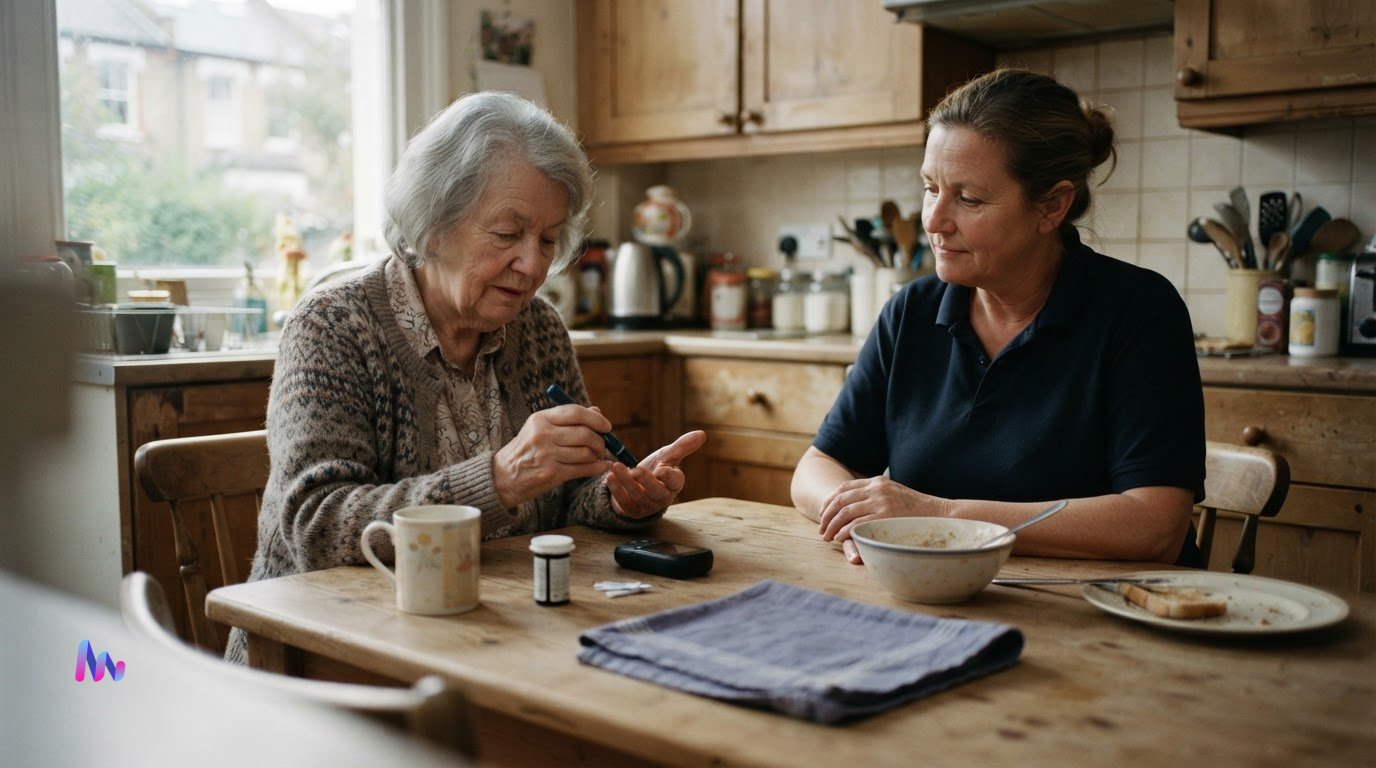
Managing diabetes at home for an elderly relative means following their individual care plan, giving medicines as prescribed and knowing what to do if they become unwell. During illness, check blood glucose more often than usual, encourage fluids and food, and continue diabetes medicines as directed. If you’re unsure what to do, contact their diabetes team or GP.
It’s understandable to worry when blood glucose changes or daily routines become harder to manage. A clear plan can make these moments feel less overwhelming while helping your relative stay comfortable and involved in their care.
This guide explains how type 1 and type 2 diabetes affect blood glucose, what to include in a care plan, and how to support insulin routines, regular reviews and screenings. It also covers practical steps for illness, so you can respond calmly and know when to seek professional advice.
Table of Contents
1. Diabetes types and how they affect blood glucose
Diabetes means blood glucose, also called blood sugar, becomes too high. The cause differs by type, so knowing your relative’s diagnosis makes daily monitoring more useful. Type 2 accounts for about 90% of people with diabetes, while type 1 accounts for about 10%. Type 1 is an autoimmune condition: the body doesn’t produce insulin. In type 2, the body either doesn’t make enough insulin or doesn’t use it properly.
Type 1 usually develops before age 40, while type 2 usually appears after 40. These are broad patterns, not a way to identify someone’s condition. Treatment and monitoring depend on diagnosis, medicines and other health conditions. A personalised care plan should explain when to check glucose and what steps to take if readings or symptoms cause concern. This gives families a clearer basis for managing diabetes at home for the elderly.
Notice changes as well as readings. Fatigue, increased thirst or hunger, dry mouth, unintentional weight loss, frequent urination, blurred vision and skin infections can be symptoms of diabetes. Increased thirst, fatigue and frequent urination can also signal high blood sugar. Dizziness, confusion and sweating may indicate low blood sugar. These signs can have other causes, so record what you observe and follow the care plan’s instructions.
Use the meter or glucose monitor recommended for your relative, following its instructions. Record readings alongside the time, meals, medicines, symptoms and activity. This context can help the healthcare team identify patterns rather than focus on isolated results. Don’t change medication in response to a reading unless the care plan or a clinician instructs you to.
Frailty, dementia and kidney disease can make diabetes care more complex. Frailty may affect appetite, mobility and the ability to monitor glucose; dementia can make routines harder to follow or symptoms harder to communicate. Kidney disease and other health conditions may affect medicines and care needs. Discuss these changes with the healthcare team when the plan is reviewed.
Exercise can support blood sugar management, circulation and general wellbeing. Choose an activity that suits your relative’s mobility, confidence and health conditions, such as a walk or seated movement. Adults with type 2 diabetes in the UK are advised to do at least 2.5 hours of walking or another activity that leaves them out of breath across the whole week, according to the NHS. Fit activity around their care plan and routine.
Blood glucose monitoring and urine tests serve different purposes. Follow the care plan’s guidance on monitoring rather than relying on home urine checks alone. For families managing diabetes at home for the elderly, a dated record makes changes easier to discuss. Note symptoms and readings, then share them at reviews to give the healthcare team practical information about daily care.
2. How often should a diabetes care plan be reviewed?
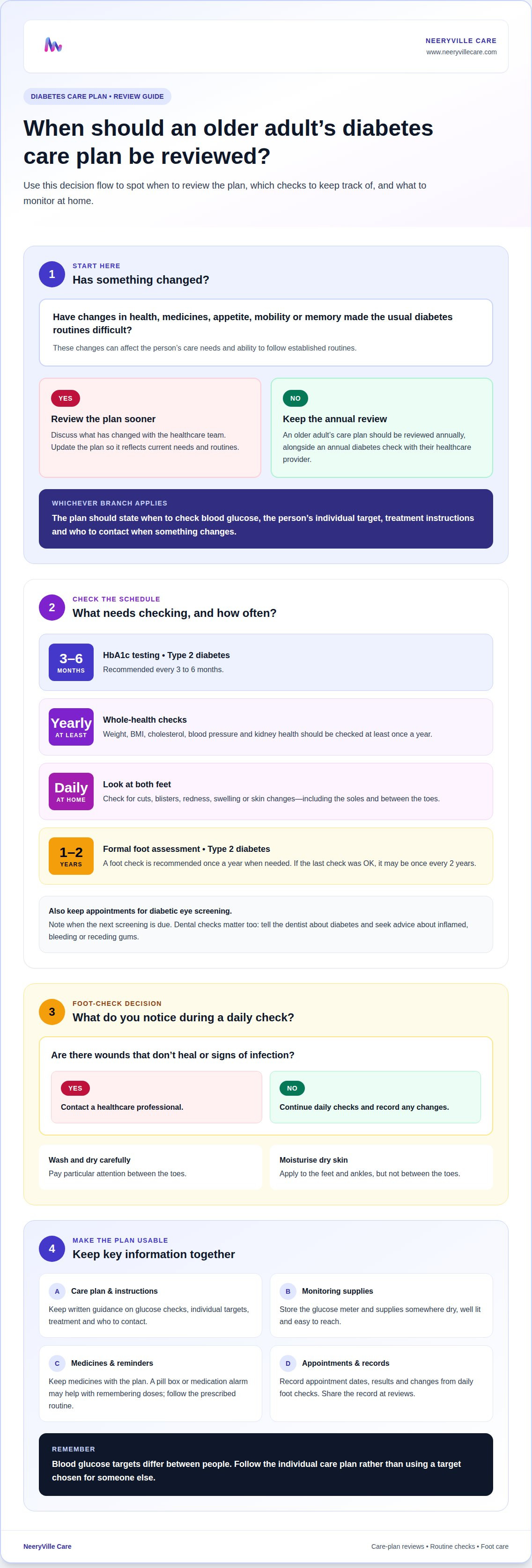
An older adult’s diabetes care plan should be reviewed annually, alongside an annual diabetes check with their healthcare provider. Review it sooner if health, medicines, appetite, mobility or memory changes make established routines difficult. The plan should record how often to check glucose, treatment instructions and who to contact when something changes.
Blood glucose targets aren’t the same for every older adult. The care plan should state the person’s target and when to check, taking account of treatment, other conditions and general health. Follow those instructions rather than applying a target chosen for another household member.
Routine checks help identify changes before they become harder to manage. For type 2 diabetes, HbA1c testing is recommended every 3 to 6 months. Weight, BMI, cholesterol, blood pressure and kidney health should be checked at least once a year. These results give the healthcare team a fuller view of diabetes care and the person’s overall health.
Foot care needs attention between appointments. Check both feet daily for cuts, blisters, redness, swelling or skin changes, including on the soles and between the toes. Wash and dry carefully, especially between the toes, and moisturise dry skin on the feet and ankles. Avoid applying moisturiser between the toes. Poor circulation and nerve damage can make injuries less noticeable, so contact a healthcare professional about wounds that don’t heal or signs of infection.
Formal foot assessments look for nerve damage, circulation problems and skin concerns. For type 2 diabetes, a foot check is recommended once a year when needed; if the last check was OK, it may be once every 2 years. Keep the date and outcome with the care plan so the next check is not overlooked.
Eye screening checks for diabetes-related damage to blood vessels in the eyes. Keep appointments and note when the next screening is due. Dental checks matter too: tell the dentist about diabetes and seek advice about inflamed, bleeding or receding gums, which may signal gum disease.
Simple home arrangements can support monitoring and daily routines. Keep the glucose meter, supplies, written care plan and medicines together in a dry, well-lit, easy-to-reach place. A pill box or medication alarm can help with remembering doses; use them in line with the prescribed routine. Clear walkways and a stable chair near the monitoring area can make seated checks easier for someone with limited mobility.
Small, recorded steps help each member of the family understand the plan. Note appointments, results and changes in daily foot checks, then share the record at reviews. If your relative’s routine becomes difficult to manage alone, elderly care at home can support everyday personal care while preserving familiar routines.
3. Insulin administration in the community
Insulin supports blood glucose control, but the right dose and timing depend on an individual prescription. Some people with type 2 diabetes may need insulin a few times a day, by injection or pump. Never change the dose, skip it or give an extra dose to correct a reading unless the care plan or diabetes team instructs you to do so.
Timing matters. Some insulin is taken in relation to meals, while long-acting insulin follows its prescribed schedule. Insuman comb mixed insulin is given 30 minutes before food. If meals are delayed or your relative eats less than usual, follow their written instructions and contact their diabetes team for advice rather than guessing.
Different insulin products act over different periods. Humalog rapid-acting insulin lasts approximately 3-5 hours; Lantus long-acting insulin lasts approximately 24 hours, and Levemir lasts approximately 20-24 hours. Each Insuman comb 15, 25 or 50 injection lasts approximately 11-20 hours. These timings describe the named products, not a reason to substitute one insulin for another.
Keep a clear insulin record beside the care plan. For each prescribed dose, note the time given, the amount specified in the plan and any relevant glucose reading or missed meal. Record concerns, such as uncertainty about whether a dose was taken. This can help prevent accidental repeat doses and give the diabetes team useful details at appointments.
Store and handle insulin according to the product instructions and the person’s treatment plan. Keep the correct insulin clearly identifiable, with its delivery device and supplies together. Check the label before each dose, especially if your relative uses more than one type. If a pen, pump or other device appears damaged or behaves differently, don’t improvise; follow the plan for seeking help.
Insulin administration in the community requires a clear understanding of responsibilities. A family member should only help with tasks they have been shown how to do and feel able to manage safely. Ask the diabetes team to explain the prescribed device and demonstrate the relevant steps. If memory problems, poor eyesight, reduced dexterity or frailty make self-administration difficult, tell the team so support can be reviewed.
Other diabetes medicines also need to be taken at their prescribed times and frequencies. Keep an up-to-date list of medicines and instructions, and update it after treatment changes or hospital appointments. Don’t assume insulin replaces tablets, or that tablets should continue unchanged when illness affects eating or drinking. Follow the sick-day plan and seek clinical advice when it directs you to.
An infection or sudden change in appetite can disrupt established routines. Note symptoms, food intake, readings and medicines given, then use the written plan to guide next steps. Diabetes UK provides guidance on managing insulin administration in the community; your relative’s prescription and care plan remain central to day-to-day support.
4. Attending diabetes reviews and screenings
Use clinical appointments to discuss changes that affect daily life, not just test results. For example, explain if your relative has become less steady, is eating differently or finds treatment harder to manage. These details help the healthcare professional consider how diabetes interacts with other conditions and whether the current support still fits.
People in the UK with type 2 diabetes are offered diabetic eye screening at diagnosis and reviewed every 1 or 2 years, according to NHS England. Keep the appointment information with other health records. If your relative has difficulty travelling, tell the screening service about access needs so practical arrangements can be discussed ahead of time.
Screening may feel less daunting when your relative knows what to expect. Before an appointment, write down concerns about vision, such as difficulty reading familiar labels or changes in sight. After screening, note the outcome and any follow-up instructions. This gives family members a shared understanding without trying to interpret clinical results themselves.
Blood pressure matters in diabetes care because hypertension is more common among people with diabetes. Ask how your relative’s blood pressure results relate to their wider health, particularly if they have symptoms or a recent change in wellbeing. A clear explanation can help the family understand what the clinician is monitoring and which concerns to raise between appointments.
Keep up with relevant NHS cancer screening invitations as well. People with type 2 diabetes are advised to attend screening because the condition is associated with increased risks of liver, pancreatic, colorectal, endometrial and breast cancers. Screening is not a diagnosis; it is a route to investigate possible concerns. Help your relative understand appointment letters and raise worries about attending with their healthcare team.
Medication conversations are another useful part of a review. Describe any suspected side effects plainly, such as feeling unwell after a dose or finding a medicine difficult to take. Explain when the problem occurs and how it affects daily activities. The clinician can consider this alongside treatment and other health conditions. Don’t stop prescribed medicines without clinical advice.
In the UK, a GP and diabetes team can provide clinical advice, coordinate diabetes-related checks and discuss concerns between appointments. Ask which team member is best placed to answer a question, and record their guidance in a shared family log. This can prevent relatives acting on conflicting information and help your older family member feel included in decisions.
A little preparation makes reviews more useful. Bring appointment letters, write down questions in advance and ask for unfamiliar clinical terms to be explained. If your relative has difficulty hearing, remembering information or communicating symptoms, explain this at the start of the appointment. The clinician can adapt the conversation and make sure your relative has the chance to express their concerns.
5. Advice when ill while taking diabetes medicine
A minor illness can disrupt meals, fluids and usual activity, making diabetes harder to manage. A written sick-day plan gives loved ones clear steps to follow when a cold, infection or stomach upset changes the routine. Keep it with the medication list, glucose meter and emergency contact details, so nobody has to rely on memory under pressure.
During illness, check blood glucose more often than usual and record each result with its time. Readings can change when someone eats or drinks less or rests more. Compare results with the personal care plan, not another person’s targets. Note symptoms, temperature, food and fluids too; this gives a specialist or GP useful context if you need advice.
Encourage regular sips of fluid and offer food as tolerated, following any dietary instructions in the care plan. If nausea, a sore throat or fatigue makes meals difficult, record what your relative manages. Don’t force food or make sudden changes to treatment. A fever is another useful detail: the sick-day plan should explain when to seek advice, including if fever exceeds 101°F (38.3°C) for 24 hours.
Continue diabetes medicines as directed by the care plan and follow its specific sick-day instructions. Don’t independently stop, add or adjust insulin or tablets because your relative is unwell. If a dose is missed, vomited after or uncertain, contact the diabetes team or GP for guidance. Write down the medicine, dose time and any effects so advice can be followed consistently.
Contact the GP or diabetes team if you’re unsure how to manage illness, readings move outside the person’s written action plan, or symptoms worsen. NHS 111 can advise when urgent help is needed and the GP is unavailable; call emergency services for an immediate, life-threatening emergency. If your relative becomes confused or unusually drowsy, treat that change seriously and seek prompt clinical advice.
Check the plan before illness occurs for practical details: who makes calls, where supplies are kept and who can help with meals or monitoring. Keep medicines and testing equipment together, and make sure anyone supporting your relative can read the instructions. If weight, appetite or activity changes during recovery, record them for the next clinical conversation rather than assuming they’ll resolve without review.
As your relative recovers, return to their usual meal, medicine and monitoring routines according to the care plan. Share illness notes and concerns about ongoing symptoms or treatment effects with the GP or diabetes specialist. A clear record helps the team decide whether follow-up or changes to the care plan are needed.
NeeryVille Care
NeeryVille Care supports families who need practical help with an older relative’s routines at home. Visiting Care and Hourly Care can help with everyday needs, while dementia care at home supports people whose memory affects daily activities. After a hospital stay, Post-Operative and Hospital Discharge Care can make the return home more manageable.
Care at home can complement the diabetes plan, but it doesn’t replace clinical advice, insulin administration instructions or reviews from the healthcare team. If caring responsibilities are becoming difficult to balance with work, family life or your relative’s changing needs, consider arranging extra support.
Contact NeeryVille Care to discuss the support your family needs.
Make the next step manageable
A lasting home routine should fit your relative, not force them into a rigid timetable. Managing diabetes at home for an elderly relative also means agreeing what they want to manage independently, what help they welcome and how changes will be shared. That conversation can protect their dignity while easing pressure on family members.
As needs change, support at home can change too. NeeryVille Care provides Live-In Care, with a carer living in your relative’s home and providing one-to-one support. This can suit families who find coordinating care difficult or whose relative needs consistent assistance in familiar surroundings. Clinical decisions and diabetes treatment remain with the healthcare team.
There’s no need to resolve every concern at once. Start with the part of the routine that feels hardest, then decide together what would make it more manageable.
Contact NeeryVille Care for support
With a thoughtful plan and the right support, your relative can receive care with greater consistency and dignity.
Frequently Asked Questions
How do I support an elderly relative with diabetes at home?
Start by asking what your relative wants to manage independently and where they welcome help. Agree who will handle practical tasks, such as collecting prescriptions, arranging transport or keeping appointment letters together. A shared calendar can help relatives coordinate without taking over. If your loved one has difficulty expressing preferences, allow time for decisions and involve them as much as possible in choosing a familiar routine.
How often should a diabetes care plan be reviewed?
Use reviews with the healthcare team to update the plan whenever your relative’s circumstances change. A hospital discharge, a new prescription, reduced mobility or a change in who provides support can make previous instructions less practical. Ask for revised directions in writing, and make sure everyone involved knows which version is current. This avoids relying on outdated notes when routines or responsibilities have shifted.
What are the symptoms of diabetes in older adults?
Symptoms can develop gradually and may be hard to distinguish from changes caused by ageing or another health condition. Pay attention to changes that persist or affect your relative’s usual activities, and tell their GP when they began. A symptom on its own doesn’t establish a diagnosis. The GP can consider the person’s health history and arrange an appropriate assessment, rather than relying on family observations alone.
What is diabetes?
Diabetes affects the body’s regulation of glucose. A diagnosis helps the healthcare team decide which treatment and follow-up suit that person. A family member can’t identify diabetes from one symptom or reading alone. If you’re concerned about a relative, tell their GP what you’ve noticed and how it differs from their usual health and routine.
How should an older person monitor blood sugar at home, and how often?
Follow the checking schedule and device instructions in the person’s care plan, rather than adopting someone else’s routine. Keep the meter and supplies easy to find, with the log alongside the plan. If a reading is surprising, note the circumstances and follow the written instructions for that result. Don’t repeat tests or alter treatment simply to obtain a preferred number.
What are the NHS dietary and exercise recommendations for older adults with diabetes?
Make meals practical and familiar, with regular mealtimes and portions suited to your relative’s appetite and needs. Limit excessive sugar, processed foods and refined carbohydrates, and keep nourishing choices easy to reach. Adapt activity to the person’s mobility, balance and other conditions; a short supported walk may suit one person, while another may need seated movement. Discuss major dietary or activity changes with the healthcare team.
How can carers help an elderly person manage diabetes safely at home?
Provide the help agreed in the care plan, and record concerns clearly for the family or healthcare team. For example, note if a task was missed, a supply ran low or your relative needed more prompting than usual. Share private health information only with people involved in their support. If your relative can safely complete a task themselves, give them time and avoid taking over unnecessarily.
What are the signs of low or high blood sugar, and what should carers do?
Follow the person’s written action plan when a reading or sudden change causes concern. It should explain the next step, whom to contact and when urgent help is needed. Stay with your relative while following those instructions, and note the time, reading and action taken. If they become seriously unwell or need immediate emergency assistance, call 999. Don’t guess at medicine changes or rely on another person’s treatment plan.