Safeguarding vulnerable adults in care: signs and action

Updated: 14 hours ago
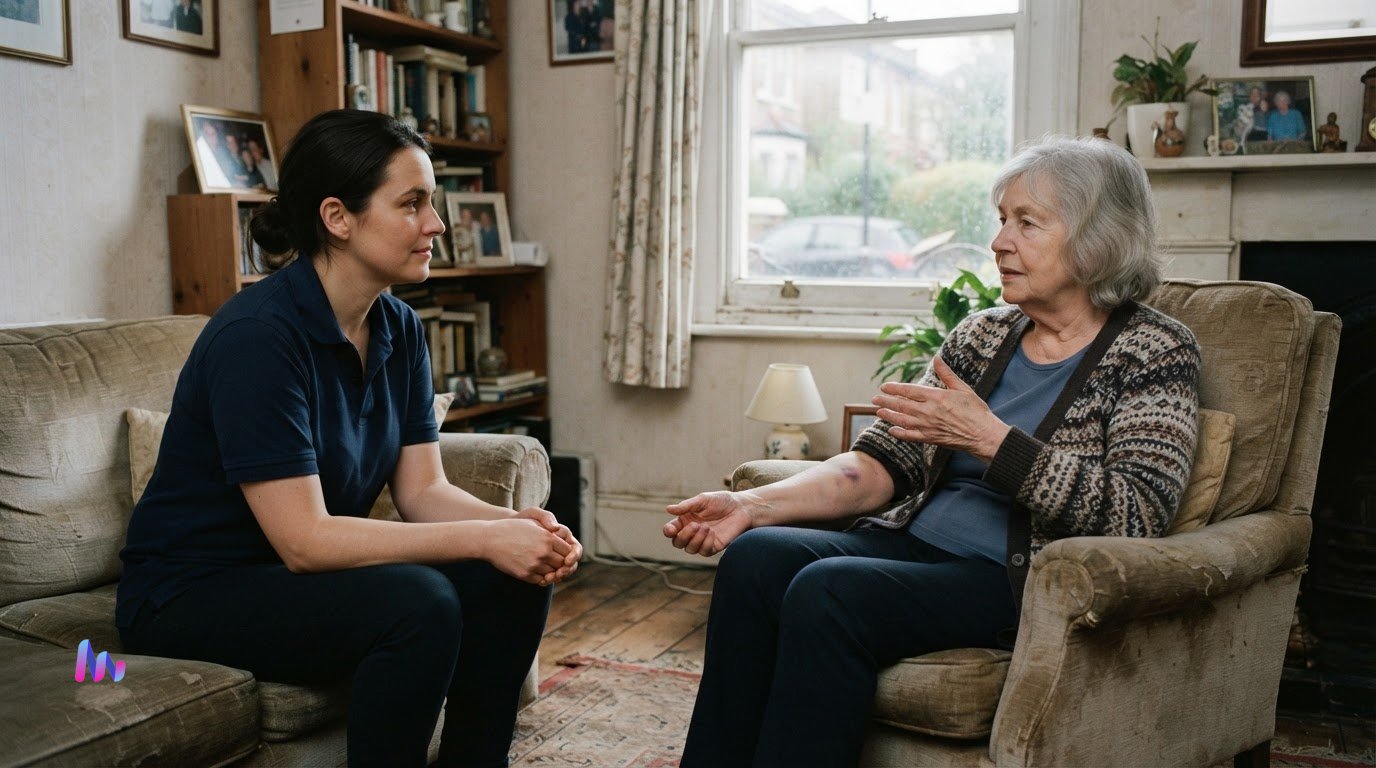
A concern about safeguarding vulnerable adults in care in Highgate deserves attention, even when the signs are uncertain. According to The National Archives, section 42 of the Care Act 2014 requires a local council to act when it has reasonable cause to suspect that an adult in its area has care and support needs, is experiencing or at risk of abuse or neglect, and is unable to protect themselves as a result. Abuse and neglect can happen in care homes as well as in someone’s own home.
It’s understandable to feel unsure about what you’ve noticed or to worry that speaking up might upset someone. You don’t need proof to report a concern to your local authority. A change in mood, unexplained injuries or signs of isolation may be reasons to seek advice, not proof of what has happened.
This guide explains what abuse and neglect can look like, the principles behind adult safeguarding and what to do if you’re worried. It also explains when to contact health professionals, the police or a safeguarding team, helping you take the next step with greater clarity and care.
Table of Contents
What is safeguarding in care homes?
Safeguarding means preventing abuse and neglect while protecting an adult’s safety, dignity and rights. Under section 42 of the Care Act 2014, a local council must act when it has reasonable cause to suspect that an adult in its area has care and support needs, is experiencing or at risk of abuse or neglect, and is unable to protect themselves as a result of those needs, according to The National Archives.
Forms and indicators of abuse and neglect
Abuse and neglect include actions, or failures to act, that harm an adult or put their wellbeing at risk. Recognising possible signs matters because you can raise a concern before all the circumstances are clear.
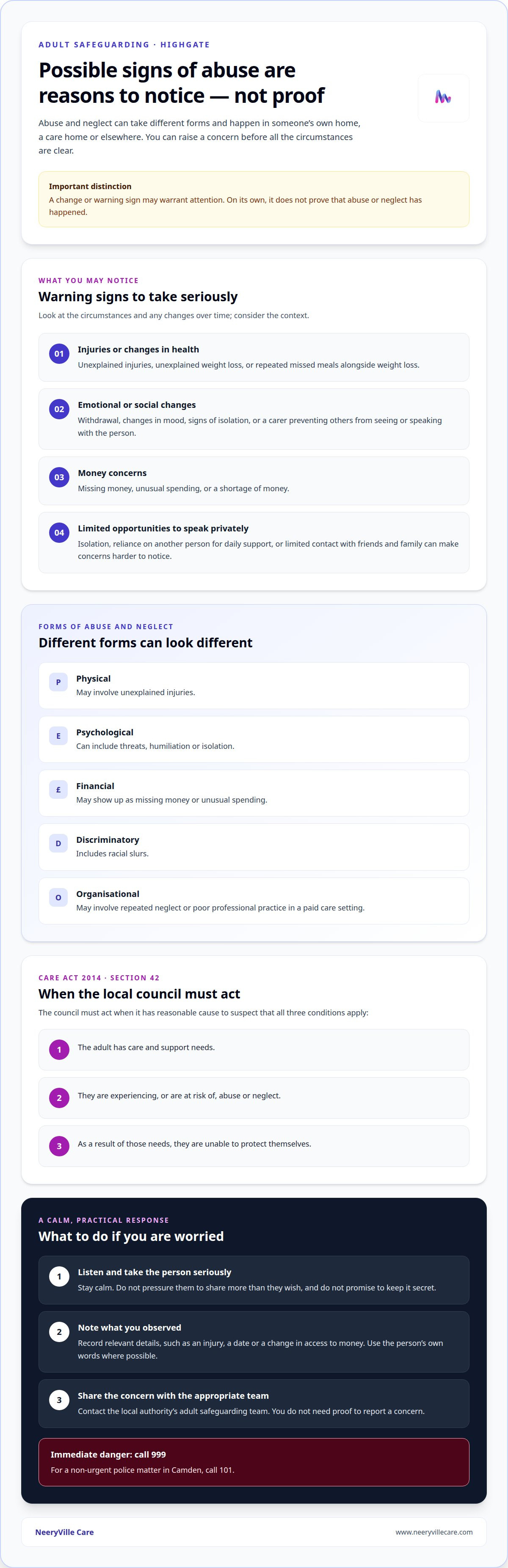
Physical abuse may involve unexplained injuries; psychological abuse can include threats, humiliation or isolation. Financial abuse may show up as missing money or unusual spending. Discriminatory abuse includes racial slurs, while organisational abuse may involve repeated neglect or poor professional practice in a paid care setting.
Abuse across care and home settings
Abuse can happen wherever an adult receives care or spends time, including care homes, their own home, hospitals, day centres, colleges and public places. A familiar setting or professional environment does not, by itself, rule out harm.
At home, isolation, reliance on another person for daily support, or limited contact with friends and family can make concerns harder to notice. For example, a person may have fewer private opportunities to describe what is happening. In care homes, repeated poor practice affecting several residents may point to an organisational concern. A written safeguarding policy can explain how concerns are recorded and escalated; the safeguarding approach provides relevant information.
Recognising signs of abuse in older people
Signs are changes or circumstances that may indicate harm, not proof on their own. They matter because older people may find it difficult to explain what has changed or ask for help.
Look for injuries without a clear explanation, unexplained weight loss, withdrawal, mood changes or a shortage of money. Concern may also arise if a carer prevents others from seeing or speaking with the person. Consider the context: repeated missed meals alongside weight loss, for example, may warrant attention. Record what you observed, when it happened and what the person said, using their own words where possible.
Responding to suspected abuse
Responding means taking a concern seriously, helping reduce immediate risk and sharing information with an appropriate professional. A calm, practical response can help the person feel heard without pressuring them to share more than they wish.
If someone tells you about abuse, listen, take their account seriously and avoid promising secrecy. Explain that you may need to share the information to help protect them. Note relevant details, such as an injury, a date or a change in access to money, and contact the local authority’s adult safeguarding team. Families can report suspected abuse without proof. If there is immediate danger, call 999.
An adult at risk or a family member in Highgate can ask Camden Council’s adult safeguarding team about independent advocacy. Explain what might make it difficult for the adult to understand the process, express their wishes or take part in decisions, and ask what advocacy support is available.
Adult safeguarding principles
Adult safeguarding should put the person, their rights and their wishes at the centre. Professionals should involve the adult in decisions, rather than treat them as a problem to manage. Someone worried about support at home, for example, should be invited to explain what feels unsafe and what outcome they want. Their views should help shape the response, even when somebody else raised the concern.
Choice matters, too. Before deciding that an adult cannot accept help, professionals should presume they have capacity and take steps to support their ability to make that decision. A quiet setting, clear language and time to consider options may help someone express a choice. A family member can support the conversation if the adult wishes. The aim is to make participation possible, not rush towards the decision others find easiest.
Respecting someone’s wishes does not mean ignoring a safety risk. It means exploring the concern with them and explaining what may happen next. If an adult does not want a particular relative involved, their preference should be heard and considered. If they want a trusted person present, that may help them speak openly. Clear explanations build trust and reduce the chance that safeguarding feels like something being done to them.
Listen to the adult. Ask what they want to change, and use their own words when recording their views.
Support decision-making. Explain choices simply and allow time for the person to respond.
Keep the response proportionate. Consider actions that address the concern while respecting the person’s independence.
Explain information-sharing. Be open about who may need to know and why, rather than promising secrecy.
These steps are especially important when an adult’s wishes differ from a relative’s concerns. A family member may feel immediate action is safest, while the adult may want time, privacy or a different kind of help. Professionals should hear both perspectives without assuming that age, diagnosis or dependence removes the adult’s voice. A practical discussion can clarify what the person understands, what worries them and what support they would accept.
For families in Highgate, a person-centred approach can make safeguarding conversations more constructive. Share specific observations, then give the adult space to describe their experience and desired outcome. If you’re considering how these principles apply to support at home, the safeguarding approach offers relevant context.
Contacting health professionals and police
Choose who to contact by considering the immediate risk and the help needed. If an adult is injured or needs medical attention, contact their GP if known. If urgent assistance is needed, contact emergency services. In Camden, call 999 when someone is in immediate danger. Don’t wait to gather every detail before seeking urgent help.
For a non-urgent police matter in Camden, call 101. This may be appropriate when you need to report a concern but nobody faces immediate danger. For example, you might have noticed a pattern of threatening behaviour or suspect that someone has taken money. Explain what you observed, where it happened and whether the adult is safe now.
A GP can be a useful contact when a health concern needs attention and you know the person’s usual practice. Describe the change clearly, such as an injury, a decline in wellbeing or difficulty getting necessary support. If the situation becomes urgent while you’re seeking advice, use emergency services. A health concern and a safeguarding concern can occur together, so contacting a clinician does not replace reporting suspected abuse to the local authority.
Immediate danger: call 999 in Camden and give the location, what is happening and whether anyone needs medical help.
Non-urgent police concern: call 101 in Camden and explain the behaviour or incident you want to report.
Health concern: contact the adult’s GP if known, and describe the symptoms or change you have observed.
Safeguarding concern: contact the local authority’s adult safeguarding team as well when you suspect abuse or neglect.
Before making a non-emergency call, note the adult’s name, location and the events that prompted your concern. Include dates or times if known, and distinguish what you witnessed from what someone told you. For example, say, “I saw a bruise on her arm this morning,” rather than guessing how it happened. This helps the person receiving your report understand the facts and decide what response is needed.
If the adult can take part, tell them which professional you plan to contact and why. Ask what support would help them feel comfortable, such as having a trusted person nearby. If they disclose abuse, listen without pressing for details or promising secrecy. In Camden, use 999 for immediate danger and 101 for non-urgent police matters; contact the known GP for health advice when appropriate.
Reporting concerns to adult safeguarding teams
For families concerned about safeguarding vulnerable adults in care in Highgate, reporting a concern gives Camden Council the opportunity to assess the adult’s circumstances. You can contact the local authority even without proof or a complete account of what happened.
Making a referral to an adult safeguarding team
A referral is information shared with the local authority so it can consider someone’s safety and support needs. This means concerns can be assessed even when the person reporting them cannot establish exactly what happened.
In Camden, phone Contact Camden on 020 7974 4444 and say “Safeguarding” when prompted. Explain who may be at risk, where they are, what prompted your concern, and whether the risk is continuing. Give practical details, such as when you noticed a change or who was present. Keep firsthand observations separate from information shared by another person.
Include the adult’s wishes if you know them. For example, explain whether they want a trusted person involved or prefer to speak privately. If they have disclosed harm, don’t promise secrecy; explain that sharing information may help protect them. For safeguarding vulnerable adults in care in Highgate, this clear, factual account helps the team understand what support or action may be needed. If danger becomes immediate, call 999.
Investigating concerns and following up
After receiving a referral, the local authority considers the information and whether the section 42 criteria apply. According to The National Archives, a council must act when it has reasonable cause to suspect an adult in its area has care and support needs, is experiencing or at risk of abuse or neglect, and cannot protect themselves because of those needs.
If a section 42 enquiry is appropriate, information about the adult’s circumstances and the concern is considered. The adult’s wishes should inform decisions. Relevant details may come from the person, relatives, or people involved in their care. An enquiry looks at the concern and the protection or support required, rather than assuming a referral proves abuse has occurred.
NICE guidance describes the safeguarding process from an initial concern through to section 42 enquiries. Local procedures and practice can vary, so the response depends on the circumstances and the adult’s needs. A referral may lead to further enquiries or other steps to address the identified risk.
After making a report, note when you contacted the team and what information you shared. If circumstances change, for example, a new concern arises or the adult’s safety changes, update the safeguarding team. This gives the council relevant context as it considers what should happen next.
Safeguarding vulnerable adults in care homes
In a care home, safeguarding means protecting residents’ health, wellbeing and rights, and preventing harm or abuse. It relies on everyday practice as well as formal responses to concerns. A missed medicine, unsafe equipment or repeated failure to provide personal care can affect a resident’s safety and dignity. The key question is whether an isolated mistake has been addressed or poor practice is repeated, creating ongoing risk.
In England, care providers should have safeguarding policies and staff training. NICE recommends policies, training and a supportive care home culture so staff can recognise concerns and people can report them. NICE guidance also explains the difference between safeguarding issues and poor practice, including when and how to refer concerns to the local authority. Clear procedures help families understand how a concern will be recorded and escalated.
Training should help staff identify possible signs, respond appropriately and know how to raise concerns. It should also connect safeguarding principles with everyday care. For example, staff should listen to a resident who becomes distressed during personal care, rather than dismiss them as difficult. They should know how to report concerns, keep records and seek guidance through the home’s safeguarding process.
Practical protection includes recognising environmental risks and responding to residents’ changing needs. Care home staff should assess needs and reduce fall risks. Equipment should be clean, suitable and used safely. Medicines and other dangerous substances should be monitored and managed. Hot water, hot substances and hot surfaces need to be controlled, with extra support when required. Good hygiene also helps prevent infections spreading between residents and staff.
Notice patterns: repeated poor care or neglect may indicate an organisational safeguarding concern.
Record concerns: clear records help staff track what happened and how the home responded.
Support reporting: residents, relatives and staff need a culture where concerns can be raised.
Review safety: check whether practical risks, such as falls or unsafe equipment, are being addressed.
The scale of safeguarding work makes sound systems important. In England, care homes accounted for 34 per cent of safeguarding enquiries conducted under section 42 of the Care Act 2014 in 2019. A referral does not by itself prove abuse; it brings a concern into a process where the adult’s circumstances and safety can be considered. People can also report a safeguarding concern to the Care Quality Commission using its safeguarding concern notification form.
If you’re concerned about safeguarding in a care setting, contact NeeryVille Care to discuss your concerns.
Contact us about a safeguarding concern
NeeryVille Care: Live-in Care
NeeryVille Care provides Live-In Care for adults who need ongoing support while staying in familiar surroundings. The same directly employed carer lives in the person’s home, providing one-to-one support with daily routines and helping families manage practical care.
Live-In Care may suit someone who needs regular assistance throughout the day, including a person living with dementia or returning home after a hospital stay. Support is shaped around the person’s needs and preferences, with dignity and wellbeing in view. Live-In Care supports day-to-day needs, but it does not replace contacting the council or police about suspected abuse or immediate danger.
If you’re considering support at home for someone close to you, contact NeeryVille Care to discuss their care needs.
Make the next conversation count
For families considering safeguarding vulnerable adults in care in Highgate, a useful next step can be a calm conversation centred on the person’s everyday life. Consider what helps them feel secure, which routines matter and how support can respect their choices. Their preferences can guide future discussions with relatives and care professionals, especially if circumstances change.
You don’t have to resolve every concern at once. Focus on one practical next step, such as agreeing who will keep the adult informed or how new concerns will be shared. A clear, respectful conversation can help everyone work towards care that protects wellbeing while preserving dignity and independence.
If you’d like to discuss support for someone close to you, contact NeeryVille Care. Our team can listen and talk through your needs.
Contact NeeryVille Care
Taking that first step can make the way forward clearer, one thoughtful conversation at a time.
Frequently Asked Questions
What is abuse and neglect?
Abuse is behaviour that harms, exploits or violates an adult; neglect is failing to provide necessary care or support. Examples include taking money without permission, threatening someone or repeatedly leaving them without help to eat or wash. A single change may have another explanation, but a pattern or the adult’s account deserves attention. Record what you observed without trying to investigate or confront anyone yourself.
What should I do if an adult who appears to be at risk of harm refuses help?
Listen to their reasons and avoid treating refusal as proof that they cannot decide. Professionals should presume the adult has capacity and help them understand their options, perhaps by explaining them calmly or offering time to think. Ask what support they would accept and what would make them feel safer. If you remain concerned, share the facts with the local authority; call 999 if there is immediate danger.
What does safeguarding vulnerable adults in care mean in the UK?
Adult safeguarding means protecting an adult’s rights, wellbeing and safety while responding to abuse or neglect concerns. For this purpose, an adult at risk is someone over 18 with care and support needs, experiencing or at risk of abuse or neglect, and unable to protect themselves because of those needs. Safeguarding applies in different settings, not only care homes, and should involve the adult’s views and wishes.
What are the Care Act 2014 safeguarding duties for adults at risk?
Under section 42 of the Care Act 2014, a local council must act when it has reasonable cause to suspect that an adult in its area has care and support needs, is experiencing or at risk of abuse or neglect, and cannot protect themselves because of those needs, according to The National Archives. The council considers whether the criteria apply and whether enquiries are needed. The adult’s circumstances and wishes inform the response.
How do I report adult safeguarding concerns in Highgate?
For a concern in Highgate, contact Camden Council through Contact Camden on 020 7974 4444 and say “Safeguarding” when prompted. Explain where the adult is, what has caused concern and whether the risk is continuing. You don’t need proof to report suspected abuse or neglect. If someone is in immediate danger, call 999; for a non-urgent police matter in Camden, call 101.
What is the adult safeguarding referral process and what information should I provide?
A referral gives the local authority information to assess an adult’s safety and support needs. Share the person’s name and location if known, what you saw or were told, when it happened, and any immediate risks. Make clear which details are firsthand and which came from someone else. Include the adult’s views where you know them. The council then considers the concern and whether a section 42 enquiry applies.
What should care staff do if an adult discloses abuse or neglect?
Care staff should listen calmly, take the person seriously and avoid pressing them for unnecessary details. They should not promise secrecy; instead, they should explain that information may need to be shared to help protect the adult. Staff should accurately record what was disclosed, using the person’s own words where possible, and follow the setting’s safeguarding procedure. If the person is in immediate danger or needs urgent medical attention, seek emergency help.
What are the signs and types of abuse and neglect in adult care?
Types of abuse include physical, psychological, financial and discriminatory abuse, neglect, and organisational abuse involving repeated poor care. Possible signs include unexplained injuries or weight loss, withdrawal, mood changes, missing money or a carer preventing others from seeing the adult. These signs do not establish what happened, but they can justify raising a concern. Note specific changes, such as missed meals or a new injury, and report them to the local safeguarding team.