

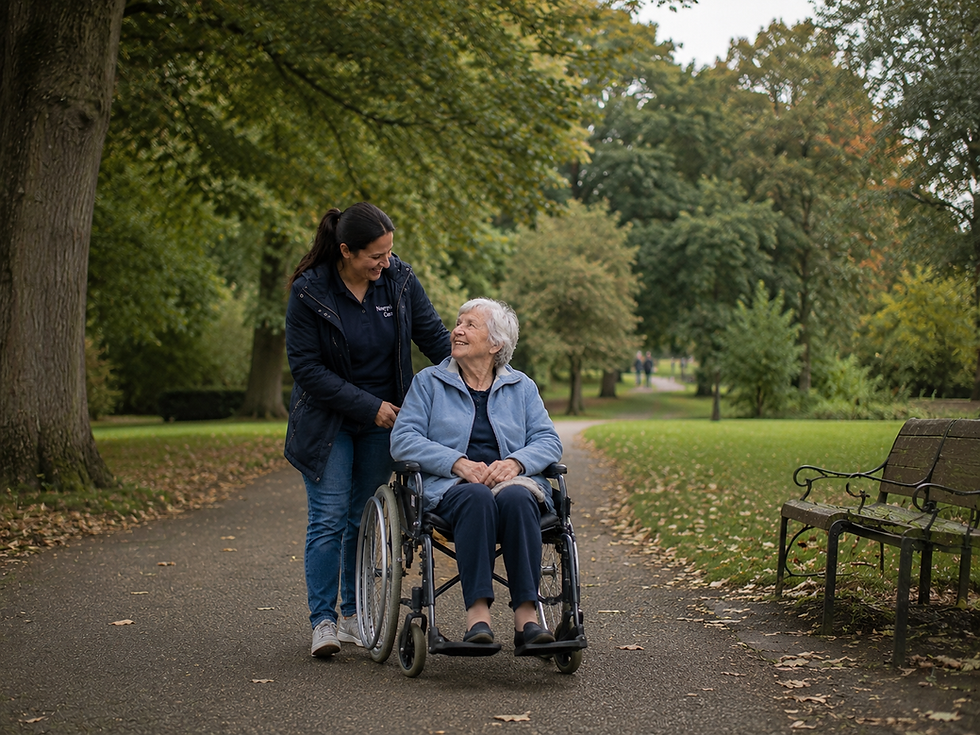
Mobility and Frailty Care at Home
Frailty does not announce itself. It arrives quietly. A parent who used to walk to the shops now takes the bus. The weekly visit that used to end with a cup of tea now ends with a longer goodbye because something feels different and you cannot quite name it.
The stumble on the path that was fine this time but might not be next time. Most families who contact us about mobility and frailty care have not yet had a crisis. They have noticed something shifting and they want to act before it becomes urgent. That is exactly the right instinct.
According to Age UK around 10 percent of people aged over 65 in the UK live with frailty, rising to between 25 and 50 percent of those aged over 85. And according to NHS guidance published in 2026 frailty care is most effective when it is proactive and personalised, beginning before a crisis occurs rather than after one.
NeeryVille Care provides mobility and frailty care at home across England. Professional, consistent support from the same familiar carer that helps your loved one maintain their independence, reduce their fall risk and stay safely at home for as long as they choose.

✓ CQC-Registered Provider
Proactive Not Reactive Our approach to frailty care focuses on maintaining independence and preventing decline rather than simply managing it.
✓ Listed on NHS Find Care
✓ 14-Day Live Well at Home Guarantee

✓ Available 24 Hours, 7 Days a Week
✓ Care Arranged in 24 to 48 Hours

The Real Danger — Falls and What Prevents Them
Falls are one of the most serious consequences of frailty and reduced mobility in older adults. They are also one of the most preventable.
According to the NHS falls are the leading cause of injury-related deaths in people over 75 in the UK and a significant cause of hospital admissions that can dramatically accelerate physical decline. The risk of a fall is not just physical.
The fear of falling — what researchers call post-fall anxiety syndrome — causes many older people to restrict their movement, reduce their activity and become more isolated. This in turn accelerates the very frailty they are trying to avoid. It becomes a cycle that is very difficult to break alone. Professional mobility and frailty care at home breaks that cycle.
A consistent carer who knows your loved one's movement patterns, the specific hazards in their home and the times of day when they are most at risk provides targeted fall prevention support that is impossible to replicate with occasional family visits or a different carer each time. Research published by the ABPI confirms that home care significantly reduces unplanned hospital admissions.
In a study comparing people who received home care with those who did not, A&E visits were nearly three times higher in the group without professional home care support.


Frailty Can Be Slowed — Sometimes Improved
One of the most important things families need to know about frailty is that it is not irreversible. The NHS National Frailty Improvement Collaborative, launched in 2026, is specifically focused on preventing and slowing frailty through proactive personalised support.
Evidence from clinical research, including a study published in the Lancet, confirms that home-based support interventions for people with mild to moderate frailty can reduce hospital admissions and improve quality of life significantly.
This means professional mobility and frailty care at home is not just about managing decline. It is about actively supporting your loved one to maintain strength, confidence and independence for longer. Structured daily activity, careful nutritional support, fall prevention and consistent human connection all play a role in slowing the progression of frailty.
At NeeryVille Care this is the approach every mobility and frailty care arrangement is built around. Not simply managing what can no longer be done. Supporting what can still be done and protecting it.

What Mobility and Frailty Care at Home Includes
Every mobility and frailty care arrangement is tailored to your loved one's specific needs and the hazards of their specific home.
It can include:
-
Safe movement support, helping your loved one move around the home with confidence including transfers in and out of bed, chairs and the bathroom.
-
Fall prevention, identifying and addressing hazards in the home, supporting safe use of mobility aids and monitoring for changes in balance or gait that indicate increased risk.
-
Supporting exercise routines recommended by physiotherapists to maintain strength, balance and coordination.
-
Personal care on days when fatigue or physical difficulty makes washing, dressing and grooming challenging to manage alone.
-
Meals and nutrition, preparing nutritious meals that support muscle maintenance and physical strength during a period when appetite may be reduced.
-
Accompaniment out of the home, supporting your loved one to continue walking, attending community activities and staying socially connected rather than becoming housebound.
-
Overnight support for those at highest risk of falls during the night, providing safe assistance with nighttime toileting and monitoring.
-
Practical household tasks, reducing the physical exertion required to maintain the home so your loved one's limited energy can be directed toward staying active and independent.
Fully regulated and compliant with UK care standards
CQC | ICO | Dementia Friend | Homecare Association


CQC Registered Care Provider (View details)
Recognised care provider on the NHS website (View listing)
What Families Say About NeeryVille Care
Families just like yours, facing the same decisions you are facing right now.
Frequently asked questions
How to Get Support for your loved one
If you have noticed your loved one becoming less steady, less confident or less able to manage the things they used to manage easily, the best time to call is now, before things become urgent rather than after.
Call us on
0208 129 5854.
We are available 24 hours a day, 7 days a week.