Care Homes in Camden: Is Live-in Care a Better Option?

When someone you love needs more support, searching for care homes in Camden can quickly turn into a bigger question: would they be better supported in a care home, or could live-in care at home be an option? The answer may look different for a family in NW1 Camden Town or Somers Town, NW5 Kentish Town or Gospel Oak, and NW3 Hampstead or Belsize Park. The person’s needs and wishes come first, but so do the details of the neighbourhood they know and the journeys their family can realistically make.
If your family is considering support in NW3, you can also read about live-in care in Hampstead. For families comparing support at home in the borough, see live-in care in Camden.
The honest answer is that live-in care can be a real alternative for some people, but it is not automatically better. The right choice depends on the person’s care needs, preferences, home, overnight support requirements and the kind of environment in which they feel most settled. Camden Council’s Adult Social Care team says it will start by finding out who the person is and what matters to them, then work with them on a support plan. That is a useful place to begin before comparing providers or prices. (Camden Adult Social Care)
What is the difference between a care home and live-in care?
A residential care home provides accommodation and personal care, such as help with washing, dressing, taking medicines and using the toilet. A nursing home also provides personal care, with one or more qualified nurses on duty to provide nursing care. Some homes offer both types of place. (NHS: Care homes)
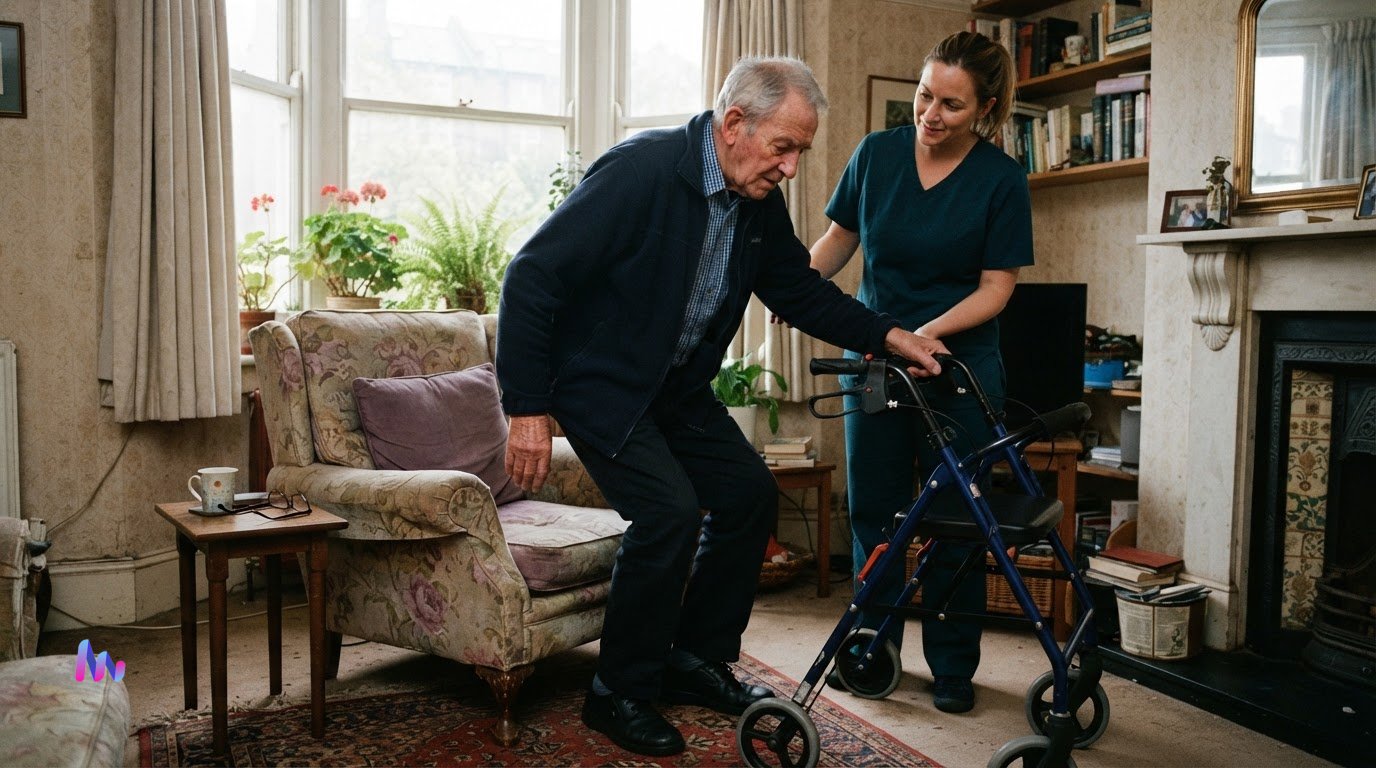
With live-in care, a professional carer stays in the person’s own home and provides support there. The exact arrangement is individual: families should ask what support is planned during the day, overnight and during the carer’s breaks, and what happens if the person needs help more often at night than the plan allows.
Neither option is right for everyone. A care home offers a shared setting and staff team; live-in care may allow someone to keep more of their familiar home routine. The important question is whether the chosen arrangement can safely and reliably meet the person’s assessed needs.
When might live-in care in Camden be worth considering?
Live-in care may be worth exploring if the person wants to remain at home and a care provider confirms that their needs can be met there. It can suit a household where familiar surroundings, routines, pets, a partner or a longstanding neighbourhood matter deeply to the person.
Think about what “home” means in practice. For someone in Camden Town, that might mean familiar shops or a regular visit near Camden Lock. For another person, it could be a route to Queen’s Crescent Market from Gospel Oak, a walk on Hampstead Heath, or seeing family near King’s Cross or Bloomsbury. These places are not a care plan by themselves, but the person’s ability and wish to stay connected to familiar routines can be part of the conversation. Camden’s council lists markets from Camden Lock and King’s Cross to local street markets such as Queen’s Crescent; The Regent’s Park and Primrose Hill are nearby open spaces. (Camden markets; The Regent’s Park and Primrose Hill)

A Camden-wide search can cover very different neighbourhoods
Camden’s Joint Strategic Needs Assessment groups the borough into five neighbourhoods: North (including Belsize, Frognal, Hampstead Town and Highgate); East (including Camden Square, Gospel Oak, Haverstock and Kentish Town North and South); South (Bloomsbury, Holborn & Covent Garden and King’s Cross); Central (Camden Town, Primrose Hill, Regent’s Park and St Pancras & Somers Town); and West (Fortune Green, Kilburn, South Hampstead and West Hampstead). This is a useful way to think about a local search: a home that is convenient for a relative in NW6 may be a difficult journey for a family visiting from Bloomsbury or Camden Town. (Camden JSNA area profiles)
For a concrete NW5 example, CQC lists Ash Court Care Centre at Ash Mews, Ascham Street, Kentish Town, London NW5 2PW. That is an example to help orient a local search, not a recommendation. Read the home's current CQC page and reports, then ask about current availability, the exact care needs it can meet, visiting arrangements and fees. (CQC: Ash Court Care Centre)
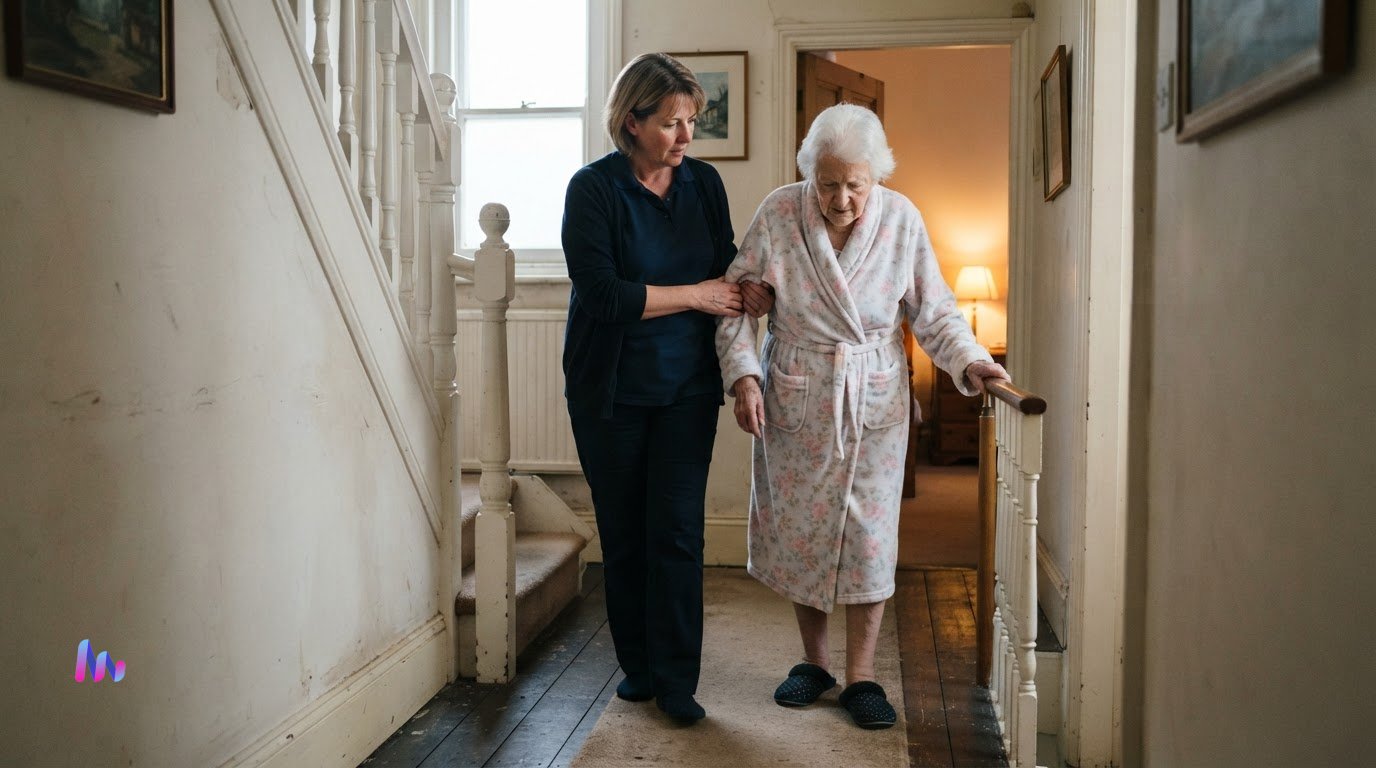
Before assuming a person can safely stay at home, consider the property too. Is there enough space and privacy for a carer? Are stairs, bathing, transfers, lighting or the front entrance creating risks? Could equipment or adaptations help? A needs assessment can consider the person’s daily life and whether practical changes or other support may help.
Live-in care is not the same as one person being awake and actively providing care every minute of the day and night. Ask the provider to explain the night-time arrangement, cover for breaks and days off, backup if a carer is unwell, and whether waking-night support or a larger team would be needed. If the person needs frequent help through the night, cannot safely be left alone, or needs nursing input, the assessment should consider whether a single live-in arrangement is enough.
When could a Camden care home be the better fit?
A care home may be more suitable when someone is finding it difficult to live safely even with support, or when their assessed needs are best met in a staffed setting. The NHS lists struggling to live alone despite help, a needs assessment recommending a care home, complex conditions requiring specialist attention day and night, and recovery after serious illness or surgery among reasons a care home may be considered. (NHS: Care homes)
Some people value the regular company, shared meals, organised activities and staff presence a particular home offers. A nursing home may be appropriate where nursing care is required. These are features to check at each home rather than assume every home provides the same experience.
Location can affect how a move feels for both the resident and their family. If relatives travel from King’s Cross, Bloomsbury, Hampstead or Primrose Hill, visit at the times they would realistically come and consider the journey, step-free access and parking. If the person already attends appointments around UCLH at 235 Euston Road or the Royal Free Hospital on Pond Street in Hampstead, ask how the care arrangement would support those journeys. Proximity to a landmark or hospital alone does not tell you whether a home can meet someone’s needs. (UCLH: University College Hospital; Royal Free Hospital)
A practical comparison
Where does the person live? — Care home: In the home’s accommodation Live-in care at home: In their existing home
What does the setting offer? — Care home: A shared setting, with care delivered by the home’s staff team Live-in care at home: Support in familiar surroundings; household routines remain central
Who provides care? — Care home: A team working across the home Live-in care at home: A carer or planned rota; ask how continuity and cover work
What about nursing? — Care home: Some homes provide nursing care; check the home’s registration and staffing Live-in care at home: Ask whether the provider and care plan can safely meet any nursing or clinical needs, and how health professionals are involved
What about overnight support? — Care home: Ask what staffing is present overnight and what help is available Live-in care at home: Ask whether nights are sleep-in or waking support and what additional cover is required
What should be checked? — Care home: CQC report, care plan, availability, fees, visiting, activities and staffing Live-in care at home: Provider’s CQC information where applicable, written care plan, suitability of the home, breaks, nights, backup and full costs
There is no reliable “cheaper” answer without comparing like with like. Fees depend on the level of care, nursing needs, provider and what is included. Ask for a written breakdown of the full weekly cost and what could lead to extra charges. If you are considering a care home, the NHS advises asking the council for a needs assessment before deciding how to pay and says not to sell a home or cancel a tenancy before the council has made a decision. (NHS: Care homes and paying for care)
How to explore care options in Camden
1. Ask the person what matters to them. Include their wishes, routines, relationships, faith or cultural needs, privacy, pets and the places they want to remain connected to.
2. Request a care needs assessment. The NHS says the assessment is free and anyone can ask their local council for one. It can help identify support such as equipment, home changes, paid care or a move to a care home. (NHS: Getting a care needs assessment)
3. Contact Camden Adult Social Care. Camden provides a referral route for yourself or someone else and links residents to Camden Care Choices. If you need help completing the referral or need urgent support, Camden lists Contact Camden on 020 7974 4444; say “Adult Social Care” when prompted. (Camden: How Adult Social Care can support you)
4. Use Camden’s local directories, then verify. Camden Council’s Care Choices site has local information and a homecare directory; the council says directory entries should be checked with the organisation and with CQC because information may not always be current. For care homes, Camden directs families to CQC’s search for the up-to-date list in the borough. CQC also lets families search homecare agencies. Read the latest inspection reports, not just the headline rating, and ask the provider about the points that matter to your family. (Camden Care Choices directory; Camden Care Choices: Care homes; CQC: Find care services)
5. Ask each provider the same questions. How are care needs reviewed? Who is on duty at night? What happens if needs change? How are breaks and emergency cover arranged? How are family members involved—with the person’s agreement? What is included in the fee, and what is extra?
So, is live-in care a better option than a care home?
It can be a better fit for someone who wants to stay at home and whose needs can be safely met there. A care home can be the better fit when the person needs a staffed environment, nursing provision or support that cannot reliably be arranged at home. Neither choice is a failure, and the answer may change as a person’s needs change.
If you are weighing up a care home in Camden, start with the person’s own view and a care needs assessment. Then compare a realistic live-in care plan with specific homes, including overnight cover, staffing, location, costs and how each option would support the person’s everyday life.
Considering live-in care in Camden? Call NeeryVille Care on 020 8129 5854 to talk through whether support at home may be suitable. A conversation can help you understand what information is needed before deciding. (NeeryVille Care)