Social activities for housebound elderly, at home and nearby

What if a meaningful social moment didn’t need a trip out? Social activities for housebound elderly people can start at home with a favourite game, familiar music or a simple craft. Nearby groups and community events may also offer a change of scene when going out feels manageable.
It’s understandable to worry that an activity could be tiring, difficult to reach or simply not feel right. Choose one that respects the person’s energy, mobility, interests and wishes, without making social time feel like another obligation.
Here are practical ideas for games, music and creative projects at home, along with ways to find local activities and stay in touch. You’ll also find tips for adapting each option to the person’s needs, so they can enjoy connection at a comfortable pace.
Table of Contents
Board games, Sudoku and crosswords
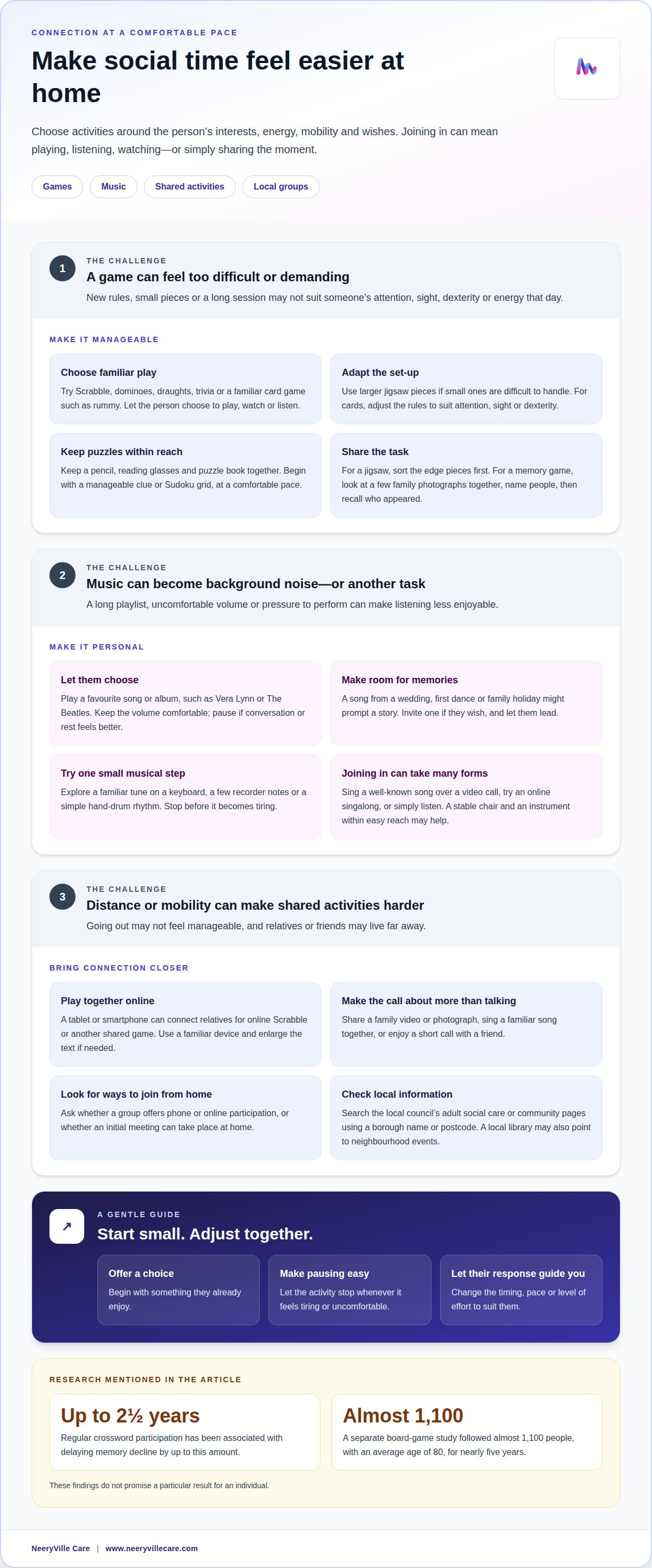
Games can bring company and a shared focus to a quiet afternoon. For seniors, familiar rules may feel easier than learning something new, while a fresh challenge can make a visit more engaging. Try Scrabble, dominoes, draughts or a simple trivia game, and let the person choose whether to play, watch or listen.
Crosswords and Sudoku suit different interests and can be completed at a comfortable pace. Keep a pencil, reading glasses and puzzle book together, then start with a clue or grid that feels manageable. Jigsaws offer a shared task too: sort the edge pieces first, or choose a puzzle with larger pieces if handling small ones is difficult.
Cards are easy to adapt for one player or a small group. Try snap, pairs or a familiar game such as rummy, adjusting the rules to suit the person’s attention, sight or dexterity. For a memory game, use family photographs: lay out a few face up, name each person, then cover them and recall who appeared.
Research has associated regular crossword participation with delaying memory decline by up to two and a half years. A separate board-game study followed almost 1,100 people, with an average age of 80, for nearly five years. These findings don’t promise a particular result for an individual, but they show why people may enjoy keeping games in their routine.
Computer games offer another way to play, especially when relatives live far away. A tablet or smartphone can connect people for online Scrabble or other shared games. Choose a familiar device, enlarge the text if needed, and set up the game before inviting someone to join. Brain-training games can add short memory or word challenges, but enjoyment matters more than a score.
Private companionship and befriending costs in the UK depend on visit length, frequency and support needs. The price is given after a quote request.
For London households planning regular games alongside home support, local care information in London can help families explore options around their routines.
Listening to music and learning instruments
A favourite song can make a quiet afternoon feel more social. Put on a familiar album, such as Vera Lynn or The Beatles, and invite the person to choose what comes next. They might listen, tap along, hum a chorus or simply enjoy the music. Keep the volume comfortable and pause if conversation or rest feels more welcome. A short playlist of meaningful songs can be easier to enjoy than leaving the radio on all day.
Music can also prompt reminiscence. Play a song from a wedding, a first dance or a favourite family holiday, then invite a story if the person wants to share one. Ask an open question, such as “Who did you listen to then?” A relative can add context by sharing a photograph or recalling a concert they attended together. Let the person lead: a song can be enjoyed without explaining its meaning.
Learning an instrument offers a fresh way to engage. Start with a familiar tune on a keyboard, a few notes on a recorder or simple rhythms on a hand drum. There’s no need to aim for a full performance. Try one small step, such as finding middle C or keeping time with a chorus, and stop before it becomes tiring. Large keys, a stable chair and an instrument within easy reach can help accommodate changes in mobility or hand function.
Choir activities can bring voices together even when people aren’t in the same room. A family group might sing a well-known song over a video call, or a local community choir may offer a chance to take part in person. For someone who prefers to stay home, look for online singing classes or a recorded singalong. Listening counts as joining in too: the person can choose when to sing, pause or simply enjoy the sound.
Make music part of an ordinary routine rather than another task. Pair a favourite record with a cup of tea, or play gentle instrumental music during an indoor gardening activity. A family member can prepare a short playlist and leave the controls within reach. For help arranging companionship around musical interests and daily routines, contact the care team to discuss what support may suit your family.
How can I find activities for elderly people near me?
How can I find activities for elderly people near me?
Start with the older person’s London borough council and search its adult social care or community information pages. Use their postcode or borough name to narrow the results, then note each activity’s location, format and access arrangements. A local library may also point you towards neighbourhood events. For social activities for housebound elderly people, look for groups that welcome phone or online participation, or ask whether an initial meeting can take place at home.
How can I help my elderly loved one to be active?
Offer a choice based on what they already enjoy rather than setting a target. For example, invite them to help prepare a simple lunch, stretch gently while seated, or walk together to another room if that suits their mobility. Make the activity easy to pause and ask how it felt afterwards. Their response can guide the next activity, its timing or level of effort.
What social activities can housebound elderly people do at home?
Social activities for housebound elderly people can grow out of everyday tasks shared together. Invite your relative to plan a meal, dictate a letter, label family photographs or help choose plants for a windowsill. A familiar radio programme can prompt conversation, while a short call with a friend can bring a welcome change to the day. Let the person decide whether to join in or simply keep you company.
How can housebound elderly people find local visitors, clubs or community groups?
Ask the local council’s adult social care team about community organisations and visiting schemes in the person’s neighbourhood. In London, search using a borough name, such as Camden or Haringey, alongside terms like “older people’s group” or “befriending”. A relative can help make an initial enquiry and explain access needs. If attending in person is difficult, ask whether a group welcomes phone participation or offers remote sessions.
How can family members arrange social activities for an elderly person at home?
Begin with a conversation about what your relative wants, then agree on one manageable plan together. Write the chosen activity and time on a visible calendar, such as “call Elaine after lunch”, and gather anything needed beforehand. Leave room to change plans if energy or mood shifts. Afterwards, ask what they’d like to repeat, change or skip. This keeps the plan collaborative rather than making it another task imposed on them.
Arts and crafts for creativity and dexterity
Creative projects give people a chance to make, choose and share something tangible. Try watercolour painting, drawing, knitting or a scrapbook of family photographs. Set out one activity at a time on a clear table, with materials within easy reach. A finished picture or decorated card can become a conversation starter with friends and relatives.
For painting, start with a large sheet of paper, a few colours and a broad brush. Someone who finds fine movements difficult might enjoy dabbing paint with a sponge or making bold marks instead. Drawing a familiar London landmark, such as St Paul’s Cathedral, offers an idea without requiring a precise result. Keep the activity enjoyable, rather than focusing on producing a perfect picture.
Knitting can involve repeated, familiar movements, while choosing wool colours adds a creative decision. In a survey, one in five older people said knitting helped reduce arthritis pain, and 70% said it helped improve their health. These are reported experiences, not a promise of a particular effect. If needles are uncomfortable, try chunky wool, a larger hook or another craft requiring less grip.
A scrapbook can come together in small steps. Choose a photograph, add a date or short caption, then leave space for a memory or a relative’s comment. Use glue sticks and larger pieces of paper if small embellishments are hard to handle. Making a birthday card for a friend also gives the activity a clear purpose and a personal finish.
For someone living with dementia, familiar materials and recognisable themes can make a craft easier to approach. Sorting buttons by colour, arranging postcards or decorating a simple picture frame are examples. Keep the choices limited and offer one instruction at a time. Dementia care at home can include personalised support that respects a person’s routines and interests.
Prepare the space before starting: use a stable chair, good lighting and a non-slip mat beneath the paper. Put scissors, pencils and other tools on the person’s stronger or more comfortable side. A family member or companion can help set out materials, join in or simply listen as the person talks about their work. The person stays in control of the pace, choices and when to finish.
Balancing social activities with personal limits
A good routine makes room for connection without making every day feel scheduled. Start by choosing one or two activities, such as a weekly family call and a short reading session. Notice which moments leave the person feeling engaged and which feel tiring. Their preferences, energy, pain, mobility and usual routine can all shape what feels manageable.
Keep the plan flexible. Someone might enjoy a musical afternoon on Monday but prefer quiet company another day. Offer a choice between listening to a favourite song, reading a magazine or chatting over tea. If they become tired, pause or finish early. A meaningful activity doesn’t need to last long or produce a finished result.
A sense of purpose can come from small, familiar contributions. Invite someone to choose a recipe, sort photographs for a family album or water an indoor plant. These tasks give the day a focus and create opportunities to talk. Reading aloud from a favourite book can be shared too, with the person choosing whether to listen, read or discuss it.
Exercise can be adapted to the home and the person’s abilities. Gentle stretching from a stable chair or moving arms to music are examples of light activity. Keep the floor clear and use a chair that doesn’t slide. If movement brings discomfort, stop and return to a more comfortable option, such as conversation or listening to music.
Carers can help ease loneliness by arranging regular contact around the person’s wishes, such as a call with a familiar friend or a shared cup of tea. The World Health Organization says social connection is important for older adults in reducing the risk of social isolation and loneliness. For safety, keep activities within the person’s usual abilities, make essential items easy to reach and allow enough time to move between rooms.
Feelings matter as much as the activity itself. After a video call or craft session, give the person space to say what they enjoyed or would change next time. A simple weekly calendar can show what’s planned while leaving room for rest, changes in energy or a different choice on the day.
NeeryVille Care
NeeryVille Care provides home support when isolation, daily needs or changing health make social contact harder to maintain. As a CQC-regulated provider, it delivers care at home, where familiar surroundings and personal routines can remain central. The right support depends on what the person needs and values, whether that means help to maintain a daily routine or care during a more difficult period.
Visiting Care may suit someone who wants support at home while keeping as much independence as possible. Visits can fit around the person’s day and existing routines. For example, help with getting ready or preparing for the day may make it easier to enjoy a planned call with family or take part in an activity at home. The aim is to understand what matters to the individual, not impose a set programme.
Live-In Care may suit someone who needs a more continuous presence at home. With one-to-one support from a carer who lives in the home, everyday moments can feel less solitary, from sharing conversation over a meal to keeping up an interest in music or reading. This option may also be relevant when needs have increased and family members find it difficult to provide all the support themselves.
When dementia affects communication, confidence or familiar routines, Dementia Care can be shaped around the individual’s preferences and established habits. A familiar song, photograph or well-loved activity may offer a comfortable focus for time together. For someone approaching the end of life, End of Life Care provides support at home during a sensitive period, with attention to dignity and the person’s needs.
Families don’t need to begin with a complicated plan. It can help to describe what the person enjoys, what they find difficult and what support would make ordinary days easier. NeeryVille Care can discuss how its home care options fit those needs, while recognising that social activities should reflect the person’s wishes and energy. The focus is on individual care, not filling every hour with planned activities.
Let connection grow at a comfortable pace
Social activities for housebound elderly people don’t need to start with a full calendar or a major change. One familiar conversation, a shared interest or a small moment of company can make connection part of everyday life. Consider what the person would welcome, what feels manageable and what kind of support could help.
Care needs can change, and families may find it difficult to balance companionship with daily responsibilities. NeeryVille Care can discuss home support in the context of the person’s routines, preferences and circumstances. A calm conversation can help you explain what’s happening and consider a way forward that respects their dignity and independence.
You don’t need to have every answer before asking for support. Start with what matters most to your family, then take the next step together.
A thoughtful beginning can make room for more connection, at a pace that feels right.
Frequently Asked Questions
How can I find activities for elderly people near me?
Start with the older person’s London borough council and search its adult social care or community information pages. Use the person’s postcode or borough name to narrow the results, then note the activity’s location, format and access arrangements. A local library can also point you towards neighbourhood events. If travel is difficult, look for groups offering phone or online participation, or ask whether an initial meeting can take place at home.
How can I help my elderly loved one to be active?
Offer a choice based on what they already enjoy rather than setting a target. For example, invite them to help prepare a simple lunch, stretch gently while seated, or walk together to another room if that suits their mobility. Make the activity easy to pause and ask how it felt afterwards. Their response can help you adjust the next activity, its timing or level of effort.
What social activities can housebound elderly people do at home?
At home, shared everyday tasks can offer social contact and a sense of involvement. Invite your relative to plan a meal, dictate a letter, label family photographs or help choose plants for a windowsill. A familiar radio programme can prompt conversation, while a short call with a friend can bring a welcome change to the day. Let the person decide whether to join in or simply keep you company.
How can housebound elderly people find local visitors, clubs or community groups?
Ask the local council’s adult social care team about community organisations and visiting schemes in the person’s neighbourhood. In London, search using the borough name, such as Camden or Haringey, alongside terms like “older people’s group” or “befriending”. A relative can help make an initial enquiry and explain access needs. If attending in person is difficult, ask whether a group welcomes phone participation or offers remote sessions.
How can family members arrange social activities for an elderly person at home?
Begin with a conversation about what your relative wants, then agree on one manageable plan together. Write the chosen activity and time on a visible calendar, such as “call Elaine after lunch”, and gather any items beforehand. Allow flexibility if energy or mood changes. After the visit or call, ask what they’d like to repeat, change or skip. This makes the plan collaborative rather than another task imposed on them.
Are there UK telephone befriending services for housebound older people?
Ask the local council’s adult social care team about neighbourhood visiting schemes. Some groups welcome phone participation or offer remote sessions.