Overnight Awake Carer in Highgate: Waking and Sleeping Care


A waking night carer stays awake throughout the night to help when needed; a sleeping night carer rests in the home and can assist up to two times during the night. An overnight awake carer in Highgate may be a better fit when night-time needs are frequent or unpredictable, rather than occasional.
It’s understandable to want reassurance that someone will be there if a loved one wakes, needs help moving or feels unsettled. Choosing the right kind of overnight care can also help everyone feel more prepared and comfortable at home.
This guide explains what waking and sleeping night care involve, the support an overnight carer can provide, and what to consider when choosing an arrangement for your household. It also compares overnight care with live-in care, helping you understand the options and decide what to do next.
Table of Contents
What is the difference between a waking and sleeping night carer?
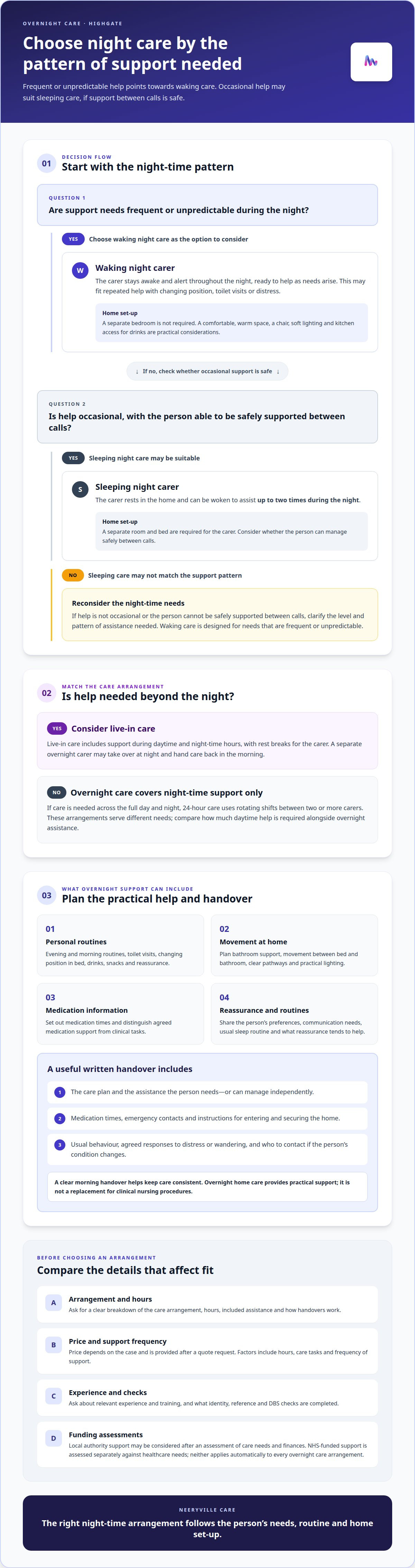
The key difference is whether the carer stays awake. A waking night carer remains alert throughout the night, ready to help whenever needs arise. A sleeping night carer rests in the home and may be woken to provide assistance. Families looking for an overnight awake carer in Highgate can consider waking support when night-time needs are frequent or unpredictable.
For example, repeated help with changing position, toilet visits or distress may call for a carer who stays awake. If support is occasional, sleeping care may be suitable, provided the person can be safely supported between calls. Sleeping care requires a separate room and bed for the carer; waking care does not require a bedroom. Choose based on the type and pattern of help needed, not simply a preference for overnight company.
Overnight care covers night-time support only. Live-in care includes support during daytime and night-time hours, with rest breaks for the carer. A separate overnight carer may also take over from a regular live-in carer at night, then hand care back in the morning. By contrast, 24-hour care uses rotating shifts between two or more carers. These arrangements serve different needs, so families can compare how much daytime help is required alongside overnight assistance.
Older people may need practical help, reassurance or support with their routines at home. Dementia can bring additional challenges at night: the Alzheimer’s Society notes that someone with dementia may become disorientated in the dark after waking to use the toilet. A waking carer can respond as needs arise, while a sleeping carer may suit less frequent calls. The person’s usual night-time pattern is a useful starting point when choosing between them.
When comparing agencies, ask for a clear breakdown of the care arrangement, hours, what assistance is included and how handovers work. The price depends on the case and is provided after a quote request; factors include the hours, care tasks and frequency of support. Ask whether carers have relevant experience and training, and what identity, reference and DBS checks are completed. These are sensible comparison points, not a claim that every role has identical requirements.
Local authority support may be considered following an assessment of care needs and finances; NHS-funded support is assessed separately against healthcare needs. Neither form of funding applies automatically to every overnight care arrangement in Highgate. NeeryVille Care can help families explore NHS Continuing Healthcare and local authority support.
For confidence about safe, respectful support at home, families can read about safeguarding practices alongside considering the person’s night-time routine and level of assistance.
Overnight personal care and medication support
Night-time help can involve more than being present. An overnight carer may support evening and morning routines, toilet visits, changing position in bed, drinks, snacks and reassurance. For example, someone who wakes needing help washing or settling again may value calm, practical assistance at home. Support should reflect the person’s routine, preferences and care plan while protecting their dignity and privacy.
Medication needs call for clear communication. A written handover for overnight care should set out the care plan, medication times, emergency contacts and instructions for entering and securing the home. This gives the carer practical information for the shift and supports a consistent morning handover. The care plan should distinguish agreed medication support from clinical tasks, so the carer’s role and any concerns are clear.
For someone living with dementia, waking at night can bring confusion or distress. The Alzheimer’s Society notes that people with dementia may become disorientated in the dark when they wake to use the toilet. A familiar routine, gentle reassurance and clear pathways through the home can help someone feel more settled. If wandering is a concern, the handover should describe the person’s usual behaviour and the agreed response, rather than relying on assumptions.
Complex needs can make nights less predictable. A person may need help repositioning, support to reach the bathroom, or reassurance during periods of discomfort. The care plan should explain what the person can do independently, what assistance they need, and who to contact if their condition changes. If support involves intensive physical assistance, two carers may be needed to meet the person’s needs safely.
After an operation, overnight support can help with everyday routines as someone returns to living at home. This might mean help getting settled, reaching a drink or moving safely between the bed and bathroom. A useful handover records the person’s routine, relevant medication times and emergency contacts. Overnight home care provides practical support, but it is not a replacement for clinical nursing procedures.
Families can prepare for the first night by sharing the written care plan and explaining the person’s preferences, communication needs and usual sleep routine. Include how the home is entered and secured, where essential items are kept, and what reassurance tends to help. For dementia-related needs, dementia care at home can form part of a wider plan for support through the night.
Sleeping night care
Sleeping night care suits someone who may need occasional help but does not usually need a carer awake throughout the night. The carer rests in a separate bedroom and can provide assistance up to two times during the night.
Waking Carer Comfort and Kitchen Access
A waking night carer stays awake, so the room should support alert, quiet care. A comfortable chair, a warm space and access to the kitchen for drinks are practical considerations. Soft lighting can help the carer stay alert without disturbing someone sleeping nearby.
Sleeping care has different room requirements: the carer needs a bed and a private room near the person they support. Fresh linen and a clear route between rooms make the arrangement more comfortable. Consider whether the room offers enough privacy for the carer while keeping them close enough to respond to a call.
Frequent or unpredictable needs, such as repeated toilet visits, may make waking care more suitable. Occasional calls may fit sleeping care, where the carer rests between requests. Consider whether help is needed once in a while or repeatedly during the night, and whether the person can safely wait for a resting carer to wake.
Areas Served Overnight
In Highgate, Haringey and nearby areas, night care arrangements should reflect the home’s layout and the person’s routine. For example, a bedroom upstairs and a bathroom downstairs may affect how the carer responds to toilet requests. A clear route, suitable lighting and access to essential items can make night-time assistance more practical.
Households should also consider where a sleeping night carer can rest. Sleeping care requires a private bedroom near the person, while waking care calls for a comfortable place to remain alert. These different arrangements mean the available space can help clarify which type of night care will work at home.
Arranging Regular Night Support
Regular waking night care can suit someone whose needs arise often or unpredictably, including repeated reassurance or help changing position. Before support begins, outline the usual bedtime routine, expected assistance, entry instructions and morning handover. This helps the night carer understand a typical shift and what changes should be shared.
The timing and type of night care depend on when support is needed, the person’s routine and the practical arrangements required. Start by describing a typical night, including calls for help, toilet visits and any periods of distress. That detail helps shape a regular plan around the person’s actual needs.
Mobility assistance and bathroom visits
A night-time bathroom visit can involve several steps: sitting up, standing, walking and lowering onto the toilet. An overnight carer may assist with these movements, help the person reposition in bed and offer reassurance if they wake unsettled. Support should follow the person’s mobility and usual routine, rather than rushing them through a familiar task.
Falls are a concern when someone is tired, disorientated or unsteady on their feet. A waking night carer stays alert and can respond when help is needed. This may suit someone who regularly needs assistance to reach the bathroom or change position. For occasional calls, sleeping night care may be appropriate, but remember that the carer needs to wake before helping.
Make the route between the bed and bathroom easier to follow. NHS inform recommends night lights in the bedroom, hallway and bathroom, along with a lamp within reach of the bed. Clear pathways matter too: a loose rug, trailing cable or misplaced walking aid can obstruct a person’s usual route. Keep essential items in familiar places, and make sure the person can reach their call bell or phone if they use one.
Before night care begins, describe how the person normally transfers from bed to chair or toilet. Explain whether they use a walking aid, need a steadying hand or require help with clothing and personal care. Include how they communicate discomfort and what helps them stay calm. These details help the carer understand the expected support and notice when the person is moving differently from usual.
Private overnight care can carry risks if the person’s mobility needs exceed the carer’s ability, or if responsibilities and emergency arrangements are unclear. Reduce these risks with a written care plan, clear handovers, agreed duties and emergency contacts. Explain how to enter and secure the home, and describe the help needed during a bathroom visit. If one carer cannot move the person safely, the plan should include additional assistance rather than rely on a difficult transfer.
For someone who needs frequent toilet visits, waking night care provides a carer who remains awake and ready to respond. Choose the arrangement based on how often assistance is needed, the movements involved and whether help can safely wait. A practical night-time plan also covers drinks or snacks, repositioning and what to do if the person feels unwell. Review the plan as mobility, confidence or bathroom routines change.
Waking overnight care
Waking night care means a carer stays awake throughout the agreed night-time shift. This can suit someone whose needs are frequent or difficult to predict, such as help changing position, agreed medication support or reassurance during distress. A waking carer does not need a bedroom, but does need a comfortable place to remain alert. Support takes place in the person’s own home, around their routine and preferences.
There is no single schedule for every household. A waking-night visit may begin around 9pm and last about 10 hours, while overnight care arrangements can cover different night-time periods. The important question is when the person needs assistance: someone unsettled soon after bedtime may need a different plan from someone who wakes repeatedly later. Share the usual pattern, including what tends to help the person settle again.
For example, a carer can respond when someone wakes confused, needs the toilet, asks for a drink or feels anxious. For a person with dementia, a familiar voice and calm reassurance may help them feel less alone in a dark, unsettling moment. The carer can also observe changes in the person’s condition and follow the agreed care plan. This can reassure relatives who might otherwise feel they need to stay alert to every sound.
Waking night care may suit someone who needs support at unpredictable times, rather than occasional assistance only. A sleeping carer rests between calls; a waking carer remains alert and ready to respond. That distinction matters if waiting for someone to wake could leave the person distressed or unable to move safely. Choose according to the person’s actual night-time pattern and support needs.
Overnight support can also benefit a household with a live-in carer. A waking night carer can take over during the night and hand care back in the morning, giving the regular carer a break. For a family providing daytime support, planned waking care can create protected time to rest. Companionship matters alongside practical assistance: a steady presence can help someone feel more settled at home.
Before the first shift, agree on the routine, medication times, emergency contacts and instructions for entering and securing the home. Include what to do if the person becomes distressed, needs help repositioning or shows a change in condition. A clear handover helps the waking carer respond consistently, while a comfortable chair, warm room and access to kitchen drinks support alertness through the night.
A family looking for an overnight awake carer in Highgate can start by describing the person’s night-time needs and the support that would help them feel more reassured at home.
NeeryVille Care: overnight care at home
NeeryVille Care provides Overnight Care at Home for people who need support during the night while remaining in familiar surroundings. Waking night care can help when needs arise frequently or unpredictably; sleeping night care may suit someone who needs occasional assistance. The right arrangement depends on the person’s routine, care needs and daytime support.
Where needs extend beyond night-time, Live-In Care or Visiting Care can form part of a wider plan. NeeryVille Care also provides Dementia Care shaped around a person’s individual routines and preferences. Families can discuss what happens overnight and what kind of help would make staying at home more manageable.
Contact NeeryVille Care to talk through overnight support at home.
Take the next step towards calmer nights
Choosing an overnight awake carer in Highgate starts with the person, not a standard rota. Notice what makes nights difficult, what helps them feel settled and how they prefer to receive assistance. A short record of bedtime routines and night-time changes can turn worried observations into a clearer conversation about support.
It can also help to include the person receiving care in decisions, at a pace that feels comfortable for them. Discussing preferences together can preserve a sense of control and make a change at home feel more familiar. Families do not need every detail resolved before starting that conversation.
A thoughtful next step can make nights feel more manageable for everyone. Start with what matters most to your family, then take the conversation from there.
Frequently Asked Questions
What is overnight care?
Overnight care is support provided at home during night-time hours, shaped around the person’s needs. It can be waking care, where the carer remains awake, or sleeping care, where the carer rests between requests for help. For example, a household might arrange overnight support when a relative needs help settling at bedtime and again before the morning routine.
What is night care?
Night care describes practical or personal support during the hours a person would usually be asleep. It can be part of home care and focus on one need, such as getting ready for bed, or a wider night-time routine. The term alone does not say whether the carer stays awake, so clarify the arrangement and the support expected during the shift.
What does an overnight caregiver do?
An overnight carer supports the person’s agreed routine at home, responding to their individual care needs during the shift. This may include help settling for bed, personal care, drinks, companionship or support when the person wakes. Families can share preferences such as how the person likes to be addressed, which routines feel familiar and what information should be included in the handover.
What information should you prepare before the first night?
Prepare a concise outline of the person’s usual evening and morning routines, preferred name, communication needs and personal preferences. Note where useful items are kept, such as glasses, hearing aids or mobility equipment. Include household entry and security instructions, emergency contacts and who should receive a morning update. A written handover helps the carer follow the same routine without relying on memory.
What does an overnight awake carer in Highgate do?
An overnight awake carer in Highgate stays awake during the agreed shift and supports the person at home as needs arise. The care plan can set out the person’s routines, preferences and priorities for support. This arrangement can provide a clear handover between daytime support and night-time care.
How much does an awake night carer cost in Highgate per hour or night?
The cost of overnight care depends on the individual arrangement, including the length and timing of the shift and the support required. NeeryVille Care provides a personalised quote after a request, rather than quoting an hourly or nightly figure here. Describe the usual night-time routine and the assistance needed so the proposed arrangement reflects the person’s circumstances.
Which home care agencies provide overnight awake carers in Highgate?
NeeryVille Care provides overnight care at home in Highgate and other North London areas. It is a CQC-regulated home care provider, not an agency. Families can discuss whether waking night care fits the person’s support needs and how night-time care could sit alongside other home support. The most useful starting point is to explain what happens during a typical night and what assistance is needed.
How do awake night care and sleeping night care differ?
With waking night care, the carer stays awake throughout the shift; with sleeping night care, the carer rests and wakes to respond to requests for help. This distinction affects the support available while the person sleeps. For example, repeated assistance may call for a waking arrangement, while occasional calls may suit sleeping care. The person’s needs and available bedroom space both matter.