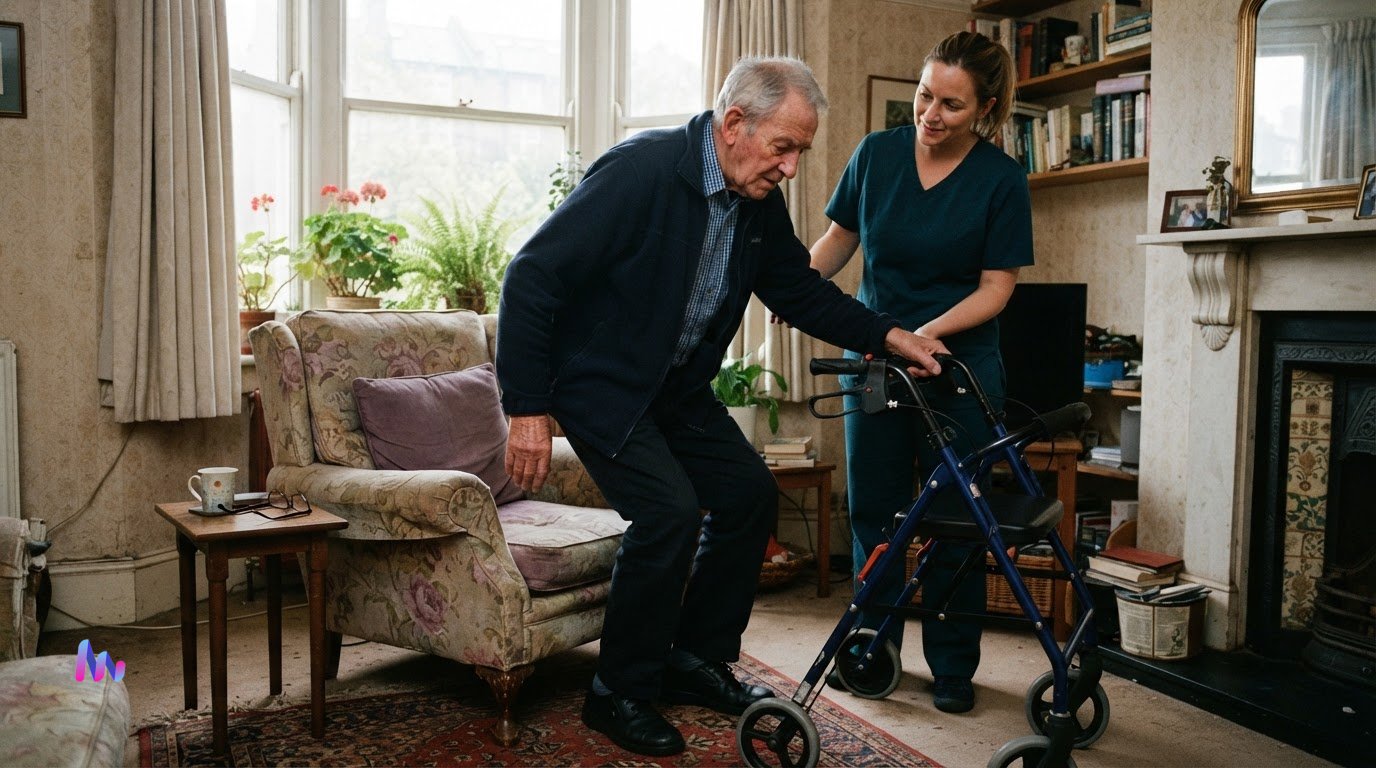
Private carer or care agency in London: compare costs and duties


The cheaper-looking choice can leave more responsibility with your family. In the private carer versus care agency decision in London, a private carer is usually hired directly, so the family manages the arrangement; an agency provides a managed care service. In England, homecare agencies must register with the Care Quality Commission (CQC).
It’s understandable to focus on hourly costs, especially when you’re balancing care decisions with everyday life. But a fair comparison also considers who arranges checks, takes on employment responsibilities, provides cover when a carer is away, and plans and records the care.
This guide explains how private carers and care providers differ in cost, checks, responsibilities and support, including live-in care. You’ll see what to consider when hiring directly and how a managed service can make care easier to organise. The aim is to help you make a clear decision with your loved one’s safety, preferences and dignity in mind.
Table of Contents
1. Live-in care agencies in London: which way is the best way?
Choosing between a private carer and a care provider in London means comparing the whole arrangement, not just an hourly rate. A private carer is hired directly by the person receiving care or their family. With a managed provider, families receive a care service rather than employing the carer themselves. This affects who organises care, handles administration and responds when routines change. A family arranging daily help, for example, may value a provider that coordinates visits, while another may prefer to agree hours and duties directly.
Live-in care has a different cost structure from hourly home care. The carer lives in the person’s home, and providers typically charge a weekly rate shaped by the carer’s experience and the demands of the work. A family comparing arrangements should list the support needed across the week, including overnight assistance and breaks. They should also consider whether the home can accommodate a live-in carer, including a spare room. For a London-specific overview of live-in care in London, consider how a resident carer’s presence would fit the person’s home and routine.
Hiring directly can look less expensive at first, but the hourly rate is only one part of the comparison. Families may also need to manage administration, insurance and cover for sickness or holidays. A managed care service includes care organisation, so compare responsibilities as well as the care itself: who sets the schedule, coordinates changes and arranges replacement support? The right comparison reflects your family’s time and capacity, not just the quoted rate.
For hourly home care, the amount paid depends on visit length, frequency and the tasks involved. A short visit for a meal or medication support differs from several hours of personal care each day. Overnight care also depends on the type of support: waking-night care involves a carer staying awake, whilst sleeping-night care involves a carer sleeping between calls for help. These arrangements address different routines, so compare the expected duties as well as the charging basis. The price depends on the case and is given after a quote request; care hours, visit pattern and support needs affect it.
For self-funded home care, an agency sends a monthly bill. Live-in care is typically charged weekly, so compare the billing period and what the arrangement covers before deciding. List the expected visits, overnight needs and likely changes in support, then weigh those against the family’s caring responsibilities. In England, homecare agencies must register with the Care Quality Commission. Registration is one part of comparing an agency, alongside its care arrangements and how it handles day-to-day coordination.
2. Private-carer checks and employment responsibilities
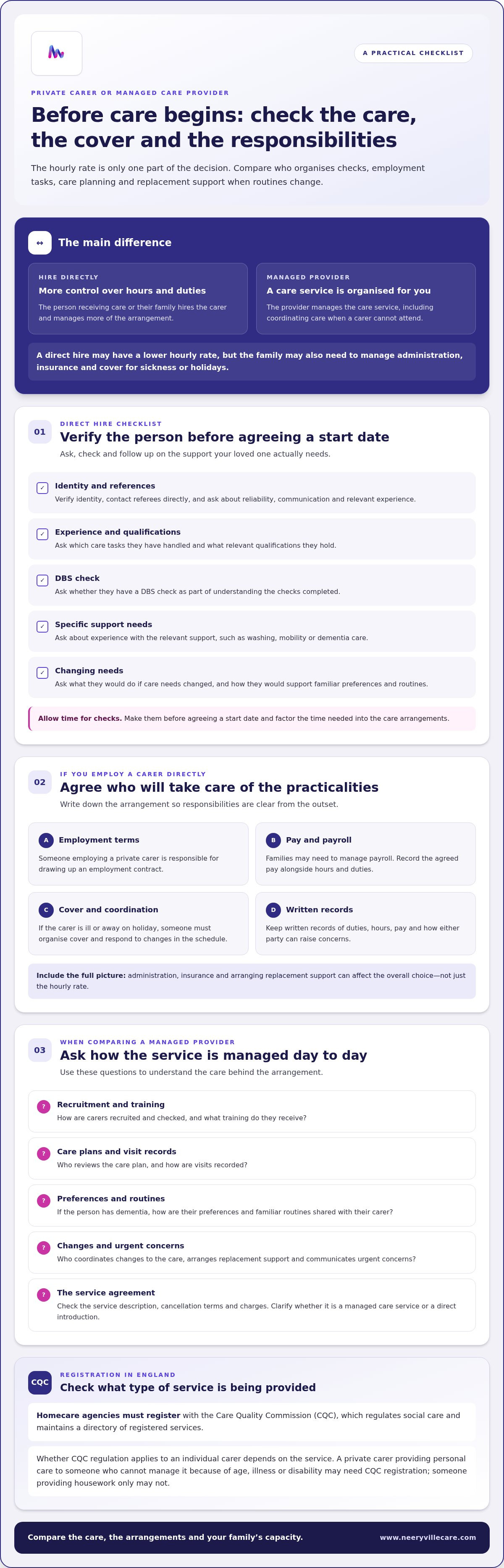
To find a private carer in London, use a reputable job advert or personal recommendation, then verify their identity, references, experience and relevant qualifications. Ask what care tasks they’ve handled, whether they have a DBS check, how they support someone with dementia, and what they would do if needs changed.
Make checks before agreeing a start date. Contact referees directly and ask about reliability, communication and experience with the specific support needed, such as help with washing or mobility. These steps take time, so factor them into your care arrangements.
In England, homecare providers must register with the Care Quality Commission (CQC), which regulates social care and maintains a directory of registered services. Whether regulation applies to an individual carer depends on the service provided. A private carer providing personal care to someone who cannot manage it because of age, illness or disability may need CQC registration; someone providing housework only may not.
When comparing care providers, ask how carers are recruited and checked, what training they receive, who reviews the care plan and how visits are recorded. If the person has dementia, ask how their preferences and familiar routines are shared with their carer. Also find out how urgent concerns are communicated. These questions clarify how the care is managed, not just how it is arranged.
Read a care agreement carefully before signing. Check the service description, cancellation terms and charges, and clarify whether the arrangement is a managed care service or a direct introduction. Find out who organises the care plan, supervises the work and responds if a carer cannot attend. NeeryVille Care is a directly CQC-regulated managed provider, not an introductory agency.
Hiring directly also means deciding how to document the working relationship. Someone employing a private carer is responsible for drawing up an employment contract, and families may need to manage references, checks and payroll. Keep written records of agreed duties, hours, pay and how either party can raise concerns. Clear terms reduce uncertainty when care needs or schedules change.
The key distinction is who takes on the practical responsibilities. A managed provider organises its care service, while a family hiring directly handles more recruitment and employment tasks. Before choosing, write down the support needed and checks completed. Then compare that list with the service agreement or direct-hire arrangements, including how safety concerns will be handled.
3. Is it not cheaper to employ a care worker directly?
Hiring directly may have a lower hourly rate, but the family also takes on responsibilities that affect the overall arrangement. If the carer is ill or away on holiday, someone must organise cover. A managed provider coordinates care when a carer cannot attend. Compare the cost with the time and coordination your family can realistically provide.
Continuity matters when care follows a settled routine. A familiar carer may know how someone likes breakfast, when they need help dressing and how they communicate discomfort. If that carer is absent, a replacement needs clear information to keep support consistent. Share agreed routines, essential tasks and emergency contacts in a written care plan, so instructions are easy to follow.
With a privately hired carer, the family may need to arrange cover for sickness and holidays. That can mean finding another suitable worker, explaining the person’s needs and arranging access to the home. If relatives are already managing work, appointments and caring duties, even a short absence can add pressure. Plan who will respond, where care instructions are kept and how urgent changes are communicated.
An agency can arrange a replacement when a regular care worker is unavailable, including during illness or holidays. That offers a route to continued visits, though the substitute may be less familiar to the person. A practical assessment of continuity should consider the care plan, visit notes and how information reaches replacement staff. For example, notes about a preferred transfer method or evening routine can help a new worker provide more joined-up support.
Insurance also depends on how care is arranged. Families employing a carer directly may need to arrange insurance themselves, alongside cover for absences. A platform that introduces families to carers is not automatically the employer or insurer, so clarify who is responsible in that arrangement. Keep the carer’s employment status and the platform’s role distinct, and identify who handles an accident, missed visit or complaint.
Before choosing, write down the cover plan for a normal week, a planned holiday and an unexpected illness. Identify who will contact a replacement, pass on care instructions and manage an emergency. Then compare your plan with how a managed provider handles unavailable staff. Hiring directly may suit a family with time and reliable backup; a managed service can reduce the work of arranging cover and coordinating care.
4. Employer responsibilities when hiring a private carer
If you pay a carer directly, you’re their employer, even when funding comes through council direct payments or the NHS, according to the UK Government. Families arranging personal care should understand the employment responsibilities before hiring, including payroll, written terms, insurance and making the home a safe workplace.
Who handles tax, National Insurance, pension and holiday pay when employing a private carer in the UK? If you employ the carer, you’re responsible for registering as an employer with HMRC and operating PAYE, including income tax and National Insurance deductions. You must also arrange pension provision and applicable holiday, sick and maternity pay.
Write down the employment terms before care begins. The contract should set out duties, working hours, pay arrangements and how either party can raise concerns. For example, distinguish personal care tasks from household help so expectations are clear. ACAS provides advice for new employers, including information about employing personal care workers.
What insurance and legal responsibilities apply when hiring a private carer directly in England? Direct employers may need to consider insurance, employment and health and safety responsibilities, and make sure the home is safe for the carer. The home is the carer’s workplace, so consider hazards such as loose rugs, unsafe equipment or blocked routes before visits begin.
Direct employers also need to arrange and fund the carer’s training and personal protective equipment (PPE). Match training to the agreed tasks, then record what has been covered and when. For example, a carer helping someone move around the home needs suitable instruction for the support expected. Clear records help everyone understand the agreed approach.
A managed care arrangement changes who organises employment matters. Families buy a care service rather than employing the worker directly, and the provider handles employment responsibilities for its staff. Read the agreement carefully to understand what the provider manages and what remains the family’s responsibility. The service terms should make this distinction clear.
Funding does not, by itself, remove employer responsibilities. A family paying a personal assistant directly through a council direct payment or NHS funding remains the employer, according to the UK Government. Keep funding records separate from employment documents, and retain payslips, agreed hours and contract changes together. This makes the arrangement easier to track.
Before hiring directly, make a responsibility list covering HMRC registration, PAYE, pensions, pay entitlements, insurance, training and workplace safety. Assign each task and keep the relevant records together. If your family cannot manage these duties alongside caring, a managed service can reduce the employment administration you handle directly.
5. What private carers and care agencies provide
The practical difference is not simply who enters the home. A private carer and a managed provider can both support daily living, but families usually agree duties directly with a private carer. A provider may organise a broader service, including recruitment, a care plan, staff checks, training and oversight. This structure can matter when support shifts from companionship to personal care or regular medication prompts.
Home care can follow different schedules. A paid carer may visit for as little as an hour a week or several hours a day. Support might include companionship, light housekeeping, meal preparation or help with washing. Care can be temporary, such as during recovery, or continue long term. Start by listing the tasks, preferred visit times and routines that matter to the person receiving care.
A privately hired carer may suit a clearly defined arrangement when the family can coordinate duties and day-to-day communication. Families can agree how support fits around meals, appointments and personal preferences. References and relevant experience can help inform the match, while written notes can explain routines, such as how the person likes their morning organised. The family is then responsible for keeping instructions current as needs or circumstances change.
A managed provider can bring more structure to regular visits and changing needs. The care plan should set out the agreed support, while visit notes record what happened and what may need follow-up. For example, notes can track changes in appetite, more frequent falls or increased confusion, helping families spot patterns. Reviews can help adapt the plan as needs change.
The care plan should balance safety with independence and choice. Someone may want help preparing breakfast but prefer to choose their clothes or complete familiar tasks themselves. Share these preferences during the assessment and discuss how they should be recorded. For dementia support, familiar routines and clear instructions can help carers provide person-centred assistance without taking over tasks the person can still manage.
When comparing care arrangements, look beyond the task list. Consider who coordinates visits, updates instructions, records changes and follows up concerns. A provider’s recruitment, vetting and training processes can be useful when care is regular or includes personal support. Hiring directly may give the family more control over the relationship and schedule, alongside greater responsibility for coordination. Choose an arrangement that matches the person’s needs and your family’s capacity.
NeeryVille Care: Live-in Care
NeeryVille Care provides live-in care for people who need ongoing support at home and for families seeking a managed care arrangement. A dedicated caregiver lives in the person’s home, helping support daily routines, comfort and independence. NeeryVille Care is CQC-regulated, giving families a clear point of reference when comparing home care options.
Support also includes dementia care, domiciliary care and end-of-life care. These services can help when needs involve familiar routines, scheduled visits or compassionate support at home. The right arrangement depends on the person’s care needs and the family’s preferences.
If live-in support feels relevant to your family, you’re welcome to explore live-in care in London and contact NeeryVille Care to discuss the next step.
Choose the care arrangement that feels right for your family
Choosing between a private carer and a care provider in London is also about the support that feels comfortable at home. Before taking the next step, talk with your loved one about what helps them feel safe, respected and involved in everyday choices. Their preferences can guide the care arrangement, from fitting support into daily life to protecting familiar routines.
It may help to write down what matters most: a trusted relationship, less coordination for relatives, or support that can adapt as needs change. Share those priorities when discussing care, so the conversation starts with the person rather than a checklist. You don’t have to settle every detail at once. A thoughtful first conversation can make the next steps clearer.
Your family can take this one step at a time, keeping your loved one’s dignity and wishes at the centre.
Frequently Asked Questions
2. What do private carers do?
Private carers provide support agreed directly with the person receiving care or their family. Depending on the arrangement and the carer’s role, duties can include companionship, meal preparation, light housekeeping and personal care. A family might agree visits around breakfast and washing, while leaving other daily tasks independent. Set out the expected duties clearly so everyone understands what support is being provided.
3. How much do they cost?
Costs depend on the care arrangement, hours, location and level of support. Hourly visiting care is charged differently from live-in care, which is usually priced by the week. The total household cost can also depend on cover, administration and employment responsibilities. Compare the billing basis and what the service includes, rather than treating an hourly figure as the full cost of care.
4. Is it not cheaper to employ a care worker directly?
Hiring directly can have a lower initial rate, but it isn’t automatically cheaper overall. A family arranging regular visits, for example, must allow for payroll administration and plan who will provide care during sickness or holidays. Compare those responsibilities with a managed service and the time relatives would spend coordinating care. The most affordable arrangement depends partly on the support your family can reliably organise.
5. When should I consider help at home from a paid carer?
Consider paid home care when everyday tasks become difficult to manage safely or family support no longer meets the person’s needs. Care may be temporary, such as during recovery after illness, or continue longer term. Start by noting which tasks need help, when support is needed and what the person wants to keep doing independently. This gives you a clearer basis for planning care around familiar routines.
6. Are carers insured?
Insurance arrangements depend on how the carer is engaged. If you employ a carer directly, you may be responsible for arranging relevant insurance, including employer’s liability cover. A platform that introduces a carer does not automatically employ or insure them. Establish who is responsible for cover in your arrangement, and keep the answer with the employment or service documents.
7. Can you hire a carer without an agency?
Yes. A person or family can hire a carer directly and agree hours, duties and working arrangements with them. If you pay the carer directly, you may be their employer, even when funding comes from council direct payments or the NHS, according to the UK Government. Plan for employment administration as well as the care itself, including agreed terms and cover.
8. Does an agency offer specialist training for conditions like dementia care?
Training varies between care providers. For dementia care, useful preparation can include communicating calmly, respecting established routines and responding appropriately to changes in behaviour. Look for a care plan that reflects the person’s preferences and explains how support should be delivered. Training matters most when it informs practical, consistent care.