Dementia home care choices for elderly parents

A move into residential care isn’t the only option when a parent’s dementia progresses. Dementia home care for elderly parents can range from scheduled visits and respite to a live-in carer, depending on the support they need and whether it’s safe to remain at home. In England and Wales, local authorities provide care needs and carer’s assessments free of charge, regardless of finances; in Northern Ireland, health and social care trusts provide these assessments free of charge.
It’s understandable to feel torn between protecting your parent and respecting their wish to stay somewhere familiar. A care needs assessment can clarify what support could help at home. A carer’s assessment can also consider your needs and whether you need a break.
This guide explains how to explore local support, respite and longer-term care, talk with your parent and manage the emotional side of decisions. It also considers when live-in care at home may suit your family, and when changing needs could make another setting more appropriate.
Table of Contents
1. Local authority and health and social care trust support
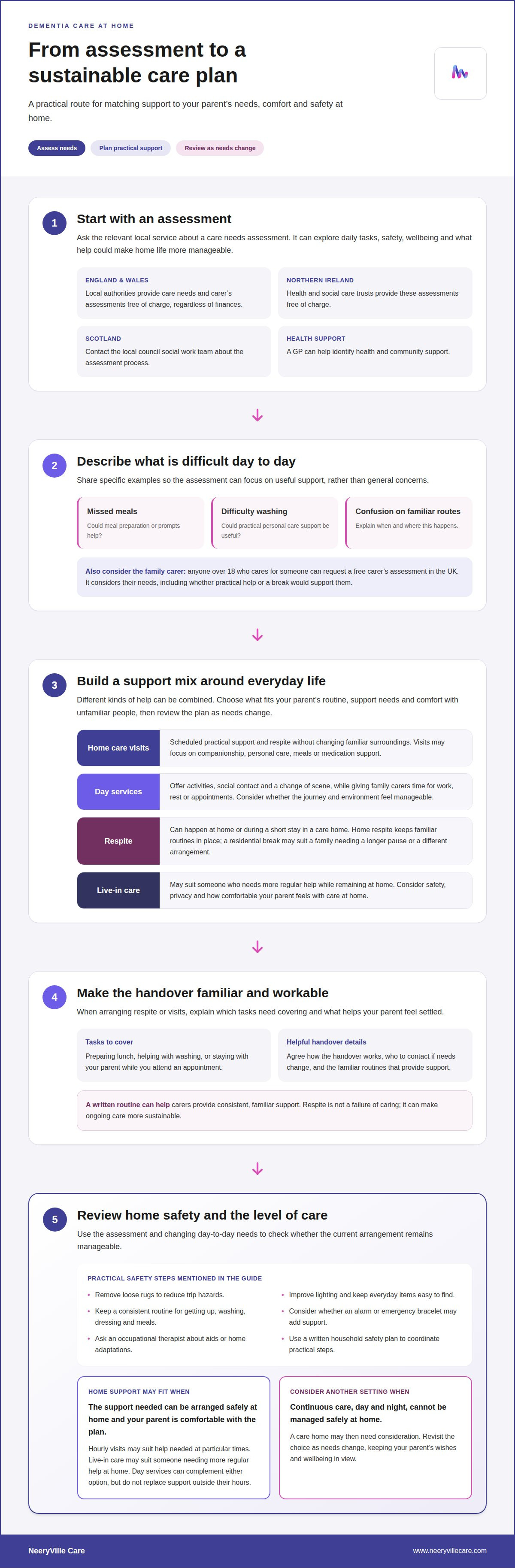
Start by contacting your parent’s local authority social care team to request a care needs assessment. In England and Wales, local authorities provide care needs and carer’s assessments free of charge, regardless of finances. In Northern Ireland, contact the health and social care trust for these free assessments. In Scotland, contact the local council social work team about the assessment process. A GP can also help identify health and community support.
The assessment explores daily tasks, safety, wellbeing and what help could make home life more manageable. Explain specific difficulties, such as missed meals, struggling to wash, or becoming confused on familiar routes. Anyone over 18 who cares for someone can request a free carer’s assessment in the UK. This considers the carer’s needs, including whether practical help or a break would support them.
Local authorities may use direct payments to fund a personal assistant. This can provide flexible support, such as accompanying someone with dementia to a hobby or helping them access community services. Ask how the assessment recommendations could be put in place and whether a personal assistant could support activities that matter to your parent.
A GP can review changes in behaviour or health and discuss appropriate support. An occupational therapist can assess how your parent moves around the home and advise on aids or adaptations, such as walking aids, chair or bed raisers, additional handles and shower stools. If getting to the toilet is difficult, an occupational therapy assessment can explore suitable mobility aids or home adaptations.
Falls, wandering and forgotten appliances can create risks at home. Reduce trip hazards by removing loose rugs, improve lighting, and keep everyday items easy to find. A consistent routine for getting up, washing, dressing and meals can help someone feel more in control. Depending on their needs, a fall alarm, emergency bracelet or front-door alarm may add support. A written household safety plan can help carers coordinate practical steps; safeguarding at home is part of that consideration.
If someone becomes agitated or paranoid, reduce background noise, speak gently and try calming music. Pain, discomfort or infection can contribute to aggressive behaviour, so note changes and share them with the GP. Family and friends can arrange a weekly visit or phone call, or cover care for an hour. The Alzheimer’s Society, Dementia UK and Carers UK can also offer advice and support.
2. Respite care and long-term care options
Dementia home care can combine scheduled visits, respite at home, day services or live-in care. The right mix depends on your parent’s daily support needs, comfort with unfamiliar people and how much time family carers can sustain. Review the plan as those needs change.
Day centres offer structure and activities outside the home. Some suit people with mild dementia, while others provide specialist dementia services. A centre can offer your parent social contact and a change of scene, while giving you time for work, rest or appointments. Introduce the idea gently and consider whether the journey, environment and activities feel manageable for them.
Home care visits can provide practical support and regular respite without changing your parent’s surroundings. Depending on the care plan, visits may focus on companionship, personal care, meals or medication support. A carer’s assessment may also recommend someone else taking over care so you can have a break. Protecting time for your own health and relationships can help prevent exhaustion.
Respite care can take place at home or during a short stay in a care home. Home-based respite keeps familiar routines in place; a residential break may suit a family needing a longer pause or a different arrangement. The choice depends on your parent’s needs, response to change and available support. Respite is not a failure of caring. It can make ongoing care more sustainable.
To arrange respite, start with recommendations from the care needs and carer’s assessments. Describe the tasks that need covering, such as preparing lunch, helping with washing or staying with your parent while you attend an appointment. Agree how the handover will work, what helps your parent feel settled and who to contact if their needs change. A short written routine can help carers provide familiar support.
For longer-term care, compare how each option fits your parent’s daily routine. Hourly home care may work when support is needed at particular times. Live-in care may suit someone who needs more regular help while remaining at home. Day services can complement either arrangement, but do not replace support at home outside their hours. If continuous care day and night cannot be managed safely at home, a care home may need consideration.
If support at home could help your parent and give you planned respite, explore dementia care at home as one possible part of the plan.
3. Emotional considerations when choosing care
A dementia diagnosis can change family roles as well as daily routines. Your parent may feel embarrassed about needing help with dressing, washing or medication, while you may feel guilty about accepting support. Name the specific concern, then discuss one practical adjustment at a time. For example, agree that a carer helps with morning washing while your parent chooses their clothes and toiletries.
Talk about future wishes early, while your parent can express preferences. Discuss what matters most: staying near friends, keeping a pet, familiar meals or privacy. Write down their views and revisit them as dementia progresses through its stages. If siblings or other relatives disagree, focus the conversation on the parent’s wishes and the support needed to preserve their wellbeing.
Professional dementia care can ease pressure on relatives, but introducing someone new may feel unsettling. Start with a clear care plan covering familiar routines, preferred names, communication style and activities your parent enjoys. A carer who understands why your parent resists showering, for instance, can offer choices and protect their dignity rather than rush. The arrangement should also consider everyone living in the home, not only the person receiving care.
When choosing home care, review the provider’s care plan, safeguarding approach and staff supervision. When choosing home care, ask the provider how it monitors care quality and what information it can share about its service. Consider whether the proposed support addresses your parent’s needs, such as medication prompts or help with washing, and whether the care plan explains how changes are recorded and shared with family.
There isn’t one dementia qualification that answers every family’s concerns. Carers should have preparation relevant to dementia, understand person-centred support and communicate calmly when someone feels confused or distressed. Look for practical examples of how they adapt routines, protect dignity during personal care and respond to changing behaviour. A good care plan also explains how the carer’s role fits around your parent’s routines and preferences.
Ask for the emergency and out-of-hours arrangements to be written into the care plan, including whom relatives contact and what happens if a visit is missed. For an immediate threat to someone’s safety, call 999; routine changes should follow the agreed care contact route.
A care home may be worth considering if your parent needs continuous care day and night that cannot be managed safely at home. The decision is not a measure of family love. Compare what each setting can provide, including supervision, meaningful daily activities, familiar relationships and privacy. If you feel anxious, low or unable to cope, contact your GP and explain which parts of caring are becoming hardest.
4. Communicating with someone with dementia
Dementia can affect memory, emotions and character, making familiar conversations difficult. Your parent might lose a word, repeat a question or misunderstand a request. Treat these changes as symptoms, not deliberate rudeness. Pause, notice what seems challenging and adjust how you speak rather than correcting every mistake.
Choose a quiet moment and reduce competing noise, such as a television or radio. Stand where your parent can see you, say their name and use a calm voice. Keep sentences short and give one instruction at a time. Instead of asking, “Would you like to get ready and go out?”, try, “Shall we put on your coat?”
Allow time for an answer. Your parent may need longer to understand a question or find the words they want. Avoid finishing their sentences unless they ask for help. If they can’t follow a long explanation about lunch, offer a simple choice: “Would you like soup or a sandwich?” This supports their involvement without adding pressure.
Use clear choices: Offer two options, such as the blue jumper or the green one.
Keep gestures natural: Point towards the cup when offering tea, while keeping your expression relaxed.
Stay with the feeling: If your parent says they need to go home, acknowledge that they sound worried before changing the subject.
Try another approach: If a question causes distress, pause and return to it later in a calmer setting.
Non-verbal cues matter too. Your parent may notice a hurried movement or tense expression, even when your words sound reassuring. Sit at eye level when discussing a difficult choice, and avoid speaking about them as though they aren’t present. During personal care, explain each step before helping, then offer privacy and time to respond.
Memory changes can make a correction confusing or upsetting. If your parent remembers an event differently, focus on the feelings behind the account rather than arguing over details. For example, if they worry about a family member who has died, respond kindly to the concern, then gently shift their attention with a familiar activity or photograph.
Share useful communication approaches with relatives and carers. A brief note can record the name your parent prefers, topics they enjoy, words that cause distress and what helps them settle. Update it as symptoms change. Consistent responses from the people around them can make everyday conversations more predictable and respectful.
5. Live-in care at home
Live-in care generally involves a paid carer staying in the person’s home to provide support. For families considering dementia home care for elderly parents, this brings support into familiar surroundings as needs become more involved. It may suit someone who needs regular assistance and wants to remain at home.
Support can include practical help with personal routines, meals, medication and companionship. For example, a carer might help with washing in the morning, encourage a familiar hobby after lunch and support your parent to settle in the evening. The care plan should reflect the person’s habits and preferences, not simply list tasks to complete.
Careful planning matters, even when symptoms are severe. A live-in carer can provide personal assistance and support throughout the day and night. However, a professional’s presence may feel confusing to someone with dementia, including someone with Alzheimer’s disease. It can also change how home feels for other household members. Discuss the arrangement gently and introduce changes at a manageable pace.
Consider safety alongside comfort. Someone who forgets to turn off the oven or electrical equipment may face danger. Falls on stairs and repeatedly leaving the house can create further concerns. Adaptations might include changing the layout, reducing hazards or moving a bedroom downstairs as needs change. A written plan can help relatives and carers respond consistently if your parent becomes unsettled or leaves home.
Live-in care isn’t automatically the right answer for every family. Consider whether your parent welcomes support at home, whether the household can maintain privacy, and whether the arrangement can meet their needs. A local authority or health and social care trust may contribute towards professional homecare, but usually won’t fund care for every part of the day and night. Funding can therefore influence the options available.
When weighing dementia home care for elderly parents, consider overnight support, the routines that need help and how the plan could change over time. Scheduled visits may suit support needed at particular times, while live-in care provides a carer in the home. A care needs assessment can help identify support needs. Relatives can agree how to stay involved through visits or calls, while giving your parent and carer time to build familiarity.
Live-in care offers support at home, but it requires thoughtful preparation and can affect everyone in the household. Discuss the routine, personal space, safety concerns and each person’s needs before making changes. If staying at home can no longer meet your parent’s need for continuous care, review the plan as their circumstances evolve.
NeeryVille Care: Live-in Care
NeeryVille Care provides live-in care for families considering support at home as dementia needs change. A carer living in the home can provide day-to-day assistance and companionship, helping maintain familiar routines and surroundings. Support is tailored to the person and includes dementia care and help with daily living.
As a CQC-regulated home care provider, NeeryVille Care can discuss whether live-in care or visiting care better fits your parent’s needs. Live-in care may be worth exploring when scheduled visits no longer provide the support your family needs, while remaining at home still feels right. The decision should account for your parent’s wishes, household needs and level of care required.
Contact NeeryVille Care to discuss dementia support at home and the options available to your family.
Take the next step at a pace that feels right
Deciding on dementia home care for elderly parents doesn’t require settling every future question at once. Begin with one practical family conversation: what matters most to your parent now, what feels hardest at home and which change could bring greater stability. Record their wishes in their own words, then revisit them as circumstances and preferences evolve.
Agree who will coordinate updates with relatives and care professionals, and when the family will revisit the plan. A shared starting point can help everyone contribute without placing every decision on one person. If live-in care feels worth exploring, NeeryVille Care can help you consider how support at home could fit your parent’s circumstances.
You don’t need every answer before beginning. Listen, take one step at a time and let the plan grow with your family.
Frequently Asked Questions
How can I support someone as their dementia progresses?
Adapt your support as your parent’s abilities and preferences change. Keep a simple record of what they can manage, what causes distress and which activities they still enjoy. For example, they may need help choosing clothes but still enjoy laying them out. Review the record with relatives and carers, and include your parent in everyday decisions wherever possible. Small, familiar choices can help preserve independence and dignity.
How do I manage financial and legal issues?
Discuss a Lasting Power of Attorney while your parent can make and communicate decisions. It allows someone they appoint to make decisions on their behalf when they’re no longer able to. A third-party mandate can give someone permission to manage a bank account. If your parent can no longer make or communicate decisions and has no Lasting Power of Attorney, an application to the Court of Protection can seek a deputy or decision-making authority.
What support is available to me?
Support can include a carer’s assessment, help from relatives and peer groups. Use the assessment to explain the impact caring has on your sleep, work, health and relationships, then discuss what support could ease that pressure. Carers UK and the Alzheimer’s Society offer advice, while local dementia groups can provide contact with people facing similar challenges. If caring leaves you feeling anxious or low, speak with your GP.
How much does dementia home care cost per hour in the UK?
There isn’t one hourly rate that applies to every dementia care arrangement. The price depends on the care arrangement, visit schedule, support tasks and level of assistance, and is given after a quote request. For example, a plan involving help with personal care and medication support may differ from companionship visits. If comparing a scheduled visiting arrangement with live-in care, consider the hours and type of support needed, not just an hourly figure.
Can people get local council funding for dementia care at home?
Yes, a local council can contribute towards professional home care following an assessment of care needs. The assessment identifies support required at home, and direct payments may fund a personal assistant. Council funding usually won’t cover care for every part of the day and night, so establish which needs the proposed support addresses. In England and Wales, the care needs assessment is free, regardless of the person’s financial situation.
What support is available for family carers, including respite care and benefits?
Family carers can seek an assessment, arrange respite and explore whether benefits apply. Depending on age and care or mobility needs, a person with dementia may qualify for Personal Independence Payment or Attendance Allowance. A diagnosis alone doesn’t automatically qualify them. For a break, agree a specific handover with a relative or friend, such as covering a meal or appointment, and record essential routines so your parent receives familiar support.
When should someone with dementia move from home care to a care home?
Consider a care home if changing needs mean your parent requires continuous care day and night that can’t be managed safely at home. Review the situation if essential support remains unmet despite adjustments to the care plan, or the household can no longer sustain the arrangement. Include your parent’s wishes and the views of those involved in their care. The decision should reflect safety, wellbeing and the support each setting can provide.