Live-in carer food and board costs, allowances and meals

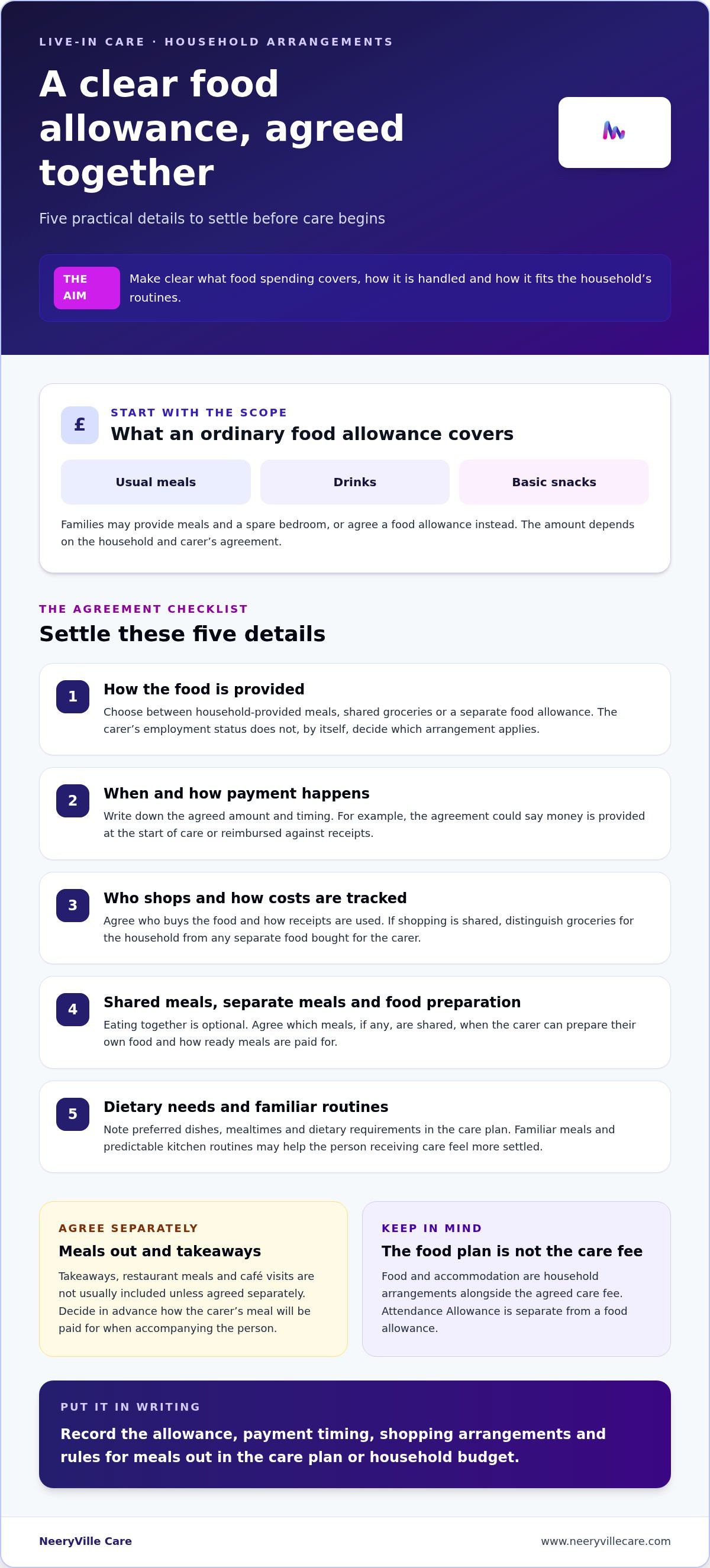
For live-in carer food and board costs, families usually provide meals and a spare bedroom or agree a food allowance as part of the household arrangements. Shared meals are optional: the carer and the person receiving care can eat together or separately, depending on the household’s preferences. An allowance generally covers the carer’s usual meals, drinks and basic snacks.
It’s understandable to want these details settled before someone new joins the household. Food, privacy and everyday routines all matter when care takes place at home. A practical arrangement includes a private bedroom, access to kitchen and bathroom facilities, and clear agreements about meals and household shopping.
This article explains how families can agree a food allowance and manage shared shopping, meals out and other food costs. It also covers reasonable accommodation and how to discuss the household’s and carer’s needs before care begins. Clarifying these details can make the change feel more manageable and help the person receiving care stay comfortable at home.
Table of Contents
Do live-in carers pay for their own food?
Families commonly provide a live-in carer’s meals and a spare bedroom, or agree a food allowance instead. Set out the arrangement clearly before care starts.
Included meals and accommodation
Meals and accommodation are household arrangements that support a carer living in the person’s home during a placement. Families usually provide meals, a spare bedroom and occasional travel expenses. A food allowance generally covers ordinary meals, drinks and basic snacks. Agreeing which option applies helps everyone understand what the household budget covers, rather than leaving food costs unclear.
Whether the carer is employed or self-employed does not, by itself, determine whether meals are provided or an allowance is agreed. The household and carer can settle an arrangement that fits the household routine, care plan and way the placement is organised. For example, the family might buy shared groceries, while the carer buys separate food using an agreed allowance.
Providing a room or meals does not automatically mean an employer can deduct their value from wages. If the family employs the carer, agree any proposed deduction in writing and handle pay under the relevant employment arrangement. A self-employed carer’s fees are managed under the terms agreed with them, rather than through a family payroll deduction.
Meal sharing and preparation
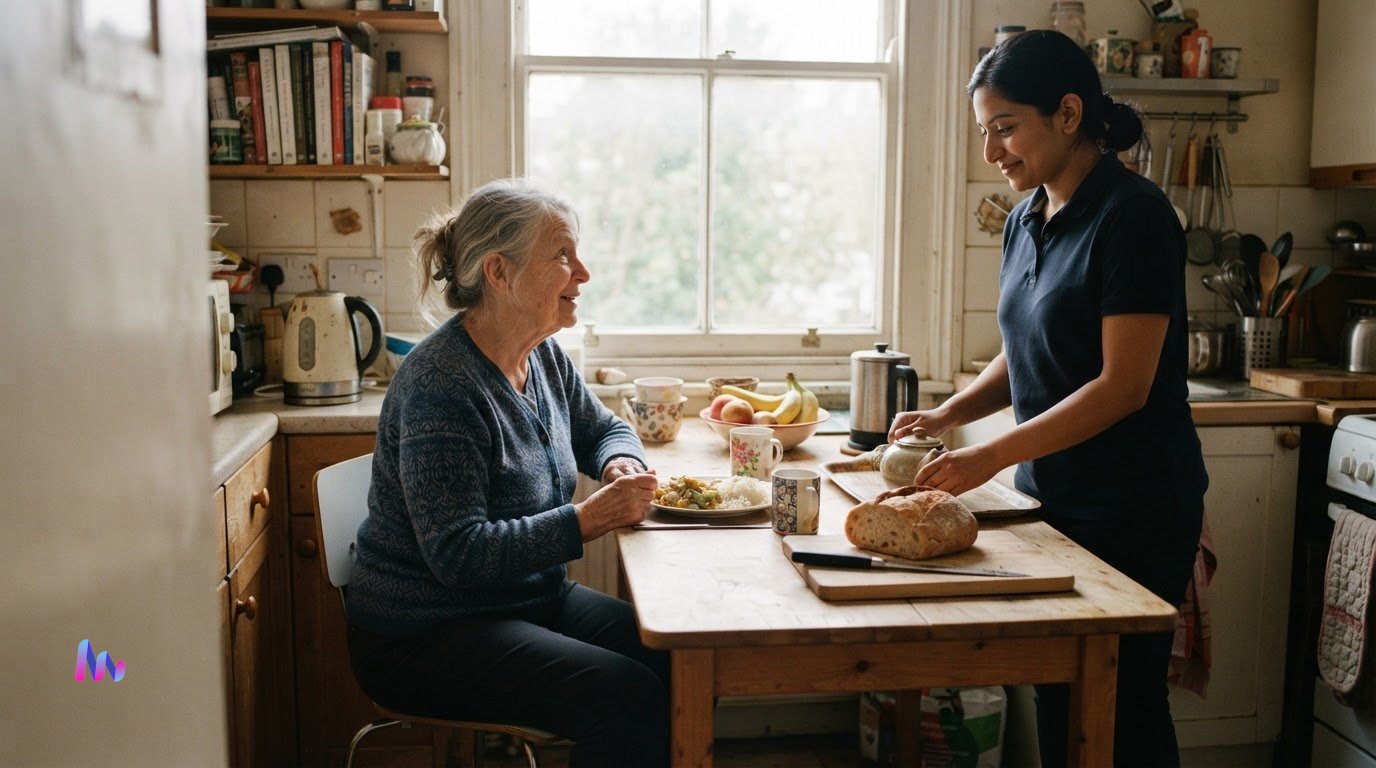
Agree whether the carer will eat with the person receiving care or prepare food separately. Shared meals are optional, and the household’s preference should be respected. Since a live-in carer is present throughout the week, a clear routine helps: for example, agree which meals are shared and when the carer can prepare their own food.
Cooking arrangements can reflect the person’s preferences and support needs. Someone living with dementia may feel more settled when familiar meals and predictable kitchen routines continue. Note preferred dishes, mealtimes and dietary requirements in the care plan. If the carer prepares a ready meal, agree whether it comes from shared household shopping or their separate food allowance.
Care at home doesn’t mean the carer works throughout the day or overnight; working hours and breaks need separate agreement. Families can clarify how meal preparation fits around the person’s routine, including when the carer takes a break. In London, household arrangements can be discussed alongside live-in care in London, helping families consider meals and daily support together.
Agreeing how and when the food allowance is paid
Set out the allowance in the care plan or household budget before care begins. This gives the family and carer a shared understanding of what food spending covers and when payment is made.
Food allowance arrangements
A food allowance is an agreed contribution towards a live-in carer’s usual meals, drinks and basic snacks. The amount and payment timing depend on the arrangement between the household and carer. For example, the agreement could say whether money is provided at the start of care or reimbursed against receipts. Putting the details in writing helps avoid confusion once the carer is living in the person’s home.
Include practical details, not just a total. Record who buys food, how the allowance is provided and how spending is tracked. If the carer shops for household groceries, receipts can show what was purchased. If the carer buys separate food, agree how those purchases are distinguished from groceries for the person receiving care.
Connect the food plan with the household routine and care plan. For example, note whether shopping takes place alongside personal care tasks or during agreed breaks. If the person prefers familiar meals, record those preferences so the carer can follow the routine. Clear notes help maintain continuity when support is provided at home.
Allowance coverage and household shopping
Agree which ordinary food items the allowance covers, such as meals, drinks and basic snacks. Takeaways, restaurant meals and café visits are not usually included unless agreed separately. Making this distinction helps the household plan shared shopping without assuming every outing comes from the carer’s food budget.
For shared shopping, agree whether groceries are bought for both the person and carer, and how receipts will be recorded. For separate shopping, clarify whether the allowance is paid directly or reimbursed. If the carer accompanies the person to a café, garden centre or restaurant, decide in advance how the carer’s meal will be paid for.
Attendance Allowance is separate from a food allowance. According to the Department for Work and Pensions, its rates are £76.70 per week at the lower rate and £114.60 per week at the higher rate in 2026. Eligible people may use Attendance Allowance towards care costs, regardless of savings. It is a benefit, not a tax relief, and care fees or food expenses should not be treated as automatically tax-relievable.
Before care starts, write down the allowance, payment timing, shopping arrangements and rules for meals out. This simple record gives everyone a practical reference as household routines settle.
Food and reasonable living arrangements for a live-in carer
In a live-in arrangement, food and accommodation are part of the household setup, alongside the agreed care fee. Clear arrangements help the carer live and work safely in the person’s home, without confusion about who pays for everyday needs.
There is no single food-and-board charge for every household. The household’s actual spending depends on factors such as food shopping, cooking habits and use of kitchen facilities, rather than the care fee alone.
For the accommodation offset question, the relevant point is how board is treated in pay calculations. The exemption that allowed some live-in domestic workers’ food and accommodation to count towards pay ended on 1 April 2024. Families employing a carer should not assume that providing meals or a room can simply replace wages.
Consider the practical living arrangements before the carer arrives. A dedicated bedroom provides private space to rest and keep personal belongings. The carer also needs reasonable access to kitchen facilities and a safe place to store food. Agree which shelves or cupboards are available and where chilled food can be kept.
Discuss dietary requirements before care begins. The carer may have food preferences or needs that differ from those of the person receiving care. Agreeing how these fit with household shopping helps avoid waste and last-minute changes. If the person values familiar meals, keeping ingredients and kitchen routines consistent can also make the transition to home care calmer.
Household routines can take time to settle. Families may combine shared shopping with separate food arrangements during the first fortnight. For example, the household might buy shared staples at first, while the carer later prefers separate items. A brief conversation about what works can make the arrangement more practical without changing the person’s usual routine.
Rest is part of a safe living arrangement, too. A live-in carer is present in the home 24 hours a day but doesn’t work 24 hours a day. Agree working hours and daily breaks, and make sure the carer can step away from care duties. If overnight support is needed, include that in the care plan rather than assuming the carer is on duty throughout the night.
Paying for home care and paying for accommodation are related household considerations, but they are not the same charge. Residential care combines accommodation and support differently from care at home. Keeping household spending, care fees and any agreed food contribution distinct helps families understand what each payment covers.
Live-in carer accommodation and facilities
A live-in arrangement works best when the carer has private space and practical access to shared household facilities. Preparing these details alongside the care plan can make the move into the home clearer for everyone, including the family member receiving support.
A dedicated private bedroom is the central accommodation requirement. It should have a comfortable bed and storage for personal belongings, such as a wardrobe, drawers or a clear shelf. The room gives the carer somewhere to rest away from care duties and household activity. A private bathroom is not usually needed, but the carer does need access to a clean, accessible bathroom, which may be shared.
Before care starts, consider the route between the bedroom, bathroom and kitchen. Check that the carer can reach these spaces while respecting the person’s usual routines. Agree where towels and toiletries can be kept and which bathroom shelves are available. These small details help prevent everyday facilities from becoming a source of uncertainty.
Kitchen access matters because the carer needs to prepare meals and store food safely. Agree which cupboards, fridge shelves and cooking equipment are available. A labelled shelf or container can keep the carer’s food separate from the person’s groceries. The arrangement should also account for dietary requirements and household cooking routines.
The carer may need Wi-Fi access for care-related paperwork, medication schedules and communication with healthcare professionals. Explain how to connect and identify a suitable place for paperwork, such as a desk or clear table. Keep sensitive documents stored appropriately rather than leaving them beside shared household items.
Agree practical boundaries as well as access. For instance, discuss whether the bedroom is private during breaks, how shared spaces are used and where the carer can keep personal belongings. As a live-in arrangement brings the carer and family member together in the home, clear expectations can protect privacy without making the home feel divided.
Home care takes place in the person’s own household, unlike care in a residential home. There may be no separate staff room or dedicated facilities, so consider the available bedroom, bathroom and kitchen together. A food allowance also works best when everyone knows whether groceries are shared or kept separately.
Walk through the home before care begins. Check that the bedroom is ready, confirm bathroom access, identify food storage space and explain the Wi-Fi arrangements. This practical review gives the carer a clear starting point and helps the person receiving care remain comfortable in familiar surroundings.
What are typical food and board costs for a live-in carer in the UK?
There is no fixed food-and-board figure that applies to every live-in care household.
Food and board are separate from the care fee. Household spending is not the price of a care package or a set allowance owed to every carer. The actual arrangement depends on how food is provided, the household’s shopping habits and which facilities the carer uses.
For example, a family may add the carer’s groceries to its usual shop and keep receipts. Another household may agree a separate food allowance, with the carer buying their own meals. Shared meals, dietary needs and whether the carer joins café or restaurant visits can all affect how the household manages spending.
Families can agree which accommodation and shared facilities are included in the living arrangement and whether any separate payment is involved. A private bedroom, bathroom access and reasonable use of kitchen facilities form the practical setup. Families should distinguish these provisions from cash expenses such as groceries or agreed travel costs.
One important distinction concerns wages. The exemption that allowed some live-in domestic workers’ food and accommodation to count towards pay ended on 1 April 2024. So families employing a carer shouldn’t assume that providing meals or a room replaces wages. The employment arrangement and household budget should be considered separately.
To estimate household spending, consider the actual routine rather than applying a broad range automatically. A carer who eats household meals may affect the grocery bill differently from one who shops separately. Heating, cooking and laundry can also influence household use. These are practical budgeting factors, not a standard extra charge.
Keep a simple weekly record during care. Note shared grocery purchases, separate food spending and any agreed meals out. Receipts can help show which items were bought for the household. Reviewing the record together makes it easier to adjust the arrangement if the carer’s shopping pattern or the person’s meal routine changes.
When comparing live-in care arrangements, separate the care fee, household costs and any food allowance in your budget. This makes overall spending easier to understand without treating food and board as one fixed price. Live-in carer food and board costs depend on the household arrangements, not a universal tariff.
NeeryVille Care: Live-in Care
NeeryVille Care provides live-in care for people who need support while remaining in their own homes. If you’re considering food arrangements alongside daily care needs, discussing the household routine can help clarify what support may suit your family member.
Support may include dementia care, domiciliary care or end of life care, depending on the person’s needs. As a CQC-regulated home care provider, NeeryVille Care offers personalised support focused on daily living and wellbeing. Families can discuss how care needs fit with familiar routines, meals and the practical arrangements of living at home.
Contact NeeryVille Care to discuss your family’s care needs and next steps.
Make the next care conversation feel clearer
Once the practical arrangements are clear, consider how support can fit the person’s day-to-day life. Think about the routines they value, the help that would make daily tasks easier and how they want to remain involved at home.
Understanding live-in carer food and board costs is one part of planning. A thoughtful conversation can also bring together the person’s preferences, family concerns and the support needed to keep home feeling familiar. Taking these topics one at a time can help everyone share what matters most.
NeeryVille Care can discuss your family’s care needs and help you consider a suitable way forward.
A calm, clear conversation is a helpful place to begin. Your family can take the next step at a pace that feels right.
Frequently Asked Questions
How much does live-in care cost in the UK?
There isn’t one UK price that applies to every live-in care arrangement. The cost depends on the person’s support needs, the care hours required, overnight assistance and whether support is for one person or a couple. For a useful comparison, ask for a written quote that separates care provision from household spending. In London, the person’s daily routine and level of support will shape the care plan.
Are treats, takeaways and café meals included?
A carer’s ordinary food allowance does not automatically cover treats, takeaways or café meals. Agree these costs beforehand, especially if the carer accompanies a family member on an outing. For example, decide whether the household pays for the carer’s meal, the carer pays separately or the cost comes from an agreed budget. A quick note in the household plan can prevent uncertainty during a trip.
How does that compare with the alternatives?
Live-in care keeps support in the person’s own home, while visiting care provides help at agreed times. A residential care home involves moving into a shared care setting, so daily routines and surroundings change. Compare the support required, privacy, continuity and household responsibilities, not just the headline fee. For someone in Highgate or Hampstead, the choice may also depend on whether family support is nearby.
What does a food allowance cover?
A food allowance generally covers a carer’s ordinary meals, drinks and basic snacks during care. It does not automatically cover restaurant meals, takeaways or café visits. For example, if the carer buys a sandwich while accompanying someone to an appointment, the household should agree beforehand how that purchase is handled. Keep the allowance’s purpose distinct from groceries for the person receiving care.
What does it cost, and how do you compare fairly?
Food and board spending varies with the household’s shopping and accommodation arrangements, so compare like with like. Ask whether a figure covers care, groceries, accommodation or other household expenses, and note what falls outside it. A written breakdown helps families compare care plans without treating food spending as part of the care fee. In North London, also consider the person’s routine and the support needed at home.
Who pays for a live-in carer’s food and accommodation in the UK?
Families usually arrange the carer’s meals and a spare bedroom, or agree a food allowance instead. Make the arrangement clear between the household and whoever employs or contracts the carer. If the family employs the carer, providing food or a room should not be assumed to replace wages. Keep accommodation, food spending and pay arrangements distinct in household records.
What is included in board and lodging for a live-in carer?
Board and lodging generally describes accommodation and food arrangements, rather than a single standard package. In practice, lodging means a private bedroom and access to household facilities; board concerns how meals or food spending are provided. For example, one household might offer a room and shared groceries, while another agrees separate food shopping. Clarify what is included so household expenses remain clear.
What rules apply to a live-in carer’s room, privacy and living conditions?
A live-in carer generally needs a dedicated private bedroom, a comfortable bed and storage for personal belongings. Bathroom access can be shared, and the carer needs reasonable access to kitchen facilities and safe food storage. Agree practical boundaries, such as private time in the bedroom and use of shared spaces. These arrangements help protect the carer’s privacy and the family member’s comfort at home.