24-hour dementia care at home: when families may need it

When two or more warning signs apply, families should explore 24-hour dementia care at home, particularly if their loved one can’t safely be left alone at any time. Around-the-clock support may become important when daily tasks, personal care or safety need constant attention. It can also help when nights have become difficult to manage.
It’s understandable to want familiar routines and the comfort of home to continue, while worrying about falls, wandering, missed medication or what happens when you need to rest. Recognising these changes doesn’t mean you’ve failed. It may mean the support around your loved one needs to change, too.
This article explains which signs may point to a need for continuous care, how support at home can help preserve everyday routines and what to consider when needs change. It also clarifies the difference between live-in care, where a carer lives in the home and sleeps at night, and 24-hour care with active overnight support, so you can better understand which arrangement may fit your family.
Table of Contents
When do dementia patients need 24-hour care?
Consider round-the-clock support when a person with dementia can’t safely be left alone, including overnight. Two or more warning signs from the sections below suggest it may be time to explore more help.
Support needs can increase as dementia progresses, especially when daily routines, personal care or safety become harder to manage without supervision. The decision depends on what happens throughout the day and night, not on the diagnosis alone.
Overnight support and carer respite
Overnight support means having a carer available while family members rest or attend to other responsibilities. It matters when night-time waking, confusion or distress leaves relatives repeatedly on alert, or when a person may get up and move around unsafely. Without support overnight, falls and medication errors can become more likely. Respite can give family carers time to sleep, work or spend time with friends, helping them continue their caring role.
Round-the-clock support needs
Round-the-clock care provides help across 24 hours when someone needs ongoing supervision, including a person with dementia. Dementia includes conditions such as Alzheimer’s disease and vascular dementia; changes in brain function can affect memory and thinking. Support needs depend on how those changes affect daily life, personal care and safety. A tailored plan can also reflect other conditions affecting the person’s routines and assistance needs.
Medication is one practical part of the decision. If a person forgets doses, takes them at the wrong time or can’t manage the routine safely, carers can provide medication support in line with prescribed timings. They can also notice changes, such as new discomfort or a marked change in behaviour, and report them to the relevant healthcare professional. Keeping a clear record of doses and observations helps relatives understand what has changed.
Review daytime and night-time routines as a family. Note whether your loved one can prepare food, manage personal care, move safely around the home and follow medication instructions. Record specific examples, such as getting up confused after dark or missing a dose. Then consider whether a relative or friend can reliably provide the necessary supervision, and whether that arrangement leaves them enough time to rest.
If several warning signs apply, or one presents an immediate safety concern, discuss the person’s needs with their healthcare specialist or social services. A needs assessment can help establish the level of care required. Families can also explore a live-in dementia care case study to see how support at home may fit into a family’s experience.
Choosing a home care agency or independent carer
A home care agency arranges care through its service, while an independent carer works directly with the person or family. Consider how each option handles continuity, cover and the level of dementia experience needed.
Agency and independent carer options
In England, care agencies should be regulated by the Care Quality Commission (CQC). An agency arrangement may help coordinate care and provide cover when a carer is unavailable. An independent carer can offer a direct working relationship, but the family may need to organise arrangements themselves. Compare how each option would support daily routines, medication and supervision across 24 hours. Be clear about who coordinates care and keeps family members updated.
Assessments and eligibility
A needs assessment considers the person’s support requirements, while a carer’s assessment looks at the family carer’s needs. Social services can arrange these assessments and use them to understand how dementia affects daily living. Share practical examples, such as difficulty preparing meals or managing personal care, rather than relying only on a diagnosis.
In England, NHS Continuing Healthcare may be available when someone has complex health and care needs. A dementia diagnosis alone doesn’t guarantee eligibility. The assessment considers the person’s overall health and care needs, not simply the name of their condition. Families can also discuss whether a personal budget could help pay for chosen care.
Carer matching and reassurance
Carer matching means finding someone whose experience and approach suit the person’s needs, preferences and routines. Familiarity can help build trust, and consistency may reduce anxiety and distress. Consider whether the carer communicates calmly, respects established routines and understands what helps the person feel at ease. NeeryVille Care provides the same carer for every visit or live-in arrangement.
Before care begins, prepare a short guide to the person’s preferences, daily habits and ways of communicating. For example, note whether they respond better to simple choices or a familiar greeting. These details help the carer provide more personal support and give relatives a clearer basis for reviewing how the arrangement is working.
Carer training and vetting
Look for dementia-specific knowledge and practical experience supporting people with similar needs. A dementia carer should be able to explain how they approach communication, personal care and changes in behaviour. Discuss how the support will reflect the person’s routines and what helps them stay calm during confusing moments.
Vetting also matters in a person’s home. Understand who has checked the carer’s references and suitability, and how concerns are recorded and handled. For an agency, clarify how it oversees care and communicates changes. For an independent arrangement, agree who will coordinate updates with relatives and relevant professionals.
Before discussing care, write down the person’s priorities: continuity, overnight supervision, help with daily tasks and support for family carers. These points make it easier to compare arrangements and describe what practical reassurance would look like for everyone involved.
What is the difference between 24-hour and live-in care?
The main difference is whether someone is awake and actively providing support throughout the night. The right arrangement depends on the person’s night-time needs, daily routines and safety.
Live-in care usually means one carer lives in the person’s home, sleeps at night and is on call if needed. By contrast, 24-hour care often uses carers working in shifts, so someone remains awake and available to help overnight. This distinction matters if your loved one regularly needs assistance after bedtime, rather than occasional reassurance.
In a typical UK live-in arrangement, a carer shouldn’t usually be expected to wake more than 2 or 3 times per night. If the person needs frequent or sustained help overnight, a waking-night rota may be more suitable. A small team can share shifts, with a carer staying awake through the night. A sleeping-night arrangement differs because the carer rests but can respond when needed.
Overnight care covers the night, rather than providing support throughout the day. Visiting care can be arranged for set times, such as to help with personal care, medication or meals. Live-in care provides one-to-one support from a carer who lives in the home, and can include assistance during the day and night. These are different patterns of support, not different diagnoses.
Live-in dementia care allows the person to remain in familiar surroundings with support shaped around home routines. A care home provides care in a shared residential setting, with staff available to support residents. Nursing homes provide personal care and 24 hours of care from qualified nurses. The setting and type of support needed are important parts of the comparison.
London costs depend on the care pattern, the person’s needs and the level of support required. The price depends on the individual case and is given after a quote request; factors include whether care is live-in or shift-based, overnight needs and the amount of personal care required. Standard live-in and dementia-specific arrangements may differ, so compare like-for-like support rather than looking at the label alone.
To weigh the options, note how often help is needed overnight, whether the person can be left safely and what support they need during the day. Then compare those needs with the hours and responsibilities included in each arrangement. Live-in care can provide support at home across the day and night, while overnight care focuses on night-time assistance. Explain whether the person needs someone awake and actively supporting them overnight when discussing care.
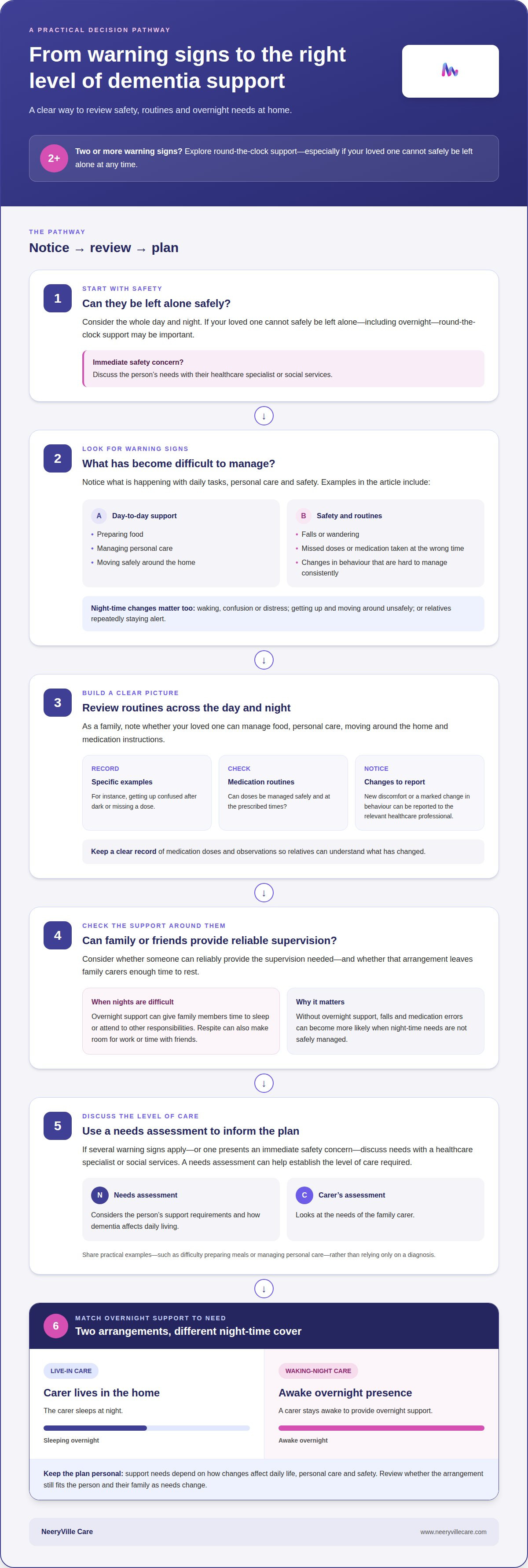
Signs that round-the-clock dementia care may be needed
Round-the-clock support may be needed when dementia makes it unsafe to leave someone alone, even briefly. Look at what happens during ordinary routines, including washing, dressing, eating and moving around the home. A single serious safety concern, such as leaving the house disorientated, can matter more than a list of smaller difficulties.
Wandering is one sign to take seriously. Six in ten people living with dementia become restless and wander. Notice whether someone leaves home unexpectedly, tries doors at night or becomes confused in a familiar street. Falls, confusion in unfamiliar places and difficulty finding the way back can put safety at risk. Keep a note of when incidents happen and what preceded them.
Night-time changes can also affect the support needed. A person may wake repeatedly, feel confused or distressed after dark, mistake one room for another or try to go outside. If relatives must stay awake to help them settle or move safely, record how often this happens and what assistance is needed.
Daily tasks offer further clues. During the middle stages of dementia, a person may need more regular help with personal care, preparing meals and companionship. They might forget steps when dressing, struggle to use kitchen appliances or need guidance to move between rooms. Consider whether these tasks can be supported safely through visits, or whether the person needs someone present throughout the day.
Live-in care at home can cover medication support, personal care, mobility, meals, light household tasks and companionship. A home assessment helps shape a care plan around the person’s routines and needs. For instance, the plan can set out help with washing in the morning, meals during the day and support with mobility. It should also reflect preferences that bring comfort, such as familiar activities or a calm evening routine.
Care then follows the agreed plan, with carers providing support at the times the person needs it. If needs change, the plan can be reviewed and adapted. Family members can share observations about new confusion, discomfort or changes in behaviour with the relevant healthcare specialist. Clinical tasks are coordinated with NHS professionals, so the home-care plan reflects the person’s wider support.
To make the decision clearer, keep a simple record of incidents, tasks that need help and night-time disruptions. Include practical details, such as a fall near the stairs or repeated difficulty dressing. This helps families describe the level of supervision needed and identify where support could protect safety while preserving familiar routines.
Benefits of getting help with dementia care at home
Care at home can help a person with dementia keep familiar surroundings and daily patterns. Their own chair, kitchen and garden remain part of everyday life. A carer can support them to follow meaningful routines, rather than expecting them to adapt to a new setting. For families, that familiarity can make everyday support feel more personal.
The practical benefit is support shaped around individual needs. A care plan can bring together help with personal care, meals, mobility and companionship. For example, a carer might support washing in the morning, prepare a familiar lunch and accompany the person around the home. Relatives and relevant professionals can contribute to the plan, which can change as the person’s needs develop.
Familiar routines can also support emotional wellbeing. NHS guidance on living well with dementia highlights familiar daily routines and engagement in everyday life. A carer can help maintain a preferred mealtime, encourage an enjoyable activity or make time for conversation. These small, recognisable moments can help the person feel involved and respected.
Practical adjustments at home can make support more suitable. Families can remove trip hazards, improve lighting for early evening and create a calm space for rest. A carer can support safe movement between rooms and prepare meals around the person’s preferences. Observing what works at home can also help relatives notice where routines or surroundings need attention.
Support at home can ease the pressure on family relationships. Relatives may be able to spend time talking, sharing a meal or enjoying an activity, rather than managing every care task themselves. Scheduled assistance can also give family carers time for work, rest or other responsibilities. The aim is not to replace family involvement, but to make it more sustainable.
Home care is not automatically the most suitable setting for every person. If someone has complex health and care needs, a nursing home may be appropriate because nursing care is available there. Consider whether the person’s needs can be met safely at home, what support relatives can provide and whether the home environment works for daily care. These practical questions help keep the person’s wellbeing at the centre.
For families considering support at home, a useful next step is to describe the person’s routines, preferences and day-to-day needs. This gives a care discussion a practical starting point, from familiar meals to the help needed with personal care.
NeeryVille Care: Live-in Care
NeeryVille Care provides live-in care and dementia care for people who need support while remaining in familiar surroundings. A dedicated carer lives in the home and provides one-to-one support, with care shaped around the person’s routines and individual needs. This can suit families whose loved one needs more consistent assistance than visits alone can provide.
As a CQC-regulated home care provider, NeeryVille Care can discuss how dementia care at home may fit your family’s circumstances. If the person needs awake, active support throughout the night, explain this when discussing care, as sleeping live-in arrangements differ from waking-night care.
Contact NeeryVille Care to discuss your family’s needs and arrange a free care assessment.
Make the next step feel manageable
Before making changes, take time to discuss what your loved one wants from support, where possible. A familiar routine, a favourite activity or a preference about who helps with personal care can shape a more respectful arrangement. Write down the details that matter most, then use them to guide the next conversation. This keeps the person, not just the practical demands, at the centre.
Choosing 24-hour dementia care at home is a significant decision, and it doesn’t need to be made all at once. Families can start by describing what feels hardest now and what they hope will feel different. A calm discussion can help turn a complex situation into clear priorities, one step at a time.
When you’re ready, NeeryVille Care can talk through your family’s needs and the support you’re considering.
You’re taking a thoughtful step by seeking support. Keep your loved one’s comfort and wishes in mind as you decide what comes next.
Frequently Asked Questions
How quickly can I start 24-hour home care?
NeeryVille Care arranges care within 24 to 48 hours of the initial assessment. The assessment helps establish the person’s needs, routines and preferences, so the care arrangement has a practical starting point. For a hospital discharge, the team handles urgent situations as quickly as possible. Families can prepare by noting key daily tasks, medication routines and any changes that affect safety or comfort at home.
What does a 24-hour carer do?
A 24-hour carer provides ongoing support with daily living in the person’s home. Depending on the care plan, this can include personal care, medication support, meal preparation, companionship and household tasks. For example, a carer may help someone get ready in the morning, prepare meals and offer reassurance during familiar routines. Live-in care is not the same as a waking-night arrangement with an awake carer throughout the night.
Are your carers dementia-trained and CQC-regulated?
Families should check what regulation and dementia-related training or accreditation apply to the provider and individual carers. CQC regulation applies to the provider and its services; it isn’t a qualification held by each individual carer. NeeryVille Care employs and supervises its carers. Families can explain the person’s communication preferences, routines and support needs during care planning, helping shape an arrangement around the individual rather than relying on a diagnosis alone.
How can a live-in carer support me at home?
A live-in carer can provide one-to-one help with daily routines while living in your home. Support may include personal care, meal preparation, companionship and safety monitoring. For instance, they can help you maintain a familiar mealtime routine or offer assistance with getting dressed. NeeryVille Care provides the same carer for each live-in arrangement, helping build familiarity over time and giving families a consistent point of contact.
How do you know when a family member with dementia needs more care?
Look for changes that make existing support harder to sustain, such as repeated missed meals, difficulty managing personal care or increasing night-time disruption. Keep a brief record of what happened, when it occurred and what help was needed. If family members are struggling to cover essential tasks or get enough rest, that’s another sign to reassess the arrangement. Share these examples during a care assessment or planning discussion.
How much does 24-hour care cost in London in 2026?
The price depends on the individual case and is given after a quote request; factors include the care pattern, the person’s needs, the level of personal support and whether overnight assistance is required. Live-in care and shift-based support aren’t identical arrangements, so compare what each plan includes. Families can also explore whether NHS Continuing Healthcare or local authority support may be available to contribute towards care.
Why choose live-in dementia care?
Live-in dementia care can suit someone who wants support while remaining in familiar surroundings. One-to-one assistance can be shaped around the person’s daily preferences, rather than a shared residential routine. NeeryVille Care provides the same carer for each live-in arrangement, supporting continuity and familiarity. Its live-in and home care services focus on local communities in North London, including Highgate and Hampstead.
What does 24-hour dementia care at home include in the UK?
It includes the home support agreed around the person’s needs, such as help with daily living, personal care, companionship, medication support and meals. The care plan identifies which tasks the carer will support and how routines will be maintained. Home care doesn’t provide clinical nursing procedures. Where complex clinical tasks are needed, these require appropriate professional involvement, coordinated with the person’s wider health and care support.