Hospital discharge care at home in London: aftercare support

Hospital discharge care at home in London helps someone manage the practical and personal parts of recovery after leaving hospital. It can include support with everyday routines, reassurance at home and care that adapts as needs change. The plan should reflect the person’s condition, home situation and discharge arrangements.
It’s understandable to feel relieved that someone is coming home and worried about what happens next. Familiar surroundings can be comforting, but everyday tasks may feel different during recovery, and family members may be unsure how best to help. This guide explains what hospital discharge care involves, how home support can complement the healthcare team’s plan and how practical help can adapt as recovery progresses.
The aim is a calmer transition, with clear support that respects the person’s comfort and independence. A thoughtful plan can help families feel prepared, one step at a time.
Table of Contents
What is hospital discharge care?
Hospital discharge care at home in London means practical support that helps someone leave hospital and manage daily life during recovery. It can connect the hospital’s discharge arrangements with the person’s needs at home. A clear plan identifies which support will start, who is responsible and how the family can raise concerns. That clarity matters when familiar routines have changed.
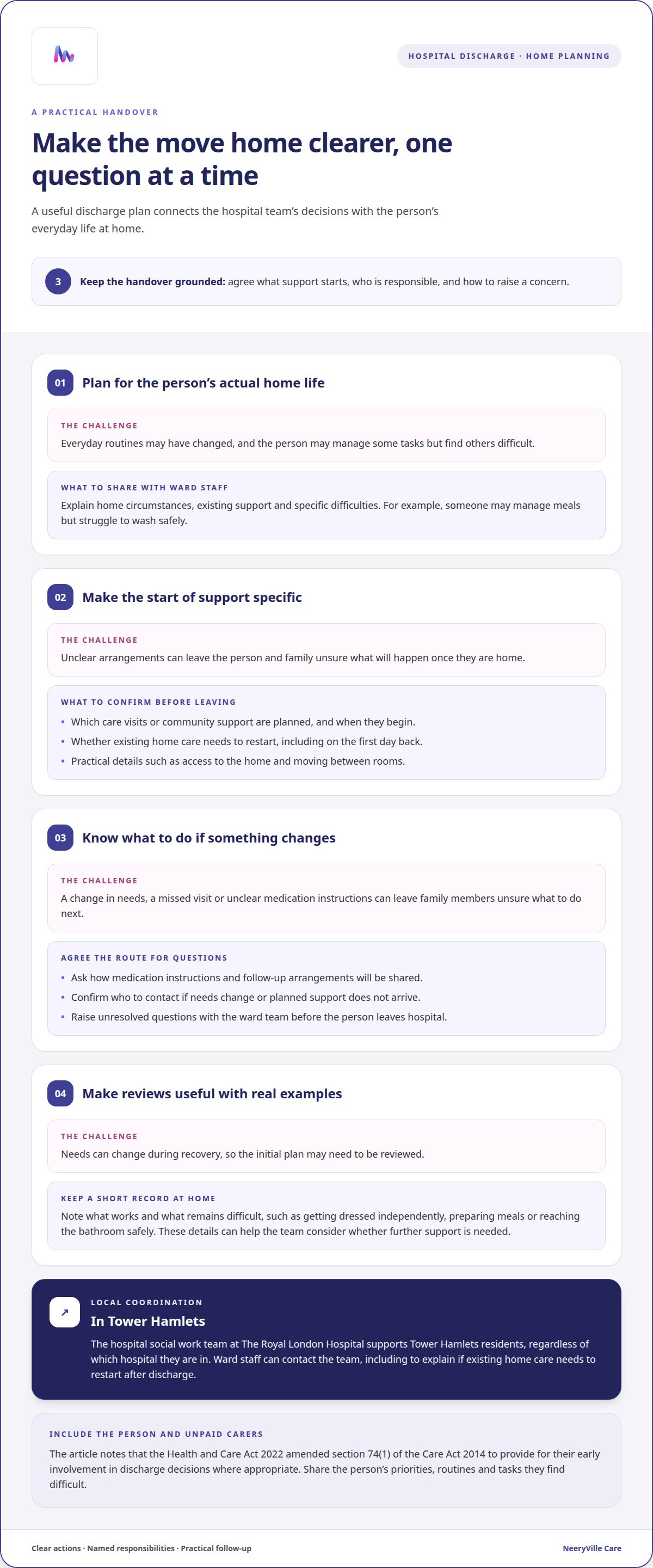
Planning starts before the person leaves hospital. Tell ward staff about their home circumstances, existing support and any tasks they find difficult. Share the next of kin’s contact details, and explain if existing home care needs to restart on the first day back. For example, someone may manage meals but struggle to wash safely. Specific details help the team plan around the person’s actual needs.
An initial conversation should cover what the person can manage, what help they need and which routines matter to them. Ask how support will be arranged and who to contact if needs change. For hospital discharge care at home in London, the plan should reflect the person’s home life, not just their medical treatment. A short note of agreed actions can help family members keep track.
Who is eligible for NHS-funded hospital discharge support at home in England? People may be considered for support when their needs show they need help to leave hospital and recover safely at home. The hospital discharge team considers each person’s circumstances and coordinates suitable arrangements.
Who pays for care after hospital discharge, and how are means tests applied? In England, intermediate care, including reablement provided by local authorities, must be free of charge for up to 6 weeks, according to UK Government. For ongoing support, the local authority assesses care needs and explains whether a financial assessment applies to the proposed care.
What hospital discharge care at home services are available in London? Support may include intermediate care or reablement, help with personal care, assistance with daily activities and restarting existing home care. Alongside these arrangements, families may explore live-in care in London if continued practical support at home would help.
How does NHS discharge to assess work in London? The person leaves hospital once arrangements are in place, then professionals assess their needs in a more suitable setting, such as home. This helps them understand how the person manages everyday activities outside hospital.
What are the risks of going home without adequate care, and who to contact if problems arise? Difficulty taking medication as directed, washing or moving safely can make recovery harder. Raise concerns with the ward or discharge team before leaving. Once home, contact the person’s GP or care coordinator if their needs change.
Care planning with healthcare professionals
A useful discharge plan connects the hospital team’s decisions with the person’s life at home. It should explain what support will begin, who is responsible and how family members can raise concerns. Before leaving, discuss practical details such as access to the home, moving between rooms and whether existing care needs to restart. A clear plan helps everyone understand their role in the transition.
Patients and unpaid carers should have a voice in decisions. The Health and Care Act 2022 amended section 74(1) of the Care Act 2014 to provide for their early involvement in discharge decisions where appropriate. Section 74 also requires relevant trusts to have regard to NHS England guidance when involving patients and carers in discharge planning. Share the person’s priorities, including routines they want to maintain and tasks they find difficult.
In Tower Hamlets, discharge planning can involve community organisations. If someone cannot return home immediately after leaving hospital, the Tower Hamlets team plans for a safe discharge. Its hospital social work team at The Royal London Hospital supports Tower Hamlets residents, regardless of which hospital they are in. Ward staff can contact the team to explain if existing home care needs to restart after discharge.
Care and support arranged through a hospital discharge plan may be available for a limited period. During that period, the team reviews the person’s needs and considers whether further support is required. Families can make the review more useful by noting what works at home. For example, record whether the person can get dressed independently, needs help preparing meals or struggles to reach the bathroom safely.
Before discharge, ask the relevant professionals to clarify responsibilities. A practical conversation can cover:
Which care visits or community support are planned, and when they begin.
How medication instructions and follow-up arrangements will be shared.
Who to contact if the person’s needs change or planned support does not arrive.
Whether family members are expected to help, and with which tasks.
Write down names, telephone details and agreed actions during the discussion. If the person already receives care at home, tell ward staff when it needs to resume. In Tower Hamlets, this can help the hospital social work team coordinate the restart. Clear handover details matter: a missed visit or unclear medication instruction can leave families unsure what to do next. Raise any unresolved questions with the ward team before the person leaves hospital.
Companionship and reassurance during recovery
Coming home can bring relief, but familiar rooms may feel different after a hospital stay. The person may feel unsettled when family members return to work or worry about managing a quiet afternoon alone. Companionship offers conversation and a calm presence while respecting the person’s need for rest. Small, familiar routines can make the day feel more manageable.
Start by asking what the person finds comforting. They might enjoy discussing a favourite television programme, looking through family photographs or sitting by a window with a cup of tea. These choices make support personal and give a visitor ways to connect without making every conversation about symptoms, appointments or the hospital stay.
Reassurance can be practical as well as emotional. A companion can help the person follow the day’s agreed routine, get comfortable before a family member leaves or write down a question for the next healthcare appointment. They can listen carefully and pass concerns to an appropriate family contact. They should not change clinical instructions or make treatment decisions.
A simple visit can follow the person’s preferred rhythm:
Arrive calmly and ask how the person would like to spend the visit.
Offer a choice, such as conversation, a quiet activity or a short walk indoors if suitable.
Notice practical concerns, such as difficulty reaching a telephone or favourite book.
Before leaving, agree who the person can contact and what happens next.
If the person feels anxious when alone, agree on a familiar plan with family. For example, a daughter might telephone after lunch, while a scheduled visitor offers company earlier in the day. A note beside the telephone can show the planned visit and family contact. Clear arrangements reduce uncertainty without taking over the person’s time or independence.
Some people prefer quiet company rather than continuous conversation. A companion might sit nearby while the person listens to music, reads a newspaper or rests. Others may welcome help staying in touch with relatives by phone. Energy and preferences can vary from day to day, so check before starting an activity and allow time for pauses.
Families can share useful details before visits begin: the person’s preferred name, conversation topics, usual routine and signs that they need a break. If a long conversation becomes tiring, for instance, a short visit with one familiar activity may feel easier. Thoughtful companionship helps the person feel heard, included and more at ease at home.
Flexible support that can change as recovery progresses
Recovery rarely follows a perfectly predictable timetable. Someone who needs help dressing in the first days at home may later manage independently, while fatigue can make familiar tasks harder on some days. Support should reflect what the person can do now, rather than simply repeat the original routine. Notice changes and share them with the people coordinating care.
A short daily record can make changes easier to explain. Note practical details, such as whether the person prepared a snack, reached the bathroom safely or needed help getting ready. Include what they managed comfortably and what caused difficulty. These observations give family members and professionals clearer examples than a general comment that the person seems better or worse.
Review the support whenever a routine changes. For instance, if someone can wash their face but still needs help getting into the shower, describe the specific task that remains difficult. If a visit is no longer needed for one activity, another task may still require attention. Keep the person involved and ask what they feel ready to try.
Useful signs to discuss with the relevant care or healthcare contact include:
A daily task that now feels easier, such as preparing a drink or choosing clothes.
A new difficulty, such as reaching an item stored in a cupboard.
A change in routine, including sleeping later or needing more time to get ready.
A concern that makes the person less confident moving around their home.
Family members can help by sharing clear, specific information. Instead of saying, “Mum is managing better”, explain that she now makes breakfast but still needs help washing safely. This keeps the discussion focused on the right task. If different relatives provide support, agree who will keep the notes and pass them on so details are not lost between conversations.
Keep instructions consistent as support changes. Follow any guidance a healthcare professional has given about activity or medication, and raise questions with the appropriate professional. A family member should not alter medication or introduce new exercises independently. Write down any agreed change, who recommended it and when the family should review how it is working.
Flexibility also means respecting the person’s pace. Offer a choice between trying a familiar activity independently and accepting help, rather than taking over automatically. For example, place a dressing gown within easy reach and give the person time to use it. Small adjustments can preserve dignity while showing where practical support remains useful.
Sections 2 and 3 of the Care Act 2014 require English local authorities to take steps to prevent, reduce or delay care and support needs. These duties provide a wider context for reviewing whether support remains appropriate as recovery progresses.
UK Parliament states that Section 10 of the Care Act 2014 requires English local authorities to assess an unpaid carer who appears to have support needs now or in the future, and to draw up a support plan. Family members who provide care can raise their own support needs as well as describe the help the person recovering requires.
Under section 17 of the Children Act 1989, a local-authority assessment is provided for when it appears a young carer may need support, or when the young carer or their parent requests one.
Help with daily activities, recovery routines and mobility
After returning home, ordinary tasks can take more effort. Getting dressed, preparing a meal or reaching the bathroom may require planning. Identify what the person can manage and where practical help is needed. For example, they may dress independently but need help washing safely. This distinction keeps support focused and protects independence.
A familiar routine can make the day easier to follow. Keep agreed medication instructions, meals and rest periods visible in one place. A family member can organise reminders or make sure prescribed medicines are available. Don’t change doses or introduce exercises without guidance from the appropriate healthcare professional. If instructions are unclear, write down the question and raise it with the relevant professional.
Moving around the home also deserves attention. Notice the route between the bedroom, bathroom and kitchen. A narrow passage, loose item on the floor or frequently used object stored out of reach can make everyday movement harder. Keep essential belongings accessible and report mobility concerns to the healthcare team. Follow any advice about moving, transfers or activity.
What equipment and adaptations may be provided for a safe discharge home? The assessment considers the person’s mobility, daily tasks and home layout. It can identify equipment or adaptations that may help with transfers, washing or access between essential rooms, and inform arrangements for suitable support.
Families can make routines easier by preparing the home before the person arrives. Place everyday items where they can be reached comfortably, and keep a clear route to the rooms the person uses most. If a family member helps with washing, agree how to preserve privacy and allow the person to do any parts they can manage themselves.
A simple daily plan can separate tasks without making the day feel crowded:
Set out clothes and personal items before the usual time for dressing.
Keep meals and drinks easy to access, following any professional instructions.
Allow time for moving between rooms and completing personal routines.
Record difficulties, such as needing help to stand or reach the bathroom.
Use these observations when discussing support with healthcare professionals. For instance, explain whether the person can move from bed to chair or needs help washing at the sink. Specific examples help identify which tasks require assistance. If needs change, describe the new difficulty and the routine affected, rather than simply saying mobility has worsened.
Care after hospital discharge can help with practical routines as someone settles back at home. The right support should respect personal choices and follow the person’s agreed care plan.
NeeryVille Care: Live-in Care
NeeryVille Care provides Live-in Care for people who need ongoing practical support while recovering at home. A dedicated carer lives in the person’s home and supports everyday routines, helping families feel less alone during the transition. This may suit someone who needs more consistent assistance than scheduled visits can provide and wishes to remain in familiar surroundings.
Support is shaped around the person’s preferences and changing needs. If dementia or another ongoing condition also affects recovery, Dementia Care or Domiciliary Care may be relevant. Families can discuss the help needed, such as support with personal routines, reassurance or everyday tasks, and consider whether Live-in Care suits their circumstances.
You’re welcome to contact NeeryVille Care to discuss support after a hospital stay.
Take the next step at a pace that feels right
Planning can begin with a simple question: what would make the first days at home easier for this person? Write down their priorities, the tasks they find difficult and the routines they want to keep. This gives your family a clear starting point for discussing hospital discharge care at home in London and shaping support around everyday life.
Recovery can bring changing needs, so a useful plan leaves room for honest conversations. NeeryVille Care can discuss how care at home fits your family’s circumstances, including support that respects the person’s choices and familiar routines. You don’t need every detail worked out before taking the first step.
A thoughtful conversation can help you move forward with greater clarity. Take it one step at a time, keeping the person’s comfort and dignity at the centre.
Frequently Asked Questions
Where can London residents find local hospital discharge and reablement services?
Start with the hospital ward’s discharge team, which can connect the discharge plan with local support. Tell staff where the person lives and ask which council team coordinates adult social care or reablement there. For Tower Hamlets residents, the hospital social work team at The Royal London Hospital supports residents regardless of which hospital they attend. Ward staff can contact the team about the person’s situation.