Lewy body dementia support in North London for people and carers

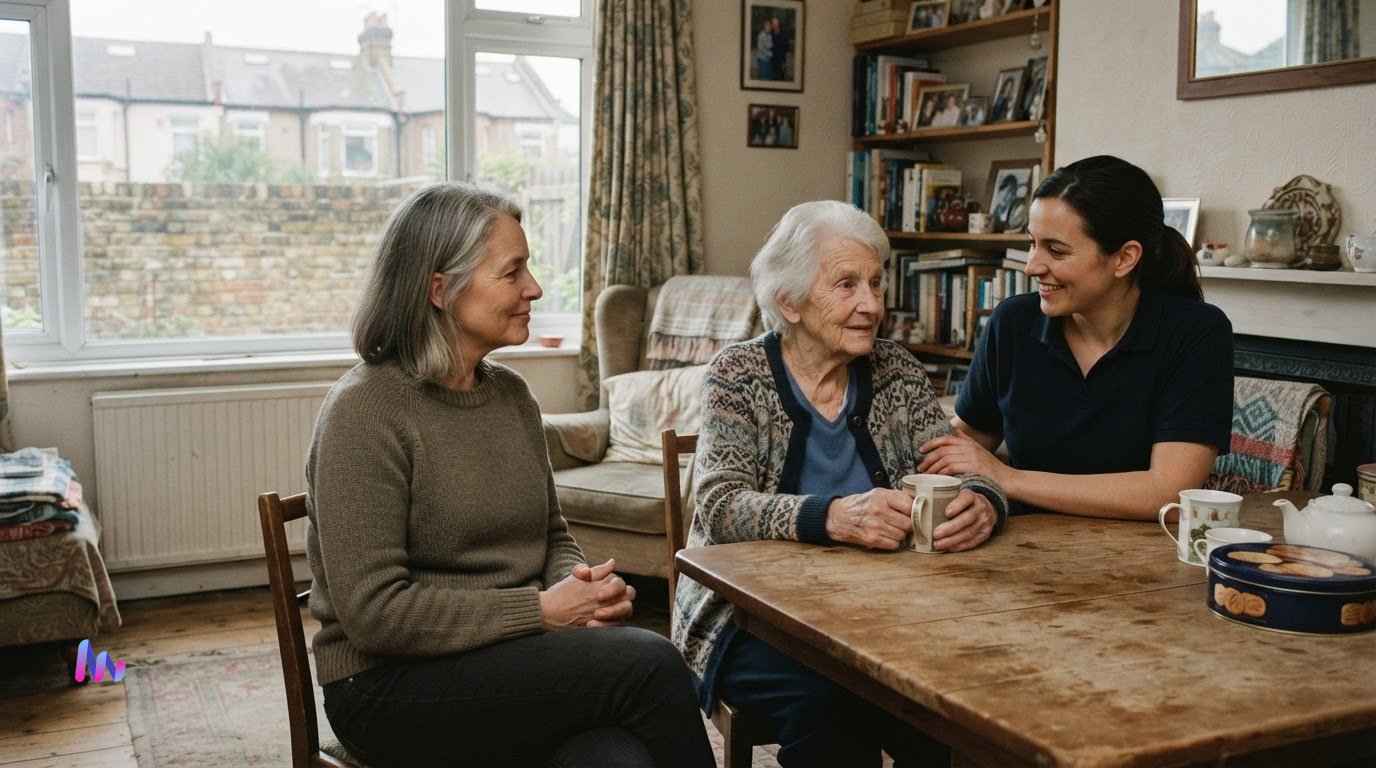
Lewy body dementia support in North London can help people living with the condition and those caring for them manage daily life at home. Around 130,000 people in the UK are thought to be living with Lewy body dementia. Support may be useful for practical routines, companionship and easing the pressure on family carers.
It’s understandable to feel worried when symptoms change or a loved one’s needs become harder to manage. Lewy body dementia can affect thinking, movement, sleep and perception, and symptoms may fluctuate over time. This guide explains what support at home can involve, practical ways to make daily care more manageable, and where families can find information and help. It also looks at how to plan care while respecting the person’s dignity, preferences and familiar routines.
Table of Contents
Dementia and Alzheimer’s disease care at home
Dementia describes difficulties with mental abilities caused by gradual changes and damage in the brain. Alzheimer’s disease is one form, while Lewy body dementia has its own pattern of symptoms and support needs. Around 944,000 people in the UK are currently living with dementia. The number is projected to exceed one million by 2030.
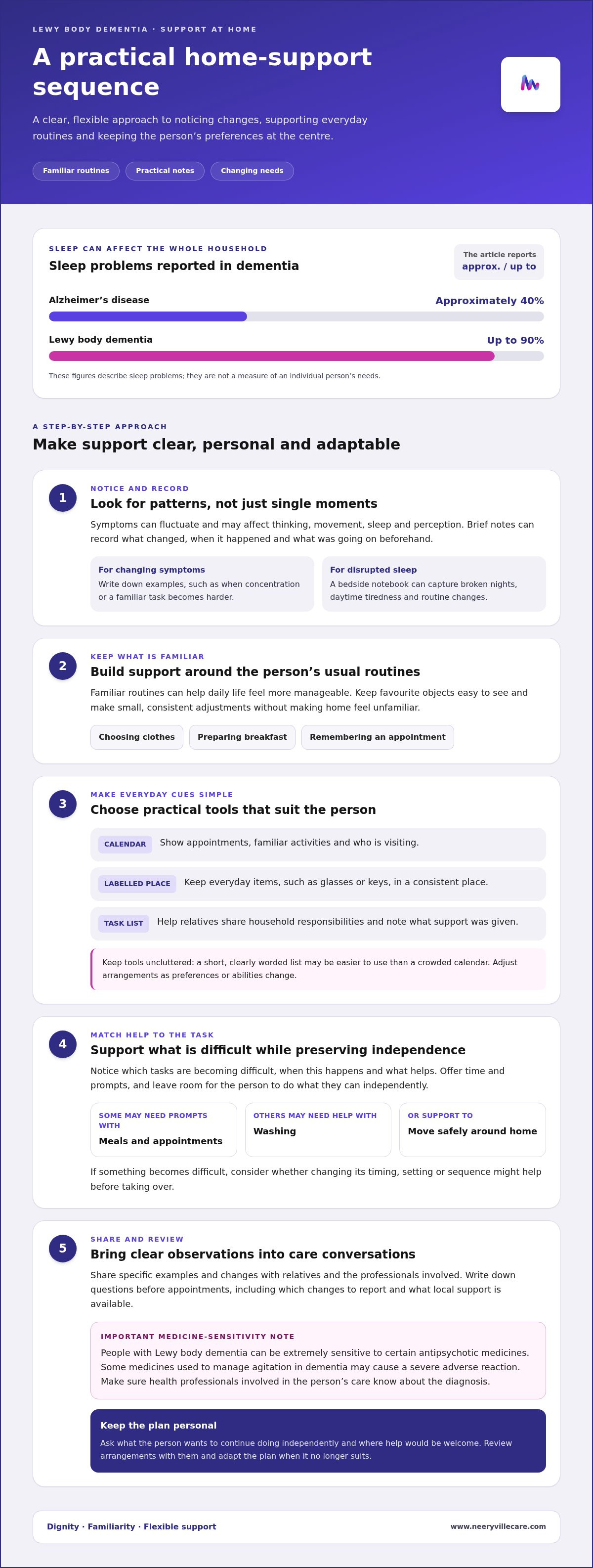
At home, support works best when it follows the person’s familiar routines. A carer might help someone choose clothes, prepare breakfast or remember an appointment, while leaving time for them to do what they can independently. Keeping favourite objects in easy-to-see places can also make everyday tasks simpler. Small, consistent adjustments can help preserve dignity without making home feel unfamiliar.
Care needs vary from person to person and may change over time. One person might need prompts with meals and appointments; another may need help washing or moving safely around the home. Note which tasks are becoming difficult, when this happens and what helps. These specific examples give relatives and professionals a clearer basis for discussing support.
Sleep can affect the whole household. Sleep problems affect approximately 40% of people with Alzheimer’s disease and up to 90% of people with Lewy body dementia. A bedside notebook can record disrupted nights, daytime tiredness and changes in routine. This tool helps families describe patterns clearly, rather than relying on memory during a conversation with a health professional.
A few practical tools can make home routines easier to follow:
A daily calendar can show appointments, familiar activities and who is visiting.
A labelled storage place for everyday items, such as glasses or keys, can reduce time spent searching.
A written task list can help relatives share household responsibilities and note what support was given.
Keep tools simple and suited to the person. A crowded calendar may be confusing, while a short list with clear wording can be easier to use. Ask which arrangements feel helpful, and adjust them if the person’s preferences or abilities change. A familiar routine should provide structure, not create pressure.
In Islington, residents diagnosed with dementia who live at home can access post-diagnostic support. The local service can arrange an assessment at home for someone who is housebound or otherwise unable to attend the clinic. Under-65s in Islington should be referred to the National Hospital for Neurology and Neurosurgery at Queen Square for assessment, except where the service assesses residents with a severe and enduring mental health problem.
For families, the Alzheimer’s Society and the Lewy Body Society are named sources of information about dementia and the needs associated with specific diagnoses. In North London, write down questions before an appointment, such as which changes to report and what local support is available. Families exploring local home-support arrangements can read about live-in care in London.
Keep the person’s priorities at the centre of conversations about support. Ask what they want to continue doing independently and where help would be welcome. If a task becomes difficult, consider whether changing its timing, setting or sequence might help before taking over. Calm explanations and enough time to respond can make daily interactions more respectful. Relatives can agree who will check in, share observations and raise concerns, so important details are not missed. Review the arrangements with the person and adapt them when they no longer suit.
Care planning should reflect the individual rather than assume that one diagnosis explains every support need. Around 153,000 people in the UK are currently living with Parkinson’s disease. This is a separate condition from dementia, and the figure does not indicate that someone with Parkinson’s has dementia. When a person has more than one diagnosis, keep notes about the particular difficulties they describe and the help they find useful. Discuss those details with the professionals involved, and make sure any home routine remains practical and acceptable to the person receiving support. A plan that can be adjusted is more useful than a fixed set of expectations.
Dementia conditions treated
Dementia is an umbrella term, not a single diagnosis. Lewy body dementia is described as the second most common dementia, and around 130,000 people in the UK are thought to live with it. Alzheimer’s disease and vascular dementia are other diagnostic names families may encounter. Each person’s needs depend on their experiences and abilities, not simply the label recorded in their notes.
Lewy body dementia can affect several aspects of daily life. A person may experience visual hallucinations, changes in cognitive ability, parkinsonism or REM sleep behaviour disorder. They can also be extremely sensitive to certain antipsychotic medicines. Some medicines used to manage agitation in dementia may cause a severe adverse reaction in people with Lewy body dementia. Make sure health professionals involved in the person’s care know about the diagnosis.
Symptoms may fluctuate. Someone might follow a conversation in the morning but find it harder to concentrate later. A familiar task, such as making tea, may be difficult one day and manageable the next. These changes can be confusing for relatives. A brief diary can record when something happened and what was going on beforehand. It gives families specific examples to share at appointments, rather than relying on a general impression.
Some people have more than one dementia diagnosis recorded. Robert’s story, for example, described vascular dementia with Lewy bodies; he was diagnosed in December 2018. That wording can help explain why a person’s symptoms do not fit one simple pattern. For families, the useful next step is to write down the exact diagnosis and any changes professionals have explained, then keep those notes with current care information.
Dementia is often described in seven stages, but this framework cannot predict an individual’s experience. People do not all progress at the same rate, and Lewy body dementia can involve sudden changes rather than a steady decline. A stage chart may provide broad terms for discussion, but a dated record of what the person can actually do is more useful for planning support. Note changes in communication, movement and everyday tasks.
A practical information folder can bring key details together without reducing a person to their diagnosis. Keep it easy to find and update it when care arrangements or health information change. Useful items include:
A diagnosis summary with the condition’s full name and relevant contact details.
A medication list that records current medicines and recent changes for discussion with the GP or specialist team.
An observation diary with clear examples of changes in thinking, movement, sleep or perception.
A preferences page noting the person’s routines, comforting activities and preferred ways to communicate.
The Lewy Body Society provides information and support for people living with Lewy body dementia. Its resources can help families prepare questions and understand features of the condition. Take one concern at a time: record what happened, note when it occurred and share it with the relevant professional. Clear, person-centred information helps those involved respond to the individual’s needs rather than make assumptions based on the diagnosis.
The Brain Charity states that more than 600 neurological conditions exist and that neurological conditions affect 1 in 6 people. This wider context is a reminder that a diagnosis may sit alongside other health or support needs, so information should be shared with the professionals involved in a person’s care. Keep the folder focused on details that help others respond consistently: the person’s preferred routines, communication needs, changes relatives have noticed, and questions to raise at appointments.
Families can note who has been told about the diagnosis and when, then update the record if advice or care arrangements change. If the person finds it difficult to explain what is happening, a trusted relative or carer can help describe their experience while involving them as much as possible. Clear, practical notes can support conversations without assuming that everyone with the same diagnosis needs the same help.
Practical help for people with Lewy body dementia
In Islington, residents diagnosed with dementia who live at home can access post-diagnostic support. To request a social care needs assessment, contact Islington Council’s adult social care service and explain which everyday tasks have become difficult. Share the diagnosis and specific examples, such as needing help with washing, meals or moving safely around the home. If the person is housebound or unable to attend the clinic, Islington’s service arranges an assessment at home.
Before speaking to the council or assessment team, prepare a few clear notes. Record what the person manages independently, where they need help and what happens on more difficult days. Include their priorities, such as staying involved in cooking or keeping a familiar morning routine. Specific examples describe support needs more clearly than a diagnosis alone.
For urgent mental health support in Islington, contact the older adults Home Treatment Team on 0333 200 7193. A GP referral is not required. This is the named local route for urgent mental health support; it is distinct from planning everyday assistance at home. Keep the number accessible, and explain the person’s diagnosis and the immediate concern when calling.
Medication needs particular care in Lewy body dementia. Some medicines commonly used to manage agitation in dementia can cause a severe adverse reaction in people with this condition. Promptly tell the GP or specialist team about medication changes. Keep an up-to-date medication list, note when a change happens and describe any new symptoms clearly. This record helps the clinical team understand what changed and when.
Avoid relying on a broad description such as “more confused”. Give a specific example, such as difficulty following a familiar conversation or a new problem moving around the home. Note when it happened and the circumstances. Because Lewy body dementia can involve sudden changes, a dated record can help distinguish a brief fluctuation from an ongoing change in support needs.
Practical tools can make communication and routines easier to manage:
A medication record keeps current medicines and recent changes together for appointments.
A daily planner shows familiar activities, visits and appointments in one place.
A prompt card can remind the person of a simple task, such as where their coat is kept.
A contact sheet keeps the GP, specialist team and relevant council service details easy to find.
Introduce one tool at a time and see whether it helps. A planner with too many entries may feel overwhelming, while a short list of familiar activities can make the day easier to follow. Ask the person what feels useful and adjust the approach as their needs change. Planning care early is recommended because Lewy body dementia can be rapid and unpredictable.
When arranging support, discuss both the person’s abilities and the tasks they now need help with. Include family carers’ observations while making space for the person’s preferences. A clear shared picture helps council staff and health professionals consider next steps, whether the concern is a change in daily living, a request for assessment or an urgent mental health need.
Support for carers, family and friends
Supporting someone with Lewy body dementia can make ordinary family routines feel uncertain. A partner may balance appointments with work, while an adult child coordinates visits with siblings. Listing these tasks helps relatives see what is becoming difficult and decide what support or shared responsibility could make the week more manageable.
Start with a brief family check-in, in person or by phone. Agree who will update the appointment calendar, collect questions for the specialist team and help with practical tasks. One relative might organise shopping while another accompanies the person to an appointment. A shared notebook or digital calendar helps everyone follow the same plan.
Carers can also need someone who understands the condition. The Lewy Body Society provides information and support for people affected by dementia with Lewy bodies. Its helpline for people affected by the condition in the UK is 0800 888 6678. The society says Dementia UK Admiral nurses answer the helpline from 9am to 5pm on Saturdays and Sundays.
The Lewy Body Society also provides an information telephone number, 01942 914 000. A call can help a relative prepare questions about the diagnosis or explain what they are finding difficult. Before calling, write down the main concern and an example, such as a change in sleep or a challenging conversation. This keeps the discussion focused when emotions feel close to the surface.
Practical tools can make care tasks easier to share and discuss:
A shared calendar helps relatives coordinate appointments, visits and household tasks.
A care diary gives family members a place to record observations and questions for the next appointment.
A task list makes responsibilities visible, such as preparing a meal or accompanying someone to an appointment.
A private reflection note can help a carer recognise their own worries and identify what they need to discuss.
These tools work best when they are straightforward. For example, a calendar entry can say who is visiting and what the person enjoys doing together. A task list can name one responsible relative, so everyone knows who will act. Keep personal notes private where appropriate, and share relevant care observations with the people supporting the person.
Carers may find it hard to ask relatives for help, especially when everyone has different commitments. Make requests specific: “Could you sit with Mum during her appointment?” is easier to answer than “Can you help more?” If relatives live far away, a phone call to check the calendar or organise a delivery can still ease pressure on the person providing day-to-day care.
For families in North London, a manageable first step is to write down the concern and decide who can share a task. The Lewy Body Society’s helpline or information number may also help when guidance is needed. Carers’ needs matter too. A regular conversation about the workload can help relatives adjust their plan before the strain becomes harder to manage.
NeeryVille Care: Live-in Care
NeeryVille Care provides live-in care and dementia care at home, supporting people to remain in familiar surroundings. Live-in care may suit someone whose changing needs make daily life harder to manage and who values staying at home. Dementia care can be shaped around the person’s routines and circumstances.
Families might explore this option when coordinating help alone is becoming difficult, or when the person needs more support at home. NeeryVille Care also offers domiciliary care and end of life care, giving families different forms of home support to consider as needs change.
For a calm conversation about support at home, contact NeeryVille Care or visit www.neeryvillecare.com.
Choose a next step that feels manageable
Lewy body dementia support in North London can begin with a conversation about what matters most at home. Before arranging further help, write down the person’s priorities and the tasks putting the greatest strain on family life. This gives everyone a clear starting point without having to solve everything at once.
For some families, the first step is discussing practical help with relatives. Others may want to talk through home-care options and how these could fit around familiar routines. NeeryVille Care can help you explore support in a calm, person-centred way, making it easier to identify a next step suited to your family’s circumstances.
One thoughtful step is enough for today. With a shared plan and the right conversations, families can move forward together at a comfortable pace.
Frequently Asked Questions
Who is this service for?
This support is for adults living with Lewy body dementia who need practical help at home, and for relatives who need help sharing day-to-day care. For example, a person in Highgate or Crouch End may want assistance with familiar routines while staying involved in decisions. Support can also help a family carer manage responsibilities alongside work, appointments or other commitments.
What Lewy body dementia support services are available in North London?
NeeryVille Care provides dementia care and visiting care for people who need practical help at home, with live-in care for those who need ongoing support. Families seeking Lewy body dementia support in North London can discuss help with daily living, companionship and medication support. Care can be shaped around the person’s routines and needs. Visiting care is available in Highgate and surrounding North London, including Hampstead.