Companionship care in Olney and the support available

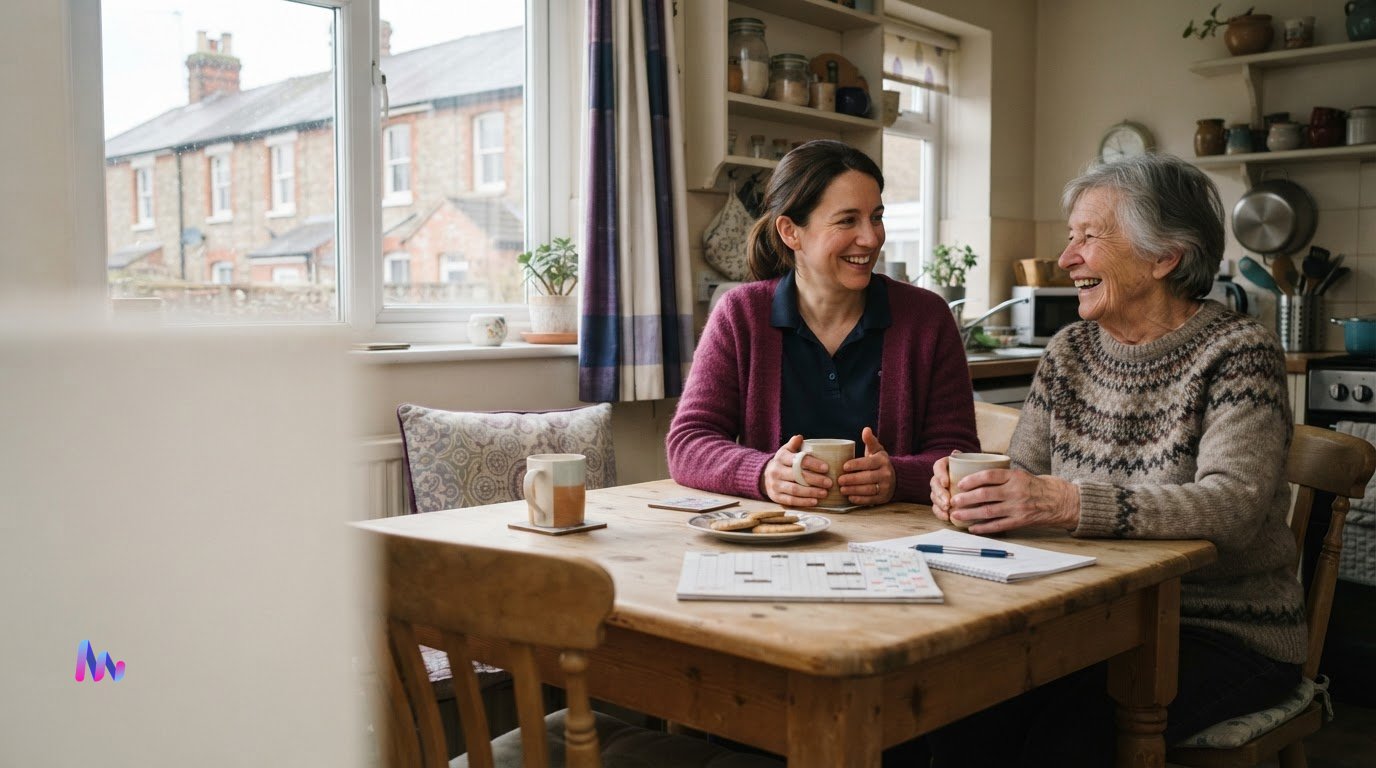
Age UK reports that 1.4 million older people in England are chronically lonely. Companionship care in Olney can offer friendly conversation, shared activities and practical day-to-day support, helping someone feel less alone while staying in familiar surroundings. Visits can be shaped around the person’s routines and interests across Olney and surrounding villages such as Emberton, Lavendon, Weston Underwood, Clifton Reynes and Cold Brayfield.
It’s understandable to worry when a loved one spends long stretches without company or seems less confident about getting out and doing the things they enjoy. The right support is personal: it might mean a regular chat over a cup of tea, a walk, a game or company on an outing.
This guide explains what companionship visits can include, who they may help and how social support can ease loneliness. It also compares hourly visits, overnight care and live-in arrangements, so you can consider what best fits your family’s needs.
Key Takeaways
See how companionship can provide conversation, reassurance and practical day-to-day help for someone who feels isolated.
Explore how visits can fit around familiar routines, personal interests and the support a person needs at home.
Understand how hourly visits, overnight support and live-in care differ, and what can shape the cost of each arrangement.
Discover how shared activities and regular social contact can bring connection and structure to everyday life.
Learn when live-in care from NeeryVille Care may be a suitable next step for someone who needs ongoing support at home.
Table of Contents
Company, conversation and emotional support
In Highgate, companionship care can bring conversation, reassurance and practical help into someone’s home. The right arrangement reflects the person’s routine, interests and need for company.
Conversation and emotional support
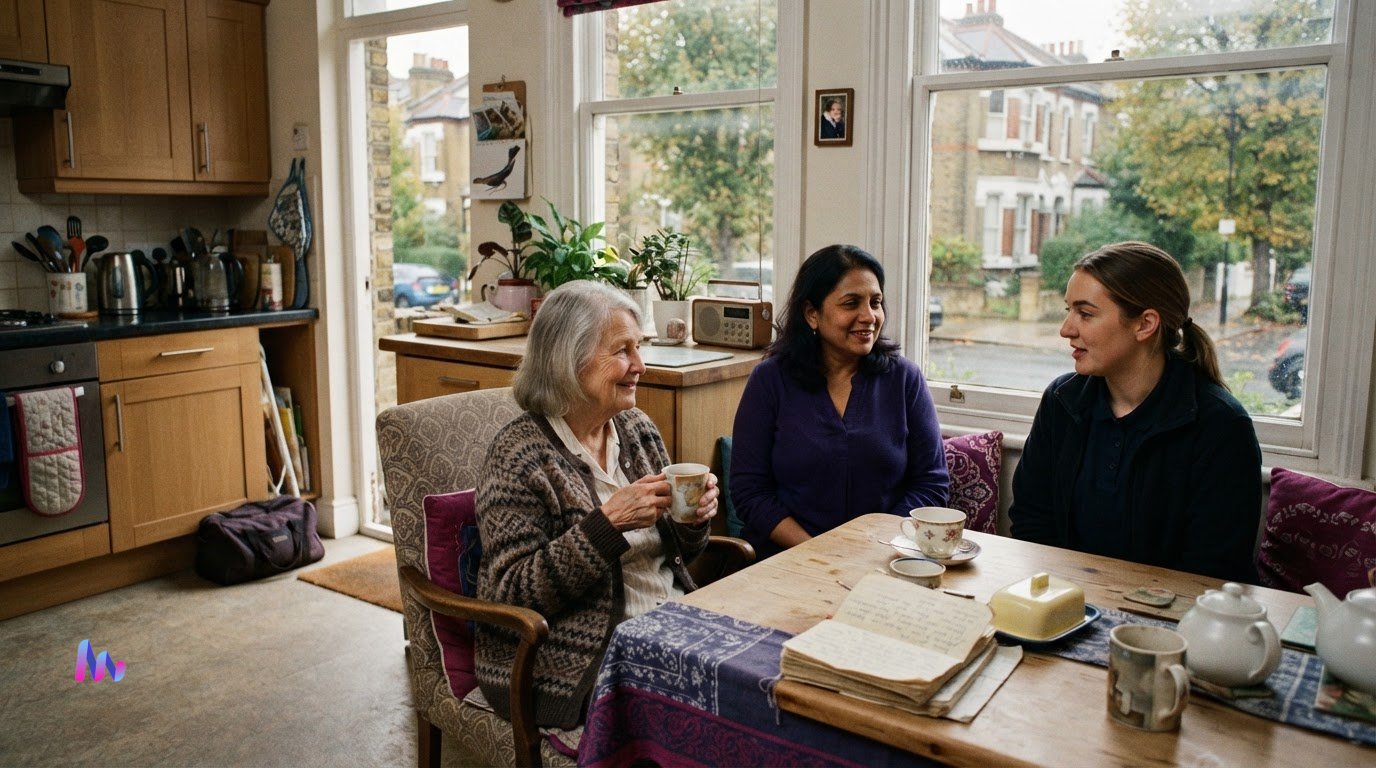
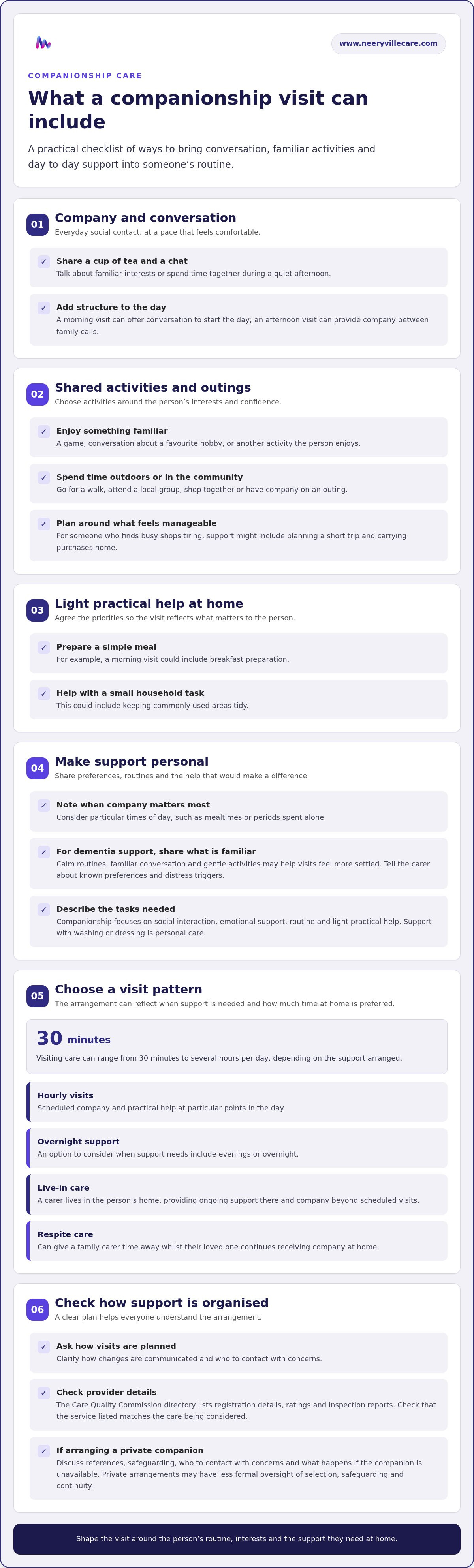
Companionship may suit an older adult living alone, someone recovering from illness or a person whose family lives further away. A visit might mean sharing tea, talking about familiar interests or sitting together during a quiet afternoon. These everyday moments can offer connection and reassurance while respecting the person’s choices.
To shape useful support, note when company would make the greatest difference. For example, a morning visit could help someone start the day with conversation, while an afternoon visit could give structure between family calls. In Highgate, companionship may also include light day-to-day help, such as preparing a simple meal or accompanying someone on an outing.
It’s helpful to distinguish companionship from personal care. Companionship focuses on social interaction, emotional support, routine and light practical help. Personal care may involve support with washing or dressing, so describe the tasks needed when discussing an arrangement.
Specialist companionship support
For someone living with dementia, calm routines, familiar conversation and gentle activities can make visits feel more settled. A carer might talk about a favourite hobby, offer reassurance when the person feels unsettled or help maintain a familiar daily rhythm. Share known preferences and distress triggers so support feels personal and unhurried.
Someone seeking care can look for relevant experience and ask how carers are selected, supported and prepared for the person’s needs. According to the UK Government, staff employed to carry on a regulated activity must be of good character and have the qualifications, competence, skills and experience necessary for their work. A private companion may not have the same agency oversight, so discuss references, safeguarding and what happens if concerns arise. The safeguarding approach is one useful example of a topic families can raise.
Companionship can be provided through hourly visits, overnight support or live-in care, depending on the person’s routine and needs. Respite care can also give a family carer time away while their loved one continues receiving company at home. Consider when support matters most, including evenings or overnight, and how much time a carer needs to spend in the home.
With a private companion, families may have less formal oversight of selection, safeguarding and continuity. Before agreeing on support, clarify the tasks, who to contact with concerns and what happens if the companion is unavailable. These questions help you understand how the care is organised and whether it fits the person’s needs.
Need help with care in Olney?
Home care in Highgate can provide company and practical support without changing familiar routines. Visits can be tailored to someone’s day, preferred activities and the help they need at home.
Flexible visits and hourly companionship
Visiting care suits people who value independent time but welcome company at particular points in the day. Visits can range from 30 minutes to several hours per day, depending on the support arranged. For example, a morning visit might offer conversation and breakfast preparation, whilst an afternoon visit could provide company after an appointment.
Before arranging visits, note when support would help most, such as at mealtimes or during periods alone. Include practical tasks and social preferences, then use these details to plan a consistent routine. This makes the arrangement more responsive to the person’s day.
Live-in companionship at home
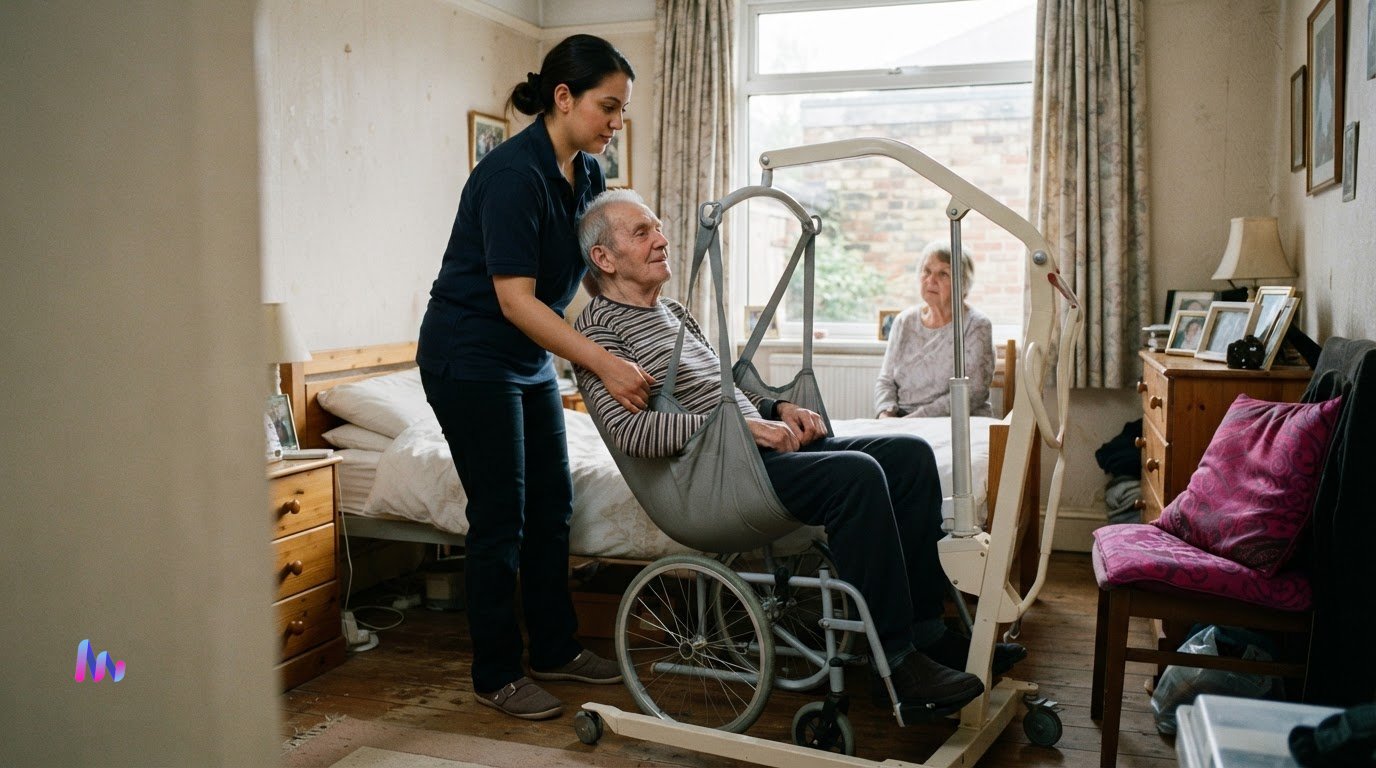
Live-in companionship means a carer lives in the person’s home and provides ongoing support there. It may suit someone who values company throughout the day rather than support limited to scheduled visits. Familiar surroundings remain part of daily life, including the person’s bedroom, meals and neighbourhood.
Consider how much help is needed during a typical day, including evenings and overnight. With live-in care, the carer stays in the home, so the care plan should clarify the practical support and routines involved. You can then discuss whether the arrangement suits the person’s preferences and circumstances.
Company, errands and help at home
Companionship may include a walk, a visit to a local group or company while shopping. At home, light help might involve preparing a simple meal or keeping commonly used areas tidy. Agree priorities beforehand so time together reflects what matters to the person, rather than becoming a list of chores.
Someone who finds busy shops tiring, for example, might prefer help planning a short trip and carrying purchases home. Another person may value conversation over tea and support with a small household task. These details help families explain the support they want and discuss how visits could fit existing routines in Highgate or nearby North London.
Checking agency registration and ratings
To check a provider’s CQC registration and rating, search its name in the Care Quality Commission’s directory. Review the registration details, rating and inspection report, including the reasons for the findings. Check that the listed service matches the care you’re considering, rather than relying on a rating alone.
Ask how visits are planned, how changes are communicated and how concerns are handled. These questions clarify how care is organised and whom to contact about the arrangement. A clear explanation of responsibilities helps you understand what support will look like in practice.
Local authority funding depends on an assessment of care needs and finances; NHS support is assessed separately. Families can prepare examples of daily routines, tasks and support needs to explain the situation during those discussions.
Hourly, overnight and live-in carer rates around Olney
Care costs depend on the type of support, how often it’s needed and the hours involved. Compare arrangements by matching the support to the person’s routine, not by looking at a rate alone.
Comparing care rates
Hourly care is arranged around scheduled visits, while overnight care supports a person at night. Live-in care involves a carer living in the home to provide ongoing support. Because the arrangements cover different needs, compare what each includes before deciding.
The price depends on the case and is given after a quote request; factors include visit length and frequency, the support required, and whether overnight care involves waking or sleeping nights. For live-in care, consider the level of day-to-day assistance alongside the need for a resident carer. These details shape the arrangement and its cost.
When comparing care, write down the expected routine first. Include the times when company or practical help matters, such as evenings, meals or getting ready for bed. Then consider whether hourly visits, overnight care or live-in support best suits the person. An hourly rate alone does not show the same coverage as support overnight or throughout the day.
Ask what the arrangement includes, how scheduled hours are counted and how changes to the routine are handled. Someone who needs company during the day may have different requirements from someone needing overnight support. Clear details make it easier to compare similar arrangements, rather than judging different types of care on price alone.
Olney and nearby areas served
Olney is near villages including Emberton, Lavendon, Weston Underwood, Clifton Reynes and Cold Brayfield. When considering care, identify the person’s home location and the places they need to reach, such as local shops or social activities. The journey involved can affect which visiting arrangement works best.
Which providers serve Olney and nearby villages? Coverage varies, so look for services that specify Olney and the relevant nearby village rather than assuming every address is covered. Nearby areas include Emberton, Lavendon, Weston Underwood, Clifton Reynes and Cold Brayfield.
When choosing a provider, consider its stated coverage, the types of visits offered and how the care plan reflects the person’s routine. Ask how visits can support planned outings as well as time at home. These practical details help show whether hourly, overnight or live-in care suits the location and daily needs.
Conversation, shared activities and cognitive stimulation
Conversation and familiar activities can give a visit purpose, connection and a comfortable rhythm. In Olney, begin with the person’s preferences, routines and energy on the day.
Conversation and shared activities
A companion can build conversation around familiar subjects, such as family photographs, a favourite television programme or local memories. Listening matters as much as asking questions; pauses and gentle prompts let the person set the pace. A shared game or reading aloud can also make quiet time feel more connected.
Note topics the person enjoys, subjects they prefer to avoid and activities that bring comfort. A short conversation over tea may suit someone who tires easily, while another person may enjoy discussing the news. If medication is part of their routine, record its usual timing separately so companionship activities fit comfortably around the day.
Hobbies and engaging activities
Choose familiar, manageable hobbies rather than introducing a demanding new activity. Reading, gardening, simple games and sorting photographs offer different ways to take part. Someone who once enjoyed gardening, for example, might water indoor plants or sort seed packets with a companion.
At-home activities may help maintain fine motor skills and offer therapeutic benefits. Keep the activity flexible: a person might handle large buttons while talking, turn book pages, or arrange flowers at the table. Watch for signs of tiredness or frustration, then pause or switch to a calmer option. The aim is meaningful participation, not completing a task.
Social activities and community connections
Support with social activities can help someone maintain familiar connections beyond the front door. A companion might join them on a walk, help with shopping or attend a community group together. For an outing in Olney, agree on the destination and pace beforehand, and allow time for rest or conversation along the way.
Start with the person’s preferences: a familiar group may feel easier than a busy new event. Consider practical details such as transport, mobility and the best time of day. A family member can share what has worked before, such as a quieter route or regular club. This information helps make outings more comfortable and personally meaningful.
Companionship care can support someone living with dementia through calm routines, familiar conversation, reassurance, gentle activities and regular social contact. Friendly conversation offers connection and can help ease loneliness.
Loneliness and social isolation in later life
Loneliness can affect emotional wellbeing, daily confidence and a person’s sense of connection. Age UK reports that 1.4 million older people in England are chronically lonely.
Emotional wellbeing
A regular, familiar visit gives someone time to talk and feel listened to. This can matter when bereavement, reduced mobility or a change in health makes ordinary social contact harder. Notice practical changes, such as avoiding the telephone or losing interest in a favourite routine.
Families can start with a simple conversation about what the person misses most. They may want company at lunchtime, help planning a visit or reassurance before an appointment. Arrange support around those preferences and share useful details with the carer, such as topics the person enjoys and when they feel most at ease.
Companionship is not a substitute for mental health care. If someone describes persistent distress or a serious change in mood, involve their GP or another appropriate health professional. A companion can offer attentive company and help the person stay connected while clinical concerns receive suitable attention.
Reducing loneliness and isolation
Regular contact can make social plans feel more manageable. A companion might help someone prepare for a shopping trip, accompany them to a familiar group or share conversation at home afterwards. These small steps can support connection without requiring the person to change routines or leave home on every visit.
Try making a simple weekly plan with the person. Include a preferred visit time, an activity they enjoy and a way to keep in touch with family or friends. If going out feels difficult, begin with a short walk or a conversation at the doorstep. Adjust the plan to their energy, comfort and choices.
Practical help can also make social contact easier. Support with shopping, for example, may help someone choose ingredients for a meal with a relative. A companion could help plan the outing and provide company along the way, while keeping the person involved in decisions. The aim is participation, not taking control.
Families can review the plan together after a few visits. Ask which conversations or activities felt enjoyable and whether the timing suited the person. Keep what works and change what doesn’t. This considered approach can reassure relatives while helping the person retain choice and meaningful contact.
Age UK’s figure describes loneliness across England, not any individual’s circumstances. In Olney, family members can notice changes in someone’s usual social pattern and discuss what support might help. A familiar chat, a shared errand or company at home can each be a practical first step.
NeeryVille Care: Live-in Care
NeeryVille Care provides live-in care across England for people who need ongoing support while remaining in familiar surroundings. The same carer stays in the person’s home each day, providing practical help and company as part of daily life. This may suit someone whose needs extend beyond occasional visits.
Support can also include dementia care, visiting care or end-of-life care, depending on the person’s circumstances. If your family is considering a move from visits to more support at home, discuss the person’s routines, preferences and needs with NeeryVille Care. Its CQC-regulated care is personalised around the individual and their dignity.
Contact NeeryVille Care to discuss care options for your family.
Choose a next step that feels right for your family
There’s no need to solve every aspect of care at once. Start by talking with your loved one about what could help them feel more connected and comfortable at home. Their views can guide the first conversation and keep their dignity at the centre of decisions.
When considering companionship care in Olney, focus on what a good day looks like for the person and what support could make it easier. A thoughtful conversation can turn concerns into a practical starting point without rushing a decision.
NeeryVille Care can discuss your family’s circumstances and help you consider a suitable way forward. Share what matters most, including the person’s wishes and the support you hope to arrange.
One small, considered step can make the way forward feel clearer. Take it at your family’s pace.
Frequently Asked Questions
How quickly can I start?
NeeryVille Care says care can be arranged within 24 to 48 hours of the initial assessment. To make that conversation useful, prepare a short outline of the person’s daily routine, preferred support and important household arrangements. You can also note which tasks matter most at the start. NeeryVille Care provides the same carer for every visit or day, helping keep the agreed support consistent.
How much does companionship care cost per hour in Olney?
The hourly cost depends on the support needed and is provided after a quote request. Factors include how long each visit lasts, how often visits take place, and whether help with daily living tasks forms part of the plan. A clear outline of preferred visit times and tasks will help shape a personalised quote. Compare the proposed support with the person’s actual routine, rather than considering hourly cost alone.
Can companionship carers in Olney help with shopping, appointments, and meal preparation?
Companionship support can include company while shopping or attending appointments, as well as meal preparation at home. A carer might accompany someone to an appointment, then help prepare lunch afterwards. Explain which outings matter, what meals the person enjoys and their shopping preferences. This helps shape support around everyday choices while keeping the person involved in decisions.
How quickly can companionship care start in Olney?
NeeryVille Care provides live-in care across England. Visiting care is available in Highgate and surrounding North London within a five-mile radius, including local communities such as Crouch End, Hornsey, Camden, Hampstead, Finsbury Park, Kentish Town, Tufnell Park, Haringey and Angel. For someone in Olney, this distinction matters when considering care at home. Call NeeryVille Care to discuss the person’s routines, companionship needs and suitable options.