Top-Rated North London Domiciliary Care: 2026 Guide

Updated: Sep 26

How do you find care you can trust in North London, without worrying that a different person will arrive at the door each day? Choosing top-rated domiciliary care North London involves more than checking a rating. The right support should also feel safe, familiar and respectful of the person’s independence.
It’s understandable to feel overwhelmed. Agencies differ, and it isn’t always clear where household help ends and regulated personal care begins. You may also be trying to understand what CQC regulation means in practice and how a provider supports someone at home.
This guide will help you compare providers with greater confidence. We’ll explain what to look for in CQC information, what to ask about safeguarding and care plans, and how to check whether a consistent carer can be arranged. We’ll also clarify the difference between domestic support and personal care, so you can focus on the help your loved one actually needs.
For families in Highgate, Hampstead and across North London, continuity matters as much as credentials. NeeryVille Care is a CQC-regulated provider of domiciliary and live-in care, with personalised support at home. Take each step at your own pace. A clearer picture can make the next decision feel more manageable.
Table of Contents
What is Domiciliary Care and Why Does Quality Vary in North London?
Domiciliary care is support provided in someone’s own home, helping them manage daily life while remaining in familiar surroundings. It can include companionship, meal preparation and help with personal routines. The phrase domiciliary care in the UK covers a range of services, so ask exactly what an agency provides, when support is available and how it is overseen.
Families can face a choice paradox: plenty of names to compare, but no simple way to tell which service fits their needs. Quality isn’t only about completing a list of tasks. Person-centred care takes account of someone’s preferences, routines and dignity, adapting support around the person rather than expecting them to fit a fixed schedule. That distinction matters when you’re looking for top-rated domiciliary care North London.
Regulated Care vs. Domestic Help: Why the Difference Matters
Cleaning, laundry and basic household tasks are domestic help. Personal care is different: it can include assistance with washing, dressing or eating. In England, providing personal care as a regulated activity generally requires the provider to register with the Care Quality Commission (CQC). Check the provider’s CQC status and report, and clarify whether the proposed support is regulated care or household help.
Some introductory agencies arrange a connection between a family and a carer rather than directly providing care. Don’t assume every arrangement is regulated in the same way. Ask who employs the carer, who manages the care, and who is responsible for checking training, suitability and insurance. These questions help you understand who to contact if something goes wrong. A regulated provider offers an accountable care structure, but families should still ask how staff are selected, trained and supported. For practical information about safeguarding, see NeeryVille Care’s London care support.
The North London Care Landscape in 2026
Families in Highgate N6, Crouch End N8, Hornsey, Camden, Hampstead, Finsbury Park, Kentish Town, Tufnell Park, Haringey and North London may compare visiting support with more extensive home care. Other areas to consider include Hungerford, Chelsea, Kensington, Hillingdon, Enfield and Hackney. Availability and travel arrangements can vary, so check that the provider covers the person’s specific address and can provide the planned visits consistently. Ask how visits are scheduled, how delays are handled and what happens if a regular carer is unavailable.
Local community centres may offer opportunities for social contact, activities or community information. They can complement care at home, but they aren’t a substitute for personal care or support from a regulated provider. The best arrangement may bring these strands together: care shaped around the individual, familiar routines at home and suitable connections with the local community.
How to Identify Top-Rated Care: The CQC Framework and Beyond
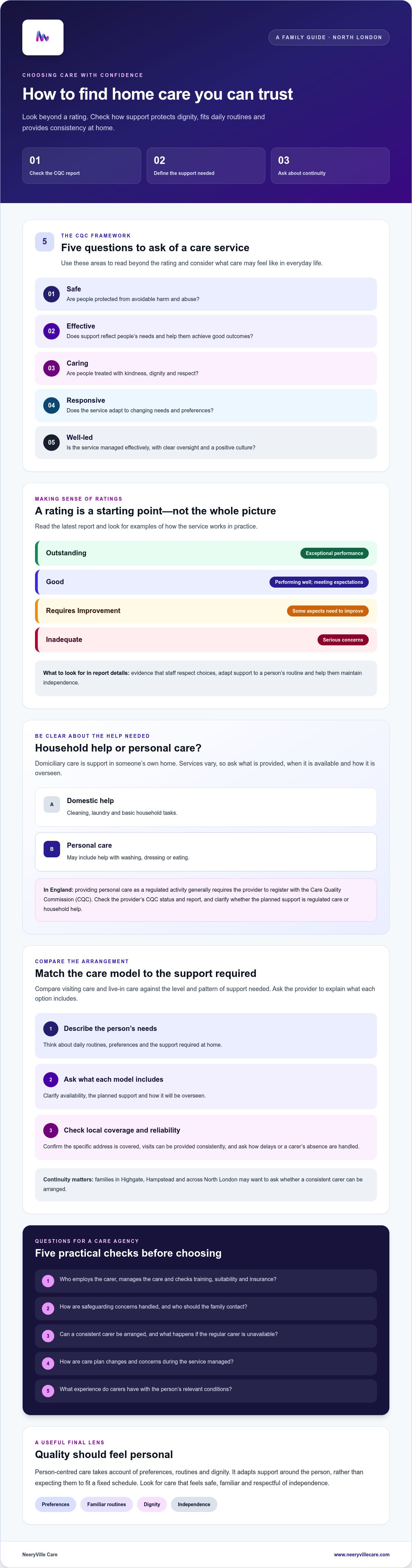
A CQC rating is a useful starting point, not a substitute for understanding what daily support will feel like. The Care Quality Commission assesses services against five key questions. Together, they help families look beyond a badge and consider safety, skill, dignity and reliability. For anyone comparing top-rated domiciliary care North London, read the latest report and check that it relates to the service you’re considering.
Safe: Are people protected from avoidable harm and abuse?
Effective: Does support help people achieve good outcomes and reflect their needs?
Caring: Are people treated with kindness, dignity and respect?
Responsive: Does the service adapt to people’s changing needs and preferences?
Well-led: Is the service managed effectively, with clear oversight and a positive culture?
Decoding CQC Ratings for Home Care
Outstanding means a service is performing exceptionally; Good means it is performing well and meeting expectations. Requires Improvement signals that aspects of the service need to improve, whilst Inadequate indicates serious concerns. Ratings offer an overview, but report details can show what those findings mean in practice. Look for examples of staff respecting a person’s choices, adapting support to their routine and helping them maintain independence. A Good rating in Caring may matter greatly to families concerned about warmth and dignity, but consider all five areas together.
Safeguarding is part of that picture. Ask how concerns are recognised, recorded and acted upon, and who you or your relative can speak to if something doesn’t feel right. NeeryVille Care outlines its approach in its safeguarding information. You can also compare a provider’s approach with the NICE quality standard for home care, which sets out quality statements relevant to person-centred support.
Beyond the Badge: Signs of a Truly Caring Agency
Notice how the provider learns about the person before care begins. An assessment in a Highgate or Hampstead home should invite discussion about routines, preferences, communication and the support needed, rather than treating the visit as a checklist. Ask how carer absences or emergencies are handled, and what steps are taken to preserve continuity. Ask any provider to explain what continuity means in practice and how a replacement carer would be briefed.
Finally, request a clear written agreement that sets out the services, visit arrangements, responsibilities and charges. Transparent information makes it easier to compare like with like and avoid surprises. Family feedback can add useful context, too. Look for specific accounts of communication, reliability and how the service responds when needs change, rather than relying on praise alone.
Comparing Care Models: Hourly Visiting vs Live-in Care
The right care model depends on how much support is needed, when it’s needed and how the person feels about having help at home. Visiting care brings a carer in for agreed visits, whilst live-in care provides support from a carer who stays in the home. Neither is automatically the better choice. The aim is to match support to the person’s routines, safety needs and wish for independence.
Hourly Visiting Care: Flexibility in Highgate
Visiting care can suit someone who manages well alone for much of the day but would value help at particular times. Visits might focus on medication support, meal preparation, personal care or companionship. A planned visit can offer a gentler introduction to support, while allowing the person to keep familiar routines and time to themselves between visits. Find out more about visiting care in Highgate.
There are limits to consider. A schedule of visits won’t provide someone to call on between them, so think carefully about what happens if needs change or unexpected help is required. In North London, ask how the provider plans travel between appointments and manages delays, particularly if visits need to happen at specific times. Local knowledge can help with practical planning, but the provider should explain how it supports punctuality and continuity.
Live-in Care: Safety and Continuity at Home
Live-in care may suit a person who needs more frequent assistance or reassurance throughout the day, but wants to remain at home. Having a carer present can make everyday support more accessible and help preserve familiar surroundings. It can be an alternative to moving into residential care, though the right option depends on the person’s needs, preferences and home circumstances. Live-in care shouldn’t be taken to mean uninterrupted one-to-one attention, so ask how support, breaks and overnight arrangements work.
It may be considered for someone living with dementia or recovering after a stroke, where familiar surroundings and consistent support may be particularly valued. NeeryVille Care offers live-in care in London. Ask how the provider maintains continuity if a carer is absent and how any replacement would be introduced.
Costs need a like-for-like comparison. Add up the planned visiting hours and ask each provider for a clear breakdown of what’s included. Then compare that with live-in care, including the support arrangements and any additional charges. There’s no universal point at which one model becomes less cost-effective: it depends on the hours, needs and terms offered. For families comparing top-rated domiciliary care North London, also consider the emotional balance. Visits can protect privacy and independence between calls; live-in care can offer greater day-to-day companionship and reassurance. A careful assessment should make space for both.
5 Critical Questions to Ask a North London Care Agency
Choosing care can feel personal and urgent at the same time. These questions help you understand not just what a provider promises, but how its arrangements would work for your family. Compare answers in writing where possible, and ask for clarification if anything feels vague.
How do you ensure my parent sees a familiar carer? Ask how continuity works in practice, who would step in if the regular carer is unavailable, and how a replacement would be introduced. Familiarity can be especially reassuring for someone with memory difficulties.
What training do your carers have for Parkinson’s or dementia? Ask about training relevant to your parent’s needs, how staff apply it during everyday support, and whether they receive guidance when needs change. You can also ask how carers are prepared for moving and handling and medication support, if these are part of the care plan.
How quickly could care begin after an emergency, such as a hospital discharge? Avoid relying on a general promise of a rapid start. Explain the situation and ask for a realistic timeframe, what assessment or planning must happen first, and what could affect the start date.
Can you provide local references from families in Highgate, Hampstead or Camden? Ask whether families have agreed to share feedback or whether you can read relevant testimonials. Respect for privacy may limit direct introductions, so consider how the agency handles that request and look for specific comments about communication and reliability.
Do you offer a trial period or guarantee, and what does it cover? Ask for any terms in writing, including what the period applies to, any conditions and how to raise concerns. Don’t assume a trial or guarantee is included unless the provider confirms it.
Continuity and Training: The Foundation of Trust
A familiar carer may help someone with memory impairment feel more settled and make everyday routines easier to follow. Still, ask how cover is arranged and how new carers are briefed. Training matters too: find out how the provider checks that carers can support the person safely and respectfully, including with mobility or medication tasks identified in their plan.
Responsiveness in the North London Community
For families in Highgate, Hampstead or Camden, ask who coordinates care and how updates are shared, especially if relatives live elsewhere. Agree who to contact, how changes will be communicated and what the provider needs from the hospital or family to plan a discharge transition. Local knowledge can help, but clear responsibilities and honest timeframes matter most.
These conversations can help you judge whether an agency’s promises fit your family’s needs. If you’re considering NeeryVille Care, you can discuss your situation and ask about its care arrangements.
The NeeryVille Difference: Compassionate Care in Your Community
Choosing care is about more than arranging practical help. Families also want their loved one to feel respected, safe and at ease with the person coming into their home. NeeryVille Care provides CQC-regulated domiciliary and live-in care, with domiciliary care focused on North London areas including Highgate and Hampstead. Its personalised support is shaped around the individual’s needs and can include companionship, medication management and help with daily living tasks.
When comparing top-rated domiciliary care North London, ask how care plans are shaped around changing needs and how continuity is maintained. Ask who would provide cover if a regular carer is unavailable, and how your family would be kept informed. Clear answers help you understand what the service can offer and whether it suits your loved one’s routines.
Tailored Support for Complex Conditions
NeeryVille Care offers support at home for people living with dementia and provides personalised assistance with daily living. The right plan depends on the individual, so families can ask how carers will learn about daily routines, communication preferences and practical support needs. Read NeeryVille Care’s live-in dementia care case studies for examples of the provider’s work.
Care can also include meal preparation and light housekeeping. These practical tasks may help keep daily life more manageable, while support is delivered in the person’s own home. Families should discuss which tasks matter most and how they can be included without making the day feel rushed or overly structured.
Starting Your Care Journey in North London
Before care begins, ask the provider to explain its process clearly. You might expect to:
Share your family’s needs and ask whether the person’s location is within the service area.
Discuss the support required, routines, preferences and any questions about the proposed care plan.
Agree the service arrangements and understand what needs to happen before the first visit.
These are useful points to clarify, not a promised timetable or fixed process. If you’re in Highgate, Hampstead or Camden, ask how the team will keep your family informed and who you can contact with questions. You can also ask whether a home assessment is available, and whether it carries any cost or obligation, before making a decision.
If you’re considering home care, start a conversation with NeeryVille Care about your family’s needs, the support available and the next steps.
Take the Next Step Towards Care That Feels Right
Choosing top-rated domiciliary care North London means looking beyond a rating: check that the provider is CQC-regulated, understand exactly what support and costs are included, and ask how it will protect continuity. The right care model should meet your loved one’s needs whilst respecting their routines, dignity and independence.
NeeryVille Care supports families with domiciliary and live-in care. Ask about the proposed care arrangements, what is included and how the service would work for your family before deciding. You don’t need to have every answer straight away. A calm conversation can help you understand the options and feel clearer about what comes next.
With the right information and a familiar, person-centred approach, support at home can feel more manageable for everyone. Take the next step at a pace that feels comfortable.
Frequently Asked Questions
What is the average cost of domiciliary care in North London in 2026?
There isn’t one reliable average that will reflect every family’s care plan, and we can’t quote a service price here. Charges depend on the type and amount of support, visit length and provider’s terms. Ask for a written breakdown covering scheduled visits, tasks included and any additional charges. To compare top-rated domiciliary care North London, request quotes based on the same needs and visit pattern, so you can assess them fairly.
Is domiciliary care better than a residential care home for dementia patients?
Neither option is automatically better; the right choice depends on the person’s needs, preferences and safety. Home care may allow someone to remain amongst familiar belongings and routines, with support planned around them. A residential care home may be worth considering if their needs can’t be met safely at home. Discuss changing needs with appropriate health and social care professionals, and ask providers how they support people living with dementia.
How do I check if a North London care agency is CQC-regulated?
Search for the provider on the Care Quality Commission (CQC) website and check that its registration covers the service you’re considering. Read the latest inspection information and rating, then confirm the provider’s identity and service details directly with the agency. Registration and ratings are useful checks, but they don’t replace asking how care will work day to day, including safeguarding, staff training and continuity.
Can I get help with funding for home care from my local council, such as Camden or Haringey?
You may be able to get council support, depending on an assessment of your care needs and finances. Contact the relevant council, such as Camden or Haringey, to ask about a needs assessment, financial assessment and possible funding. The rules and outcome depend on individual circumstances. The government’s guidance on financial assessments for care explains what councils consider. Ask the council what steps to take before arranging paid support.
What happens if our regular carer is unwell or on holiday?
Ask the agency how it arranges cover, whether a replacement carer would be introduced in advance, and how your family will be told about changes. Also clarify what happens if no suitable replacement is available. Discuss how continuity is managed during absences and what arrangements would apply to your particular care plan.
Do your carers provide help with shopping and light housekeeping in Highgate?
NeeryVille Care lists Home Help and light housekeeping among its services, and its domiciliary care focuses on North London, including Highgate. Ask the team whether the specific tasks you need, such as shopping, can be included in the proposed arrangement. Clarify who would carry out each task, how it fits with personal care or meal preparation, and whether it can be agreed in the written care plan.
Can I arrange overnight care if my parent becomes disoriented at night?
Overnight support may be an option to discuss if your parent becomes disoriented or needs reassurance at night. NeeryVille Care lists overnight care, waking night and sleeping night support. Explain what happens overnight, how often help may be needed and what support is required. Ask the provider which arrangement may suit those needs, what it includes, and how the plan can be reviewed if your parent’s situation changes.
How quickly can domiciliary care start after a hospital discharge?
There isn’t a confirmed start time that applies to every discharge. Timing depends on the person’s needs, the provider’s availability and the planning required before care begins. Contact the agency as early as possible, explain the expected discharge date and ask what assessment, care plan and information it needs. NeeryVille Care offers Care After Hospital Discharge; confirm directly whether it can meet your family’s timing and support requirements.