Taking Medication Correctly at Home: A Practical Guide


What if a safer medication routine could support someone’s independence, rather than take it away? Ensuring medication is taken correctly at home can feel daunting when doses are missed, several medicines have different instructions, or you’re unsure what has already been taken. It’s understandable to worry about making a mistake, especially when you’re trying to help someone you love.
A clear, familiar routine can make medicines easier to manage while keeping the person’s preferences and dignity at the centre. This guide covers practical ways to organise instructions, build helpful daily habits and keep track of doses. It also explains what to do if a dose is missed or uncertain, including when to seek advice from a pharmacist or GP rather than guess or give an extra dose. If managing medicines is becoming difficult, personalised home-care support can help reinforce an established routine alongside everyday assistance and companionship, without taking more independence than needed.
Table of Contents
Why taking medication correctly at home can feel difficult
Medicine instructions and daily routines can change, making a familiar system less reliable. A new tablet, a different time of day or a note added after an appointment may leave you unsure which instructions are current. If you’re focused on ensuring medication is taken correctly at home, that doesn’t mean you’ve failed or that the person can no longer manage independently. It’s a reason to pause and make the routine clearer.
Medication adherence means taking medicines as prescribed, following the agreed dose and timing. In everyday life, a medication routine is a clear, repeatable way to fit prescribed medicines into the day and keep track of what has been taken. It can make the next step easier to remember, but it doesn’t replace advice from a GP or pharmacist about the medicine itself. The overview of medication adherence also describes how practical and personal factors can affect whether someone follows a prescribed routine.
What can make a medication routine harder to follow?
Several medicines may have different directions. One might be taken at a particular time, while another has different instructions on its label. Similar-looking packets, medicines stored in different places or packaging that’s difficult to open can add to the uncertainty. A routine that worked well before may need reviewing when a prescription changes.
Changes after an appointment or hospital stay can be especially disruptive. A medicine may have been stopped, added or adjusted, leaving older notes or packets alongside the current instructions. Rather than relying on memory or assumption, clarify the current list with a pharmacist or GP before settling back into a routine.
Personal circumstances can make things harder, too. Memory changes may affect whether someone recalls taking a dose. Poor eyesight can make labels difficult to read, while reduced dexterity can make packets awkward to handle. Someone may also feel uncomfortable accepting help if they’re concerned it will limit their independence. These are practical difficulties, not a reason for blame.
How can routine support independence?
A useful routine works around the person’s life, not against it. Linking a dose with an existing habit, such as sitting down for breakfast, may provide a familiar cue, as long as the prescribed timing allows it. A written record or reminder can show what has already happened, particularly when family members share support.
Keep the person involved wherever possible. They might choose where reminders are kept, which cue feels natural or whether they’d prefer a family member to check in. That choice can make support feel respectful rather than controlling. Reminders can help someone follow their instructions, but they can’t determine whether a medicine is suitable, whether a dose should change or how to respond to a concern. Those questions belong with a GP or pharmacist. The routine’s purpose is to make the agreed plan easier to follow, calmly and consistently.
How to Make Home Medication Routines Safer and Easier
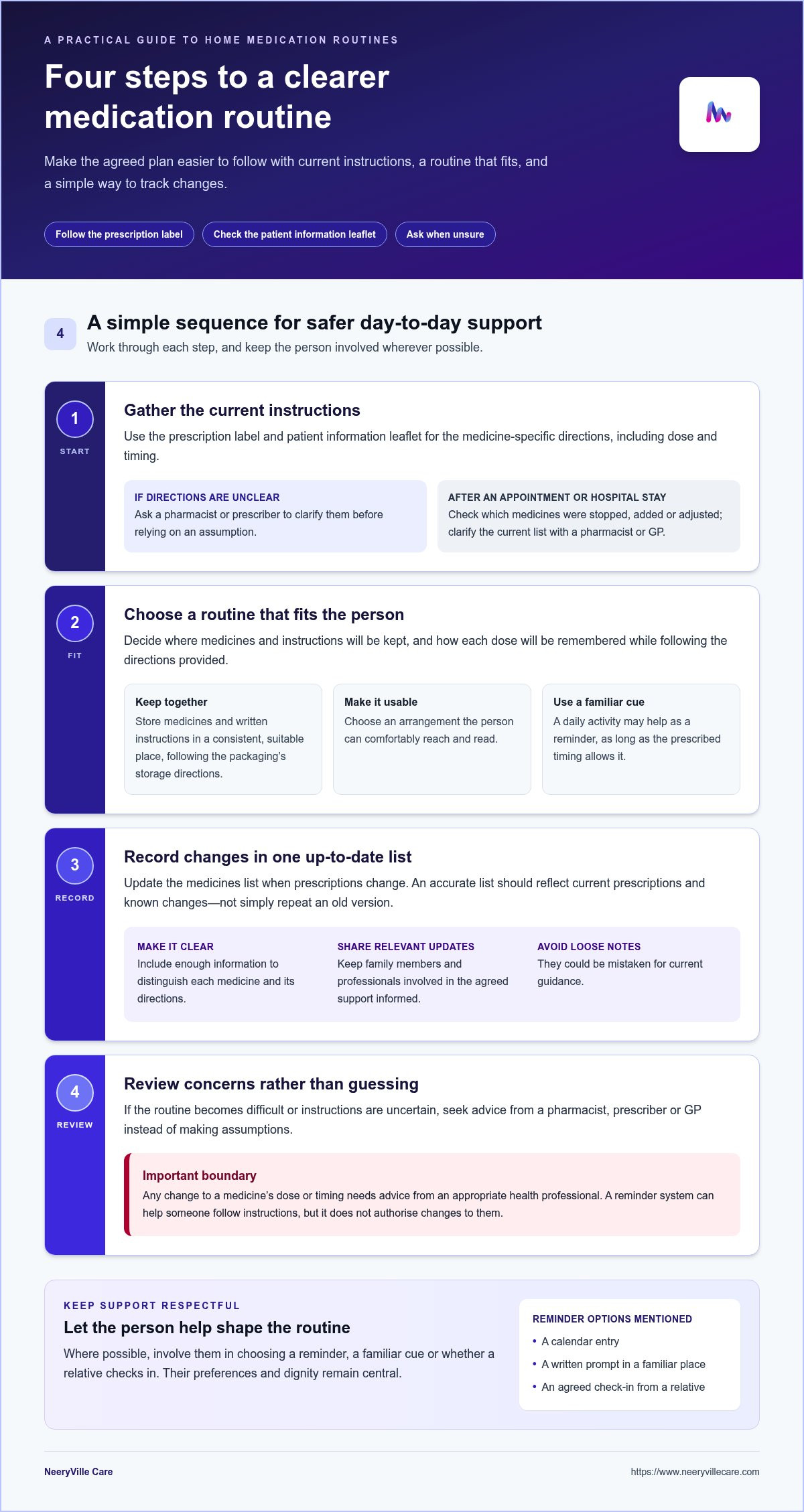
Start with a clear picture of what the person currently takes. For ensuring medication is taken correctly at home, keep the process manageable: gather current instructions, choose a practical way to follow them, record changes and review concerns. A short written plan can help everyone involved understand the agreed routine.
Gather current instructions. Use the prescription label and patient information leaflet for medicine-specific directions, including dose and timing. If information appears unclear or inconsistent, ask a pharmacist or prescriber to clarify it.
Choose a routine that fits. Decide where medicines and instructions will be kept and how the person will remember each dose while following the directions provided.
Record changes. Update the medicines list when prescriptions change. Share relevant updates with family members or professionals involved in the person’s agreed support.
Review concerns. If the routine becomes difficult or instructions are uncertain, seek advice rather than make assumptions.
How can families organise current instructions?
Keep medicines and written instructions together in a consistent, suitable place where they’re easy to find and stored safely. Follow the storage directions on the packaging. Avoid relying on loose notes that could be mistaken for current guidance. Choose an arrangement that works for the person, including what they can comfortably reach and read.
An accurate medicines list should reflect current prescriptions and known changes, not simply repeat an old version. Include enough information to distinguish each medicine and its directions, and share relevant updates with the person’s GP, pharmacist or agreed care support. If a label, leaflet or list is difficult to understand, ask the prescriber or pharmacist to explain it before relying on an assumption.
Any change to a medicine’s dose or timing needs advice from an appropriate health professional. A reminder system can help someone follow their instructions, but it doesn’t authorise changes to them.
How can reminders fit into daily life?
Choose a reminder that suits the person. It could be a calendar entry, a written prompt in a familiar place or an agreed check-in from a relative. Keep the system simple, and make sure anyone sharing reminders knows how doses are recorded. That can reduce confusion about whether a dose has already been taken.
A familiar daily activity may provide a useful cue, as long as the medicine’s prescribed timing allows it. Pill organisers and other medication aids aren’t suitable for every medicine or person, so ask a pharmacist or prescriber before using one. If keeping an agreed routine organised is becoming difficult, NeeryVille Care can provide personalised home support that respects the person’s choices.
When should someone manage medicines alone, and when is support helpful?
There isn’t one right level of help for everyone. Some people prefer to manage their medicines independently, perhaps with a written record or reminder they’ve chosen. Others welcome a family check-in or practical support agreed as part of their home-care arrangements. Ensuring medication is taken correctly at home isn’t about taking control away; it’s about finding support that fits the person’s needs and wishes.
Forgetfulness on its own doesn’t prove that someone can’t make decisions about their care. They may be adjusting to a new instruction, coping with difficult packaging or finding that their usual system no longer suits them. Start by asking what feels hard and what kind of help, if any, they would find useful. Involve them in decisions wherever possible.
What signs suggest extra practical help may be useful?
It may be time to discuss additional help if the person repeatedly worries about whether they’ve taken a dose, struggles to follow written instructions or finds packaging difficult to open. Look for patterns without blame. Does confusion arise after a prescription change, at a particular time of day or when several people are helping? These details can help shape a practical response.
Talk with the person first. Then involve a pharmacist, GP or prescriber if medicine instructions or health concerns need clarification. Practical support might mean a trusted relative checking an agreed record, or care support that follows the person’s established instructions and arrangements. Keep support proportionate and review it if circumstances change, rather than automatically taking over tasks the person can still manage.
What is the difference between medication support and clinical advice?
Medication support is practical help to follow an agreed routine in line with the person’s care arrangements. Depending on the agreed role, this might mean giving a prompt or helping keep track of what has happened. It isn’t a substitute for clinical judgement. Carers don’t prescribe medicines, interpret symptoms or decide to change a dose. Questions about whether a medicine is suitable or what an instruction means should go to a pharmacist, GP or prescriber.
Families can feel stretched when they’re trying to monitor medicines alongside work, relationships and other caring responsibilities. That strain deserves attention, too. If the responsibility is affecting your wellbeing, Carers UK’s support and advice for carers may offer a helpful starting point. Asking for practical help isn’t a failure of love or commitment. It can make support steadier for everyone while keeping the person’s dignity and choices in view.
What to Do if a Dose Is Missed or Medication Is Uncertain
Finding an untaken tablet or being unsure whether a dose has already been taken can feel alarming. Pause before acting. Guessing, taking an extra dose or changing the next dose could create further risk, and the right advice depends on the specific medicine. Start by checking what you know.
What should you do after a missed or uncertain dose?
Work through these steps without rushing:
Pause and establish what’s known. Check the person’s medication record, packaging and any agreed notes. Don’t assume a dose was missed simply because you can’t remember seeing it taken.
Identify the medicine. Note its name, strength and the time the dose was due. Check the prescription label and patient information leaflet for medicine-specific directions about a missed dose.
Ask for advice if anything remains unclear. Contact a pharmacist or the prescriber for guidance on what to do next. Don’t double a dose, take an extra one or alter the schedule unless the medicine’s instructions or a health professional specifically advises it.
Make a brief record. Note what happened and any advice received, so the person or anyone supporting them has a clear account to refer to.
There isn’t one missed-dose rule that’s safe to apply to every medicine. If the leaflet doesn’t answer the question, or the instructions are difficult to understand, ask rather than rely on general advice. This is especially important if several medicines are involved or the prescription has changed. Clear information helps the pharmacist or prescriber give advice relevant to that medicine and situation.
What if the wrong medicine or dose may have been taken?
Seek prompt professional guidance if the person may have taken the wrong medicine or amount. Don’t wait for symptoms to appear before asking what to do. Keep the packaging and medicines list nearby, and be ready to explain what may have been taken, how much and when, if known. If details are uncertain, say so; a guess could mislead the person advising you.
For urgent medical advice in England, contact NHS 111. If someone is seriously unwell or their life may be in danger, call 999. Follow the call handler’s instructions and share the medicine packaging or details with emergency responders. For a life-threatening emergency, don’t delay calling 999 while trying to establish every detail.
Once the immediate concern has been addressed, repeated missed or uncertain doses may indicate that the current routine needs more practical support. A personalised plan can help reinforce agreed instructions without changing them. NeeryVille Care provides medication support as part of personalised home care. Discuss practical medication support at home.
How NeeryVille Care can support medication routines at home
When a medication routine starts to feel difficult, practical support can make each day more manageable without taking away the person’s say in how they live. NeeryVille Care provides personalised medication support as part of home care, helping reinforce agreed routines while respecting each person’s dignity, preferences and independence.
Support is shaped around the person, not just a list of tasks. They may want a prompt at an agreed point in the day, help keeping track of their routine or support alongside other everyday activities. The approach is based on their needs and care arrangements. Care workers follow agreed instructions; they don’t prescribe medicines, change doses or replace advice from a GP, pharmacist or other health professional.
NeeryVille Care is a CQC-regulated home-care provider. The day-to-day focus is personal: what helps the individual feel comfortable, involved and secure?
How can home care fit around an established routine?
For someone who needs planned help at agreed times, visiting care at home can fit around existing habits and daily activities. Support can sit alongside companionship or other day-to-day assistance, rather than making medication the only focus of a visit. For a person who needs more ongoing help at home, live-in care offers another arrangement. In either case, support reinforces the prescribed routine; it doesn’t alter it.
A helpful plan takes account of the person’s preferences: how they like reminders given, what they can comfortably manage themselves and where they would welcome assistance. Involving them in these decisions helps preserve choice and makes it easier for family members and care workers to provide consistent support. If instructions change, those changes should come from the prescriber or pharmacist and be reflected in the agreed care arrangements.
What can families expect from a first conversation?
Families can explain what is happening at home, including the current routine, which parts are becoming difficult and what the person would like help with. It may help to describe practical concerns such as remembering whether a dose has been taken, managing packaging or keeping daily support consistent. Include the person receiving care wherever possible, so their wishes are heard from the start.
A conversation is a chance to explain the family’s situation and discuss personalised support in a calm, respectful way. You don’t need every detail worked out before raising a concern. If you’re worried about medicine instructions or whether a medicine remains suitable, speak with a pharmacist, GP or prescriber. Home-care support complements that professional advice; it doesn’t replace it.
NeeryVille Care provides domiciliary care in North London, including Highgate N6, Crouch End N8, Hornsey, Camden, Hampstead, Finsbury Park, Kentish Town, Tufnell Park, Haringey, Hackney, Angel and London. Local care is also available in Hungerford, Chelsea, Kensington, Hillingdon and Enfield. Live-in care is provided nationwide across England.
For families considering support, the NeeryVille Care contact page is a place to start a conversation about the person’s routine and preferences.
Make the next step feel manageable
A medication routine doesn’t have to be perfect to become clearer. Begin with a small, shared adjustment that feels comfortable for the person, then review it if their needs or circumstances change. Keeping their voice at the centre helps practical support protect independence rather than become another source of worry.
If ensuring medication is taken correctly at home is becoming difficult for your family, you don’t have to work out the right level of practical help alone. A thoughtful conversation can help you explain what’s challenging and consider support that respects the person’s choices. For medicine-specific questions, continue to seek guidance from a pharmacist, GP or prescriber.
With the right support around an established routine, home can remain a familiar place where the person feels respected and involved.
Frequently Asked Questions
What is the safest way to organise medicines at home?
Keep current instructions together and follow each medicine’s label and patient information leaflet. For ensuring medication is taken correctly at home, make sure the medicines list matches current prescriptions, including changes made after an appointment or hospital stay. Keep the list accessible to the person and anyone involved in agreed support. If a direction is unclear, ask a pharmacist or prescriber rather than relying on memory.
Can a carer help someone take their medication at home?
Yes. A carer may provide practical medication support as part of agreed home-care arrangements, following current instructions. This might involve a reminder or help keeping track of an agreed routine. The person’s preferences and independence should remain central. Carers don’t prescribe or make clinical decisions. If there’s a question about whether a medicine is suitable, a possible side effect or a dose change, speak with a pharmacist, GP or prescriber.
What should I do if an older person misses a dose?
Don’t guess or give an extra dose to make up for one that may have been missed. Check the patient information leaflet for that specific medicine, then contact a pharmacist or prescriber if the next step isn’t clear. For example, if you discover an uncertain dose while helping a parent, note the medicine and when it was due before seeking advice. Call NHS 111 for urgent health advice, or 999 for immediate danger.
Should medicines be kept in a dosette box?
A dosette box can help some people organise medicines, but it isn’t suitable for every medicine or situation. Before moving tablets from their original packaging, ask a pharmacist or another appropriate professional whether an organiser is suitable for the person’s medicines. Check that the arrangement reflects current prescriptions, especially after changes. A dosette box is an organisation aid, not a way to alter a prescribed dose or schedule.
Can I give a double dose if I am unsure whether medicine was taken?
No. Don’t give a double dose simply because you’re unsure. The appropriate action depends on the particular medicine, so check its patient information leaflet and contact a pharmacist or prescriber promptly for advice. If you can, have the packaging and current medicines list to hand. If an overdose may have happened or the person becomes seriously unwell, seek urgent professional help rather than waiting to see what happens.
When should I seek urgent help after a medication mistake?
Seek prompt professional advice if the wrong medicine or dose may have been taken, or you’re worried about the person’s health. Keep the packaging nearby and explain what may have happened, including the amount and time if known. Use NHS 111 for urgent advice when appropriate. If the person’s life may be in danger, call 999. Don’t wait for symptoms if you’re seriously concerned.
How can home-care support help with medication routines?
Home-care support can help someone follow an agreed medication routine as part of personalised assistance at home. It may be useful if reminders or day-to-day organisation have become difficult, while medical questions remain with a pharmacist, GP or prescriber. NeeryVille Care provides domiciliary care in North London, including Highgate and Hampstead, and nationwide live-in care. Families can discuss practical needs and the person’s preferences, including how medication support may fit alongside everyday care.