Social Isolation in Older People: Practical UK Solutions

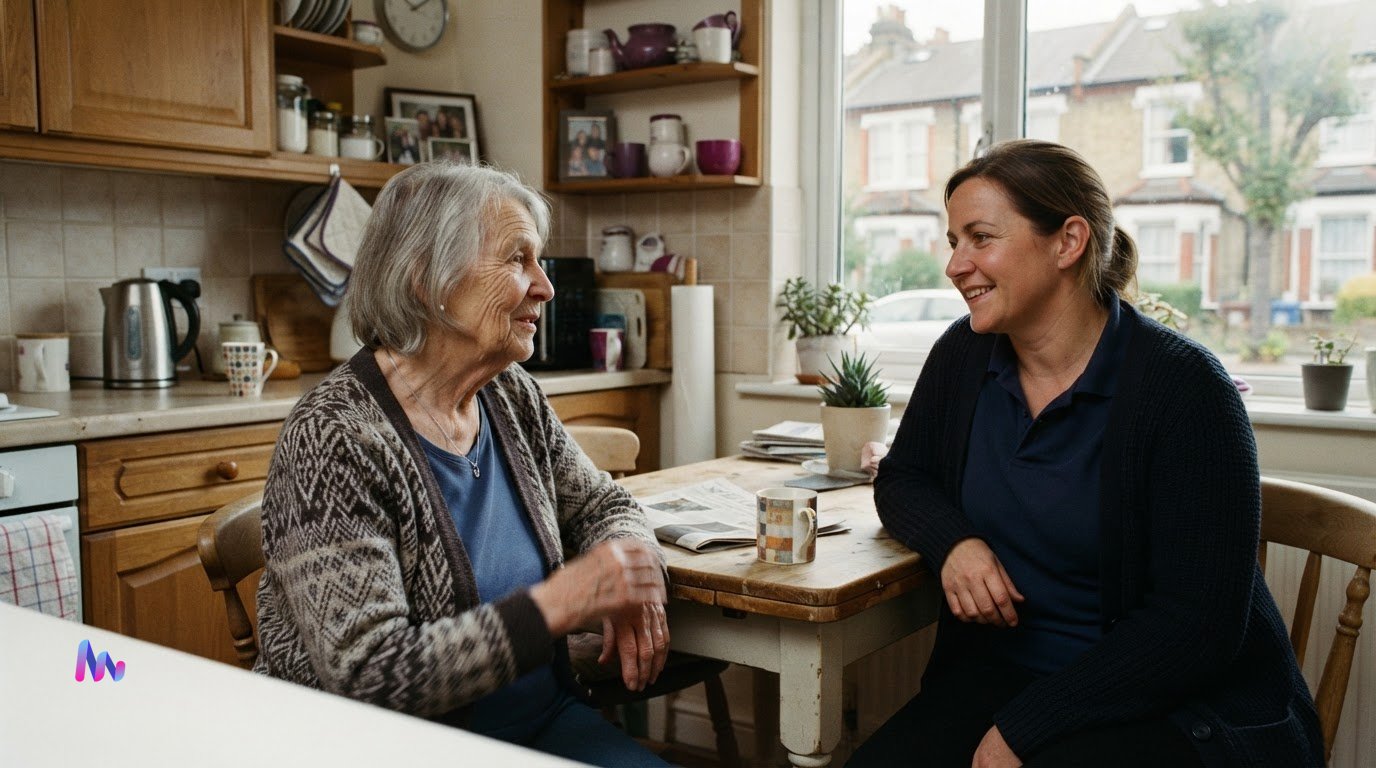
What if the answer isn’t a busier diary, but one familiar conversation or a gentle reason to get out of the house? If you’re worried that an older relative is spending too much time alone, it’s understandable to want something practical that could make a difference. This guide explores social isolation in the elderly solutions UK families can consider, starting with the person’s own wishes rather than a one-size-fits-all list of activities.
Loneliness and social isolation are related, but they aren’t the same. Someone can spend time alone and feel content, whilst another person may feel lonely even when others are nearby. The most helpful first step is to listen and find out what kind of connection feels welcome, whether that’s a regular phone call, a local group, help getting out or company at home.
You’ll find realistic ideas for building connection into everyday routines, exploring community and at-home options, and adapting support as circumstances change. Companionship or visiting care may provide regular, individual contact alongside practical help, without replacing valued friendships or community ties. The aim is a respectful plan that feels manageable and right for the older person.
Table of Contents
Social isolation in older people: what it means and what families may notice
If you’re concerned that an older relative seems to have less company, it’s natural to wonder whether they’re feeling lonely. But being alone isn’t automatically a problem. Some people enjoy quiet time and feel content with the connections they have; others may feel lonely even when they see people regularly. A calm conversation can help you understand their experience without making assumptions.
Social isolation is limited contact with other people, whilst loneliness is the personal feeling that the connections someone has are fewer or less meaningful than they would like. A person may experience either, both or neither. One missed outing or quiet week can’t tell you how someone feels overall. The Social isolation overview offers further background on the concept, but the older person’s own perspective is the best place to start.
How can families tell the difference between loneliness and isolation?
Think of isolation as a social circumstance. For example, someone may have little contact beyond essential appointments. Loneliness is an individual experience, shaped by whether their relationships feel satisfying and supportive. The two can overlap, but they don’t have to. Someone may prefer their own company whilst keeping close friendships, or feel disconnected despite regular contact with family.
Ask open questions without suggesting a “right” answer. You might say, “How are you feeling about the amount of time you spend with others?” or “Is there anyone you’d like to see or speak to more often?” Listen without rushing to solve things. This can reveal whether they want more contact, different company or simply to be heard.
What changes might prompt a kind conversation?
A shift in routine, fewer conversations or less interest in activities they once enjoyed can be a reason to check in, not proof of loneliness or isolation. Ask gently what’s changed. Bereavement or retirement may alter someone’s usual social rhythm; reduced mobility, hearing or vision changes, or changes in health may make familiar activities harder to manage. Several small barriers can add up, but each person’s circumstances are different.
Try questions that leave room for choice: “Is there anything you’ve stopped doing that you’d like to return to?” or “Would any help make that easier?” They might welcome a lift from family, a quieter setting where conversation is easier, or no change at all. Respecting that answer matters. If they don’t want support now, leave the door open and ask again another time, without pressure.
This distinction is a useful starting point for exploring social isolation in the elderly solutions UK families may be able to access. First, find out what kind of connection the person wants. Then consider what, if anything, is getting in the way, while keeping their preferences and independence at the centre.
Why social isolation can grow in later life, and why connection matters
Social contact can change gradually as life changes. After bereavement, familiar visits may stop; retirement can remove everyday conversations with colleagues. A move, a change in caring responsibilities or a relative’s own health needs may also reshape who is available and when. These changes don’t affect everyone in the same way, and a quieter routine isn’t automatically a cause for concern. What matters is whether the person feels their connections meet their needs.
Practical obstacles can build on one another. Someone who finds walking tiring may also find public transport difficult. Hearing or sight changes can make a busy or unfamiliar venue less comfortable. Fatigue, reduced confidence or uncertainty about getting home may make an invitation harder to accept, even when the person would like company. Ask which part feels difficult rather than assuming they’ve lost interest.
Which everyday barriers can make social contact harder?
Look at the details together. Is the activity accessible? Does the timing fit around energy levels or appointments? Is the location easy to reach, and would the cost be manageable? Would a quieter setting, written information or a phone call feel easier than a group conversation? Agree on one small adjustment to try, such as arranging transport with someone they trust or choosing a familiar place. Let the older person decide what feels worthwhile.
Why should families take social connection seriously?
Enjoyable contact can offer a sense of belonging, shared interest and something to look forward to. That might mean a chat with a neighbour, time with family or taking part in a favourite activity. It needn’t be a crowded calendar. A small, welcome interaction may suit someone better than frequent plans.
The NHS explains that loneliness can affect mental health and wellbeing. This general guidance doesn’t mean social isolation will cause a particular condition, or that more contact will have the same outcome for everyone. Read the NHS guidance on loneliness for further information. Age UK’s research on loneliness also offers wider context on older people’s experiences.
Understanding what makes connection difficult is a useful step towards social isolation in the elderly solutions UK families can explore. If practical support at home might make a preferred routine easier, families can discuss the older person’s wishes and support needs with NeeryVille Care. The aim is to make room for connection that feels right, not to impose a timetable.
UK solutions for social isolation in the elderly: compare support options
There isn’t one right answer for every older person. Start with what they enjoy, how much contact they want and what makes it difficult to connect. Some options build community relationships; others provide individual support at home. Council, NHS and voluntary-sector services vary by area, so check what’s currently available, who can use it and whether there’s a waiting list.
What community and voluntary options can older people explore?
Informal contact might mean arranging a regular call, a neighbourly visit or time with family. For wider connection, ask locally about library groups, community centres, faith groups, lunch clubs and befriending schemes. A GP practice may be able to advise about social prescribing or referral to a link worker, where available. Before deciding, check transport, step-free access, booking arrangements, cost if applicable, and whether someone can accompany the person on a first visit.
The first three options focus on community or personal relationships. Visiting and companionship care are paid care support, not substitutes for chosen friendships or community participation. They may suit someone who prefers one-to-one contact at home or would value scheduled support as part of their routine. Ask what the person would like a visit to involve and how the support can reflect their preferences.
When might companionship or visiting care help?
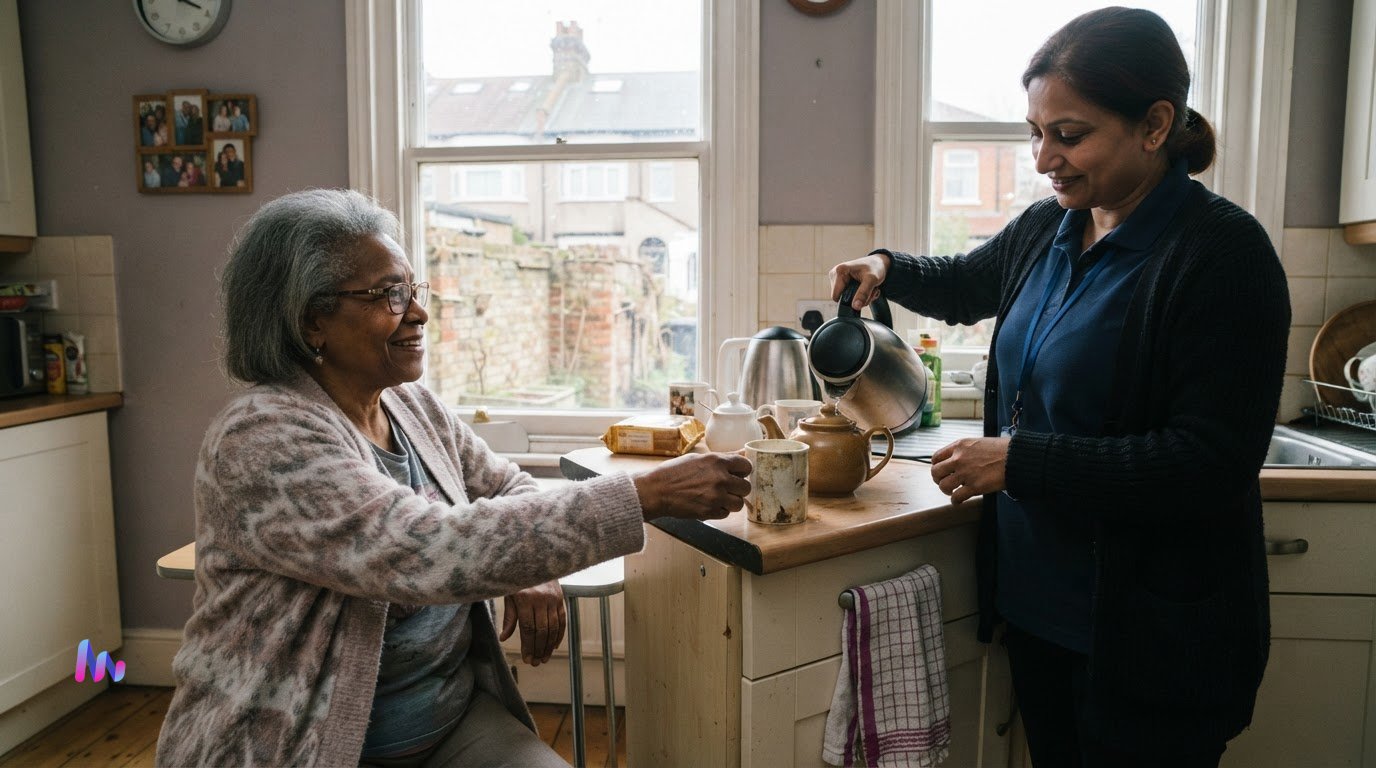
Companionship care can offer personalised social contact alongside agreed support at home. Visiting care may suit someone who wants help at planned visits rather than continuous care. NeeryVille Care offers companionship care at home. Families can discuss the older person’s preferences and support needs to understand whether it may be appropriate.
When comparing social isolation in the elderly solutions UK families can access, try asking: “Would you rather meet people, have company at home, or keep things as they are for now?” Then check local arrangements together. A small, chosen first step is often a more respectful starting point than making several plans at once.
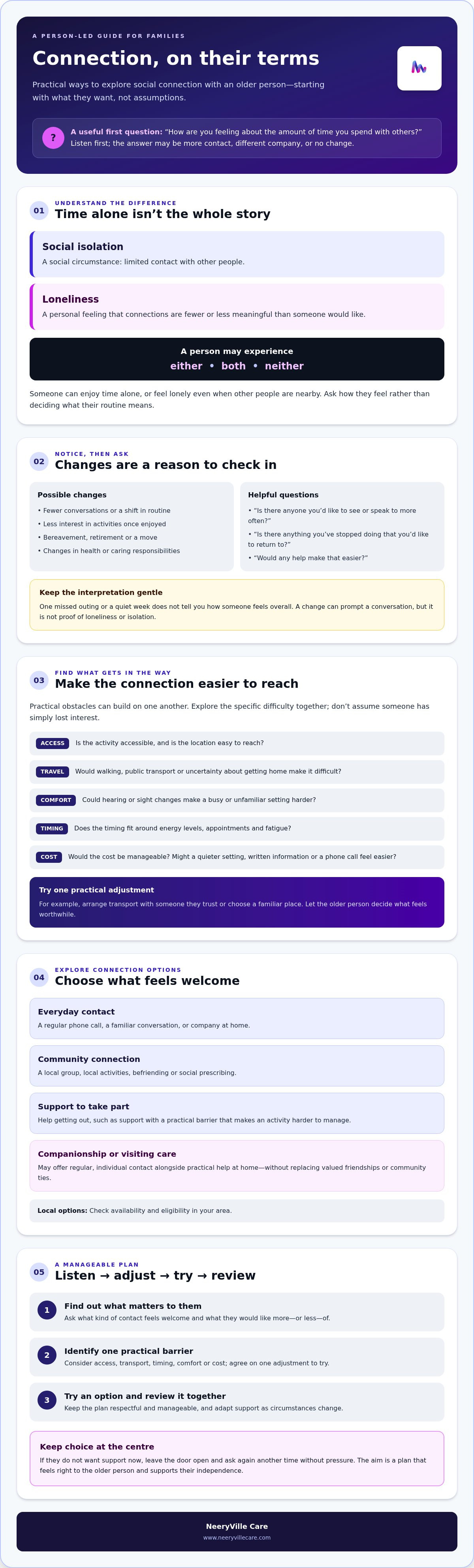
Making a Practical Person-Led Plan to Reduce Isolation
A supportive plan doesn’t need to start with a full calendar of activities. It can begin with a conversation, one small change and a chance to see how that feels. Keep the older person involved at each step: support should reflect what they want, not simply what others think would be good for them.
How can you begin a conversation without taking over?
Ask about the routines and relationships that matter to them. “Who do you most enjoy catching up with?” or “Is there something you’d like to do more often?” can open up a discussion without assuming they’re unhappy. Before looking into local services, contacting friends or arranging a visit, ask permission. Agree a first step together, and make clear that they can change their mind.
A simple sequence can help keep things manageable:
Listen: Find out whether they want more contact, different company or practical help.
Choose: Identify one activity, relationship or familiar routine they’d like to maintain or try.
Remove one barrier: Ask whether transport, timing, access or confidence is getting in the way.
Try and review: Make one agreed change, then talk about how it went.
For example, an older person might say they miss seeing a friend but find the journey tiring. With their agreement, a family member could ask the friend about a phone call first, then consider meeting somewhere easier to reach. That’s one possible approach, not a guaranteed pathway. The person may prefer something else or decide not to continue.
How should families review whether a solution is helping?
Ask whether the arrangement felt enjoyable, accessible and worthwhile to the older person. If a group felt too noisy, a one-to-one visit or a quieter setting might suit better. If getting there was the main difficulty, look at timing or transport before deciding the activity itself wasn’t right. A first attempt is useful feedback, not a test they’ve passed or failed.
Family, friends, community groups and care support can complement one another. Relatives might help maintain familiar relationships, while a local group offers shared interests and companionship or visiting care provides agreed support at home. Care should support the person’s chosen connections, not replace them. NeeryVille Care’s companionship care at home is one option families can discuss in light of the older person’s preferences and support needs.
If concerns involve changes in health, mood or safety, consider speaking with their GP or an appropriate local service. Otherwise, keep checking in gently. The most suitable social isolation in the elderly solutions UK families can explore are those the older person has a real say in and can adapt as their needs and wishes change.
How home care can support connection while helping an older person stay at home
Home care may make some everyday routines easier to maintain, particularly when practical tasks or spending long stretches alone are becoming difficult. It’s one possible part of a wider support plan, not a replacement for the friendships, family relationships or community activities the older person values. The right fit depends on what they want help with and what they’re comfortable accepting.
Could visiting or companionship care be a suitable next step?
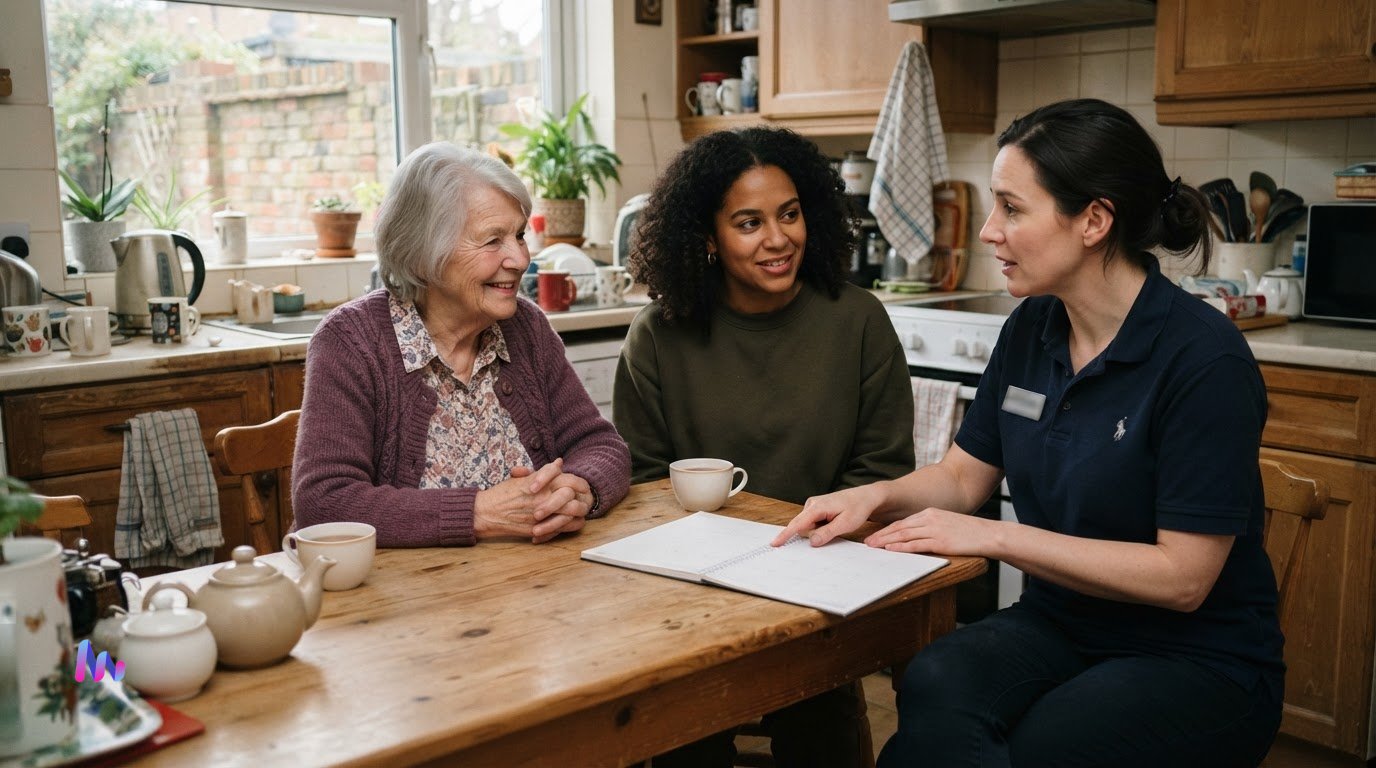
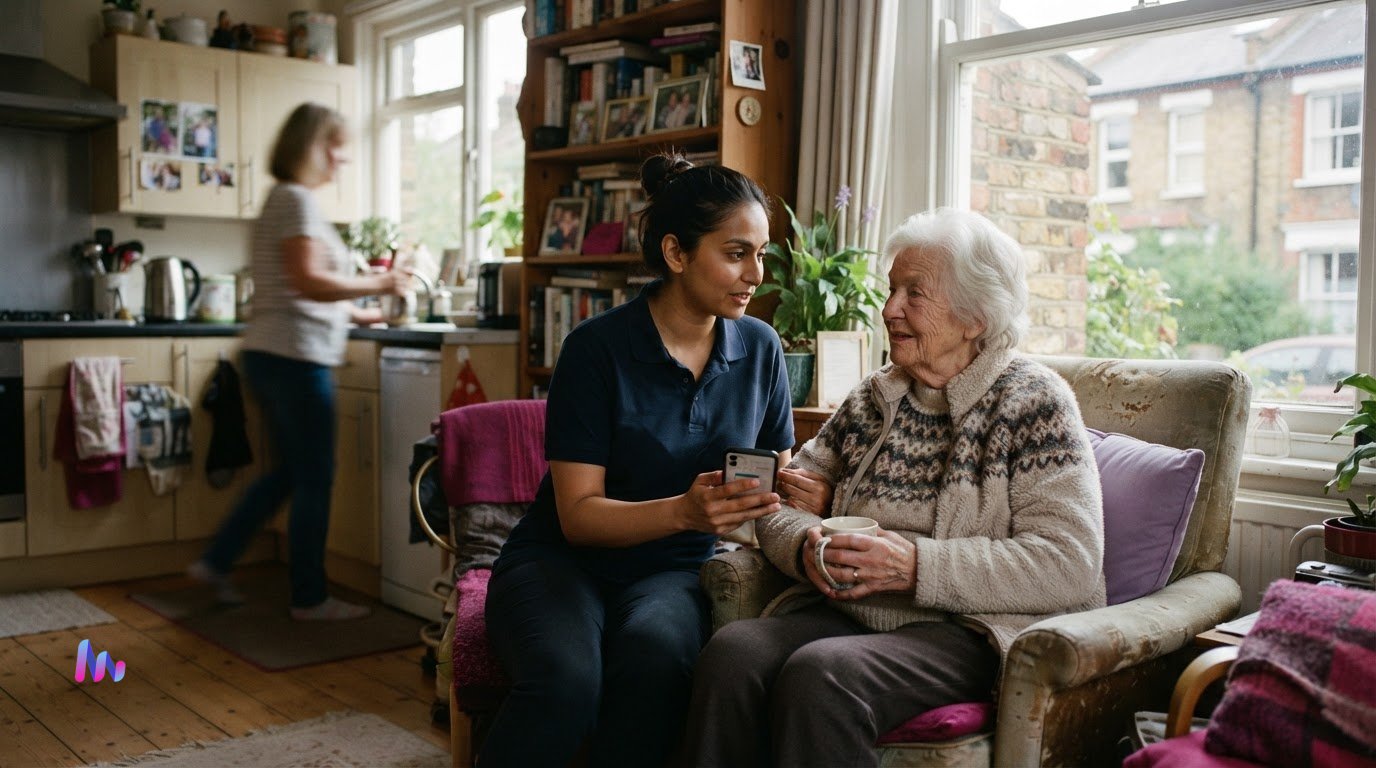
A planned visit can provide conversation and agreed practical help at home. This may suit someone who welcomes individual company or support with daily living, but doesn’t want continuous care. Talk together about what a visit should involve, which routines matter and what the person would prefer to do independently. Support should be personalised and agreed with the person receiving it, not organised around assumptions about what they need.
NeeryVille Care provides domiciliary care in North London, including Highgate and Hampstead. Its local areas include Highgate N6, Crouch End N8, Hornsey, Camden, Finsbury Park, Kentish Town, Tufnell Park, Haringey, Hungerford, Chelsea, Kensington, Hillingdon, Enfield and Hackney. Families can contact the provider to discuss local availability and whether companionship care at home could complement the person’s chosen connections. A carer’s company may offer regular individual contact, while family, friends and community activities continue to play their own important roles.
When might a family consider live-in care?
Live-in care may be worth discussing when someone needs more ongoing support at home, based on their circumstances and assessed needs. NeeryVille Care offers live-in care across England. It may provide companionship alongside practical support, but living alone or feeling lonely doesn’t, on its own, mean this level of care is necessary. Families can learn more about live-in care at home in England and consider together whether it fits the older person’s preferences and support needs.
Care can also affect relatives who are trying to provide regular support alongside work, family life and their own wellbeing. If the caring role feels difficult to sustain, acknowledge that strain and consider what support the family might need as well. A care plan should recognise everyone’s circumstances while keeping the older person’s choices central.
Exploring social isolation in the elderly solutions UK families can access doesn’t mean rushing into care. It means finding out what the older person wants, then considering whether support at home could help them keep the routines and relationships that matter. NeeryVille Care can discuss their preferences and support needs with your family, at a pace that feels comfortable.
Take the next step towards connection that feels right
Supporting an older person starts with listening. Time alone doesn’t always mean someone feels lonely, so ask what kind of contact they’d welcome and what, if anything, is making it harder. Then choose one practical step together, whether that’s reconnecting with someone they know, trying a local activity or exploring personalised support at home.
The most suitable social isolation in the elderly solutions UK families can consider are shaped around the individual, not a fixed timetable. Community connections and care at home can complement one another, but neither should replace the relationships and activities the person values. Review the plan together and adjust it as their preferences or circumstances change.
NeeryVille Care provides personalised companionship and domiciliary care in North London, as well as live-in care across England. NeeryVille Care is CQC-regulated. A conversation can help your family explore whether support at home fits your relative’s wishes.
A gentle first step is enough. With patience and the older person’s voice at the centre, a plan can grow in a way that feels respectful and manageable.
Frequently Asked Questions
What is the difference between social isolation and loneliness in older people?
Social isolation describes limited social contact, whilst loneliness is the personal feeling that someone’s relationships or connections aren’t meeting their needs. An older person can experience one, both or neither. For example, someone may spend much of the week alone and feel content, whilst another person may feel lonely despite seeing family regularly. Ask how they feel rather than judging their wellbeing by how often they have visitors.
How can I help an elderly relative who feels lonely but refuses support?
Respect their decision and keep the conversation open without pressure. Ask what they miss, if anything, and whether a small change would feel welcome, such as a familiar phone call or help returning to an activity they enjoyed. Seek permission before arranging visits or contacting services on their behalf. If they decline now, let them know you’re happy to talk again. If you’re worried about their health or safety, contact their GP for advice.
Can a GP help an older person access social prescribing in the UK?
A GP practice may be able to explain whether social prescribing is available locally and how to access it. In England, a social prescribing link worker may help someone explore community activities or other non-clinical support, but local arrangements and eligibility can vary. The older person or a family member can ask the practice what options are offered and whether a referral is appropriate. Social prescribing isn’t a guaranteed service in every area.
What local activities can help older people meet others in England?
Possible options include library groups, community-centre activities, faith groups, lunch clubs, befriending schemes and interest-based groups. Availability differs between neighbourhoods, so check with the local council, library or community organisation. Before attending, ask about accessibility, transport, booking, costs if applicable and whether someone can accompany your relative for a first visit. A familiar, smaller group may feel more comfortable than a busy or unfamiliar setting.
Can companionship care help with social isolation at home?
Companionship care can provide individual social contact and agreed support at home, which may suit someone who welcomes company but finds going out difficult. It doesn’t automatically resolve loneliness or replace friendships, family contact or community activities. NeeryVille Care offers personalised companionship and domiciliary care in North London, including Highgate and Hampstead. Families can discuss what the older person would like from support and whether this kind of care fits their preferences.
When should a family seek professional help for an older person who is becoming isolated?
Speak with their GP if reduced contact comes alongside concerns about mood, health, memory or changes in everyday functioning. You can also ask the local council about adult social care support and community options in the area. If there’s an immediate safety concern, seek urgent help. A professional conversation doesn’t mean taking decisions away from your relative; involve them wherever possible and explain what you’re worried about.
Does living alone mean an older person is socially isolated?
No. Living alone describes someone’s household, not the amount or quality of their social contact. An older person may live by themselves and enjoy regular conversations, visits and community activities. Another person may have people around them yet still feel disconnected. Ask whether they’re content with their current contact and whether there’s anyone or anything they’d like more of. Their own experience matters more than their living arrangement alone.