Looking for a Carer Who Can Drive in the UK? A Family Guide

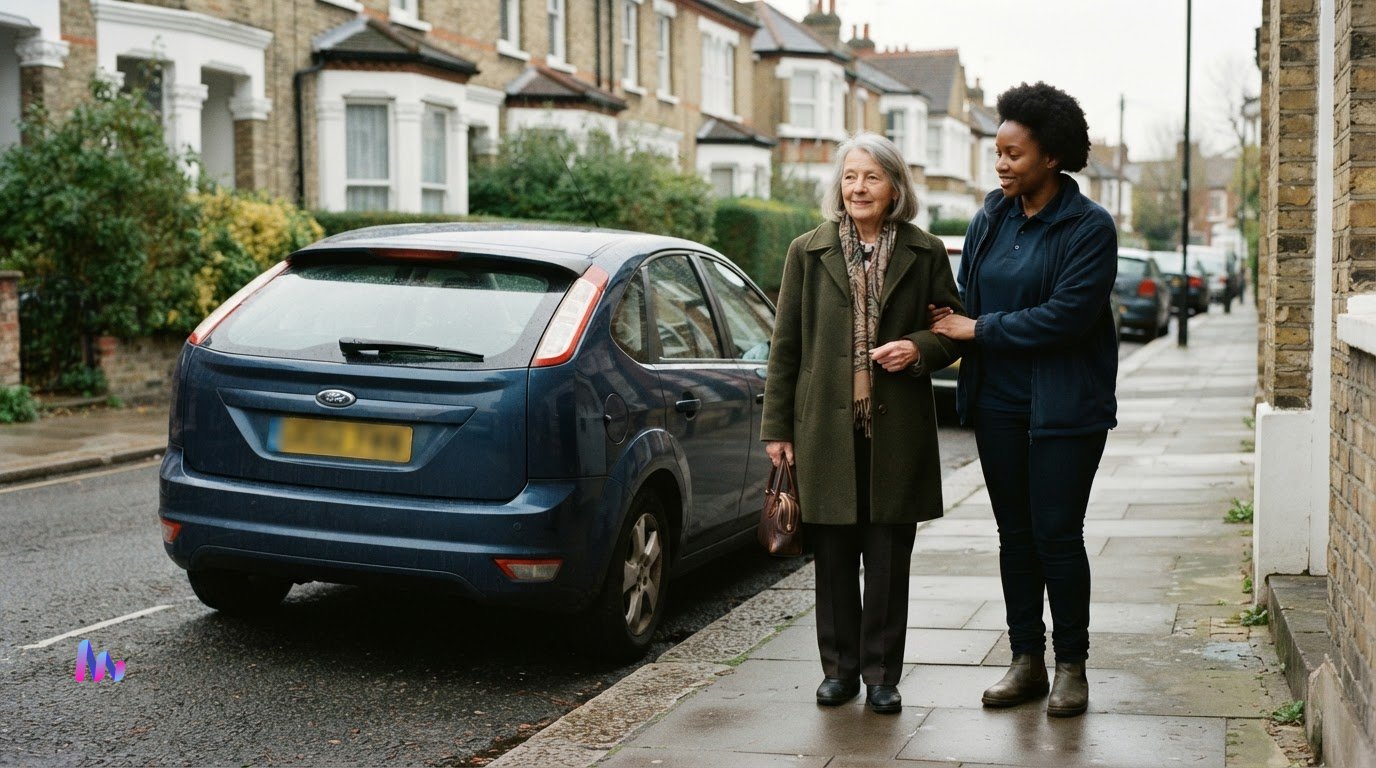
Could a carer that can drive UK roads help your loved one stay connected, without adding new worries about safety and responsibility? Journeys can mean more than getting to an appointment. They may help someone keep familiar routines, run errands or see the people who matter to them.
It’s understandable to want transport needs considered from the start. But having a carer involved doesn’t automatically mean they’ll drive your loved one, or that every journey will work in the same way. The details matter: whose car will be used, how insurance and responsibilities are handled, and what feels comfortable for the person receiving care.
This guide explains the practical questions to consider before care begins, so journeys can be planned around your loved one’s preferences, wellbeing and daily routine. You’ll also learn how personalised support at home can help maintain independence, whether transport is part of the arrangement or needs to be organised separately. A thoughtful plan can bring greater peace of mind, while keeping your loved one’s choices at the centre.
Table of Contents
Carer who can drive in the UK: what families need to understand first
Care may need to fit around more than what happens at home. A hospital or GP appointment, a quick local errand or a visit with family can all matter to someone’s independence and wellbeing. It’s understandable to want these journeys considered as part of the wider care plan.
Still, “a carer who can drive” describes a need to discuss, not an automatic feature of a care service. A carer may provide companionship or practical support at home, whilst the driver, vehicle and arrangements for a particular journey are separate considerations. Care support can help someone prepare for and manage daily life; transport arrangements determine how, when and with whom a journey takes place.
For families, a carer that can drive UK roads may seem like a straightforward solution, but it helps to be precise about what’s needed. Does your loved one need a carer to drive their own vehicle, to travel alongside them in a car, or simply to help organise another suitable way of getting there? These are different arrangements, and none should be assumed to come with a particular care package.
Home care generally means support provided in a person’s own home. The overview of Home care in the United Kingdom offers background on how home care is structured. In England, the Care Quality Commission (CQC) regulates health and social care services that it registers. The UK’s nations have different regulatory and government arrangements, so check the relevant official guidance for your location if you’re considering rules about driving, licences or vehicle use. The CQC’s guidance explains its role in England.
What might a family mean by a driving carer?
The phrase can refer to several practical needs: a carer driving the person’s vehicle, accompanying them as a passenger in a car, or helping them use another transport option. For example, someone might need reassurance and assistance getting to a health appointment, collecting a few essentials locally or visiting a relative. Clarifying the journey and the support needed helps avoid treating “driving” as one simple, all-inclusive task.
Which journeys matter most to your loved one?
Begin with the person’s priorities. List essential appointments alongside familiar routines and activities they value, such as seeing friends or attending a regular group. Consider what makes each journey manageable: mobility and getting in and out of a vehicle, comfort during travel, communication needs, and timing around meals, medication or rest. Preferences can change, so keep the conversation open. Person-centred home care takes account of changing daily needs and supports familiar routines; companionship care at home can form part of that wider support.
How to plan care and journeys around safety, choice and routine
A clear plan can make travel feel less uncertain for everyone. Start with your loved one’s wishes, involve them as much as they want to be involved, and agree arrangements that reflect their comfort and independence. Needs can change, so treat the plan as something to revisit rather than a fixed set of instructions.
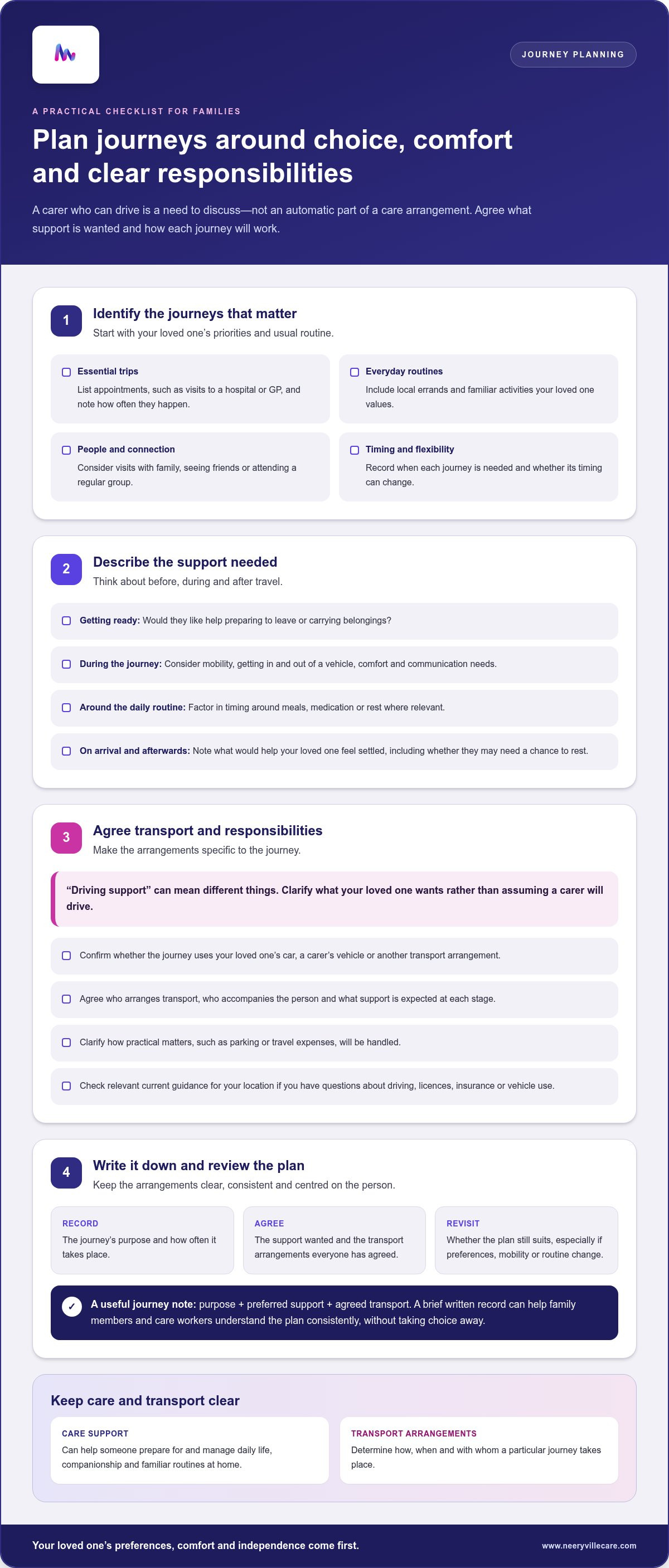
Work through these steps together:
Identify the journeys. Note regular appointments, errands and personal activities, including how often they happen and whether timings are flexible.
Describe the support needed. Consider help before, during and after travel, such as preparing to leave, getting in and out, carrying belongings or feeling settled on arrival.
Agree responsibilities. Set out who will arrange transport, which vehicle may be used, who accompanies the person and how practical matters such as parking or travel expenses will be handled.
Review the plan. Check whether the arrangement still suits the person, especially if their preferences, mobility or daily routine change.
For each regular journey, record its purpose, the support your loved one wants and the transport arrangements everyone has agreed. A brief written note can help family members and care workers understand the plan consistently, without taking choice away from the person.
Set out travel and support needs
Describe what makes a journey manageable for your loved one. They may need extra time, a familiar companion, help with mobility, communication support or a chance to rest afterwards. If medication timing or fatigue affects the routine, include that as relevant information for planning, without trying to make clinical decisions. Personalised elderly care at home can support daily living around the person’s individual needs and familiar routines.
Clarify vehicle use and responsibilities
Be specific about whether the journey would involve the person’s car, a carer’s vehicle or another transport arrangement. Before travel is agreed, clarify who is responsible for organising the vehicle, any associated expenses, and what support is expected at each stage. Don’t assume that a care role automatically includes driving. For questions about a driver’s health and reporting requirements, GOV.UK guidance on health conditions and driving explains when someone may need to tell the DVLA. Licensing, insurance and vehicle-use details can depend on the circumstances, so use current official guidance relevant to your location.
If you’re shaping a wider plan for support at home, you can talk through personalised home care with NeeryVille Care, keeping your loved one’s routines and preferences at the heart of the conversation.
Driving support compared with other ways to manage essential journeys
There isn’t one right way to arrange every trip. A familiar local journey may suit one person, whilst an appointment involving particular access needs may call for a different plan. Compare the options by how well they fit the journey and the person, not by assuming that a carer-led lift is always the easiest answer.
This comparison is a starting point, not a ranking. A family looking for a carer that can drive UK journeys should still consider the individual trip, the person’s wishes and the transport arrangements that have actually been agreed. A care service should not be assumed to provide transport simply because a carer is involved.
When a familiar journey routine may matter
Regular timings and recognisable destinations can help keep an established routine intact, whether that means attending a familiar activity or visiting someone important. Changes in mobility or confidence may affect how much time, assistance or reassurance a journey takes. If social connection and meaningful activities are part of the picture, companionship care at home can support wellbeing alongside a wider plan for daily life.
When another journey arrangement may be more suitable
Some journeys may require accessible or specialist transport, or support beyond an ordinary daily-care routine. Family coordination can be one option, but it shouldn’t be treated as the default or sole solution. Revisit the arrangement if the person’s needs, health circumstances or preferences change. The most suitable plan is the one that respects their comfort and choices whilst meeting the practical needs of that particular journey.
Questions to resolve before arranging a carer who can drive
A practical checklist can help turn a broad request into an arrangement that respects your loved one’s choices. Include them in the conversation wherever possible, and use their own words to describe what feels comfortable. A family member may help share information, but the person’s preferences should remain central.
Questions about the person and their regular routine
Which journeys matter? Separate essential trips, such as appointments, from enjoyable outings and journeys that could be arranged flexibly.
How often and when are they needed? Note usual days or times, and whether comfort or energy varies at different points in the day.
What assistance would help? Describe mobility, communication and comfort needs respectfully. Consider support getting ready, during the journey and on arrival.
What does your loved one prefer? Ask about familiar routes, companions, waiting and any aspects of travelling that cause concern.
For a family considering a carer that can drive UK journeys, these details help explain the support they’re looking for without assuming that transport is automatically part of a care arrangement. Needs may differ by destination or by how the person is feeling that day. Make room for those variations.
Questions about arrangements and changing needs
Which vehicle is involved? Identify whether it belongs to your loved one, a family member or someone else, and agree how its use will be arranged.
Who is responsible for each practical detail? Clarify who organises the journey, accompanies the person and handles any agreed expenses or permissions.
How will changes be shared? Decide how the relevant people will communicate a cancellation, a changed appointment or a new support need.
When will you review the plan? Revisit it if the person’s circumstances, wellbeing, preferences or travel routine change.
Clear responsibilities help prevent misunderstandings about who is arranging, supporting and paying for each journey. Record what has been agreed through the care-planning process, in language everyone involved can understand. This is a practical planning step, not legal or insurance advice. Questions about a vehicle’s insurance should be considered separately using current official guidance, such as GOV.UK information on vehicle insurance; requirements can depend on the circumstances.
A well-considered plan can support independence without asking the person to accept an arrangement that doesn’t suit them. Keep listening, and adjust the details as needed.
How NeeryVille Care supports a wider plan for care at home
Thinking about journeys can bring a wider question into focus: what support would help your loved one feel safe, comfortable and more independent at home? NeeryVille Care is a CQC-regulated home care provider offering personalised support for daily living. Care is shaped around the person, not just a list of tasks.
A carer that can drive UK roads may be one part of a family’s travel planning, but driving and transport are separate from the home-care support described here. NeeryVille Care’s role is to support people at home through agreed care, including companionship, practical help with daily life and medication support. A clear distinction helps families plan confidently without assuming that care automatically includes lifts or vehicle use.
How personalised care can fit familiar daily life
Good planning starts with listening. What does the person value in their day? Which routines would they like to maintain, and where would a little support make daily life easier? The answers help shape care around personal preferences, abilities and changing needs.
Companionship can offer social connection and a supportive presence, whilst assistance with daily living can help someone manage familiar routines at home. Medication support may also form part of an individual plan. The aim is to uphold dignity and independence, and to help the person feel supported in surroundings they know. It’s attentive, practical care, without treating transport as an assumed feature.
Discuss the support your family needs
NeeryVille Care provides domiciliary care in North London and live-in care across England. Domiciliary care offers personalised support in the person’s own home, while live-in care provides a different arrangement for people who need ongoing support at home. Families considering this option can read more about live-in care at home across England.
You don’t need to have every detail settled before starting a conversation. It can help to describe your loved one’s routines, the support they need at home, what matters most to them and any concerns your family is carrying. That gives the discussion a helpful starting point, with the person’s preferences and wellbeing at the centre.
Care planning is personal. A calm conversation can help you explore the wider home-care support that may fit your family’s circumstances, whilst keeping travel arrangements as a separate consideration.
Build a care plan around the life your loved one wants
A carer that can drive UK roads may sound like a simple answer to travel concerns, but the right arrangement depends on the person, the journey and what has been agreed. Clarify who will provide transport, what assistance is needed and how the plan can respect your loved one’s comfort, preferences and independence. Keep reviewing it as routines or needs change.
Care at home can also offer meaningful support beyond travel. NeeryVille Care is a CQC-regulated home care provider, with personalised help for daily living and companionship. Domiciliary care is provided in North London, and live-in care is available across England. Support is shaped around the person and their familiar routines, without assuming that care includes driving.
If you’re weighing up what would help your family feel more supported, a conversation about home-care needs can be a gentle place to begin.
With a thoughtful plan and the right support, your loved one’s choices can remain at the heart of each day.
Frequently Asked Questions
Can a carer drive my parent to appointments in the UK?
Possibly, if driving has been specifically agreed as part of the arrangements. A carer’s involvement in home care doesn’t automatically mean they’ll drive or provide transport. Discuss the appointment, the support your parent needs and whose vehicle would be used. If travel is arranged separately, make sure your parent knows what to expect and feels comfortable with the plan.
Does live-in care automatically include driving?
No. Live-in care describes support provided in a person’s home, but it doesn’t automatically include driving or lifts. A carer that can drive UK journeys is a specific transport-related need to discuss separately from personal care, companionship or help with daily living. Families should plan who will arrange each journey and consider other suitable transport if driving isn’t part of the agreed arrangements.
Can a carer use my loved one’s car?
That depends on the arrangements and whether the carer is permitted and appropriately insured to drive that vehicle. Don’t assume a driving licence alone is enough. Clarify permission, insurance cover and responsibilities before any journey, and review the policy details with the insurer. GOV.UK provides information about vehicle insurance; specific questions depend on the circumstances.
What should I consider when arranging care that involves journeys?
Start with the person’s priorities: which trips are essential, how often they’re needed and what help would make each journey manageable. Consider mobility, communication, comfort, timing and support at the destination. Agree who arranges transport, which vehicle is involved and how expenses or changes will be handled. Include your loved one in decisions wherever possible, and record the agreed plan clearly.
Can a carer take someone shopping or on social visits?
Shopping or a social visit may be part of a person’s wider routine, but a carer’s involvement doesn’t automatically mean they’ll drive. Separate the care or companionship someone needs from the transport plan. Discuss the person’s preferences, the assistance needed and how they’ll get there. For families in North London, including Highgate and Hampstead, familiar activities can be considered as part of personalised home support.
How can I check whether a care provider is regulated in England?
Use the Care Quality Commission’s official website to search for the provider and review its registration details and available inspection information. CQC regulates health and adult social care services in England; regulatory arrangements differ across the UK’s nations. Checking the official record can help you understand a provider’s status, but it doesn’t determine whether a particular journey or driving arrangement is included in care.
What if my loved one’s travel needs change after care starts?
Review the plan with your loved one and the people involved in their care. A change in mobility, confidence, wellbeing or routine may affect the support that makes travel comfortable. Update practical details such as journey timing, assistance and transport arrangements, and communicate changes clearly. If a trip is no longer suitable, consider another way to manage it that respects the person’s preferences and independence.