Live-in Carer Accommodation: Home Set-up Guide

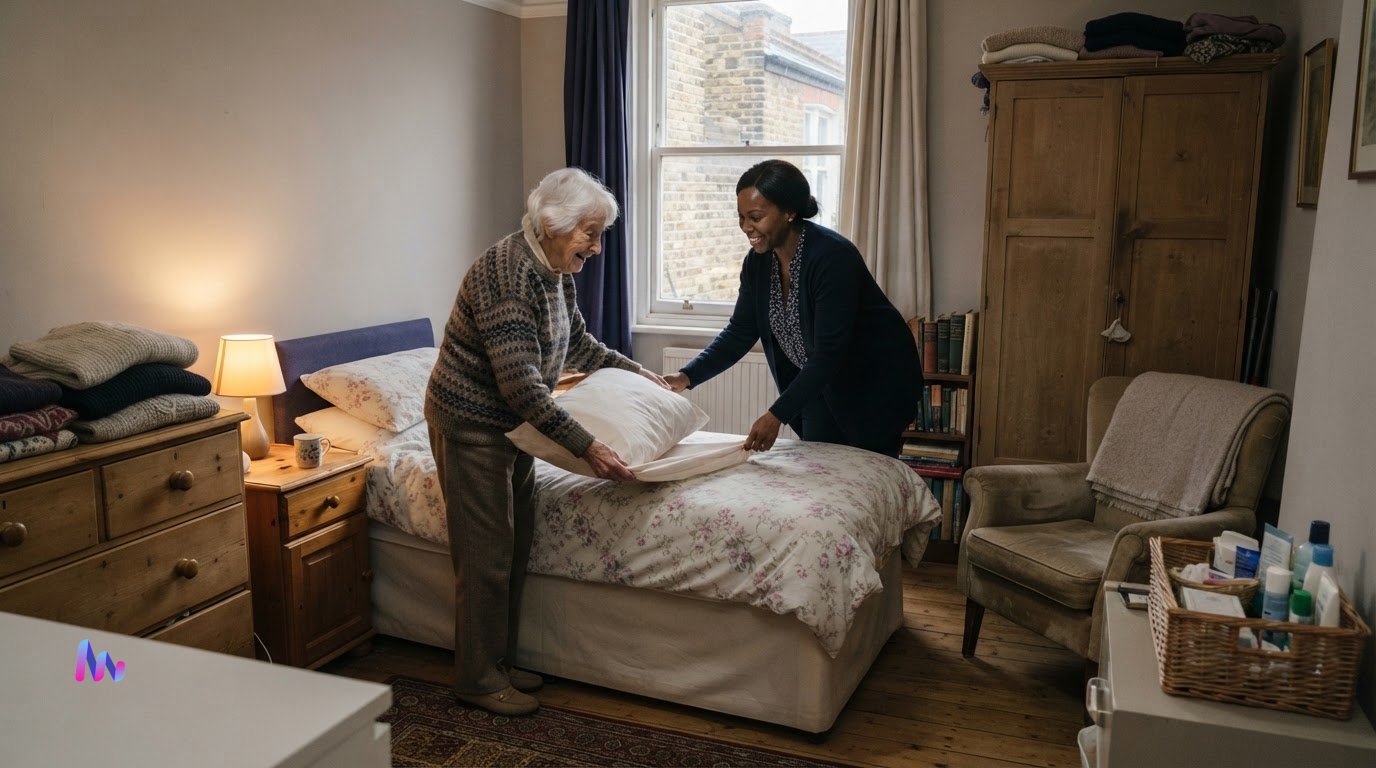
A spare bedroom in a live-in care arrangement is never just an extra bed; it's the quiet foundation that sustains exceptional, dignified support. Still, opening your doors to round-the-clock help often brings genuine worry. It's entirely natural to fret about losing household privacy, or to feel confused about the specific accommodation requirements for a live-in carer under UK safety and welfare standards. You want your loved one properly protected, but you also need your home to remain a calm, personal sanctuary.
Fortunately, you don't need a sprawling property or an en-suite wing to create an ideal environment. In this guide, you'll discover the exact legal, practical, and comfort requirements needed to prepare your home properly for a dedicated live-in carer. We'll explore essential bedroom standards, clear guidance on shared facilities, and sensible daily boundaries that protect everyone's privacy, giving you complete confidence as you welcome support into your family home.
Table of Contents
Essential Accommodation Requirements for a Live-in Carer: The Regulatory Baseline
Preparing the Carer Bedroom: The Complete Room Preparation Checklist
Shared Household Facilities: Bathrooms, Kitchens, and Daily Living
Adapting Your Home: Practical Solutions for Compact and Urban Spaces
Partnering with NeeryVille Care: From Environmental Assessment to Smooth Placement
Essential Accommodation Requirements for a Live-in Carer: The Regulatory Baseline
Welcoming dedicated support into your household requires a thoughtful balance between clinical safety and domestic warmth. While the Care Quality Commission (CQC) inspects registered care agencies rather than private domestic premises, the established accommodation requirements for a live-in carer reflect firm employment and welfare standards across England. When arranging bespoke live-in care in London or surrounding counties, establishing a dedicated personal environment protects your loved one and ensures their assistant can deliver calm, attentive support every single day.
Minimum Bedroom Standards: Space, Privacy, and Natural Light
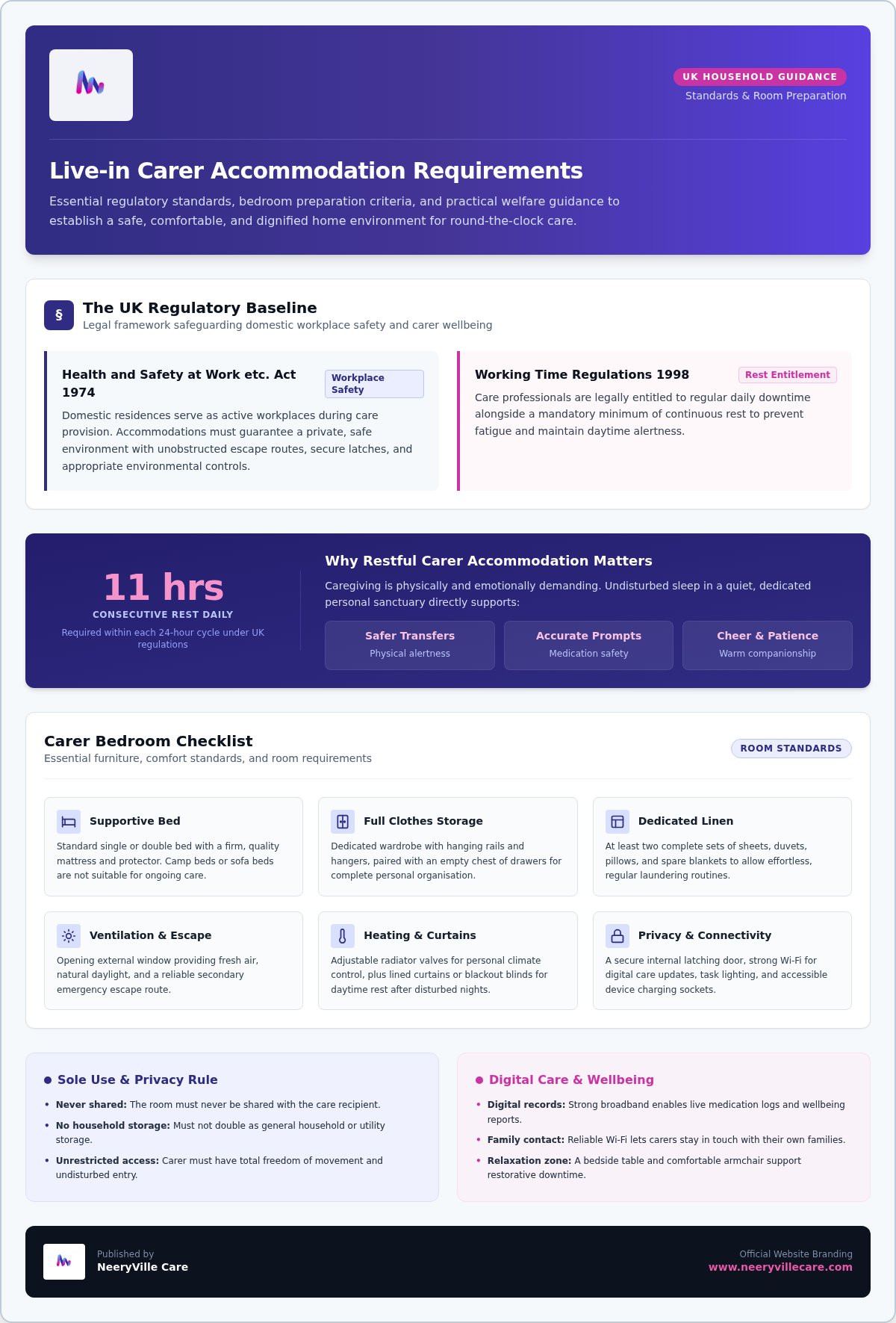
A carer's bedroom must be a private, separate sanctuary used solely by them. It should never be shared with a care recipient or treated as general household storage. Under the Health and Safety at Work etc. Act 1974, domestic residences serve as active workplaces during care provision. To properly support a professional live-in caregiver, the designated room must provide:
Adequate floor space to move freely around a standard bed, with dedicated personal storage including a wardrobe and chest of drawers.
An opening external window that ensures fresh ventilation, sufficient natural daylight, and a reliable secondary escape route.
A secure internal door that latches properly to guarantee total privacy and undisturbed downtime.
Adjustable heating, suitable task lighting, and accessible electrical sockets for charging essential personal devices.
Welfare Regulations and Carer Downtime Under UK Guidelines
High-calibre personal care relies on restorative rest. Under the Working Time Regulations 1998, care professionals are entitled to regular daily downtime alongside eleven consecutive hours of rest within each twenty-four-hour cycle. Satisfying standard accommodation requirements for a live-in carer means offering a genuine retreat away from daily care routines.
Caregiving is emotionally involving and physically demanding. When a carer has a comfortable, quiet sanctuary to read, speak with family, and sleep deeply, caregiver fatigue decreases significantly. That undisturbed sleep directly shapes daytime alertness, ensuring safer physical transfers, reliable medication prompts, and the patient, cheerful companionship your loved one deserves.
Preparing the Carer Bedroom: The Complete Room Preparation Checklist
Turning a guest room into a dedicated carer sanctuary doesn't require luxury refurbishment. It simply takes thoughtful preparation. Meeting the practical accommodation requirements for a live-in carer centres on creating an inviting space where an experienced professional can genuinely unwind, recharge, and take pride in their surroundings.
Essential Furniture, Bedding, and Comfort Standards
A proper bed is the centrepiece of any comfortable living space. Carers need physical recuperation after days spent assisting with transfers, domestic tasks, and mobility routines. Temporary options like camp beds or sofa beds are unsuitable for ongoing arrangements.
Before your carer arrives, ensure the room includes:
A supportive bed: A clean standard single or double bed with a firm, quality mattress and mattress protector.
Dedicated fresh linen: At least two complete sets of sheets, duvets, pillows, and spare blankets so laundering is effortless.
Full clothes storage: A dedicated wardrobe with hanging rails and hangers, alongside an empty chest of drawers.
A relaxing seating space: A bedside table with a soft reading lamp, accompanied by a comfortable armchair where they can read or rest quietly.
Heating, Ventilation, and Technology Essentials
Restful downtime relies just as much on environmental comfort as good furniture. The room needs independent temperature controls, such as an adjustable radiator valve, allowing the carer to manage their own comfort across changing seasons. Lined curtains or blackout blinds are equally valuable, helping care professionals sleep soundly during daylight hours after assisting during disturbed nights.
Technology plays a critical operational role. Modern care routines rely on regular digital record-keeping, from medication updates to daily wellbeing summaries. Ensure the bedroom receives strong, uninterrupted Wi-Fi coverage. A reliable broadband connection also allows your carer to stay in touch with their own family during personal downtime without using mobile data allowances. Check that power points are easily accessible near the bedside and desk area for charging phones and tablets.
If you would appreciate an objective eye when assessing your space against the essential accommodation requirements for a live-in carer, you can always reach out to our friendly care team for gentle advice tailored to your household.
Shared Household Facilities: Bathrooms, Kitchens, and Daily Living
Inviting someone into your family home inevitably raises practical questions about communal areas. Sharing everyday living spaces can feel daunting initially, but clear domestic boundaries prevent friction before it begins. The standard accommodation requirements for a live-in carer don't require an isolated property annex; rather, they rely on sensible, mutual respect across three key communal zones.
Bathroom Access: Dedicated Facilities versus Shared Arrangements
A private en-suite bathroom is wonderful, but it isn't an absolute requirement under UK care standards. Shared access to a clean, well-maintained family bathroom is completely acceptable. What truly matters is establishing personal dignity and smooth daily routines.
To make shared bathroom access effortless:
Allocate a dedicated shelf or hanging caddy exclusively for the carer's personal toiletries.
Provide specific towel hooks or a separate rail so personal towels remain distinct from family linens.
Agree on basic morning timings early on, ensuring neither your loved one nor the carer feels rushed during personal hygiene routines.
Kitchen Privileges, Meals, and Food Storage Protocols
The kitchen is the natural heart of any household. Live-in care agreements typically expect the client's family to supply adequate, wholesome food and drink for the carer. Clear communication around meals prevents misunderstandings entirely.
Offer your carer dedicated storage: clear a specific shelf in the refrigerator and assign a separate cupboard for their personal dry goods. Many households enjoy sharing evening meals, where the carer cooks a wholesome dinner for the person they support and sits down with them. Others prefer separate cooking times due to specific dietary needs or cultural preferences. Discuss these habits openly on day one.
Laundry and Household Amenities Management
Meeting practical accommodation requirements for a live-in carer also extends to utility management. Carers need reasonable, scheduled access to laundry appliances to wash personal clothing and clean bedding. For infection control and basic hygiene, it's wise to provide a separate laundry basket for their work attire.
Finally, agree on expectations for communal living spaces. While carers often enjoy watching television or chatting with your loved one in the lounge during duty hours, they also need quiet evenings in their own bedroom. Establishing soft household boundaries, like designating quiet hours after 9:00 pm, preserves your family's personal privacy while ensuring your carer feels entirely welcome.
Adapting Your Home: Practical Solutions for Compact and Urban Spaces
Many families assume round-the-clock assistance is impossible without a sprawling country property. In reality, meeting the accommodation requirements for a live-in carer is entirely achievable within Victorian terraced houses, townhouses, and city apartments. With thoughtful planning, dedicated live-in care in London adapts seamlessly to diverse architectural layouts without disrupting the familiar comfort of your family home.
Creative Conversions: Transforming Dining Rooms and Studies
When a traditional guest bedroom isn't available upstairs, converting an underused ground-floor room offers an effective answer. Formal dining rooms, home offices, and garden studies can quickly become warm, dignified living spaces for a care worker.
When planning a conversion, keep these safety and comfort factors in mind:
Building and fire regulations: Ensure the converted space features an opening window suitable for emergency escape alongside working mains-wired smoke alarms.
Acoustic privacy: Add draught-proofing around door frames, hang heavy thermal curtains, or position freestanding bookcases along shared walls to buffer noise from busy reception rooms.
Access to amenities: Make sure the carer can reach a bathroom easily without disturbing your loved one during nighttime hours.
Proximity versus Boundaries: Supporting Complex or Dementia Care
Arranging room placement becomes especially important when caring for individuals with progressive conditions. When delivering specialised dementia care at home, nighttime wakefulness or wandering can occur. Placing the carer's bedroom near your loved one allows quick responses to distress calls, but constant nighttime monitoring can quickly lead to exhaustion if not managed carefully.
Technology provides a reassuring compromise. Rather than leaving bedroom doors wide open, discreet call pendants, gentle motion sensors, or audio monitors alert the carer only when assistance is needed. This setup preserves personal privacy for your loved one while safeguarding your carer's rest periods. Balancing gentle vigilance with proper personal boundaries ensures both parties feel secure, fulfilling the practical accommodation requirements for a live-in carer even in compact homes.
Speak with our London care specialists about adapting your home layout
Partnering with NeeryVille Care: From Environmental Assessment to Smooth Placement
Preparing a home for dedicated care can bring sudden moments of uncertainty. You might wonder if an older property meets modern safety guidelines or whether your spare room layout will truly suit a professional. As a CQC-regulated care provider registered across England, NeeryVille Care treats accommodation planning as an empathetic collaboration rather than a strict inspection, lifting the practical strain from your family's shoulders.
The Home Assessment: How We Verify Safety and Suitability
Our registered managers conduct an in-person environmental review before care begins. This visit isn't about judging interior decor; it focuses entirely on safety, comfort, and dignified living. We walk through the property together, assessing fire exits, heating efficiency, electrical point safety, and private storage.
During this review, we address practical domestic logistics directly:
Keys and property access: Arranging dedicated front-door keys or secure keysafes for smooth daily handovers.
Medication storage: Identifying a cool, lockable space out of reach of vulnerable individuals.
Minor adjustments: Offering straightforward solutions if a room lacks sufficient lighting or hanging space.
Resolving these details early ensures your home aligns naturally with the established accommodation requirements for a live-in carer, giving you complete reassurance before placement day.
Welcoming Your Carer: Establishing Rapport from Day One
First impressions set the foundation for warm, enduring relationships. Providing a thoughtful welcome helps your care professional settle in immediately. A freshly made bed, a set of clean bath towels, and an information sheet with the Wi-Fi password and household appliance quirks make a lasting difference.
We recommend holding a gentle orientation conversation over a cup of tea during arrival. Walking through typical daily routines, dietary preferences, and favourite household habits helps everyone relax. Behind this personal welcome stands our ongoing agency governance. NeeryVille Care maintains continuous supervisory check-ins, transparent safeguarding reviews, and regular carer relief rotas so your loved one receives consistent, high-standard companionship. If you are ready to explore dedicated support at home, take the first step and speak with our compassionate team to discuss your home setup today.
Preparing Your Home with Complete Confidence
Preparing your household for round-the-clock support isn't about perfection; it's about creating safety, mutual dignity, and warmth. Setting up a dedicated bedroom sanctuary, establishing clear kitchen and bathroom boundaries, and understanding the practical accommodation requirements for a live-in carer ensures your loved one receives calm, attentive support without disrupting your family's privacy.
As a CQC-regulated provider delivering person-centred care across England, NeeryVille Care helps make this transition seamless. From thorough home environmental reviews to ongoing placement supervision, our dedicated teams across North London and surrounding communities lift the practical burdens off your shoulders so you can focus entirely on your family.
Arrange a friendly home consultation with our live-in care specialists
With the right preparations and an experienced team beside you, welcoming care into your home becomes a smooth, comforting step forward.
Frequently Asked Questions
Does a live-in carer need their own private bathroom, or can they share?
No, a live-in carer doesn't legally require an en-suite bathroom; sharing a clean family bathroom is completely acceptable. It's standard across UK care arrangements, provided the carer has dedicated storage for toiletries and clean towel rails. Families often establish simple schedules in the morning to prevent congestion. Maintaining privacy, hygiene, and clear communication makes a shared bathroom arrangement comfortable for both your family and the visiting care professional.
What size must a bedroom be to satisfy accommodation requirements for a live-in carer?
UK law sets no rigid square-metre rule for domestic carer rooms, but fulfilling the accommodation requirements for a live-in carer requires sufficient space for a standard adult bed, clothes storage, and easy movement. A standard single or double bedroom with an opening window, proper heating, and closing door satisfies regulatory and safety baseline expectations. What matters most is providing a private, secure retreat where your carer can relax properly between daily responsibilities.
Do families have to pay for the live-in carer's meals and groceries?
Yes, families are responsible for providing reasonable food, wholesome meals, and everyday non-alcoholic drinks for their live-in carer. You can include their preferences within your weekly grocery delivery or household shop. Most carers prepare meals for the person they support and eat alongside them, though some prefer cooking independently. Offering a dedicated shelf in the fridge and dry larder cupboard gives your carer independence while respecting personal dietary requirements.
Can a live-in carer share a bedroom with my elderly parent?
No, a live-in carer cannot share a bedroom with a care recipient under any circumstances. UK care standards and the Working Time Regulations 1998 mandate uninterrupted daily downtime and eleven consecutive hours of rest. Sharing a room prevents restorative sleep, compromises personal dignity, and increases fatigue. For individuals requiring constant overnight assistance, such as advanced dementia, agencies arrange specific waking night or sleeping night care rather than room-sharing.
What happens if our home does not have a dedicated spare guest bedroom?
You can often repurpose an underutilised ground-floor reception room, dining room, or home study into an approved carer bedroom. Across London townhouses and apartments, many families adapt ground-floor spaces. The room simply needs to satisfy standard accommodation requirements for a live-in carer, including an external window for ventilation, private closing door, and adequate heating. Care agencies assess these layout options during initial environmental reviews to ensure complete fire safety and client comfort.
Are families required to provide television and high-speed internet in the carer's room?
While a private television is optional, reliable high-speed Wi-Fi access in the carer's bedroom is considered an essential practical requirement. Carers rely on strong internet connectivity to complete digital daily logs, record medication updates, and contact care managers. It also serves an emotional need, enabling your carer to speak with family during downtime without draining mobile data. Adding a television is a kind gesture, but stable broadband access is what truly counts.
Can a live-in carer invite personal visitors or family members into our home?
As a general rule, live-in carers may not invite personal visitors, partners, or family members into your home during their placement. Your home remains a private sanctuary, and safeguarding your loved one is paramount. Carers take their scheduled daily rest breaks outside the property to meet friends, run personal errands, or exercise. If an exceptional circumstance arises, it requires prior written discussion and agreement between your family, the agency, and the care worker.