Live-in Care in Wallingford: A Guide for Families


What if more support at home could protect the routines and independence that matter, rather than replace them? If you’re weighing up live-in care options, it’s natural to wonder how another person in the home might affect privacy, family life and day-to-day choices.
Those concerns deserve thoughtful answers. Live-in care can be shaped around the person, with practical help and companionship fitted to their preferences and established routines. It can also give family members reassurance that they don’t have to manage every part of daily support alone.
This guide explains what day-to-day help may involve, how a live-in arrangement can work in a family home, and how personalised support can uphold dignity and independence. NeeryVille Care is a CQC-regulated home-care provider offering tailored support, including help with daily living, companionship, dementia care and medication. You’ll also find practical steps for discussing needs and considering what support could look like for your family.
Table of Contents
Could live-in care in Wallingford help you stay at home?
Deciding whether someone needs more support can carry a lot of emotion. You may be balancing a loved one’s wish to remain at home with practical concerns about meals, personal care, medication or managing when alone. There isn’t one right moment to start talking about care, and asking the question doesn’t mean taking away someone’s independence.
Live-in care means a carer stays in the person’s home and provides personalised support there. The aim is to make daily life more manageable while respecting the person’s comfort, dignity and familiar routines. A carer can offer practical help and companionship, while the person’s preferences continue to guide ordinary choices, from how they like to start the day to what makes home feel like home. The right arrangement depends on the individual’s needs, wishes and household.
For a general explanation of the role, Live-in caregiver offers useful background. The details of support are personal: the needs of one person or household may differ considerably from another’s.
Signs your family may be considering more support
Look for changes in what feels manageable, rather than treating age itself as a sign that care is needed. Perhaps preparing meals has become tiring, getting washed takes longer, or someone feels less confident going out or moving around the home. These observations can be a reason to talk, not a judgement about what the person can or can’t do.
There may be family pressures, too. A relative might be balancing care with work or other responsibilities, household routines may be harder to maintain, or worries about being alone may be affecting everyone’s peace of mind. Start a calm conversation with what the person wants to keep doing, what feels difficult and what kind of help would make a difference.
What live-in care can mean for life at home
Support takes place in familiar surroundings, with the person’s belongings, habits and daily choices close at hand. Small details matter: when someone prefers breakfast, how they like to spend a quiet afternoon, or which household tasks they value doing for themselves. A thoughtful plan builds on abilities and preferences rather than assuming the carer should take over.
Live-in care differs from scheduled visiting care. Instead of a carer attending for arranged visits, a live-in arrangement means a carer stays in the home as part of the support plan. That describes the living arrangement, not uninterrupted hands-on attention. The pattern of help should be agreed around the person’s needs and the household.
Privacy and trust matter from the outset. Discuss personal boundaries, shared spaces and how family members will communicate about changing needs. A clear safeguarding approach also helps build confidence. NeeryVille Care explains its safeguarding approach. With live-in care wallingford families can explore support that starts with the person’s priorities and keeps familiar life at the centre.
Daily support from live-in care in Wallingford
Support at home is most useful when it fits the person’s real day, not an idealised timetable. For one person, a little help getting dressed may make it easier to manage the rest of the morning independently. Another may value help preparing lunch, managing medication or keeping household routines on track. Families considering live-in care wallingford can identify which kinds of assistance would make everyday life feel more manageable, while keeping the person’s abilities and preferences in view.
A personalised care plan can set out what help is wanted, how the person likes it offered and which tasks they prefer to do themselves. Needs can change, so it’s helpful for the family and care team to share relevant updates and review what is working. The NHS guidance on home care services also offers general information for people considering support at home.
Practical help shaped around the person
Everyday assistance might include support with washing, dressing or choosing clothes, preparing meals the person enjoys, and moving around the home. Medication support and light help with household routines may also form part of an individual plan. These are possibilities, not a fixed checklist. What matters is agreeing support with the person and respecting their consent, pace and preferred way of doing things.
That could mean offering an arm rather than taking over, laying out clothes while allowing time to dress independently, or preparing a meal together. Small choices help someone stay involved in their day. The carer should understand which tasks the person wants help with and which they’d rather continue doing, so support complements their abilities.
Companionship and support with more complex needs
Practical help is only part of feeling supported. A familiar conversation over a cup of tea, sharing an interest or accompanying someone in an everyday activity can bring warmth and connection to the day. Companionship should reflect the person’s character and wishes. Quiet company may be just as welcome as a chat.
For someone living with dementia, personalised support can take account of familiar routines and ways of communicating. The right approach depends on the individual, rather than assuming everyone has the same needs. NeeryVille Care’s live-in dementia care case studies offer examples of support shaped around people and their lives.
Families can make the plan more personal by sharing the details that matter: preferred meal times, treasured activities, what helps during an unsettled moment, or how the person likes to be approached. This context helps practical support feel more natural and less imposed. If you’re considering what assistance might look like at home, you can talk through your family’s care needs.
Live-in care in Wallingford: safety and independence
Having a carer stay in the home can raise an understandable question: will the person still feel in control of their own life? Support doesn’t have to mean giving up choice. A well-considered arrangement aims to help with agreed needs while leaving room for privacy, independence and existing relationships. The person remains central to decisions about their daily life.
How support can respect privacy and personal choice
Before support begins, talk through everyday boundaries and preferences. The person may want privacy while dressing, prefer a knock before anyone enters their room, or like to manage certain parts of their morning routine themselves. Agreeing these details helps make assistance feel respectful rather than intrusive.
Wherever possible, involve the person directly in decisions, including when help is offered and how tasks are approached. They might choose what to wear, when to eat or how to spend time at home. If preferences change, make space to discuss them and adapt the plan. Having a carer in the home doesn’t mean supervising every moment or replacing family relationships. It means adding agreed support while loved ones remain involved in ways that feel right to everyone.
Building reassurance through safeguarding and communication
Safety and dignity belong together. Safeguarding means taking a thoughtful approach to protecting a person’s wellbeing, listening to concerns and treating them with respect. Clear communication helps build reassurance, too. The person and family should understand what support is agreed and have a comfortable way to raise questions or explain when needs have changed.
NeeryVille Care is a CQC-regulated home-care provider. This is an important consideration for families, alongside the value of a trusting relationship and support shaped around the individual. For more about how dignity and protection inform care, read about NeeryVille’s safeguarding approach.
Families exploring live-in care wallingford can discuss practical boundaries as well as care needs: which spaces are private, how the person likes visitors to be welcomed, and how family members will stay in touch. Agreeing these details can ease uncertainty on all sides. The aim isn’t to make home feel like a service setting. It’s to create a respectful arrangement where support is available, the person’s choices matter and everyone understands how to communicate if something doesn’t feel right.
Planning live-in care in Wallingford step by step
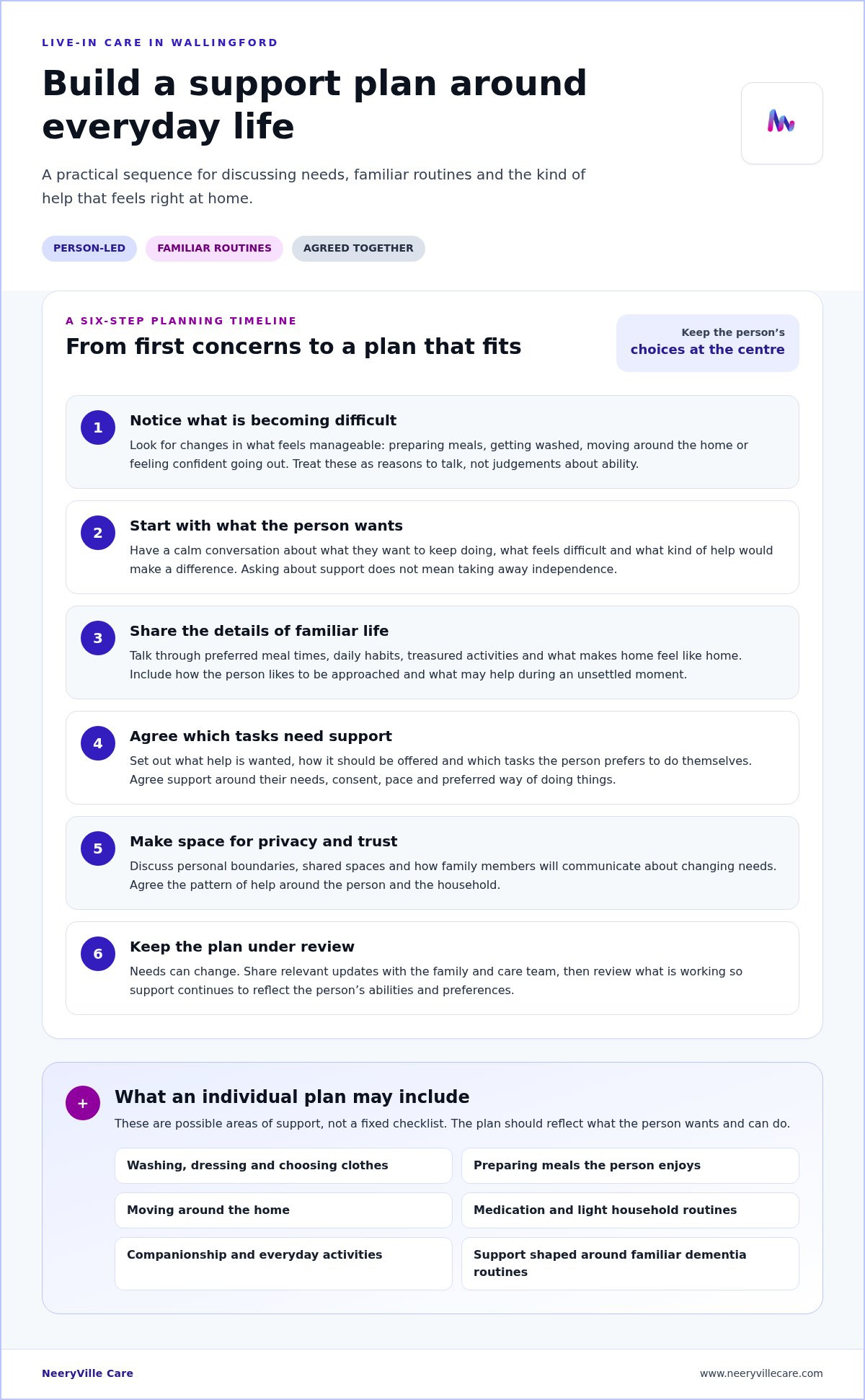
Making arrangements can feel like a lot to manage at once. Breaking the conversation into practical steps helps the person stay involved and gives relatives space to share what they’ve noticed without having to solve everything immediately. For families considering live-in care wallingford, preparation is less about getting the home perfect and more about giving the care team a clear picture of the person and everyday life.
Talk about what matters. Begin with the person’s wishes, what they find difficult and what they’d like to keep doing for themselves. Include family observations while making sure the person’s own voice is heard.
Describe the daily routine. Note preferred waking and meal times, food choices, hobbies, mobility considerations and approaches that help the person feel comfortable. Share relevant medication information and important contacts as part of the planning conversation.
Consider the home together. Discuss where support will happen and what private space may be suitable for a carer who lives in. Think through household routines, shared areas and practical details that could help the arrangement work comfortably for everyone.
Agree how to keep in touch. Decide who in the family will share updates, how questions or concerns can be raised, and how changes in needs will be communicated. A simple, agreed approach can prevent relatives from feeling they must each manage information separately.
Preparing the home and sharing everyday preferences
A short written note can be useful. Include favourite meals, how the person likes to be addressed, what helps them move around comfortably and the names of key contacts. Add the small things that make a day feel familiar, such as a regular activity or a preferred way of organising the morning. These details help the plan reflect the person, not just a list of tasks.
It’s also sensible to discuss suitable private accommodation for the live-in carer. Every home is different, so talk through the space available and how the household can make the arrangement comfortable and respectful. Preparation can be adapted to the home and the people living in it.
Keeping family communication manageable
Care arrangements can affect relatives’ time, energy and responsibilities, especially if one person has been coordinating most of the support. Agreeing who will be the main family contact and how updates will be shared can make communication feel less overwhelming. Keep the person receiving care involved in conversations wherever possible.
Families can also make space to notice their own needs. If worry or caring responsibilities are weighing heavily, talking with someone trusted or seeking relevant guidance may help. A care plan should support the family partnership, not leave relatives feeling they have to carry every detail alone.
NeeryVille Care provides live-in care across England, giving families in Wallingford a way to consider support at home. Its local care work also serves areas including Highgate N6, Crouch End N8, Hornsey, Camden, Hampstead, Finsbury Park, Kentish Town, Tufnell Park, Haringey, North London, Hungerford, Chelsea, Kensington, Hillingdon, Enfield, Hackney, London and Angel.
NeeryVille Care: live-in care support in Wallingford
Choosing support is personal, and families don’t need every answer before beginning a conversation. NeeryVille Care provides personalised live-in care nationwide, including for families in Wallingford. Support is shaped around the individual, bringing practical assistance and companionship into the familiar setting of home.
The aim is to understand what would make everyday life more comfortable and manageable for your loved one. That might mean explaining which parts of the day feel difficult, what they want to continue doing independently, or what worries the family most. Their wishes and routines are a useful starting point.
A person-centred approach to live-in support
NeeryVille Care is a CQC-regulated home-care provider. Its live-in support can include assistance with daily living, companionship, dementia care and medication support, shaped around the person’s circumstances and preferences. Practical help matters, but so does how it is offered: with respect for dignity, personal choices and the familiar rhythms of home life.
Talking through the next step with NeeryVille Care
A first discussion can begin with the information you already have. You might describe your loved one’s current needs, an ordinary day, the support relatives are providing and the questions you’re still working through. You don’t need to prepare a perfect plan. Sharing what matters most gives the care team a helpful foundation for discussing personalised support.
For broader context on the nationwide service, explore NeeryVille Care’s live-in care at home across England. This can help you consider how support at home may fit your family’s situation, while this guide offers a starting point for thinking about routines, privacy, practical help and communication.
It’s understandable if you’re still weighing up what feels right. A conversation can help you explain the situation and priorities, and understand possible next steps. There’s no need to decide everything at once. The focus is on listening carefully and discussing what support could look like for the person and family.
Take the next step at your own pace
Deciding what happens next doesn’t have to mean settling every detail today. A useful first step is to bring together what your loved one wants, what feels difficult at home and what the family hopes will change. Those priorities can guide a conversation about whether live-in care wallingford may suit your circumstances.
You can talk through the situation as it is, including uncertainties or questions you’re not yet sure how to answer. A considered discussion can help turn a broad concern into a clearer picture of possible support, while keeping your loved one’s wishes at the centre.
There’s no need to rush. Give yourself and your family time to reflect, share concerns and take things one step at a time.
A thoughtful beginning can make the way forward feel more manageable, and your family doesn’t have to work it all out alone.
Frequently Asked Questions
Is live-in care available in Wallingford?
Yes. NeeryVille Care provides live-in care nationwide, so families in Wallingford can discuss support for a loved one at home. You can explain what’s changing, what the person would like to maintain and what the family is finding difficult. This helps make a conversation about care relevant to your circumstances.
What does a live-in carer do each day?
A live-in carer can provide personalised help with daily living and companionship, with agreed support depending on the person’s needs. For example, the plan might include help getting ready for the day, preparing meals or managing medication. It may also include time spent talking or sharing an activity. The balance varies between individuals and should reflect what the person wants help with, rather than assuming everyone needs the same routine.
Can someone receiving live-in care remain independent?
Yes. Support can be organised around what the person wants to do themselves, with assistance offered where it’s useful. Someone might prefer to choose their clothes, make decisions about meals or continue a familiar hobby, even if they need help with another task. Discussing personal boundaries and asking before assisting can help preserve a sense of control. Independence doesn’t have to mean managing every task without help.
Does live-in care include dementia support?
Yes. NeeryVille Care offers personalised dementia support as part of its care services. The approach can take account of what helps the person feel settled, how they prefer to communicate and which familiar activities matter to them. Families can share useful background, such as changes in routine that cause distress or subjects the person enjoys discussing. Support is tailored to individual needs.
How is live-in care different from visiting care?
With live-in care, a carer stays in the person’s home as part of the agreed arrangement. Visiting care involves a carer coming to the home for scheduled visits, so support is organised around those planned times. Families considering the difference can think about when help is most needed and whether support between visits would be important. The choice depends on the person’s circumstances, preferences and household.
What should families prepare before live-in care starts?
It can help to gather practical information in one place: usual meal times, food preferences, mobility considerations, medication details and important contact names. Note the person’s preferred ways of doing things, too, such as how they like to be greeted or what helps them feel at ease. Families can also discuss suitable private space for the carer and agree who will share updates or raise concerns.
How can my family discuss live-in care with NeeryVille Care?
You can share your loved one’s needs, usual routines and the concerns your family is weighing up through the NeeryVille Care contact page. It’s fine to begin with questions or a brief outline of what has prompted you to consider support. You don’t need to make a decision before talking. A conversation can help clarify what matters to your family and what a possible next step could be.