Introducing a New Carer: A Guide for Families

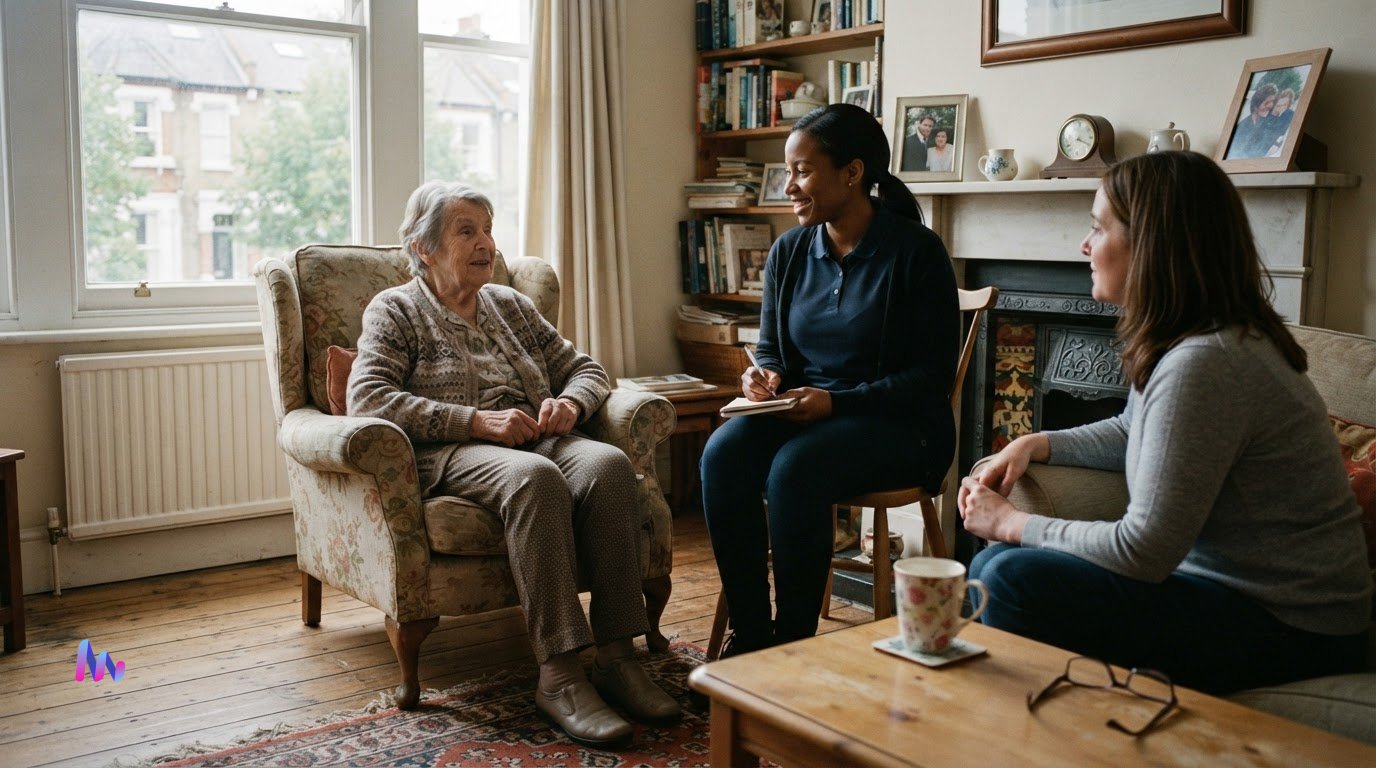
What helps an unfamiliar person feel less like a stranger in a home that’s deeply personal? A new carer can bring reassurance and practical support, but it’s understandable if the first meeting feels unsettling. The introduction process for a new carer works best when everyone has time to feel comfortable, ask questions and get to know one another without pressure.
With a little preparation, families can help make that first visit calmer and more respectful. Sharing useful details about routines, preferences and communication gives a carer a clearer picture of what matters. Keeping the person receiving care involved helps them feel listened to and in control. This guide explains what to prepare, how to approach the first meeting and how to raise concerns if something doesn’t feel right. It also looks at how familiar carers and clear communication can support a relationship over time. There’s no need for everything to feel perfect straight away. A thoughtful introduction is a first step towards trust, built at a pace that feels right for the person and their family.
Table of Contents
Why the new carer introduction process matters at home
Inviting someone new into your home can bring mixed feelings. You might welcome extra support while also wondering how it will affect privacy, independence or familiar routines. The person receiving care may feel the same way. These concerns deserve space, not dismissal. A thoughtful introduction helps everyone understand what support is for and how it can fit around the individual’s life.
The introduction process for a new carer is a planned, person-centred first meeting, not simply a handover of information. It gives the carer and the person receiving support a chance to meet, discuss preferences and begin building familiarity. A carer may provide practical help, companionship or personal care. This overview of what is a carer offers wider background on different caring roles. The introduction should reflect the person’s needs and the type of care being arranged.
What does introducing a new carer involve?
In general, an introduction involves preparing useful information, meeting at a comfortable pace, sharing what matters to the person and making time for feedback afterwards. This might include explaining preferred names, daily routines, communication needs and how the person likes to be asked before receiving help. Focus on details that can guide the first visit, rather than trying to cover every aspect of care at once.
The individual’s comfort and consent should guide how the meeting unfolds. They may want a family member present, prefer to speak for themselves or need more time before discussing personal support. A family can help create the conditions for a good first meeting, but the person receiving care should have a meaningful say wherever possible.
Why can a familiar approach make a difference?
Predictable routines can offer reassurance when someone is adjusting to support at home. A carer who knows when the person likes breakfast, how they prefer to be greeted or which tasks they want to manage themselves can approach the day with greater sensitivity. This doesn’t guarantee an immediate bond, but it can prevent unnecessary surprises and show that personal choices are being taken seriously.
Respect matters in small moments: knocking before entering a room, explaining what’s about to happen and allowing time for a response. These actions help protect dignity and independence. With visiting care, the introduction may focus on how support fits into a particular visit and the person’s usual routine between visits. With live-in care, there is also a shared home environment to consider, including privacy, household habits and how each person can have personal space.
Clear communication can support familiarity over time, especially when the person sees familiar carers. Families can share observations and preferences as they become clearer, helping keep care centred on the individual. For example, explain what has worked well during a visit and what the person would like to be different next time.
How to prepare for the first meeting with a new carer
A little preparation can make the first meeting feel more manageable without turning it into a formal interview. Keep the person receiving care at the centre: ask what would help them feel comfortable, what they’d like the carer to know and whether they want a family member alongside them.
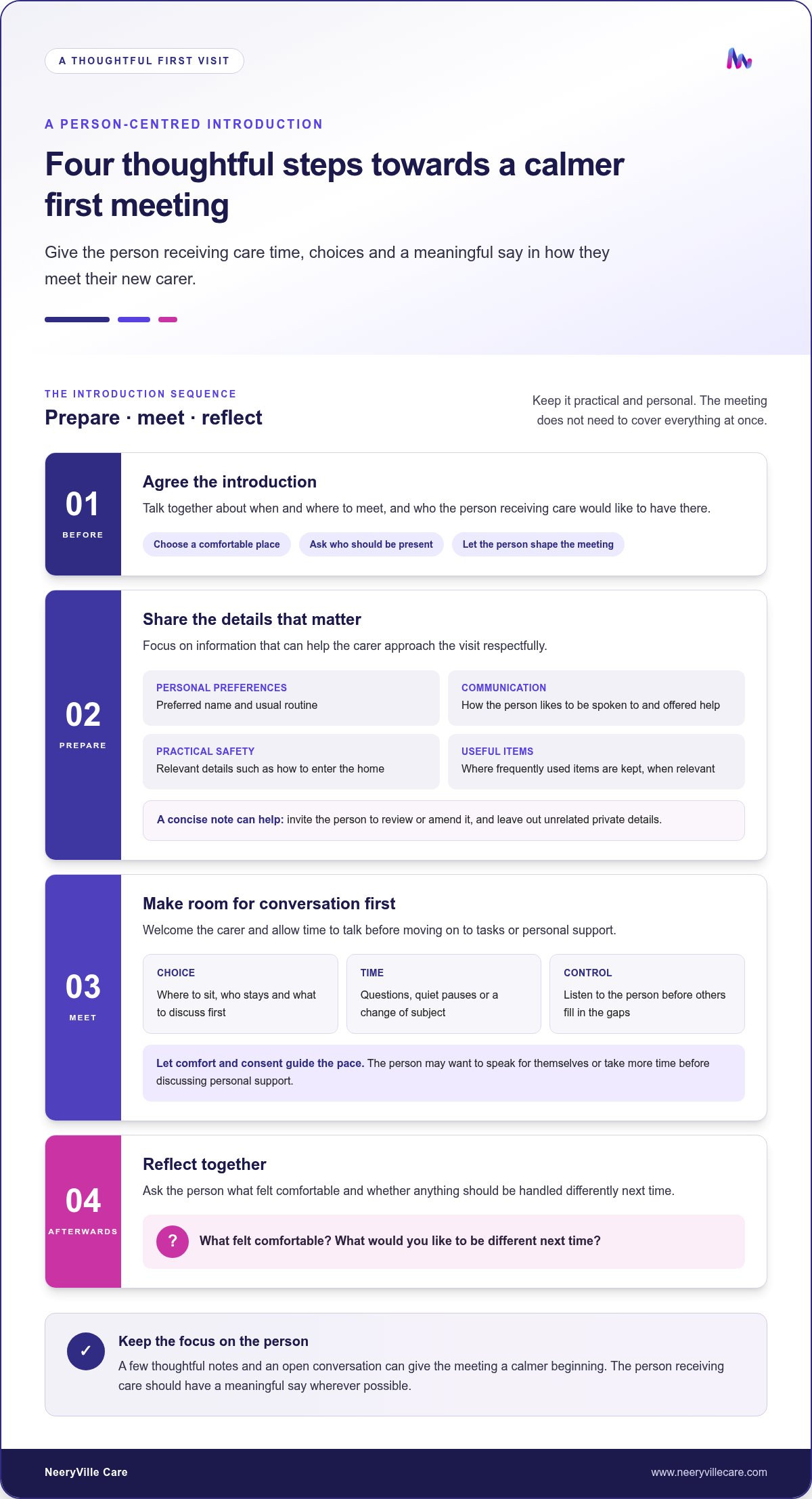
A simple sequence can help:
Agree the introduction: Talk together about when and where to meet, and who should be there.
Share preferences: Note the routines and support details that will help the carer approach the visit respectfully.
Welcome the carer: Make space for introductions and conversation before focusing on tasks.
Reflect afterwards: Ask the person what felt comfortable and whether anything should be handled differently next time.
This keeps the introduction process for a new carer practical and personal. It gives the individual a chance to shape the meeting rather than feeling that decisions are being made around them.
What should families share before the first visit?
Prioritise information relevant to the support being arranged: the person’s preferred name, usual routine, communication needs and how they like help to be offered. For example, they may prefer a gentle reminder before moving on to a task, or want to try something independently before accepting assistance.
Share practical safety information clearly and calmly, such as how to enter the home or where frequently used items are kept, when relevant. A concise written note can help everyone remember key points. Keep it focused and invite the person receiving care to review or amend it. Avoid sharing unrelated private details simply because they’re available.
How can the person receiving care stay in control?
Offer real choices: where to sit, who should be present and what to talk about first. Leave room for questions, quiet pauses or a change of subject. The person may have a clear account of what works for them, so listen before family members fill in the gaps. If they don’t want to discuss a particular topic yet, agree to return to it later where appropriate.
If the support is arranged as visiting care, the first conversation can focus on how visits might fit around the person’s day and the help they’d like during them. Find out more about visiting care in Highgate if hourly support at home is relevant to your family.
Preparation doesn’t need to be perfect. A few thoughtful notes and an open conversation can give the first meeting a calmer beginning, while leaving the person free to express what matters to them.
What should happen during the first meeting with a new carer?
The first meeting doesn’t need to begin with care tasks. A calm conversation gives the person receiving support time to get used to the carer’s presence and decide what they’re comfortable discussing. The carer can listen first, notice how the person prefers to communicate and follow their lead, rather than expecting them to explain everything straight away.
A brief explanation can make the purpose clear: “We’re meeting today so you can get to know one another and talk about the support that feels right for you.” Family members can offer relevant context, but should leave space for the individual’s own answers. If they need more time, prefer a pause or communicate in a way that takes longer, allow for that without rushing to fill the silence.
Conversation prompts that help everyone feel at ease
Keep questions open and everyday. Ask what the person enjoys, what a good day looks like and which parts of their routine they’d like to keep unchanged. It can also help to ask, “What kind of help feels comfortable?” and “Is there anything you’d rather do yourself?” Their answers offer a useful starting point for respectful support.
Agree how to communicate clearly: whether the person prefers one question at a time, a little extra time to respond or a quiet reminder before a task. Family members can add a detail if needed, then bring the conversation back to the person. This keeps them involved, rather than making the meeting feel as though others are discussing their care around them.
Introducing personal care or specialist support sensitively
Personal care can feel private, especially with someone new. Before offering practical help, explain what you’re proposing, ask permission and give the person a genuine opportunity to respond. A calm explanation and respectful pace can help protect dignity. If they’re unsure or say no, pause and consider what would feel more comfortable.
For someone living with dementia, keep language simple and introduce one idea at a time. Too much detail or several questions together may feel overwhelming. Use familiar words, allow time for a response and pay attention to the person’s cues. Support should be guided by their preferences and comfort, not by pressure to complete an introduction in one go.
If dementia support at home is relevant to your family, read more about dementia care at home. A thoughtful first conversation won’t settle every detail, but it can give the person a clearer voice in how care begins. That is an important part of the introduction process for a new carer.
What if the person does not feel comfortable with the new carer?
Trust may take time to develop, but discomfort should always be taken seriously. A person might feel unsure because the arrangement is new, or they may have a specific concern about communication, personal boundaries or how support is being offered. Don’t assume they’ll get used to it, and don’t treat one difficult meeting as proof that the relationship can’t work.
After the visit, ask what felt difficult and listen without correcting or dismissing their account. If it’s hard for them to explain, try gentle, specific prompts: Was the conversation too fast? Did they feel listened to? Was a routine or preference overlooked? A family member can describe what they noticed while keeping the person’s own perspective central.
How to respond to hesitation after the first visit
Separate general nerves from practical concerns. The person may need another conversation before feeling ready, or a different pace, communication style or approach to a task may help. Ask what they’d like to change, then share that feedback with the care provider through its appropriate contact or feedback channels.
Keep the conversation factual and calm. Rather than assigning blame, note what happened and what would have felt better. For example: “They’d like more time to answer before a question is repeated.” This gives everyone something specific to discuss and makes it easier to agree what adjustment may help. Wherever possible, tell the person receiving care what feedback is being shared.
Why continuity and safeguarding both matter
Seeing a familiar carer may help someone recognise them and feel more confident as the relationship develops. Consistency can also make it easier for a carer to understand an individual’s routines and communication preferences. Learn more about having the same carer every day and how familiarity can support care at home.
Continuity doesn’t replace the need to speak up about boundaries or safety. If something feels inappropriate or unsafe, explain clearly what happened and raise it through the provider’s safeguarding or complaints process. Make a brief note of the date, what was said or done, and how it affected the person. If there’s an immediate risk, seek urgent help through the appropriate local services.
The introduction process for a new carer should leave room for questions and honest feedback. Raising a concern early can help clarify expectations and identify changes that may make support feel more respectful and comfortable.
How NeeryVille Care can support a positive introduction
Choosing support starts with understanding the person, not fitting them into a preset routine. NeeryVille Care provides personalised domiciliary care in North London and live-in care across England, with support shaped around individual needs and daily life. As a CQC-regulated home care provider, NeeryVille Care works in partnership with the person receiving care and their family.
Support can include companionship, dementia care, medication support or help with everyday activities. The right arrangement depends on what the person wants help with, what they prefer to continue doing independently and how support can fit into their home life. A thoughtful introduction helps families explain these priorities and gives the person a voice in decisions.
Choosing support that fits the person’s daily life
Visiting care may suit someone who would value help at particular points in the day, such as support with a daily routine or companionship. NeeryVille Care provides domiciliary care in North London, with flexible hourly visits tailored to individual needs. Companionship care at home may be relevant when conversation and company are an important part of the support the person would welcome.
Live-in care may be relevant when a person needs ongoing support at home and would benefit from a carer living in the household. NeeryVille Care provides live-in care across England, supporting people to remain in the comfort of their own homes. Whichever arrangement is being considered, discuss the person’s preferences, routines and concerns openly, without assuming that one type of care will suit every family.
A gentle next step for North London families
NeeryVille Care’s personalised domiciliary care serves North London areas including Highgate N6, Crouch End N8, Hornsey, Camden, Hampstead, Finsbury Park, Kentish Town, Tufnell Park, Haringey, Hungerford, Chelsea, Kensington, Hillingdon, Enfield, Hackney, London and Angel. Families may be thinking about practical help, companionship, dementia support or simply how to make accepting care feel less daunting. It’s all right to begin with questions. The individual’s comfort, choices and familiar routines can guide the conversation.
A personal discussion can help you explain what matters at home, what support you’re considering and what feels uncertain about introducing a carer. There’s no need to have every detail worked out before talking. Start with the person’s priorities and take the next step at a pace that feels comfortable for your family.
Take the next step towards care that feels right
A thoughtful introduction can help a new carer feel less like a stranger and give the person receiving care more say in how support begins. Prepare a few relevant notes about routines and preferences, make space for an unhurried conversation and listen carefully to any concerns afterwards. Trust may take time, and feedback can help families identify what might make the arrangement feel more comfortable.
The introduction process for a new carer should be guided by the individual’s needs, choices and comfort. NeeryVille Care is a CQC-regulated home care provider, offering personalised domiciliary care in North London and live-in care across England. A conversation can help you consider the support that may fit your family’s circumstances and what matters most at home.
You don’t need to have every answer before you begin. A calm first conversation can be a reassuring step towards support that respects the person and their familiar home life.
Frequently Asked Questions
What is the introduction process for a new carer?
It’s a planned first meeting that helps the person receiving care and the carer begin getting to know one another. Families can share relevant preferences and routines while giving the individual time to ask questions and express what feels comfortable. Adapt the meeting to the person’s needs and the type of care. It isn’t simply a handover, and there’s no need to rush straight into personal support.
How do you introduce a new carer to an elderly parent?
Talk with your parent beforehand about how they’d like to meet the carer and who they want present. Choose a comfortable setting, make a simple introduction and allow time for conversation before discussing practical support. You might invite your parent to talk about their usual routine or what they enjoy. Listen to their preferences, and avoid speaking on their behalf unless they want you to add something.
Should a family member be present when a new carer visits?
A family member can be present if the person receiving care would find that reassuring, but it should be their choice wherever possible. Your role might be to welcome the carer, help with context and support the conversation, rather than answer every question. Some people prefer to speak directly with the carer or have a little time together. Agree beforehand what would make the meeting feel comfortable for them.
What information should you give a new carer before the first visit?
Share concise, care-relevant details such as the person’s preferred name, daily routines, communication preferences and the kind of help they welcome. Include practical household or safety information if it’s relevant to the visit. A short written note can help everyone remember the essentials, and the person receiving care can review it. Avoid passing on unrelated private information; share what helps the carer provide respectful, person-centred support.
What happens if my parent does not like the new carer?
Listen to your parent and take their concern seriously rather than insisting they’ll simply adjust. Ask what felt uncomfortable: perhaps the conversation moved too quickly, a preference was missed or they felt unsure about a task. Note specific examples and share them calmly with the care provider through its appropriate feedback channels. A change in communication or pace may help, but discomfort about boundaries or safety needs prompt attention.
How long does it take for someone to get used to a new carer?
There’s no set timeline. Some people feel at ease quickly; others need more time, particularly if accepting support is a significant change or routines are being adjusted. Keep checking how the person feels and allow the relationship to develop at a comfortable pace. Familiar routines, clear communication and a carer who listens may help, but don’t dismiss ongoing unease. Raise specific concerns and discuss what adjustments could make support feel more comfortable.
Can the same carer visit regularly after the introduction?
Regular visits with a familiar carer may help build recognition and confidence, and consistency can be an important preference to discuss when planning support. Share why continuity matters to the person when arranging care. NeeryVille Care provides personalised domiciliary care in North London, including Highgate, Hampstead and Crouch End, as well as live-in care across England. A conversation with the care team can help you explain the person’s priorities for care at home.