Independence for Older People at Home: 2026 Guide

What if helping an older person stay safe at home didn’t mean taking over? Maintaining independence for seniors at home often starts with small, thoughtful changes that make daily routines easier while leaving choices firmly in the person’s hands.
If you’re worried about falls, household tasks becoming harder or a loved one feeling uneasy about accepting help, those concerns are understandable. Support should protect confidence and dignity, not replace them. A calm conversation about what matters to the person can be just as important as practical adjustments around the home.
This 2026 guide explores ways to make home life more manageable, from reviewing everyday hazards to adapting routines and finding the right level of support. You’ll learn how to discuss changing needs respectfully, recognise when extra help may be useful and consider personalised home care as one option. The aim is to help an older person stay involved in decisions and feel more confident in familiar surroundings, at a pace that feels right for them.
Table of Contents
Maintaining independence for seniors at home: what it means in everyday life
Families often want to make life easier for an older relative while protecting the familiar routines and decisions that make home feel like their own. It can be hard to know when to step in, especially if a task takes longer or seems more difficult than before. Start by seeing independence as personal, not as a fixed list of things someone must manage alone.
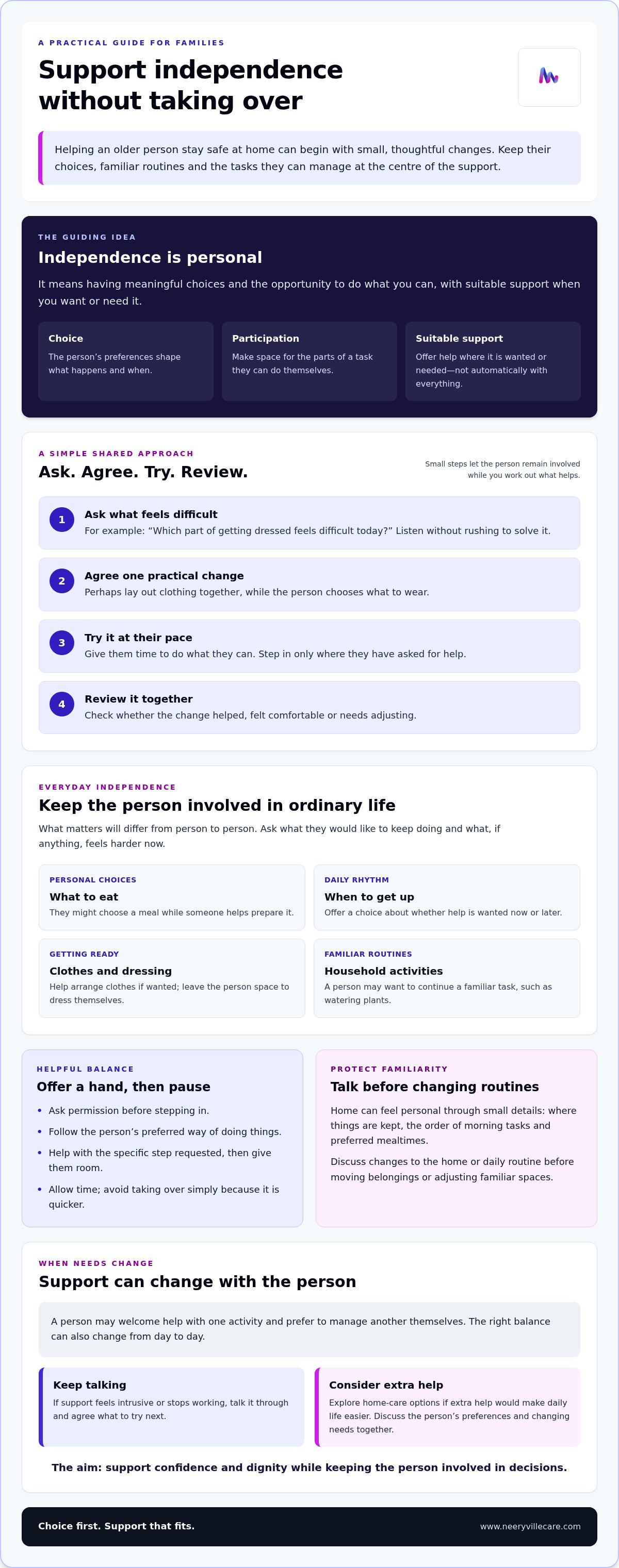
Independence means having meaningful choices and the opportunity to do what you can, with suitable support when you want or need it. It doesn’t mean completing every task without help or pretending that needs never change. A person may welcome assistance with one activity and prefer to manage another themselves. Respecting that difference is central to maintaining independence for seniors at home.
What does staying independent at home look like?
It might mean choosing what to eat, deciding when to get up, picking clothes or taking part in a household routine such as watering plants. For someone else, independence may look quite different. Abilities, habits and priorities vary, so avoid assuming that one approach suits every older person. Before suggesting a change, ask what they’d like to keep doing and what, if anything, feels harder now.
Why can familiar routines and choice matter?
Home is shaped by small, personal details: where things are kept, the order of morning tasks and the time someone likes to eat. Familiar surroundings can make everyday decisions feel more manageable, though they don’t remove every challenge. The idea of Aging in place reflects the value of remaining in one’s home and community as needs and preferences evolve.
Choice also matters when practical help is involved. Instead of deciding what happens next, ask whether the person would like help getting ready now or later, or which meal they’d prefer. These ordinary questions show respect and keep the person involved. The aim isn’t to fit their day around a family member’s preferred timetable. It’s to understand the older person’s priorities and agree support around them.
That might mean offering a hand with one daily task while leaving the rest of the routine unchanged. Personalised elderly care at home is one option families can explore if support would be welcome. Whether help comes from family or a care provider, start by asking what the person wants to continue doing for themselves.
How to support an older person’s independence with small daily steps
Helping doesn’t have to mean doing everything for someone. Notice where they’d like assistance, agree a small adjustment and leave room for them to do the parts they can. This makes maintaining independence for seniors at home a shared process, shaped by the older person’s preferences rather than assumptions about what they need.
Try this simple sequence:
Ask: “Which part of getting dressed feels difficult today?” Listen without rushing to solve it.
Agree one change: Perhaps lay out clothing together while the person chooses what to wear.
Try it: Give the person time to do what they can, stepping in only where they’ve asked.
Review together: Check whether the adjustment helped, felt comfortable or needs changing.
Use the same approach for meals and household routines. A person might choose what to eat while someone helps prepare it, or continue a familiar task with assistance for just one part. The right balance can change from day to day.
How can families offer help without taking over?
Ask permission before stepping in, then follow the person’s preferred way of doing things. If dressing feels tiring, for example, they may want help arranging clothes but prefer to put them on themselves. Avoid finishing a task simply because it’s quicker. If support feels intrusive or stops working, talk it through and agree what to try next.
Breaking an activity into manageable parts can make it easier to share without taking control. Offer a hand with the specific step requested, then pause. That gives the person space to stay involved and lets you check before offering more.
How can routines, interests and social contact be maintained?
Where practical, make room for familiar interests, whether that’s reading, gardening or keeping up with a regular call. Ask how the person prefers to stay in touch. A visit, a phone conversation or time together over an activity may feel more comfortable than a busy social plan. The useful question is not how to fill the day, but what connection the person values.
If companionship from a care worker might suit, explore what the person would enjoy and discuss an arrangement around their routines. Companionship care at home is one option to consider.
For further ideas on planning around everyday activities and the home environment, the National Institute on Aging’s Growing Older at Home guide offers a practical perspective.
Useful support enables participation; it doesn’t take over. If you’d like to discuss what personalised support could look like, you can talk through your family’s needs with NeeryVille Care.
Does accepting help mean losing independence? How to balance choice and safety
No. Accepting help doesn’t have to mean giving up control. The difference lies in whether support is agreed with the person and enables them to remain involved, or whether others take over tasks without asking. For example, help with one part of a daily routine can leave the person in charge of the rest. That balance can change as preferences and needs change.
A change in routine is a reason to check in, not to jump to conclusions. Perhaps a task takes longer, is being avoided or seems more tiring than before. These observations don’t explain why something has changed. Ask how the person feels about it, and seek appropriate professional advice if you’re concerned about their health or safety. A GP or another relevant health professional can help assess concerns. Don’t treat a family observation as a diagnosis.
How can families discuss changing needs respectfully?
Choose a calm moment and begin with what matters to the older person, rather than listing what you think is wrong. Try open questions: “Which parts of the day feel easy at the moment?” or “Is there anything you’d like a hand with?” Listen to the answer. Then agree one small change to try and revisit whether it supports their goals or feels intrusive.
What changes at home may be worth reviewing?
Ask whether lighting, clear walkways or the position of frequently used items make everyday activities easier or harder. Don’t move belongings or rearrange a familiar room without discussing it first. These are useful topics to review, not a universal safety checklist or substitute for an individual assessment. The National Institute on Aging’s guide to growing older at home also discusses planning for daily activities and the home environment.
If mobility or frailty is affecting everyday life, a health professional can advise on concerns that need assessment. For practical support with daily living, mobility and frailty care at home is one option a family may wish to explore.
Maintaining independence for seniors at home doesn’t mean choosing between autonomy and safety. It means noticing what’s changed, listening to the person and agreeing support that keeps them involved. Start with their priorities, make one considered adjustment, then talk together about whether it feels right.
How to make the home and daily routines easier to manage
A home can feel harder to manage for small, specific reasons: reaching a regularly used cup, finding a comfortable place to sit while getting dressed, or moving between rooms with items in the way. Rather than reorganising the whole space, notice which everyday tasks the older person says have become awkward, tiring or frustrating. Their experience is the best place to start.
Talk through possible changes before moving belongings or altering a familiar room. Something that seems more convenient to a relative may feel confusing or unwelcome to the person who lives there. Ask which change they’d be happy to try, and make one adjustment at a time so you can discuss whether it helps.
Which everyday home adjustments are worth discussing?
Walk through familiar routines together, if the person is comfortable with that. You might talk about whether frequently used items are easy to reach, whether there’s a convenient place to sit, or whether the route between rooms feels clear and manageable. These are starting points for conversation, not a checklist that guarantees safety. What’s appropriate depends on the person, their home and the task they want to do.
A change involving equipment, alterations or a closer assessment may need advice from an appropriately qualified professional. For example, an occupational therapist may be able to assess how a person manages daily activities in their home. Ask the person’s GP or local council about suitable routes to advice if you’re unsure where to begin.
How can routines support confidence without becoming restrictive?
A routine can offer a helpful prompt, but it should fit around the person’s preferences. If they want a reminder, a note by a regularly used item or an agreed check-in may be useful. If they’d rather manage without prompts, respect that too. A fixed timetable can feel like control rather than support, particularly if it replaces the person’s preferred time for meals, rest or hobbies.
Review what’s working after a change in circumstances, such as a shift in mobility or a return home after a hospital stay. Don’t assume an arrangement that helped before will always suit. The person’s views may change, and small adjustments can be reconsidered together.
Practical adjustments should make valued activities easier while preserving personal choice. That’s a useful principle for maintaining independence for seniors at home: adapt the surroundings and routines to the person, not the person to a rigid plan.
When to explore home-care support for greater independence
Home-care support may be worth considering when an older person asks for help, or when everyday tasks are becoming harder to manage in the way they’d like. That doesn’t automatically mean they need support with everything. Sometimes help with a specific task can make it easier to keep familiar routines and stay involved in daily decisions.
Start with the person’s view. What would they like to continue doing themselves? Which tasks would they welcome help with? Their answers can guide a conversation about whether support at home might suit them, without making assumptions or rushing into a decision.
What kinds of help can be arranged at home?
Depending on individual needs, options might include visiting care for agreed daily-living tasks, companionship or more continuous support such as live-in care. The right arrangement depends on what the person wants help with, their preferences and circumstances. Discuss it with them and review it if their needs or wishes change.
NeeryVille Care is a CQC-regulated home-care provider offering personalised domiciliary and live-in care across England. Its support can include companionship, help with daily living, medication support and dementia care. You can read more about elderly care at home as one possible approach. The aim is to fit support around the person, rather than expecting them to adapt to a preset routine.
How can families take a first, unhurried next step?
A little preparation can make the first conversation feel more manageable. Write down what the older person wants to keep doing, which routines matter to them, what help they might welcome and any questions they’d like answered. Include them in discussions as much as they wish and are able to take part. If they’d prefer, give them time to consider the options before making decisions.
It may help to ask a care provider how support can be shaped around the person’s preferences, which tasks could be included and how arrangements can be reviewed if circumstances change. You can also check that the service is available in your area and ask about the provider’s CQC registration.
Exploring support is simply a way to understand the choices available. There’s no need to decide everything at once. If you’d like to talk through home-care options with NeeryVille Care, you can start a conversation at a pace that feels right.
Keep independence personal, practical and open to change
Supporting an older person starts with listening to what matters to them. Independence isn’t about managing every task alone; it’s about having meaningful choices, keeping valued routines and getting help in ways that preserve involvement. A calm conversation and one agreed adjustment can be a reassuring place to begin.
As needs change, review what feels helpful. Consider whether daily tasks or the home environment could be made easier, and involve the person before changing familiar arrangements. Maintaining independence for seniors at home is an ongoing process, shaped by their preferences rather than a fixed plan.
Home care is one option if extra assistance would be welcome. NeeryVille Care is a CQC-regulated home-care provider offering personalised support that can include companionship and help with daily living, discussed around individual preferences and changing needs.
For families exploring support in Highgate N6, Crouch End N8, Hornsey, Camden, Hampstead, Finsbury Park, Kentish Town, Tufnell Park, Haringey, North London, Hungerford, Chelsea, Kensington, Hillingdon, Enfield or Hackney, ask NeeryVille Care about local availability. Its domiciliary care focuses on North London areas such as Highgate and Hampstead, while live-in care is offered across England.
There’s no need to have every answer today. With patience, respectful conversations and support that fits, older people can remain active participants in shaping daily life at home.
Frequently Asked Questions
How can I help an older person stay independent at home?
Ask what they’d like to manage themselves and where help would be welcome. Maintaining independence for seniors at home can start with listening, then agreeing one small adjustment together. For example, ask whether they’d like help preparing a meal while choosing what to eat, or prefer to keep a familiar routine unchanged. Give them time to do what they can, and check whether the support still feels right.
Does accepting home care mean an older person loses independence?
No. Home care can support independence when it’s shaped around the person’s preferences and agreed tasks, rather than taking over every part of the day. Someone might welcome help with daily living while continuing to make choices about meals, activities and routines. Before arranging care, discuss what they want help with, what they’d like to do themselves and how you’ll revisit the arrangement if their needs or wishes change.
What changes can make a home easier for an older person to manage?
Start by asking which everyday tasks or parts of the home feel awkward. Together, consider whether frequently used items are easy to reach, seating is convenient, or walkways feel clear. Don’t move belongings or introduce equipment without discussing it first. A change that suits one person may not suit another, so seek advice from an appropriately qualified professional if an individual assessment or more involved adjustment may be needed.
How do I talk to my parent about needing help at home?
Choose a calm moment and begin with their priorities, not a list of concerns. You could ask, “Which parts of the day are going well?” or “Is there anything you’d like a hand with?” Listen without rushing to persuade them. If they’re open to exploring help, agree one small step and give them time to think. Include them in decisions as much as they wish and are able to take part.
When should a family consider support at home for an older person?
Consider discussing support when the person asks for help or says everyday tasks are becoming harder to manage. It may be useful to explore visiting care for agreed tasks, companionship or more continuous support, depending on their needs and preferences. NeeryVille Care offers personalised home care and live-in care across England, with hourly domiciliary care focused on North London, including Highgate and Hampstead. Ask providers about their CQC status and local availability.
Can companionship help an older person remain independent at home?
Companionship may provide social contact and company around activities the person enjoys, helping them stay engaged with their own routines and interests. Ask what kind of contact they’d find comfortable, such as conversation, a shared hobby or help maintaining regular social connections. It won’t be the right choice for everyone, and it isn’t a replacement for other support if daily tasks are becoming difficult. The person’s preferences should guide the decision.
What should I do if an older person refuses help at home?
Try to understand what’s behind the refusal without arguing or making decisions for them. They may be concerned about privacy, unfamiliar people or losing control of their routine. Acknowledge those feelings, ask what might make support feel more acceptable and leave room to revisit the conversation later. If you’re worried about their health or safety, seek advice from an appropriate health or social care professional rather than trying to diagnose the issue yourself.