How to Take a Break When You’re a Full-Time Carer


What if the first step towards a break isn’t finding a whole day free, but deciding what cover would help you feel comfortable stepping away? If you’re wondering how to take a break when you are a full-time carer, it’s understandable to worry that someone else won’t know the familiar routines. When your time and energy are already stretched, even arranging a few hours can feel like another task.
Your need for rest matters, too. A break can be a short pause, time for an appointment or a longer period away. The right option is one that fits your circumstances and gives the person you care for support they can settle into.
This guide explains how to choose suitable cover, prepare a practical handover and make the transition more reassuring for everyone. A manageable plan can help you step away knowing what support is in place, then return with a little more space to breathe.
Table of Contents
Why full-time carers need a break, and what kind might help
Full-time caring can fill the day with routines, decisions and watching out for someone else. Rest can slip to the bottom of the list when there are few natural pauses. Working out how to take a break when you are a full-time carer may feel especially difficult if you’re unsure who could step in or how much time away would help.
A break doesn’t have to mean a holiday or a full day away. It could be time to attend an appointment, run an errand, see a friend or simply enjoy some quiet. Caregiving involves different responsibilities, and the overview of What is a Caregiver? offers broader background on the role.
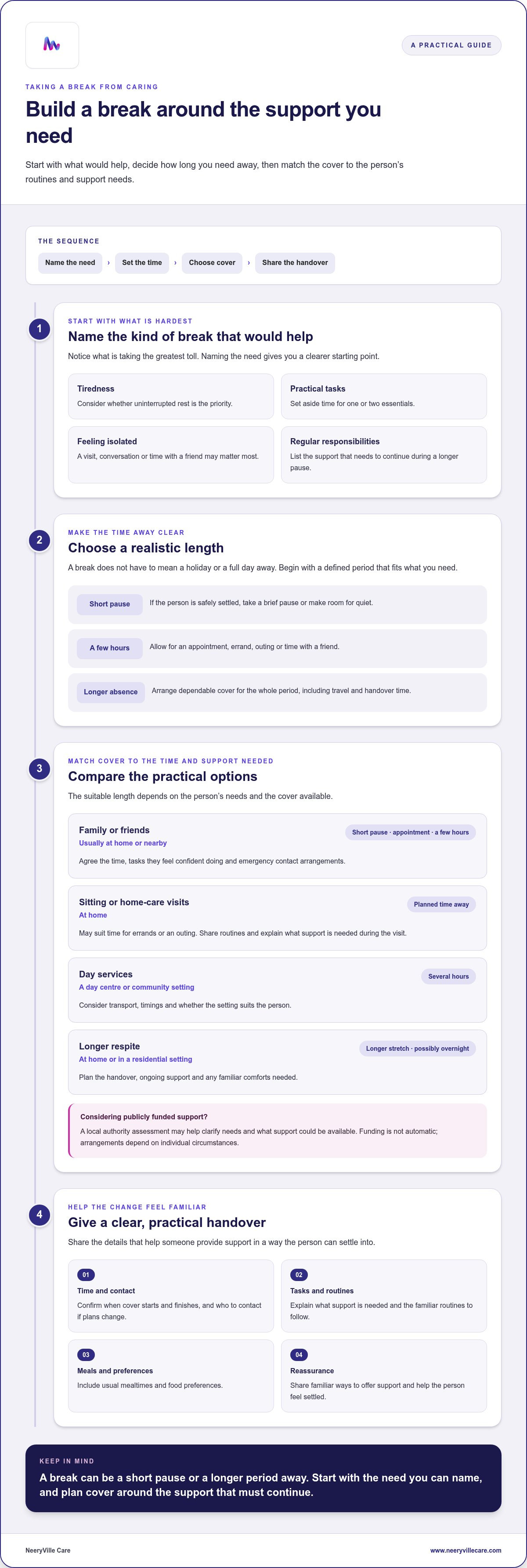
A useful break is matched to what you need most right now. Ask yourself whether you need sleep, time to deal with practical tasks, company and a change of scene, or sustained relief from regular caring responsibilities. Naming the need makes it easier to choose a realistic first step instead of comparing your situation with someone else’s idea of time off.
How can you tell what sort of break you need?
Notice what is taking the greatest toll. Is tiredness making it hard to concentrate? Are unfinished tasks weighing on you, or are you missing conversation and time outside the home? Naming what feels difficult gives you a clearer starting point.
If the person you support is safely settled, you may be able to take a brief pause. For an appointment or a longer absence, arrange dependable cover for the whole period, including any time needed for travel or handover. You don’t need to solve every future need at once. Start with a defined period and a clear plan for who will support the person while you’re away.
If you’re exhausted, consider whether uninterrupted rest is the priority.
If practical tasks are piling up, set aside time for one or two essentials.
If isolation feels heavy, a visit or time with a friend may matter most.
If you need a longer pause, list the regular support that must continue while you’re away.
Why taking time for yourself is part of caring
Time away isn’t a measure of how much you care. Rest and breathing space may support your own wellbeing and help you return with more capacity for everyday responsibilities. Everyone’s circumstances are different, so no particular type of break will suit every carer. Carers UK recognises that time apart can offer a change of scene, even when a longer trip isn’t realistic.
For one family, the first step may be a short pause; another may need a longer period of cover. If you’re considering ongoing support at home, live-in care in London is one option to explore. Start with the need you can name, then consider what support would make a break feel more manageable for both of you.
Choose the right break: informal help, visits or respite at home
Once you know what kind of time you’re looking for, consider how much support the person needs during your absence. Cover might come from someone they know, a planned home-care visit, a day service or a longer respite arrangement. The right fit depends on the person’s routines, the tasks involved and how long you hope to step away.
Use this comparison to weigh up the practical differences. The examples are not fixed arrangements. The suitable length depends on the person’s needs and the cover available.
If you’re seeking publicly funded support, a local authority assessment may help clarify the person’s needs and what support could be available. Funding isn’t automatic, and arrangements depend on individual circumstances. The NHS guidance on getting a break from caring explains respite options and where to find further information.
When might family or friends provide suitable cover?
A relative or friend may be a comfortable choice for a brief visit or a familiar routine, if they’re willing and able to help. Agree the start and finish time, the tasks they feel confident doing and how to reach you or another contact. Share practical details beforehand, such as usual mealtimes, preferred ways to offer reassurance and what to do if plans change. Be specific about what the person needs, and don’t assume a friend or relative can take on every task.
When could planned home-care support help?
Home support may suit someone who feels more settled in familiar surroundings. Visiting Care involves planned visits, while Live-In Care provides support in the home on a live-in basis. They are different arrangements, so consider how much support is needed and when it needs to be available. For London families planning a longer break, Live-In Care in London is one option to explore.
When deciding how to take a break when you are a full-time carer, start with the cover that makes your intended time away realistic. A planned visit may suit an appointment or errand; a longer absence needs a more detailed plan and handover.
Plan a break from caring with a calm, practical handover
A clear handover can make time away feel more manageable, especially when you’re used to noticing the small details that help someone feel settled. You don’t need a perfect document. A concise set of notes, discussed with the person receiving support and the person covering, can make routines easier to follow and questions easier to raise.
Work through the plan in order, adjusting it to the length of your break and the support needed:
Choose the break. Decide what you want the time for and how long you hope to be away.
Identify cover. Agree who will provide support and what they can take responsibility for.
Agree dates and timings. Set a clear start and finish, including travel time or a handover between helpers.
Share routines. Write down useful details in everyday language, so the person stepping in can refer to them.
Confirm arrangements. Make sure everyone understands the plan, knows who to contact and has time to ask questions before you leave.
If you’re seeking council support, remember that the person’s care needs assessment and your carer’s assessment are separate. One considers the support the person needs; the other considers your circumstances and needs as a carer. The NHS explains carer’s assessments and how they relate to support. An assessment can inform planning, but it doesn’t replace agreeing the practical handover for a particular break.
What should you include in a care handover?
Keep notes clear and specific. Include usual mealtimes, preferred foods, daily rhythms, personal preferences and the practical support needed during the period of cover. Add relevant contact details and agreed arrangements, such as who to call if plans change. Give both the person receiving support and the person providing it time to raise questions beforehand. A short conversation can clarify details that are difficult to capture in writing.
How can you make the transition feel familiar?
Where practical, introduce the person providing support before you step away. Familiar surroundings, usual belongings and an unhurried explanation may help the change feel less abrupt. Continuity can also help: NeeryVille Care provides the same carer for every visit or every day, rather than changing the person supporting your loved one from one visit to the next.
If support is needed urgently, explain the situation clearly when arranging help. NeeryVille Care can arrange care within 24 to 48 hours of an initial assessment in most cases across England. Urgent situations are handled as quickly as possible. Timing depends on the assessment and circumstances, so keep your handover notes and agreed contact details accessible while arrangements are being made.
Ease guilt and worry while you are away from caring
Stepping away can bring relief and worry at the same time. You might look forward to a quiet hour, then wonder whether the person you care for is comfortable or whether you should be doing more. Those feelings don’t mean you’re making the wrong choice. Adjusting to a new arrangement can feel unfamiliar, particularly if you’re used to noticing and responding to every need yourself.
Your commitment isn’t measured by whether you’re physically present at every moment. Accepting support doesn’t erase the care you give; it allows someone else to help for an agreed period. Your first break may not feel exactly as you imagined. You don’t have to travel, fill every minute or feel instantly relaxed. A quiet pause or a change of scene can be enough.
To keep worry manageable, agree in advance whether you’ll receive an update and when. Then try to give yourself permission not to check constantly. If a specific concern comes up, use the contact arrangements you agreed instead of trying to keep the whole plan in your head.
What if the person you care for feels unsure?
A change in support may take time to understand or feel comfortable with. Explain calmly what will happen, who will be there and when you expect to return. Listen to what matters to them, and describe the arrangement in a way that respects their preferences and dignity. Make space for questions before the break rather than rushing the conversation as you leave.
How can carers rebuild confidence after a break?
You don’t have to return and immediately take on every task at full pace. Allow time to reconnect with familiar routines and hear how the cover period went. Notice what helped, such as a clear update, a familiar activity or knowing when you’d be back. Also consider what you would change next time. A break is an experience to learn from, not a test to pass.
If the first attempt felt difficult, that doesn’t mean future support can’t work. You could adjust the length, timing or handover. If strain persists, you don’t have to wait until you reach a crisis to recognise that you need support. Taking a break includes arranging cover and noticing how you feel during and afterwards.
Give yourself time to settle back in. Your routine may resume gradually, and it’s reasonable to reflect on what would make the next pause more comfortable for everyone.
Arrange home care for a planned break with NeeryVille Care
Once you’ve considered the kind of break you need and the support that would help the person feel settled, planned home care may create time away while they remain in familiar surroundings. NeeryVille Care provides home care in England, with arrangements shaped around the person’s needs and the period of support discussed.
How can home care fit around the break you need?
Discuss the support and timeframe that suit your circumstances, whether you’re planning an absence or looking to add support at home. The right arrangement depends on the help needed and how long you expect to be away.
Live-In Care is available across England. Visiting Care is available in Highgate and surrounding North London within a five-mile radius. These are distinct options: Live-In Care is provided on a live-in basis, while Visiting Care involves planned visits. NeeryVille Care’s Visiting Care serves families in Highgate N6 and surrounding North London. Live-In Care is available to families across England, including those in Crouch End N8, Hornsey, Camden, Hampstead, Finsbury Park, Kentish Town, Tufnell Park, Haringey, Hungerford, Chelsea, Kensington, Hillingdon, Enfield, Hackney, London and Angel. You can read more about Live-In Care in London.
Care can be arranged within 24 to 48 hours of the initial assessment in most cases. Urgent situations are handled as quickly as possible. Share your intended dates and the support needed so the care plan can reflect your circumstances.
What reassurance can families expect when arranging care?
NeeryVille Care is a CQC-regulated provider with directly employed carers. The same carer supports the person at every visit or every day, helping families build continuity and share preferences and familiar routines.
The 14-Day Live Well at Home Guarantee means care can be ended within 14 days with no notice and no fees if it isn’t right. Discussing needs and expectations clearly from the start can also help everyone understand how the arrangement is intended to work.
When planning how to take a break when you are a full-time carer, bring together your intended dates, the person’s usual routines and the support you’d like covered. A conversation can help you work through the details without needing to have everything decided beforehand.
Make space for a first step that feels manageable
Your next break doesn’t need to be a grand plan. Choose one thing you’d like the time to make possible, then give it a place in your calendar. A modest, realistic intention can make the idea feel more tangible, even if you’re not ready to plan a longer period away.
Learning how to take a break when you are a full-time carer also means including your own needs in the plan. You may feel uncertain at first, and that’s all right. Take things at a pace that feels comfortable, notice what helps and adjust as circumstances change.
If you’d like to explore what support could make a break possible, you can talk it through without having every detail settled.
One considered step is enough for now. Your wellbeing belongs in the picture, too, and it’s possible to plan time away with care for yourself and the person you support.
Frequently Asked Questions
Is it selfish to take a break when you are a full-time carer?
No. Needing rest doesn’t lessen your care or commitment. Guilt can still arise when someone depends on you each day, but it doesn’t mean you’re doing anything wrong. Start with a manageable period and agree who will provide support, what they’ll do and how you’ll stay in touch. You may not feel relaxed straight away, and that’s all right.
How can I find help if no family member can cover my caring responsibilities?
Family help is only one possible source of cover. The NHS outlines respite options, including paid home care, and your local authority or a carers’ centre can explain local support. NeeryVille Care provides Live-In Care across England and Visiting Care in Highgate and surrounding North London within a five-mile radius. A local authority assessment can help clarify the person’s needs and possible funding routes, although support and eligibility depend on individual circumstances.
Can I request a carer’s assessment even if I am not ready to take a break?
Yes. A carer’s assessment is an opportunity to discuss how caring affects your needs and what support could help. You don’t have to agree to a particular break or care arrangement. For example, you could explain that caring makes it difficult to keep up with appointments or work. Read the NHS guidance on carer’s assessments and contact your local authority about its process, as arrangements are determined locally.
What happens if I need an urgent break and cannot continue caring as usual?
Seek timely help from your local authority or relevant support services, and explain what has changed and what support is needed. If anyone is in immediate danger, contact emergency services on 999. NeeryVille Care handles urgent care arrangements as quickly as possible. Care can be arranged within 24 to 48 hours of an initial assessment in most cases. If you’re unsure who to approach for local support, your local authority can direct you to relevant services.
Can respite care be arranged for only a few days?
Yes. NeeryVille Care offers respite care for durations ranging from a few days to several weeks. When discussing an arrangement, describe the dates you have in mind and the support the person needs during that time. The plan is shaped around individual circumstances.
What should I do if the person I care for refuses support from someone else?
Listen to what’s worrying them before trying to settle the plan. A new person or change to a familiar routine can feel unsettling. Explain calmly who would be involved, what support is proposed and when you expect to return, then ask what might make the arrangement more comfortable. Where appropriate, a gradual introduction may help. Keep their preferences and dignity central, and don’t assume they’ll agree immediately.