How to Convince Parents They Need a Carer: A Gentle, Practical Guide


What if the first step towards care isn’t persuading your parent to accept it, but helping them feel they still have a say? If you’re worried they’re finding daily tasks harder, working out how to convince parents they need a carer can feel delicate. You may fear they’ll dismiss your concerns or that raising them could damage your trust. That worry is understandable.
Care doesn’t have to mean taking over. A calm conversation gives your parent space to explain what matters to them, what they’re concerned about and where they might welcome help. Listening first can make it easier to explore support together, at a pace that feels respectful.
This guide will help you prepare for that conversation, understand why your parent may hesitate and agree a proportionate first step, from occasional help at home to more regular support if needs change. You’ll also learn when to seek professional guidance if concerns about safety or wellbeing continue. The aim isn’t to force a decision, but to find a way forward that protects your parent’s dignity and sense of control.
Table of Contents
How to recognise when a parent may benefit from a carer
Noticing changes in a parent can be unsettling. You may want to help whilst worrying that speaking up could feel like a challenge to their independence. Start with what you’ve actually seen, rather than a conclusion about what your parent can or can’t do. A useful care concern is a specific change affecting daily life, not a judgement about age.
One missed meal or forgotten errand may have an ordinary explanation. Look for a pattern and consider what might be behind it. Has your parent missed meals on several visits, struggled to keep up a familiar routine or stopped doing something they usually enjoy? These details can help you decide whether a gentle conversation is needed, without treating family observations as a diagnosis.
Which changes are worth discussing with your parent?
Make a brief note of recurring difficulties with everyday tasks, mood or routines. Record what happened and when. “You said you hadn’t eaten lunch when I visited on Tuesday” is more useful than “You can’t look after yourself.” A concrete example gives your parent something specific to respond to without labelling or blaming them.
Include what’s still going well, too. Perhaps shopping has become tiring, but your parent is managing other familiar tasks comfortably. Ask whether they’ve noticed the same change: “Have you found cooking more difficult lately, or was that just an unusually busy day?” Their answer may add context you don’t have. A resource such as Understanding Elderly Care offers broader context on support and independence, but your parent’s own experience should guide the conversation.
How to raise safety concerns without creating alarm
Separate immediate danger from a concern that can be discussed calmly. If your parent appears to be in immediate danger or needs urgent medical attention, contact emergency services on 999. For a health concern that isn’t an emergency, seek advice from their GP or NHS 111. You don’t need to work out the cause on your own.
For concerns that aren’t urgent, choose a quiet moment and share the observation plainly. Avoid turning a single difficult day into proof that a carer is necessary or making predictions that frighten your parent. If you’ve noticed meals being missed more than once, explain when it happened and ask what would make mealtimes easier. A GP or other appropriate professional can help with health concerns. Practical support at home may be worth discussing if everyday tasks are becoming harder.
This measured approach can make how to convince parents they need a carer feel less like winning an argument and more like understanding what has changed. Gather useful information together, then decide whether a next step feels right.
Why parents may resist a carer - and how to understand the concern
A parent’s reluctance can be hard to hear, especially when you’re worried. But refusal isn’t, by itself, proof that they’re being stubborn or don’t understand your concerns. Help can touch on privacy, familiar routines, money, identity or the fear that someone else will start making decisions. There may be more than one reason, and guessing can leave your parent feeling unheard.
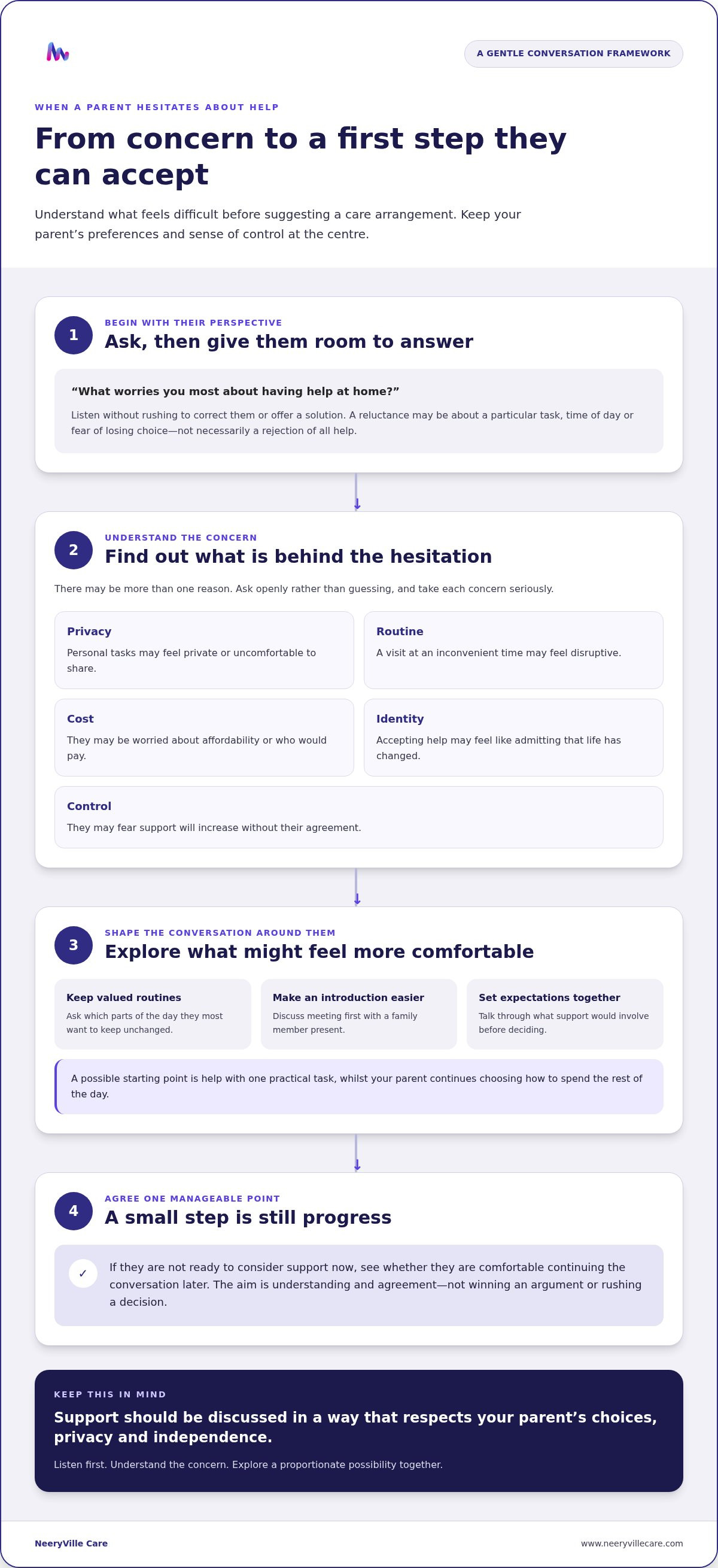
Understand the reason for resistance before suggesting a care arrangement. Give your parent room to explain what feels uncomfortable. Try asking, “What worries you most about having help at home?” Then listen without rushing to correct them or offer a solution. You might learn that they don’t object to help itself, but to a particular task, time of day or imagined loss of choice.
Privacy: They may not want personal tasks discussed or shared.
Routine: A visit at an inconvenient time could feel disruptive.
Cost: They may worry about affordability or who would pay.
Identity: Accepting help might feel like admitting that life has changed.
Control: They may fear that support will grow without their agreement.
What if your parent fears losing independence or privacy?
Acknowledge the concern rather than arguing that you know best. You could say, “I can see why you’d want to keep your routines private.” Ask which parts of the day they most want to keep unchanged and what kind of help, if any, might feel acceptable. Support can be shaped around their preferences, such as help with a practical task while they continue choosing how to spend the rest of the day.
Give cost concerns the same calm attention. Ask what your parent is worried an arrangement might cost, without assuming what they can afford or promising a particular solution. The aim at this stage is to understand the concern, not settle every detail.
What if they do not want a stranger in their home?
That can feel deeply personal. Home is familiar, private space, and welcoming someone new may take time. Ask what would make an introduction more comfortable: meeting first with a family member present, talking through expectations beforehand or beginning with a clearly agreed practical task. These are possibilities to discuss, not reasons to rush your parent into a decision.
Try to agree on one small point your parent is comfortable considering, even if it’s simply continuing the conversation later. This makes how to convince parents they need a carer less about persuasion and more about finding support that respects their choices. If talking through possible home support together would help, you can discuss your family’s concerns and preferences.
Which first steps can make accepting care feel more manageable?
A first step doesn’t have to mean agreeing to a full care arrangement. It can help your parent understand what support might look like and decide whether any of it feels useful. Match the next step to their needs and preferences. If they’re unsure, a conversation may be enough for now. If a particular task is becoming difficult, occasional visiting support could be worth discussing. If needs extend across the day, consider a conversation about more ongoing help.
Use the options below to start a discussion, not as a checklist or a promise that one arrangement will suit everyone. Be clear about what your parent would still decide.
When might a small amount of visiting support be a starting point?
If one or two tasks feel harder, your parent might be open to discussing occasional visits rather than a larger change. Visiting support could help with agreed daily tasks or offer companionship while leaving other routines untouched. For families in the area, visiting care in Highgate is one option to discuss. Start with what your parent would find helpful.
When might families need to discuss more ongoing support?
If support needs reach beyond what occasional visits can reasonably address, it may be time to talk about more ongoing help. Live-in care at home is one possibility when a parent needs more continuous support in familiar surroundings. The right level isn’t determined by a fixed checklist. It depends on an individual discussion about needs and preferences.
Keep the first decision small and specific. Your parent might agree to talk through a task, consider what a visit could involve or revisit the idea after reflecting. If they’re not ready to choose, agree when to continue the conversation. This gives them time and a meaningful say, while helping you work out whether a gentle first step is enough or a fuller discussion is needed.
For families wondering how to convince parents they need a carer, the aim isn’t to secure agreement to the biggest option. It’s to find a proportionate next step together, one that responds to what’s happening now and can be reconsidered if circumstances change.
How to talk to your parents about getting a carer
A caring conversation doesn’t need to begin with a proposal or a decision. It can begin with curiosity. Choose a time when neither of you is rushed or upset, and focus on understanding your parent’s experience rather than securing an immediate yes. A simple structure can help you stay calm if the subject feels emotional.
Choose a calm moment. Avoid raising care during an argument or in the middle of a stressful task. If today doesn’t feel right, wait for a quieter opportunity.
Ask permission. Try, “Could we talk about how things have been going at home?” This gives your parent a chance to agree to the conversation.
Share one observation. Use a specific, neutral example, such as, “I’ve noticed the shopping has been left undone a few times.”
Listen to their view. Ask what they think is happening, then allow time for an answer. Their explanation may add context or reveal a different concern.
Agree one next step. Decide together whether to revisit the conversation, look at one task or discuss what support could involve.
What words can help you start the conversation?
You might open with: “I want to understand how things feel for you at home lately.” Then ask, “Would you be comfortable telling me what’s been easier or harder?” Using “I have noticed” keeps the focus on your experience, not a verdict about theirs. Add, “Have I understood that properly, or is there more to it?” Then pause. Silence can give your parent room to think, so resist filling it with more examples or arguments.
Open questions are gentler than ultimatums. Instead of “You need a carer,” try, “What would make mornings feel less tiring?” If your parent disagrees with your observation, don’t insist that your interpretation is the only one. Acknowledge the difference and ask what they would find helpful. Listen first, name one concern, then agree the next step together.
What should you do if the first conversation does not go well?
A difficult response doesn’t mean the relationship is damaged or that you must settle the issue at once. You could say, “I can see this isn’t a good time. We don’t have to decide anything now.” Ask whether they’d be willing to return to the subject another day. If they say no, respect that answer for the moment, unless there’s an immediate safety concern that needs urgent attention.
If your parent agrees, keep a brief shared note of the concern you discussed and any next step you both accepted. Be open about the note and revisit it together, rather than keeping a private record that might feel like monitoring. If you’re carrying a growing share of the practical and emotional load, remember that your wellbeing matters too. Support for you can help make future conversations steadier.
Knowing how to convince parents they need a carer isn’t about finding a perfect script. It’s about keeping the discussion respectful, staying specific and making decisions together, one step at a time.
How NeeryVille Care can help families explore support at home
Once you’ve spoken with your parent, it may help to talk through what support at home could look like. A care discussion gives you an opportunity to explain what you’ve noticed, share your parent’s preferences and consider practical support without pressure to make an immediate decision. Start with the concern that prompted the conversation, then explore what might fit around everyday life.
NeeryVille Care is a CQC-regulated home care provider in England. Domiciliary care focuses on North London, while live-in care is available nationwide. Families in Highgate N6, Crouch End N8, Hornsey, Camden, Hampstead, Finsbury Park, Kentish Town, Tufnell Park, Haringey, Hackney and Angel can explore local domiciliary support. NeeryVille Care also serves London locations including Chelsea, Kensington, Hillingdon and Enfield, as well as Hungerford. These forms of support are different, and the discussion should reflect where your parent lives, their needs and their wishes. Personalised care can help someone remain in familiar surroundings, with their routines and dignity kept in view.
What can families discuss when exploring care at home?
Bring your parent’s usual routines into the conversation: what they enjoy, which parts of the day feel difficult and what they would prefer to manage independently. Explain the practical concerns behind your enquiry, such as needing help with daily living or wanting more companionship. You don’t need to arrive with a finished plan. Sharing the situation clearly gives everyone a better starting point.
Depending on individual needs, support may include companionship or assistance with everyday tasks. Flexible domiciliary visits may suit families looking for help at particular times, while live-in care provides more ongoing support at home. Focus the discussion on what matters to your parent, including the kinds of help they would welcome and how it might fit their existing routines. A first conversation is a way to understand possibilities, not a commitment to a particular arrangement.
How can families take a calm next step?
Take the conversation at a pace that respects your parent’s wishes and your family’s circumstances. You might first talk through concerns together, then consider whether a particular type of support feels worth exploring. If your parent isn’t ready to decide, allow time to reflect and return to the discussion when they’re comfortable. A thoughtful first step can be a conversation, not a care commitment.
For families thinking about how to convince parents they need a carer, the aim is not to win an argument. It’s to understand what would make home life feel more manageable, then discuss support that reflects the person rather than a one-size-fits-all plan. NeeryVille Care can listen to your family’s concerns and preferences as you explore support at home.
Let the next step begin with understanding
You don’t have to settle every question in one conversation. A useful next step may simply be agreeing what your parent would like to understand better, then giving them space to think. That keeps the decision connected to their priorities rather than turning it into a choice made under pressure.
If you’re still wondering how to convince parents they need a carer, shift the goal from getting an immediate yes to making room for an honest discussion. Your parent may need time to weigh up what feels comfortable. You can stay alongside them, listen to what matters most and return to the conversation when they’re ready.
A care discussion can also help your family explore personalised support in a calm, practical way. NeeryVille Care provides home care in England, with domiciliary care focused on North London and live-in care available nationwide. You don’t need to have all the answers before beginning to talk.
Small, respectful steps can make a difficult decision feel more manageable. You and your parent can work towards a way forward that feels right for them.
Frequently Asked Questions
Is it wrong to arrange a carer for a parent who says they do not need help?
Don’t treat disagreement as permission to make the decision for your parent. First, understand what they object to and explain the particular concern that prompted you to raise care. Ask what kind of support they might be willing to consider, if any. If you’re worried about serious risks or uncertain about their ability to make a particular decision, seek guidance from an appropriate health or care professional before taking further steps.
How do I talk to my elderly parents about a carer without upsetting them?
You can’t guarantee your parent won’t feel upset, but you can make the conversation gentler. Choose a private, unhurried moment and ask if they’re willing to talk. For example: “I’ve noticed the weekly food shop seems to be taking more effort. How does it feel to you?” When thinking about how to convince parents they need a carer, make room for their answer rather than pushing for agreement. If feelings run high, suggest a pause.
Can a parent refuse care at home?
A parent may say they don’t want support, and that view deserves to be taken seriously. What happens next can depend on the specific circumstances, particularly if there are substantial safety concerns or questions about decision-making. Don’t assume that age alone tells you whether someone can make a decision. If you’re unsure how to respond, speak with an appropriate professional and use current official guidance relevant to your parent’s situation.
What if my parent has dementia and refuses a carer?
Keep the conversation familiar and manageable, focusing on one immediate concern rather than several possible changes at once. Notice whether a particular word, situation or unfamiliar choice seems to cause distress, and try a calmer approach later. If your parent’s needs or safety are changing, discuss those changes with their GP or another appropriate health professional. Any support conversation should reflect your parent’s communication, preferences and individual circumstances.
Should siblings agree before speaking to a parent about care?
It can help siblings compare what each has directly observed before approaching a parent. For instance, one person may have noticed unopened post whilst another has seen a change in shopping habits. Separate these observations from assumptions about what care should look like. If relatives disagree, avoid turning the conversation into a family debate in front of your parent. Aim for a shared, respectful approach that still gives them room to speak for themselves.
What should I do if I think my parent is in immediate danger?
If you believe your parent is in immediate danger, seek urgent help from the appropriate emergency services rather than waiting to reach agreement about ongoing care. If the concern is serious but not immediate, contact a relevant health or care professional for advice. Be ready to describe what you’ve observed, when it happened and what makes you concerned. Clear details can help professionals understand the situation and advise on a suitable response.