Hourly Home Care Rates in North London: A 2026 Guide to Costs and Quality


Last Tuesday, Sarah sat at her kitchen table in Highgate, surrounded by scribbled notes and a growing sense of dread. She knew her father needed support to stay in the home he loved, but the wildly different hourly home care rates North London agencies quoted felt like a maze without a map. It's a heavy burden to carry. You want the best for your loved one, yet the fear of hidden costs or choosing a provider that might compromise on safety can keep you awake at night. We recognise that worry. We understand that exhaustion.
We believe that finding the right balance between affordability and dignity should be simple. This guide is designed to replace your anxiety with clarity by providing a transparent breakdown of 2026 benchmarks and available financial support. You'll discover how to navigate Local Authority assessments, understand the true value of CQC-regulated care, and ultimately find a path that ensures your family member feels safe, seen, and supported at every step. We are here to help you move forward at a pace that feels right for your family, offering a steady hand during a difficult transition.
Table of Contents
Understanding Hourly Home Care Rates in North London (2026 Benchmarks)
Choosing to bring a professional into your home is a deeply personal decision. Hourly domiciliary care offers a flexible way to maintain independence, providing person-centred support tailored to your unique rhythm and domestic environment. When exploring hourly home care rates North London residents in areas like Highgate, Hampstead, and Crouch End will notice that figures typically sit above the national average. This difference reflects the higher cost of living in these boroughs and the specialised expertise required to support our local community. Home care in the United Kingdom is a strictly regulated sector, ensuring that your investment translates directly into safety, reliability, and clinical quality.
A professional rate is never just about a carer's time; it's a commitment to your family's peace of mind. In North London, 2026 benchmarks reflect the necessity of paying a fair wage to attract the most compassionate and skilled professionals. This ensures that the person entering your home is not only capable but also valued and supported by their organisation. It's a partnership built on trust and the security of remaining in a familiar, cherished space.
What Does a Professional Hourly Rate Actually Include?
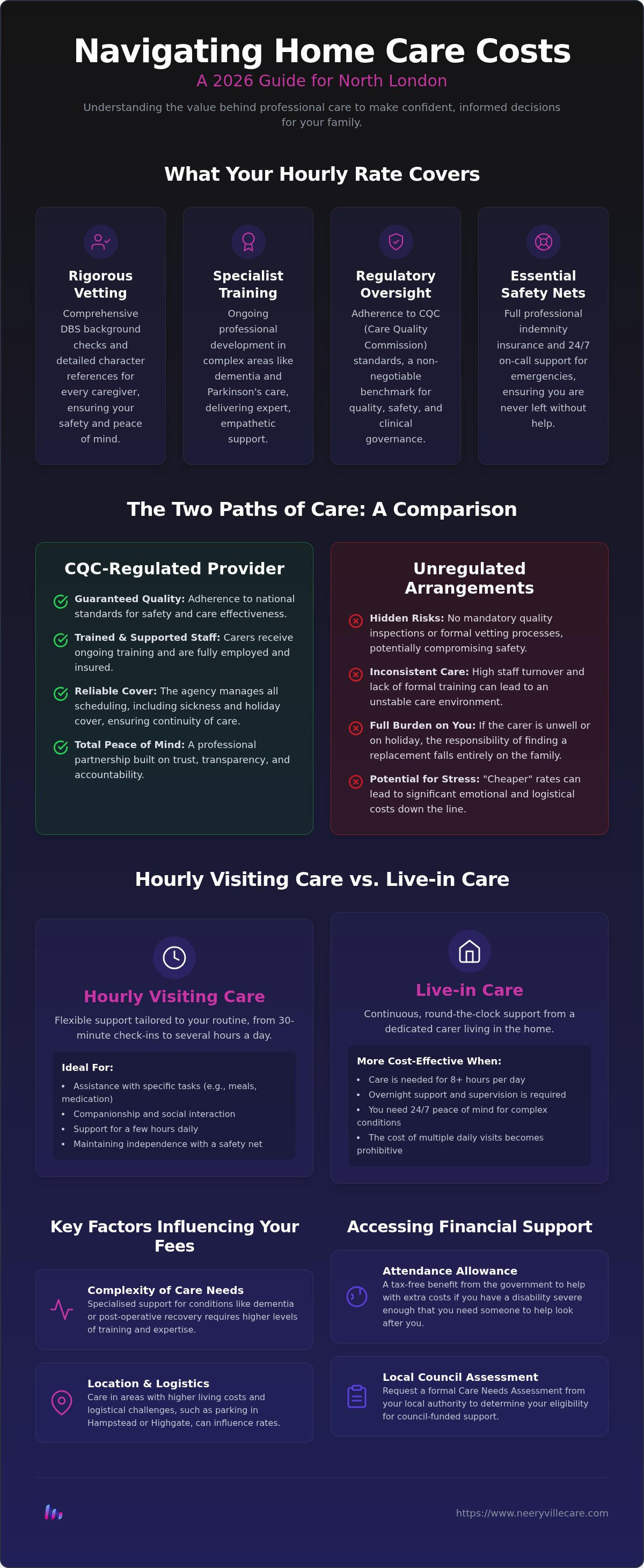
When you see a quoted rate, it encompasses an entire ecosystem of support designed to keep your loved one safe. We believe in total transparency regarding how your care is managed. A professional fee covers:
Rigorous Recruitment: This includes comprehensive DBS background checks and detailed character references for every caregiver.
Specialist Training: Ongoing education in complex areas such as dementia care at home and Parkinson's support.
Regulatory Oversight: The cost of maintaining CQC-regulated standards, which act as a non-negotiable marker of quality.
Safety Nets: This includes professional indemnity insurance and 24/7 office support for emergencies, ensuring you are never alone in a crisis.
The Risk of "Under-Market" Rates
It can be tempting to consider independent, unregulated "cash-in-hand" arrangements to reduce costs. However, these often come with hidden anxieties. Without the structure of a regulated agency, families frequently face high staff turnover and inconsistent care. If an independent carer becomes unwell or takes a holiday, the burden of finding a replacement falls entirely on you, often leading to emotional exhaustion.
Choosing visiting care in Highgate through a regulated provider offers long-term stability. Low rates often mask a lack of training or insufficient insurance, which can compromise the safety of vulnerable individuals. By prioritising a CQC-regulated partner, you're investing in a character-led service that values the individual over the process, providing a steady guide through the complexities of the care journey.
Factors Influencing Care Fees in Highgate and Hampstead
Understanding why hourly home care rates North London agencies set specific prices requires a look at the local landscape. In premium boroughs like Camden and Haringey, physical logistics play a significant role. Finding parking in Hampstead NW3 or navigating the narrow lanes of Highgate Village adds time and complexity to a carer’s day. Agencies must account for these factors to ensure their staff arrive composed and ready to focus entirely on your loved one’s well-being. It’s about creating a stable environment where the logistics of the city don’t interfere with the quality of support.
Specialist Care Requirements
Specialised support involves much more than basic assistance. When a family requires dementia care at home, they are investing in advanced training and a deep understanding of cognitive health. This level of expertise ensures that your loved one is safe and understood. Similarly, post-operative care at home provides the clinical oversight necessary for a smooth transition back from hospital. These complex needs often influence the final fee. Reviewing the NHS guidance on self-funding care can help you understand how these specialised requirements are typically structured within the wider care market.
Minimum Call Times and Consistency
We believe that high-quality care should never feel like a transaction. Many providers in Highgate now implement a one-hour minimum for each visit. Short, thirty-minute calls often result in "rushed care," which can be deeply distressing for an elderly person. A full hour allows for a meaningful connection to develop. It’s about more than just medication or meal preparation; it’s about the tea and the conversation that follows. These longer visits build a vital bond of companionship. They provide the emotional stability that helps a person feel truly at home.
The timing of support is the final piece of the puzzle. Visits scheduled for bank holidays, weekends, or overnight care usually carry a premium rate. This ensures that skilled professionals are available at any hour, providing a constant safety net for your family. If you’re feeling unsure about how these factors might affect your specific budget, it’s often helpful to request a personalised care consultation to gain a clearer picture.
Hourly Care vs. Live-in Care: A Cost-Benefit Analysis
Families often start their journey with a few hours of support each week. It's a gentle way to introduce help into a loved one's routine. However; as needs evolve, the financial and emotional landscape shifts. There is a specific "tipping point" where hourly home care rates North London families pay daily begin to exceed the cost of a dedicated, round-the-clock professional. Typically, once a person requires more than eight hours of visiting care per day, or frequent assistance during the night, the transition to live-in care in Highgate becomes the more sensible and sustainable path.
When you look at the "cost per hour" for high-dependency clients, live-in care offers remarkable value. It provides a constant presence that visiting care simply cannot match. Beyond the practical assistance, there are "hidden" benefits that ease the daily strain on families. A live-in carer manages light housekeeping and meal preparation, often reducing the stress of utility management and ensuring constant companionship. It's about more than just a schedule; it's about a shared life and the stability that comes from a single, dedicated caregiver.
When to Transition from Hourly to Full-Time Support
Recognising the right moment to change can be difficult. You might notice your loved one is experiencing more frequent falls, or perhaps they have started wandering during the night. These are clear signs that a few visits a day are no longer providing the safety they deserve. For those living as a pair, live-in care for couples offers significant financial logic. It is almost always more affordable than paying double hourly rates for two separate care plans. This transition acts as a "burden-lifter" for the entire family, allowing you to return to being a daughter, son, or partner rather than a primary coordinator. Understanding the available financial support for home care is a vital step in making this decision with confidence.
Evaluating the Value of 24/7 Presence
The emotional value of a 24/7 presence is immeasurable. Knowing that a professional is just a room away during the night provides a sense of security that alleviates the constant worry families often feel. This continuous monitoring is essential for reducing hospital readmissions, as a carer can provide immediate medication support and spot small health changes before they become crises. Live-in care provides a cost-effective alternative to residential homes for those requiring constant supervision whilst remaining in their own property. It preserves the dignity of staying home whilst ensuring that safety is never compromised.
Financial Support and Funding for Home Care in 2026
Understanding how to fund professional support is often the most daunting part of the care journey. The financial landscape for 2026 requires careful navigation, especially when balancing the hourly home care rates North London agencies charge with your family budget. We believe that financial clarity is the first step toward emotional peace. Whether you are exploring local authority support or self-funding, several avenues exist to ensure your loved one receives the dignity and safety they deserve without unnecessary strain.
Accessing Attendance Allowance in North London
Attendance Allowance remains a vital resource for those over the age of 65 who require help with personal care or supervision. This benefit is non-means-tested, meaning your income and savings do not affect your eligibility. In 2026, it continues to be offered at two rates depending on the level of support required during the day or night. Many families find this allowance particularly helpful when arranging overnight care or weekend visits. The application forms are notoriously detailed, so we encourage families to seek guidance from local organisations or official gov.uk resources. Securing this funding can significantly offset the weekly cost of professional support, providing a steady foundation for long-term care.
The Means-Testing Thresholds
If you are seeking support from Camden or Haringey councils, a Care Needs Assessment is the essential first step. This evaluation determines what help is required, followed by a financial assessment to see if the council will contribute toward the costs. For the 2026/27 period, the upper capital limit in England is £23,250. If your loved one has assets above this amount, they will typically be expected to self-fund their care. For those with assets below the lower capital limit of £14,250, the local authority will provide the maximum financial support possible. It is also important to note that the Minimum Income Guarantee for a single person of Pension Credit age is £241.45 per week, ensuring that individuals retain enough of their own income to cover basic living costs whilst receiving care.
For those with more complex, primary health needs, NHS Continuing Healthcare (CHC) may be available. This is a package of care that is fully funded by the NHS, regardless of your financial situation. Additionally, if the local authority does contribute, you can often choose "Direct Payments." This allows you to receive the funding directly into a personal budget, giving you the autonomy to choose your own CQC-regulated partner. This control is vital for families in high-property-value areas like Hampstead, where "self-funder" status is common but navigating hourly home care rates North London still requires a methodical, informed approach. We are here to help you understand these numbers and find a path that feels safe and sustainable.
Choosing a Care Partner: Balancing Cost with Quality and Dignity
Choosing a care provider is the final, most vital step in this journey. Whilst understanding hourly home care rates North London agencies set is necessary for your planning, the true value lies in the human connection between the carer and your family. At NeeryVille, we don't just provide a service; we offer a partnership. We prioritise the individual over the process, ensuring that every visit feels like a supportive conversation rather than a clinical task. This person-centred approach is overseen by a dedicated Care Manager who ensures the care plan evolves as your loved one’s needs change, providing a consistent point of contact and a sense of stability for everyone involved.
We know how overwhelming the care-seeking process can be. The emotional exhaustion of balancing work, family, and a parent's health can feel like an impossible weight. To lift that burden, we begin with a no-obligation home assessment. This is a quiet, patient opportunity for us to listen, understand the specific domestic challenges you face, and offer a simple solution tailored to your home. It’s about moving at a pace that feels right for you, ensuring the transition is as smooth and reassuring as possible.
Questions to Ask a North London Care Agency
When you are interviewing agencies in Highgate or Hampstead, it's important to look beyond the basic price list. You need to ensure the agency's character aligns with your family’s values. We suggest asking these specific questions:
How do you handle caregiver absences or holidays? A professional provider should have a robust system to ensure your loved one is never left without support.
Can we meet the carer before the service begins? Matching personalities is just as important as matching clinical skills to ensure a good bond.
What are your specific protocols for Parkinson’s care at home? Specialist conditions require specific training, particularly regarding medication timing and mobility assistance.
The Peace of Mind of CQC Regulation
Safety should never be a secondary concern when inviting someone into your home. NeeryVille is fully regulated, providing an essential layer of protection and clinical authority. The Care Quality Commission (CQC) is the independent regulator of health and social care in England. These regulatory inspections are rigorous and designed to protect your loved one’s rights, safety, and dignity. By choosing a regulated partner, you are choosing a character-led service that meets high national standards. This oversight offers the calm reliability you need, allowing you to focus on your relationship with your family member whilst we manage the complexities of their daily care.
Finding a Path Forward with Confidence
Finding the right support for a loved one is a journey of both the head and the heart. You now have a clearer understanding of the hourly home care rates North London families should expect in 2026, alongside the financial pathways that make high-quality support accessible. We know that behind every calculation is a person who deserves to remain in their own home with dignity and safety. By choosing a CQC-regulated provider, you're investing in more than just a schedule; you're securing a partnership that prioritises emotional well-being and clinical excellence.
Our specialist dementia and Parkinson's support is designed to adapt as your needs change, ensuring the transition into care feels like a natural extension of family life. We are here to lift the burden of coordination, providing expert care across Highgate, Hampstead, and the wider North London area. You don't have to navigate this complex process alone. We are ready to walk beside you, offering the steady reliability your family deserves during this significant time.
Frequently Asked Questions
How much does hourly home care cost in North London per hour?
Benchmarks for hourly home care rates North London residents typically see are influenced by the high cost of living in boroughs like Camden. Whilst national averages exist, local rates reflect the specialist expertise and CQC oversight required to provide safe, professional support in your own home. These fees cover rigorous recruitment, ongoing specialist training, and 24/7 office support. This ensures that the person entering your home is a trusted, highly skilled professional.
Is home care cheaper than a residential care home in London?
Home care is frequently a more affordable alternative to residential placement, particularly when support is only required for a few hours each day. It allows your family member to stay in their cherished home in Highgate or Hampstead whilst avoiding the high overheads of a care facility. For those with high-dependency needs, live-in care provides round-the-clock safety and companionship at a rate that often compares favourably to premium London care home fees.
Can I get help with the cost of home care from the council?
Financial assistance is available through your local authority, such as Camden or Haringey councils. You must first request a Care Needs Assessment to determine your eligibility. For the 2026/27 period, if your capital is below £23,250, you may receive a contribution toward your care. Families often choose direct payments to maintain control over their funding, allowing them to select a regulated partner that matches their specific values and clinical requirements.
What is the difference between domiciliary care and live-in care?
The primary difference lies in the level of presence and support. Domiciliary care involves visiting caregivers who assist with daily tasks for specific periods, such as an hour each morning. Live-in care involves a professional residing in the home to provide 24/7 monitoring and companionship. Whilst visiting care is ideal for maintaining independence during the early stages, live-in care offers a more comprehensive solution for those requiring constant safety and medication management.
Does Attendance Allowance cover the full cost of hourly care?
Attendance Allowance provides a valuable weekly contribution toward the cost of professional support, but it typically doesn't cover the full expense of a comprehensive care plan. It is a non-means-tested benefit for those over 65 who need help with personal care. Many families in North London use this allowance to supplement their budget for hourly home care rates North London. This ensures they can access the high standard of CQC-regulated care their loved ones deserve.
How quickly can home care be organised in Highgate or Hampstead?
We recognise that care is often needed urgently, particularly after a hospital stay. In areas like Highgate and Hampstead, we strive to be as responsive as possible to family crises. Whilst we never compromise on the depth of our initial home assessment, we can often begin providing support within a few days. Our goal is to lift the burden from your shoulders quickly. This ensures a safe and stable transition back to a domestic routine.
What happens if my loved one’s care needs increase suddenly?
If your loved one's health changes, our team is prepared to respond immediately. Our Care Managers regularly review every care plan to ensure it meets current needs. We can quickly increase the frequency of visits or introduce overnight care to manage new challenges. This flexibility allows your family member to remain in their familiar environment even as their requirements become more complex, providing the clinical authority and safety needed to avoid unnecessary hospital admissions.
Are NeeryVille carers trained to support people with advanced dementia?
Our caregivers undergo rigorous, specialist training in dementia care at home to ensure they can support individuals with advanced cognitive needs. We focus on person-centred techniques that prioritise dignity and emotional stability. By understanding the unique challenges of advanced dementia, our team provides a calming presence and expert medication support. This specialised knowledge allows your loved one to feel safe and seen, even when their condition requires a high level of clinical and domestic assistance.