Hospital Discharge Care in Highgate: A Guide for Families

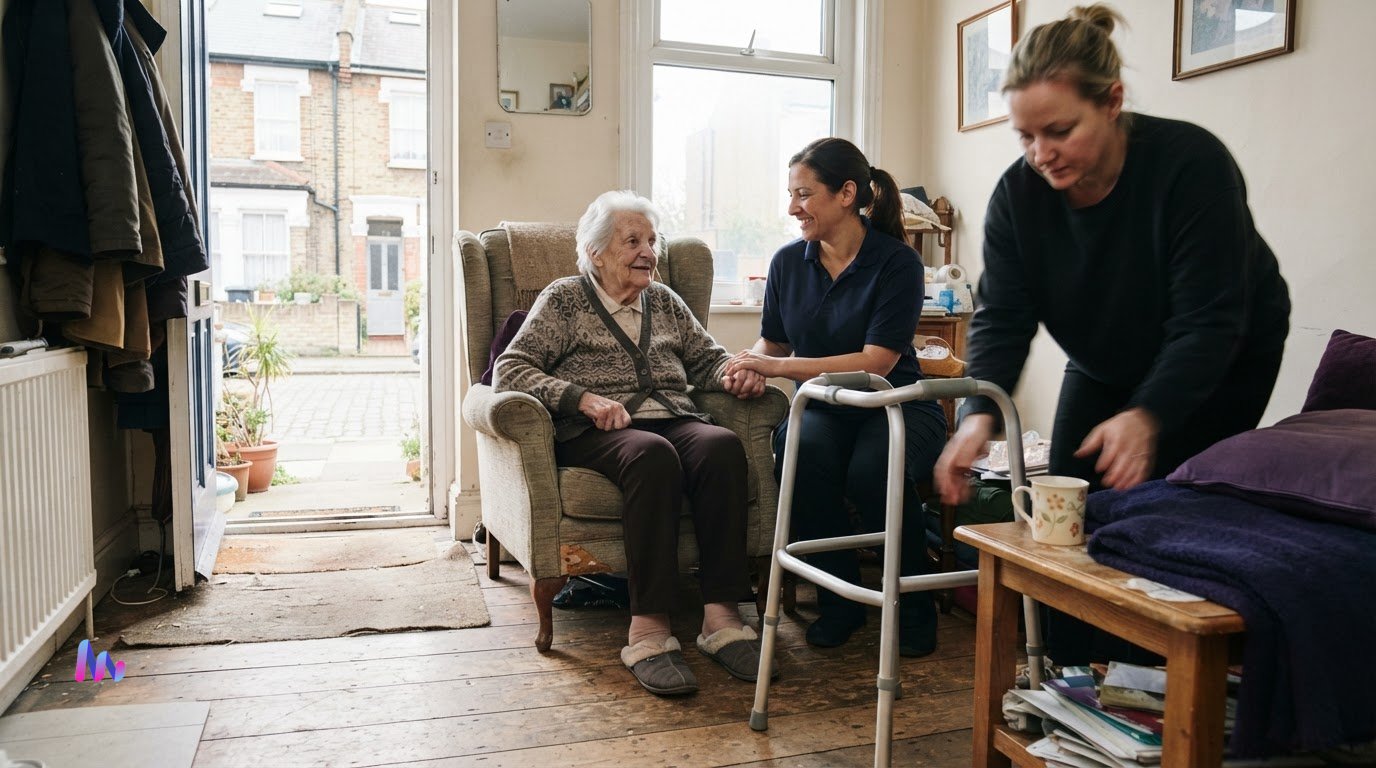
How can you make sure your relative has the right support when they leave hospital in Highgate? A discharge date can arrive while you’re still wondering what help will continue at home, whether everyday tasks will be manageable and how quickly you need to organise practical support. It’s understandable to feel under pressure. Good hospital discharge care Highgate families can rely on starts with clear conversations and a plan shaped around the person, not just the date they leave.
This guide will help you understand what to clarify with the hospital team before discharge and how to prepare for the move home. You’ll find practical prompts for discussing mobility, medication support, meals and personal care, as well as ways to think about family help and the person’s usual routines.
We’ll also explain how visiting care and other home-care options may fit into a personalised return-home plan. Every situation is different, so clinical decisions and discharge arrangements should stay with the relevant health and social-care professionals. With the right questions and suitable support in place, the transition can feel more manageable for everyone.
Table of Contents
Hospital discharge care in Highgate: what families need to know first
A hospital discharge can feel sudden, emotional and difficult to coordinate. You may be glad your relative is ready to leave, yet unsure what will happen once they’re through the front door. Start by asking the hospital team to explain the plan in plain language. Families seeking hospital discharge care Highgate can think of it as the practical support arranged to help someone move from hospital back to home, with their needs and agreed follow-up in view.
Hospital discharge care supports the transition home with everyday assistance; it isn’t a substitute for clinical treatment. The hospital team leads discharge planning and makes decisions about the person’s clinical care. Home care arranged privately may complement the support agreed with health and social-care professionals, for example by helping with personal care, meals or companionship. It doesn’t provide clinical nursing procedures.
For background on hospital stays and discharge planning, see this overview of Inpatient care. The details of an individual’s plan, however, should come from their own care team.
What should be clear before someone leaves hospital?
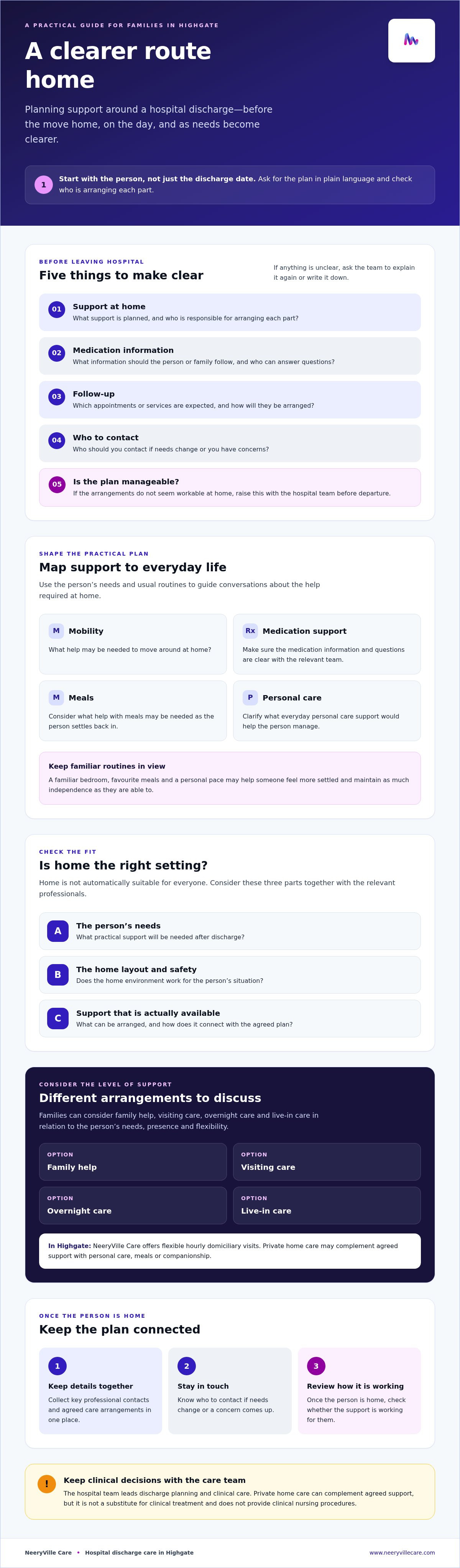
Before discharge, ask what help is expected at home and who will arrange each part. If something is unclear, ask the team to explain it again or write it down. You’re not being difficult; you’re making sure everyone understands what happens next.
What support is planned at home, and who is responsible for arranging it?
What medication information should the person or family follow, and who can answer questions about it?
What follow-up appointments or services are expected, and how will they be arranged?
Who should you contact if the person’s needs change or you have concerns?
Before leaving, check that the person and the family members involved understand the agreed arrangements. If the plan doesn’t seem manageable at home, raise this with the hospital team before departure so the concern can be discussed.
How can a familiar home support recovery?
Home may offer comforting routines: a familiar bedroom, favourite meals and the freedom to move through the day at a personal pace. With suitable support, these small points of familiarity can help someone feel more settled and maintain as much independence as they’re able to. But home isn’t automatically the right setting for everyone. Suitability depends on the person’s needs, the layout and safety of the home, and what support is actually available.
Visiting care may be one part of a personalised plan, alongside family help and any support organised by professionals. NeeryVille Care offers flexible hourly domiciliary visits in Highgate; families can read more about visiting care in Highgate. Discuss any private care alongside the agreed plan, and keep clinical questions and decisions with the relevant professionals.
How hospital discharge planning connects with care at home in Highgate
There isn’t one discharge plan that fits every person. The hospital team should explain the arrangements for this individual and how any health or social-care support connects with the return home. Official UK government guidance sets out the approach to hospital discharge and community support, while the services available depend on the person’s circumstances and local arrangements.
Use this adaptable sequence to organise the practical details. It can also help you spot questions that need answering before the person leaves.
Step 1: Confirm the plan. Ask what support has been agreed, who is arranging it and what the family is expected to do. Check that the person and those supporting them understand the arrangements.
Step 2: Identify daily needs. Talk through mobility, washing, dressing, meals and medicines. Ask which tasks the person can manage independently, where they may need help and whether any equipment or professional support is planned.
Step 3: Prepare the home. Consider how the person will get into the property, reach the rooms they need and settle somewhere comfortable. Make essentials accessible and reduce obvious trip hazards.
Step 4: Agree follow-up. Clarify which appointments or services are expected, who will contact the person and whom the family should call if needs change or the plan isn’t working.
Some support may be coordinated through NHS or local-authority services, depending on the person’s assessed needs and local arrangements. Care a family chooses and pays for privately is separate. It can complement agreed support with practical help at home, but it shouldn’t be assumed to replace a service or clinical follow-up arranged by professionals. Ask the discharge team to explain what is confirmed, what is still being considered and who will update you.
Questions to ask the discharge team
Be specific. “Will someone help with washing?” is more useful than “Will there be support?” Ask how mobility and dressing needs will be managed, what medication instructions the person should follow, and which follow-up services are planned. Write down names, contact details and what to do if the person’s condition or support needs change. If the answer isn’t clear, ask for it to be explained in everyday language.
Preparing for the first day back at home
Plan transport and access, including who will be there to let the person in and help them settle. Check there are essentials such as food, drinks and any items specified by the hospital team. Move frequently used belongings within easy reach and clear walkways where possible. Coordinate family availability and any privately arranged care around the confirmed plan, rather than assuming arrangements are already in place.
Families considering hospital discharge care Highgate can discuss how private visiting support might fit around the person’s routines and agreed needs. For a conversation about possible home-care support, contact NeeryVille Care.
Which hospital discharge care in Highgate may fit changing needs?
The right support depends on what the person needs at different times of day, what they can manage safely and what help is already available. This comparison can help families think through options, but it doesn’t replace professional advice or an assessment of the person’s needs.
When might visiting care help after discharge?
Visiting care may be worth considering when the person can spend parts of the day independently but would benefit from support at particular times, such as getting washed and dressed, preparing a meal or having company. NeeryVille Care offers flexible hourly domiciliary visits in Highgate. Ask what visit length and frequency may be suitable for the person’s circumstances, and how support can reflect their routines. If recovery after an operation is relevant, read about post-operative care at home.
You can also find details of Highgate visiting care. Any privately arranged visits should fit around the discharge plan and other support, rather than being treated as a replacement for clinical care.
When might someone need more continuous support?
If help is needed beyond scheduled daytime visits, families might ask about overnight or live-in arrangements. The best fit depends on what assistance is needed, when it’s needed, the person’s preferences and what can be safely provided at home. Discuss changing needs with the relevant health or social-care professionals, and review arrangements as circumstances develop. For broader information about support after leaving hospital, see the NHS care and support guide.
A practical Highgate checklist for a safer return home
A written checklist can make the transition feel less overwhelming and help everyone understand their part. Keep one shared record, on paper or digitally, of the agreed care arrangements, key contacts and any questions that still need an answer. Make sure the person returning home is involved wherever possible. Their preferences matter.
Before discharge
Confirm arrangements: Note what support has been agreed, who is organising it and when it is expected to begin. Record the discharge team’s contact details, relevant follow-up contacts and whom to call if something changes.
Plan the journey and access: Agree how the person will travel home and who will meet them. Check that the entrance and route to their resting place are clear and manageable.
Coordinate practical help: Write down who can assist with meals, essential supplies and everyday tasks, and how any privately arranged care fits around the agreed plan.
The first days at home
Make the home easier to use without taking over the person’s choices. Keep frequently needed items within comfortable reach, clear walkways and set up a suitable place to rest. Plan meals and laundry around the person’s energy and the support that’s actually available.
Ask what would help them feel settled and respected. They may prefer to keep familiar routines, choose when to rest or decide where everyday items belong. A small adjustment made together can support comfort and independence.
Reviewing support
Keep brief notes on what’s going well and what remains difficult, such as managing a daily task or having enough help at a particular time. Share relevant changes with the appropriate health professional and care provider, and ask who should update the plan if needs shift. Direct health concerns to the discharge team, GP or appropriate NHS service rather than trying to resolve clinical questions through home care.
If night-time help becomes a concern, discuss the person’s needs and preferences with the relevant professionals and care provider. You can read about Highgate overnight care as one option to consider. Hospital discharge care Highgate should be reviewed as the person settles, so support continues to reflect their circumstances and agreed arrangements.
Hospital Discharge Care with NeeryVille Care in Highgate
Once the discharge arrangements and practical checklist are clearer, the next step may be to consider what help would make everyday life at home feel manageable. The person’s usual routines, preferences and assessed support needs are a helpful starting point. There’s no need to have every answer straight away.
NeeryVille Care is a CQC-regulated home-care provider offering flexible hourly domiciliary care in Highgate. Depending on the person’s needs and the support agreed, visits may include personal care, companionship, medication support and assistance with daily living. This care can complement arrangements made with NHS or social-care professionals, but it doesn’t replace NHS follow-up or provide clinical nursing procedures.
What to discuss when enquiring about local care
It can help to share a few practical details, even if the discharge date hasn’t been confirmed. Explain where the person lives, what type of help the family is considering and which daily tasks may be difficult. For example, they might need support with washing and dressing, preparing meals or having company during a visit.
Ask how visits could fit around existing family help and the discharge plan, and whether the provider can meet the person’s needs. Discuss the possible visit pattern and what support may be appropriate. Confirm suitability and availability directly; don’t assume a particular start date is guaranteed.
Keep the person at the centre of the plan
Where possible, include the person in conversations about care. Ask what matters to them: perhaps privacy during personal care, a preferred time for meals, or keeping a familiar morning routine. These details help make support feel respectful and personal, rather than like another task being done to them.
Clear communication between the person, family, care provider and relevant professionals can help everyone understand what has been agreed. Keep clinical decisions and NHS follow-up with the appropriate health professionals, and raise changes in needs with the people involved in the care plan.
Choosing support is a meaningful decision, and it’s reasonable to ask questions before deciding whether to proceed. If you’re exploring hospital discharge care Highgate, you can discuss the person’s circumstances and possible visiting support with NeeryVille Care.
Take the next step towards a supported return home
A clear discharge plan, practical preparation at home and support matched to the person’s changing needs can make the transition feel more manageable. Keep the person’s routines and preferences at the centre, and direct clinical questions or concerns to the relevant health professionals.
If you’re exploring hospital discharge care Highgate, NeeryVille Care is a CQC-regulated home-care provider offering flexible hourly domiciliary care in Highgate and North London. Depending on agreed needs, support can include personal care, companionship and help with daily living. Home care doesn’t replace NHS follow-up or provide clinical nursing procedures.
You don’t need to have every detail settled before asking questions. A conversation can help you understand whether local support may fit around the person’s arrangements and preferences.
With clear communication and thoughtful support, the return home can take shape one step at a time.
Frequently Asked Questions
What happens when an older person is discharged from hospital in England?
The hospital team plans the discharge with the person and, where appropriate, their family or carer. They should explain the arrangements for leaving hospital, any support expected at home, medication information and follow-up. Depending on the person’s needs, assessment or support may continue after they leave hospital. Ask who is coordinating each arrangement and whom to contact with questions. Discharge plans vary, so confirm the individual details with the hospital team.
Can I arrange private care at home after a hospital discharge in Highgate?
Yes, families can explore privately arranged home care to complement the discharge plan. NeeryVille Care offers flexible hourly domiciliary care in Highgate and other North London areas, with support that may include personal care, companionship and help with daily living. Discuss the person’s routines and needs with the provider, and check that the proposed visits fit around NHS or local-authority arrangements. Private care doesn’t replace clinical follow-up or nursing procedures.
How soon should we arrange care after a hospital discharge?
Start asking about care as soon as a discharge is being considered, if you think help at home may be needed. This gives your family time to clarify the hospital plan and discuss possible support with a provider. There’s no single lead time that applies to every situation, and availability can vary. Share the expected discharge date if known, then confirm suitability and arrangements directly. Don’t assume care can begin on a particular date until it’s agreed.
Is care at home free after a hospital discharge?
Not necessarily. Some short-term support may be arranged through NHS or local-authority services, depending on the person’s circumstances and local arrangements. Ongoing support may be subject to a local-authority financial assessment, while privately arranged care is paid for by the person or family. Funding can depend on eligibility and the type of support. Ask the discharge team or local authority what is funded, for how long and whether any assessment is needed.
What care can someone receive at home after an operation?
Depending on their needs, someone may arrange help with washing and dressing, meals, companionship, medication support or everyday tasks. A home-care provider can discuss practical support that fits the person’s routines and agreed care plan. Clinical advice and treatment after an operation must come from the relevant health professionals. Confirm any restrictions, follow-up and instructions with the hospital team or clinician, and don’t rely on home-care visits to provide clinical nursing procedures.
Can visiting care provide enough support after someone leaves hospital?
It can be suitable if the person needs help at specific times, such as support with getting ready, a meal or companionship, and can manage safely between visits. Whether that’s enough depends on their assessed needs, home environment and other available help. Consider what happens outside visit times, including overnight. If needs change or there are gaps in support, speak with the relevant health or social-care professional and review the plan.
What should I do if I am worried someone is not safe at home after discharge?
If there’s immediate danger or a life-threatening emergency, call 999. For an urgent health concern that isn’t an emergency, contact NHS 111 or the person’s GP, as appropriate. You can also contact the discharge team or relevant care professional to explain what isn’t working, such as difficulty managing essential daily tasks or being alone safely. Be specific about what has changed, and ask what steps to take next. Don’t wait for a routine review if safety is at risk.