Holiday Cover for Live-in Carers: A Guide for Families


What should you look for in holiday cover for live-in carers? When a familiar carer takes a break, it’s natural to worry that daily routines, trust and the person’s usual support could be disrupted. A good plan considers the individual’s needs and preferences, not just the dates the carer is away.
Temporary cover can take different forms. You may be comparing a replacement live-in carer with respite care or visiting support, while considering whether each option can meet your loved one’s needs. Before deciding, clarify what help is needed throughout the day and night, how long cover is required, and what the provider can offer for those dates.
This guide explains the options families can explore and what to discuss with a provider before cover begins. Use the practical prompts on routines, care needs, handovers and communication to compare arrangements and help your loved one feel as settled and supported as possible.
Table of Contents
Holiday cover for live-in carers: what families need to plan
This guide is about arranging support while a person’s regular live-in carer takes holiday. That differs from arranging care so family members can take a break, although both situations may involve short-term support at home. In either case, families may worry about a change in routine, a new person in the home or whether the usual level of help will continue. These are sensible concerns to raise with a provider.
Plan around the person, not simply the dates in the diary. Write down their current support needs, preferences and agreed care arrangements. Note which tasks the carer usually helps with, when support is needed and how the person likes it to be delivered. If you’re looking for local information, you can read about live-in care in London. Any proposed holiday arrangement still needs to be discussed and confirmed with the provider.
What does holiday cover for a live-in carer mean?
Holiday cover is an agreed, temporary care arrangement for the period a regular live-in carer is away. The service, cover dates and support provided can vary. Don’t assume every provider offers the same arrangement or can guarantee a replacement carer. Ask what may be available, when cover would begin and end, and how the proposed plan would reflect the person’s current needs. Respite care is a broader term for temporary support that gives a usual carer a break. Ask whether a particular respite option is suitable for this situation.
Be clear about the difference between the carer’s time away and a family’s own plans. If relatives are travelling, for example, explain what support they normally provide as well as what the live-in carer does. This helps the provider understand the full picture and avoids leaving important responsibilities assumed rather than agreed.
Why continuity matters when a regular carer is away
Familiar routines can offer reassurance, especially when someone relies on predictable support. Share useful details with the provider and proposed carer: preferred waking and meal times, how the person likes to communicate, what helps them feel comfortable, and their preferences around personal care or daily activities. These specifics can help a new carer understand what matters to the person.
A thorough handover helps a temporary carer understand familiar routines and agreed support. Ask who will pass on the information and whether there will be an opportunity to discuss the person’s preferences and care requirements. A name on a rota isn’t a continuity plan. Before cover begins, make sure you understand how the proposed support fits the person’s needs and how any unanswered questions will be handled.
Compare holiday cover options against the person’s care needs
The right arrangement depends on the support the person needs in practice, not simply on what seems easiest to book. Consider how much help is needed during the day, whether support is needed overnight, how comfortable the person feels with someone new at home, and how long cover is required. Temporary live-in care, respite care and visiting support can serve different needs, so don’t treat them as interchangeable.
When might temporary live-in care be suitable?
If support is needed across much of the day, or the person benefits from someone being present in the home, a temporary live-in arrangement may be worth discussing. Compare the proposed support with the person’s existing agreed plan: which tasks need to continue, what routines are important, and is any help needed at night? Confirm staffing, availability and night-support details with the provider rather than assuming they are included.
Could respite or visiting care meet the need?
Respite care may suit a defined short-term need, but clarify the setting and support included before comparing it with care at home. Visiting care provides assistance at scheduled times, so compare the visit schedule with when help is actually needed. Consider what support will be available between visits and overnight, if relevant.
NeeryVille Care offers respite care and visiting care, but suitability and availability depend on the individual enquiry. Families in North London can explore visiting care in Highgate and ask which arrangement may suit the person’s needs. Confirm the proposed support and how continuity could be maintained before deciding.
How to judge whether holiday cover will feel safe and familiar
A temporary carer’s name on a rota isn’t enough to show that the arrangement is right. Consider how the proposed carer’s experience and approach fit the person’s support needs, preferences and communication style. For example, someone who values gentle explanations and time to process information may feel unsettled if support is rushed or instructions are unclear.
Ask the provider what information will be shared before cover starts, who will prepare it and whom you can contact with questions. Find out how the carer will be briefed on the agreed support and how they can check details they’re unsure about. Clear answers help you judge whether the plan is appropriate for the person and household.
What should a useful handover include?
A handover can cover routines, preferences, relevant support needs and practical household information. Include where everyday essentials are kept and which parts of the day may need extra care or patience. Ask who will prepare and pass on the information, and how the incoming carer can raise questions. Share information relevant to the agreed care, respectfully and with the person’s wishes and consent in mind.
Before cover begins, check suitability, handover, communication and confirmed arrangements. Ask the provider to explain the proposed support clearly if you’re unsure whether a particular need or task is included. It can also help to agree how the family should raise concerns during the cover period.
How can families protect familiar routines?
Think about daily details that matter to the person, such as when they prefer to get up, familiar mealtimes, how they like to be addressed and activities that bring comfort. Tell the provider which preferences are most important, then ask how the temporary plan could accommodate them. Not every detail may be possible to reproduce, but discussing priorities can help avoid unnecessary disruption.
NeeryVille Care’s same carer every day approach offers context on the value of consistency in care. It isn’t a promise about holiday cover or a particular replacement arrangement. Ask directly how continuity could be supported during the dates you need, including which handover and communication arrangements can be confirmed.
Reassurance doesn’t mean expecting everything to be identical. It means understanding who will provide support, what they’ve been told, how the plan reflects the person’s needs and where to raise questions. If any of those points remain unclear, ask for clarification before agreeing to the arrangement.
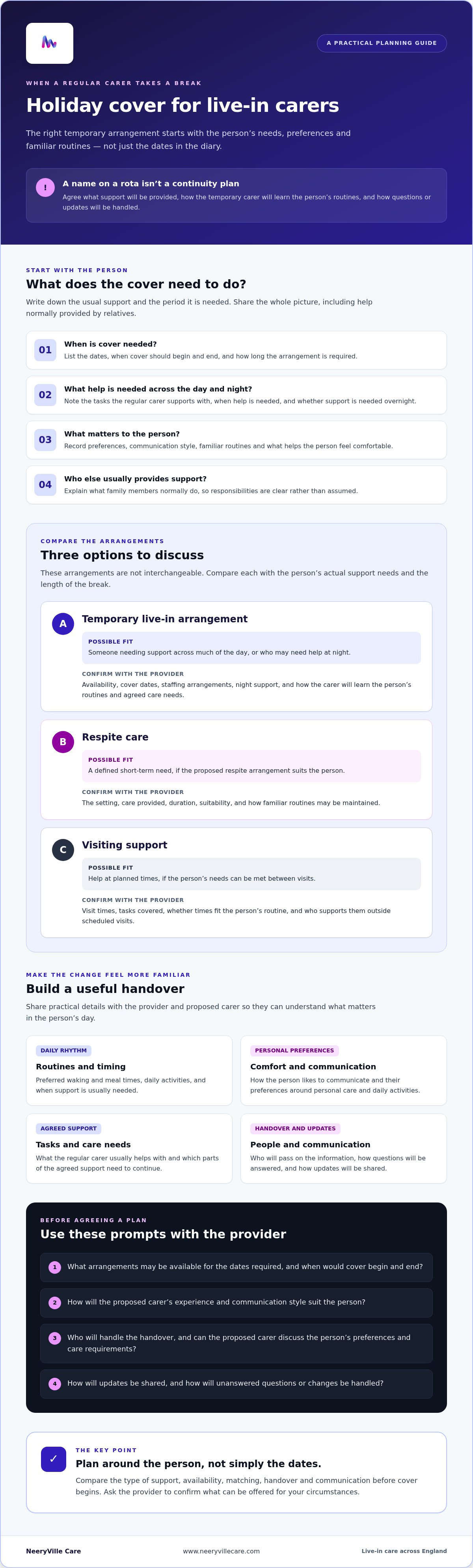
Plan holiday cover for a live-in carer before the break begins
Preparing the key details makes it easier to compare options and spot unanswered questions. For holiday cover for live-in carers, work through the practical points, then confirm the agreed plan with the provider before the regular carer’s leave begins.
Set out the dates. Note when cover is needed, including the start and end dates, and explain whether they’re flexible.
Describe current care needs. Summarise the support the person receives, their daily routines and preferences, and any changes since the care arrangements were last reviewed.
Discuss the proposed arrangement. Ask what type of cover may be suitable and whether the provider can support the requested dates. Confirm availability rather than assuming a replacement can be arranged.
Ask about matching and handover. Find out how the proposed carer’s suitability will be considered, who coordinates the handover and how the carer can clarify information.
Agree communication and scope. Confirm what support is included, whom the family should contact with concerns, and how updates will be shared during the cover period.
Questions to ask a provider about cover
Keep the conversation practical. Ask who will provide the proposed support, what they’ve been told about the person’s needs, and which tasks or requirements need further discussion. Clarify what to do if an important detail changes or a question arises during the arrangement. Before agreeing, make sure the dates, support plan, handover and communication route are clear to everyone involved.
Prepare the household and the person receiving care
Gather useful notes about routines, preferences, relevant support needs and household arrangements, such as where everyday essentials are kept. Agree with the provider what information is relevant and should be shared, taking the person’s wishes and consent into account. Introduce the change calmly, using language and timing that feel appropriate for them. Agree how and when the family would like updates rather than leaving expectations unclear.
NeeryVille Care offers live-in care across England and respite care for short-term periods. Families can discuss the person’s needs and ask whether a suitable holiday arrangement may be available. Confirm the cover dates and exact details directly. A careful conversation can establish what might work without committing to an arrangement before its suitability and availability are clear.
Discuss live-in carer holiday cover in England
A sound decision comes down to four things: the person’s needs, an arrangement that can meet them, a plan for continuity and availability confirmed for the dates required. If one part is unclear, ask for more detail before agreeing. Families should understand what support is proposed and how it will work in their home.
NeeryVille Care provides live-in care across England, including London. Its live-in care in London page offers local service information. Families in Highgate N6, Crouch End N8, Hornsey, Camden, Hampstead, Finsbury Park, Kentish Town, Tufnell Park, Haringey, North London, Hungerford, Chelsea, Kensington, Hillingdon, Enfield, Hackney, London and Angel can ask about local support. Contact the provider directly to check whether holiday cover is available for your circumstances and confirm the exact arrangements. A general service description can’t confirm a particular carer, cover period or level of support.
What to confirm before agreeing a cover plan
Before you decide, make sure you and the provider have discussed the practical details. Keeping a written record of what’s been agreed can help everyone share the same understanding.
Dates and availability: Confirm the requested start and end dates, and whether the provider can support them.
Proposed arrangement: Clarify what type of care is being offered and who will provide it.
Responsibilities: Check which agreed tasks and support needs are included, and raise anything that needs specific discussion.
Handover: Ask who will share relevant information about the person’s preferences and routines, and how the incoming carer can clarify uncertainties.
Communication: Agree whom the family should contact with concerns and how updates will be shared during the cover period.
These checks are especially useful if the person’s needs have changed or the household relies on specific routines. Don’t leave important details to assumption. Ask the provider to explain anything that feels unclear, including what happens if the proposed arrangement doesn’t match the person’s requirements.
Take the next step at a pace that feels right
Asking questions doesn’t commit your family to a plan. It helps you understand the options and decide whether a proposed arrangement feels suitable. Talk through the person’s needs first, then consider availability, handover and the details that still need to be confirmed. NeeryVille Care offers live-in care across England, but holiday-cover arrangements must be checked directly.
You don’t need to have every answer ready before starting a conversation. Share what you know about your loved one’s support and what matters most to them. A calm, open discussion can help clarify what may be appropriate and give you time to consider the next step.
For a supportive conversation about your family’s circumstances, contact NeeryVille Care when you feel ready.
Make a considered plan for your loved one’s care
Arranging holiday cover for live-in carers starts with the person’s needs, not simply the dates their regular carer is away. Compare the options carefully, then confirm that the proposed support suits the household and can be provided when needed. A clear handover, familiar routines and agreed communication can help make a temporary change feel more manageable.
NeeryVille Care is a CQC-regulated home care provider offering live-in care across England. If you’re exploring cover, ask the team whether it’s available for your dates and what the arrangement would include. You can discuss your loved one’s needs and consider the details before deciding.
To explore holiday cover, contact NeeryVille Care and discuss your loved one’s needs, dates and preferred support.
Frequently Asked Questions
Can a different live-in carer cover while the regular carer is on holiday?
Possibly, but it depends on the provider’s availability and whether a suitable arrangement can be agreed. Ask whether another live-in carer may be available for the requested dates, how suitability will be considered and what information they’ll receive before starting. NeeryVille Care offers live-in care across England, but families should confirm directly whether holiday cover is available for their circumstances and what the proposed plan would include.
How do I choose between temporary live-in care and visiting care?
Compare the support needed with the pattern each arrangement provides. Temporary live-in care may be worth discussing if help is required across much of the day or at night. Visiting care provides support at scheduled times, so consider whether the person can manage comfortably between visits. Families in Highgate N6, Crouch End N8 and Hampstead can discuss their needs with a provider and ask which options may be suitable.
What should I tell a temporary carer before they start?
Share information relevant to the agreed care, including routines, preferences, communication needs and practical household guidance. Explain what helps the person feel comfortable, such as preferred mealtimes or how they like support to be offered. Agree with the provider what information should be passed on, taking the person’s wishes and consent into account. Ask who will prepare the handover and how the incoming carer can clarify anything that’s unclear.
How far in advance should I arrange holiday cover for a live-in carer?
There isn’t a confirmed lead time that applies to every provider or situation. Contact providers as soon as you know the dates, because availability, suitability and handover arrangements all need to be discussed. Give the requested cover period and an up-to-date outline of the person’s needs. If dates are flexible, say so. Before relying on a plan, confirm that the provider can support the dates and agree the service details directly.
Does respite care provide the same support as live-in care?
Not necessarily. Respite care describes temporary support, but the arrangement and level of care can vary. Ask whether the proposed respite option is at home or elsewhere, what support it includes, and whether it can meet the person’s usual needs while the regular carer is away. NeeryVille Care offers respite care for short-term periods. Confirm its suitability and availability for your enquiry rather than assuming it matches live-in care.
What happens if holiday cover cannot be arranged for the dates we need?
Ask the provider whether alternative dates or another suitable arrangement could be considered, and discuss any gaps in support before making plans. You might also speak with the person’s existing care team or contact the local council’s adult social care service to ask about assessment and support options. Families in North London and nearby areas, including Camden, Hornsey, Kentish Town, Tufnell Park, Haringey and Finsbury Park, should confirm local options directly. Don’t assume visiting care can replace live-in support without checking the person’s needs.