Finding a CQC-Registered Care Provider in Highgate: What Families Should Check

What if a provider’s CQC registration is an important starting point, but not the whole answer? Finding a CQC registered care provider in Highgate means checking more than a status or rating. You’ll also want to understand which services are covered and whether the support suits the person who’ll receive it.
It’s understandable to feel unsure. Registration offers information about regulatory oversight, but it doesn’t tell you everything about day-to-day care, personal compatibility or how well a provider can meet your loved one’s needs. Take time to ask questions and make a considered choice.
This guide explains how to use the official CQC directory, what to check in inspection information and which questions can help you explore care planning and safeguarding. It also compares visiting care and live-in care, so you can consider the options in the context of your family’s circumstances.
Table of Contents
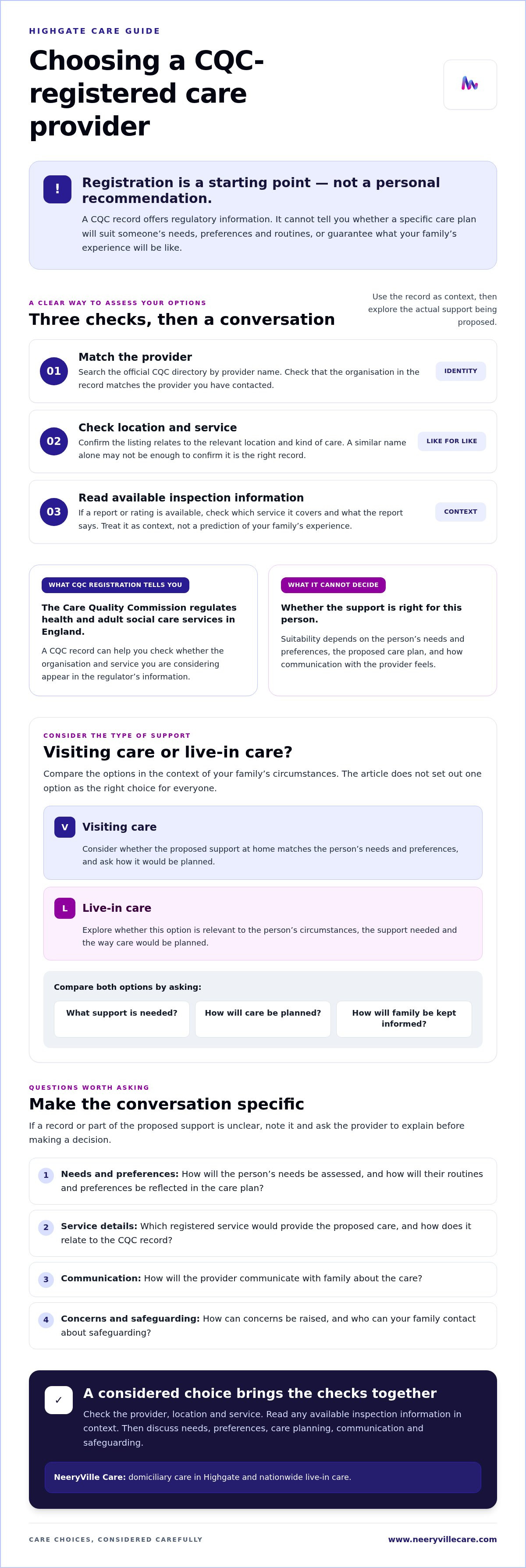
Finding a CQC registered care provider in Highgate: Start With These Checks
Choosing support for someone close to you can feel like a heavy responsibility. You want them to be safe, treated with dignity and supported in a way that fits their life. Start by identifying the provider, checking its CQC record and discussing the care being proposed. That gives you useful information without expecting a registration check to answer every question.
What does CQC registration tell families?
The Care Quality Commission (CQC) regulates health and adult social care services in England. Its role and background are outlined in this Care Quality Commission (CQC) overview. A provider’s CQC record can help you check whether the organisation and service you’re considering appear in the regulator’s information.
Registration is a starting point, not a personal recommendation or a guarantee that every need and preference will be met. It won’t tell you whether a particular care plan will respect your loved one’s routines or whether communication with the provider will feel reassuring. Discuss those details with the provider and, where possible, the person receiving support.
How do you search for a Highgate care provider?
Use the official CQC directory and search by the provider’s name. Compare the record with the location and service being discussed. A trading name, registered organisation and individual service details may not appear in exactly the same way, so check the details rather than relying on a name alone.
Look for information that helps you confirm you’ve found the right record:
Provider identity: Does the organisation named match the provider you’ve contacted?
Location: Does the record relate to the service or area relevant to the support being discussed?
Service information: Does it appear to cover the kind of care you’re asking about?
Published inspection information: If available, read the context. A rating or report cannot predict your family’s individual experience.
If something doesn’t match, note the wording and ask the provider to clarify it before making a decision. You don’t need to interpret an unclear record alone. Ask which registered service would provide the proposed care so you can compare like with like.
As you continue finding a CQC registered care provider in Highgate, consider the CQC check alongside a practical discussion about needs, preferences and available support. If visiting support is one option, read about NeeryVille’s visiting care in Highgate, then confirm directly whether it suits your circumstances and current needs.
How to Read a CQC Record Without Mistaking It for a Recommendation
Once you’ve found a possible match, compare the CQC record with the service you’re discussing. A provider name alone may not show whether the record relates to the right organisation, location or type of care. Note anything unclear and ask about it before relying on the information.
Which details should you confirm on the CQC directory?
Check the provider’s identity and location against the details the organisation has given you. Look for information about the relevant service and any published inspection details. The CQC explains its purpose and role; its record is a source to check, not a substitute for discussing the care on offer.
For example, if you’re speaking with an organisation about support at home, check that the record appears to relate to that provider and the relevant service. Don’t assume a similar name is enough. Keep the provider name, location and any unclear wording to hand, then ask the provider how the record connects to the support being discussed. You can also contact the CQC if you need help understanding its listing.
What can a rating or inspection report tell you?
Use the information shown on the current official record. If an inspection report or rating is available, read the report itself and note which service it covers, what it says and when it was published. Avoid filling gaps with assumptions: a record can’t tell you what it doesn’t state or guarantee how your family’s experience will feel.
Registration is a regulatory check; suitability depends on the person’s needs. A published report can provide context about a service, but it can’t establish whether a care plan will respect someone’s routines, communication preferences or sense of independence. That takes a direct conversation about the person, not just a search result.
If you spot a discrepancy, such as a location or service description that doesn’t seem to match what you’ve been told, ask the provider for a clear explanation. You don’t need to decide on the spot. Families exploring support in Highgate can also contact NeeryVille Care to discuss their circumstances and clarify which care options may be relevant, while checking the official record independently.
Compare Highgate Care Providers by Service, Safeguarding and Personal Fit
A provider can appear suitable on paper, but practical details matter too. Compare the type of support offered, how the care plan is shaped around the person and how you’ll communicate if needs or circumstances change. Using the same questions with each provider makes it easier to compare their answers without assuming one arrangement suits everyone.
Would visiting care or live-in care better suit your situation?
Visiting care provides support at agreed times. Live-in care is a different arrangement that needs a detailed discussion about the person’s needs and living circumstances. Consider their daily routine, the support they want and their own preferences. A conversation or assessment with a provider can help clarify what may be appropriate. Don’t decide based on the service name alone.
Use this table to guide conversations with each provider. Ask for clear details about the proposed arrangement rather than treating the examples as a promise of what any service includes.
What should you ask about safeguarding and care planning?
Ask how the provider learns what matters to the person: their usual routines, preferred ways of communicating, privacy and any concerns they want taken seriously. Involve the person receiving care wherever possible. Personal support should be discussed with them, not only about them.
Ask how to raise concerns, who responds and what information can be shared with family. Clarify how changes in needs are discussed and how the care plan may be revisited. The answers can help you decide whether the provider’s approach feels open and respectful.
NeeryVille Care’s visiting care information for Highgate is one local service example to review as you compare options. For families finding a CQC registered care provider in Highgate, weigh service details alongside the person’s wishes, and take time to discuss questions before choosing.
Questions to Ask Before Choosing a Highgate Care Provider
An initial conversation can make a worrying decision clearer. You don’t need to have every answer ready. Focus on how the provider would learn about the person, explain possible support and keep communication open. This can help you decide without feeling rushed.
What should families ask at an initial care conversation?
Invite the person who may receive care to take part as much as they wish. Ask the provider to explain its approach in plain language, and request clarification if an answer or CQC record is difficult to understand. You might ask:
Understanding needs: How would you find out what support is wanted and what the person can manage independently?
Involving the person: How will their views, routines and preferences shape any proposed care plan?
Local options: What types of support may be available in Highgate, and how would we discuss which arrangement could fit?
Communication: Who should we contact with questions or concerns, and how are updates to family agreed?
Changing needs: How can we raise a change in circumstances, and how would the proposed support be discussed again?
Unclear information: If the service details or CQC record don’t seem to match, who can explain the difference?
Listen to both the information and how it’s explained. A provider should be able to describe what it is proposing and what still needs clarification, rather than leaving you to fill in the gaps.
How can you prepare for a care assessment?
A short note can make the conversation easier, especially if you’re weighing several concerns. With the person’s involvement where possible, jot down:
Everyday tasks where support may help, such as washing, preparing meals or getting out to usual activities.
Important routines, preferences and ways the person likes to communicate.
Any worries they’d like addressed, including what helps them feel safe and retain independence.
Questions about the provider’s CQC information or the care being discussed.
These details help you explain what matters in daily life, not just where help may be needed. If you’re finding a CQC registered care provider in Highgate, take your notes to each conversation. You can compare the explanations and consider the person’s comfort alongside practical arrangements.
If you’re ready to talk through your family’s Highgate care needs, you can contact NeeryVille Care at a pace that feels right.
Explore CQC Home Care in Highgate with NeeryVille Care
After comparing providers and identifying your family’s questions, NeeryVille Care is one local option to explore. It offers personalised domiciliary care in Highgate and surrounding North London areas, alongside live-in care across the UK. As with any provider, check the current CQC record independently and ask how the service being discussed relates to the information shown there.
What support can NeeryVille discuss with a Highgate family?
Support may include companionship, dementia care, medication management and help with daily living. The right arrangement depends on the individual’s routines, preferences, support needs and wish to remain as independent as possible. A conversation can help clarify whether scheduled visiting care or another arrangement is worth exploring, without assuming one option will suit everyone.
You can read more about NeeryVille’s visiting care in Highgate as an example of local home-care support. If you’re considering live-in care, ask directly about the arrangement and how it might relate to the person’s circumstances. NeeryVille also offers nationwide live-in care, with details to discuss with the provider.
What is a gentle next step if you are still comparing?
You don’t need to have made a decision before speaking with a provider. Share the questions you’ve gathered, describe the person’s everyday routines and explain what matters most to them. Ask for anything unclear about the proposed support or CQC record to be explained plainly. Continue checking the official CQC information as part of your decision.
Finding a CQC registered care provider in Highgate means bringing regulatory information together with a clear understanding of the person’s needs. A calm conversation can help you explore whether NeeryVille’s local service may fit, while leaving room to consider other options. Contact the team to discuss your family’s circumstances without rushing your decision.
Take Your Next Step Towards Support That Feels Right
Choosing care is easier when you separate the checks: confirm the provider’s CQC record, understand the service being offered and consider how well its approach fits the person. Registration and inspection information can provide context, while a direct conversation helps you explore care planning, safeguarding and communication.
Finding a CQC registered care provider in Highgate isn’t only about finding a matching entry in a directory. Listen to your loved one’s preferences and ask clear questions before deciding. You don’t need to have everything worked out before making an enquiry.
NeeryVille Care is CQC-regulated. Check its current CQC register entry independently, and confirm current Highgate availability when you enquire. Its home-care support may include companionship and assistance with daily living, shaped around the individual’s needs.
When comparing support in Highgate N6, you may also be considering providers in Crouch End N8, Hornsey, Camden, Hampstead, Finsbury Park, Kentish Town, Tufnell Park, Haringey and elsewhere in North London. Families looking at options in Hungerford, Chelsea, Kensington, Hillingdon, Enfield or Hackney should confirm directly which services cover their circumstances and location.
Take things one question at a time. A thoughtful next step can help your family move towards support that respects the person’s dignity and independence.
Frequently Asked Questions
How do I check whether a care provider in Highgate is CQC registered?
Search the Care Quality Commission’s official directory using the provider’s name, then compare the record with the organisation and service you’re considering. Check the location and relevant service information, along with any published inspection details. When finding a CQC registered care provider in Highgate, don’t rely on a similar name alone. If the details are missing, unclear or don’t match, ask the provider to explain or contact the CQC.
Does CQC registration mean a care provider is the right choice for my family?
No. CQC registration is a regulatory check, not a guarantee that a provider will meet every individual need or preference. Use the record to help confirm the provider and service, then ask how care would be planned around your loved one’s routines, wishes and independence. Discuss how concerns are handled and how the provider communicates with family. Personal fit needs a direct conversation.
What should I look for in a CQC inspection report?
Check which provider, location and service the report relates to, then read the published findings rather than relying on a rating alone. Note the report’s date and the context it gives about the service. Don’t assume it predicts your family’s individual experience or covers details it doesn’t mention. Use the findings to prepare questions about care planning, safeguarding and communication.
Can I find CQC registered home care in Highgate?
Yes. Search the CQC directory for providers and relevant service information in Highgate, then confirm the details directly. NeeryVille Care offers personalised domiciliary care focused on Highgate and nearby North London areas, including companionship and help with daily living. Check its current CQC register entry and ask about local availability and the specific support being considered before deciding.
What is the difference between visiting care and live-in care?
Visiting care provides support at scheduled times, while live-in care is a different arrangement in which a carer lives in the person’s home. The right option depends on the individual’s needs, daily routines, preferences and home circumstances. Ask the provider what each arrangement could involve and how it would be planned. Neither should be assumed suitable without discussing the person’s situation.
What questions should I ask a care provider before arranging support?
Ask how the provider will understand the person’s needs and involve them in planning. Find out what support may be available, how the care plan can reflect routines and preferences, and how changes or concerns are discussed. Clarify who you or your loved one can contact and how family updates are agreed. If the CQC record or proposed care is unclear, ask for a plain-language explanation before deciding.
Can a CQC registered provider offer both visiting and live-in care?
A provider may offer both, but don’t assume this from registration alone. Check the current CQC record and ask the provider to confirm which services it offers and which may be relevant to your family. NeeryVille Care offers domiciliary care focused on Highgate and nearby North London areas, alongside nationwide live-in care. Discuss the individual’s needs directly and verify the current register entry independently.