Emotional Support in Palliative Care: Guide for Families


What if the most reassuring thing you can offer isn’t the perfect words, but your steady presence? If you’re worried about saying the wrong thing, making difficult feelings worse or not knowing what to do when someone doesn’t want to talk, you’re not alone. Emotional support during palliative care can feel uncertain, especially when you’re carrying your own worry and anticipatory grief.
You don’t have to fix every feeling or fill every silence. Listen patiently, respect the person’s wishes and let them know you’re alongside them. Your needs matter, too. Caring for yourself can help you continue supporting your loved one with greater steadiness.
This guide covers practical ways to offer support, respond when conversation is difficult and recognise when you may need help yourself. It also explains how personalised home care can provide companionship and practical support in familiar surroundings, alongside the person’s wider care team and not in place of clinical care.
Table of Contents
What emotional support during palliative care can mean for patients and families
Palliative care can bring uncertainty, sadness, worry and moments of calm, sometimes all at once. The person receiving care may feel differently from one day to the next, while relatives have their own responses. There’s no single emotional pattern that everyone follows, and no one needs to feel a particular way to be coping “well”.
Emotional support during palliative care means offering attention, presence and respect for what matters to the person. It could mean listening to a concern, sitting quietly together or accepting that they’d rather focus on an ordinary part of the day. Palliative care takes a broad view of a person’s needs, including emotional and social wellbeing as well as physical care.
Emotional support isn’t about solving every problem or removing every difficult feeling. It’s about helping someone feel heard and respected while those feelings are there. Family care and companionship can sit alongside clinical care, but they don’t replace advice or treatment from the NHS or a specialist palliative care team. Raise concerns about symptoms, treatment or a change in the person’s condition with their care team.
Emotional support is more than finding the right words
You don’t need a perfect response. A gentle “Would you like me to stay for a while?” may be more comforting than trying to make everything sound positive. If the person shares something difficult, acknowledge it with “That sounds hard”, then give them room to continue or pause. Small gestures, such as making a cup of tea or sitting nearby, can show care without demanding conversation. NeeryVille Care’s approach to safeguarding reflects the importance of treating people with dignity and respect.
Avoid promises about outcomes you can’t know or pressure to stay hopeful. Reassurance can still be honest: “I’m here with you” or “We can take this one step at a time.” The person may welcome conversation, quiet company, humour or time alone. Follow their cues rather than assuming one kind of support will suit everyone.
Palliative care can involve changing emotional needs
Feelings can shift as circumstances, energy levels and priorities change. Someone who wanted company yesterday may prefer quiet today; a person who hasn’t wanted to talk might later choose to share a worry. Ask rather than assume: “What would feel helpful today?” or “Would you like company, or a little space?”
Keep the question open and accept the answer without taking it personally. You can check in again another time. If a concern relates to symptoms, medication or care decisions, share it with the person’s NHS or palliative care team, who can advise on their situation.
How to listen and communicate when emotions feel difficult
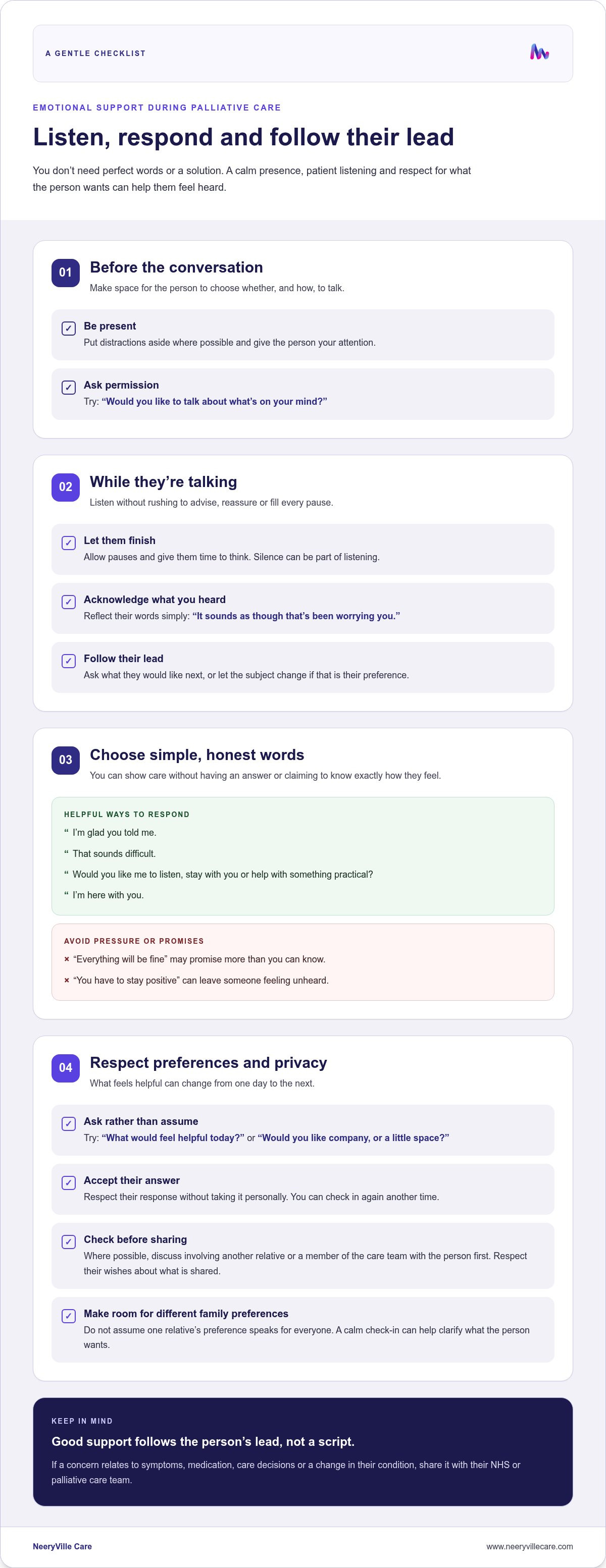
When a conversation feels delicate, you don’t need to plan a perfect speech. A calm approach can help you understand what the person wants without rushing them towards a decision or guessing how they feel. Treat these steps as a gentle guide, not a script you have to get right.
Be present. Put distractions aside where possible and give the person your attention.
Ask permission. Try, “Would you like to talk about what’s on your mind?”
Listen. Let them finish, even if there are pauses. Resist jumping in with advice.
Reflect. Briefly acknowledge what you’ve heard: “It sounds as though that’s been worrying you.”
Follow their lead. Ask what they’d like next, or let the subject change if that’s what they prefer.
An open question can make it easier to begin: “What would make today a little easier?” The answer might be practical, such as help with a task, or simply having someone nearby. Silence is part of listening, too. Give the person time to think instead of filling every pause.
Good support follows the person’s lead, not a script. In emotional support during palliative care, what feels comfortable depends on the person, the moment and the conversation.
What to say when you are unsure how to respond
Keep your words simple and sincere. “I’m glad you told me”, “That sounds difficult” or “Would you like me to listen, stay with you or help with something practical?” can acknowledge feelings without claiming you know exactly how the person feels.
By contrast, “Everything will be fine” may promise more than you can know, while “You have to stay positive” can leave someone feeling unheard. You can show care without having an answer. If you’re unsure, ask what kind of support they want, then respect their response.
Respecting privacy, boundaries and different preferences
One person may welcome an honest conversation; another may prefer quiet company or time alone. Before raising a sensitive subject, ask whether it’s all right to talk about it. If you think another relative or member of the care team should be involved, discuss it with the person first where possible, and respect their wishes about what is shared.
Families may not agree on how much to talk or when. Don’t assume one relative’s preference speaks for everyone. A calm check-in can help: “Would you like me to share this with the others, or keep it between us for now?” If you’re considering companionship or practical support at home, the NeeryVille Care team can discuss the kind of help your family is looking for.
Supporting the person and their family without taking over
The person receiving palliative care and their relatives may be facing the same situation but experiencing it differently. The person may want to focus on comfort, privacy or everyday choices, while family members manage worry, practical responsibilities and grief about what lies ahead. Both sets of feelings matter. Supporting relatives doesn’t take attention away from the person; it can help families stay present without expecting themselves to manage everything alone.
Try to distinguish what the person wants from what you need as a relative. You might note questions or concerns and, with the person’s agreement, raise relevant points with their NHS or palliative care team. Respect their privacy: don’t assume every detail they share can be passed on. If you’re unsure what they’re comfortable sharing, talk with them first where possible.
Making space for family members’ feelings
Feeling exhausted, tearful, worried or unsure doesn’t mean you’re failing. These can be understandable responses to a demanding and emotional time. Speak with someone you trust or seek appropriate support for yourself rather than keeping every concern to yourself. It may also help to learn how to recognise strain and look after your wellbeing.
Where possible, share practical tasks such as arranging meals, running errands or organising visits. There’s no single family arrangement that suits everyone. The aim is to make responsibilities manageable and preserve time for rest and connection.
Dignity and safety matter in everyday care. If something worries you, raise it respectfully with the relevant care team or service. NeeryVille Care’s safeguarding approach explains the importance of helping protect people’s wellbeing and treating concerns seriously.
When emotional concerns need wider support
If a concern persists, becomes harder to manage or affects how the person is coping, share it with their care team. Describe what you’ve noticed, when it happens and what seems to help, without trying to diagnose the cause. The person’s clinicians can assess health concerns and advise on appropriate care; treatment decisions belong with qualified healthcare professionals.
Emotional support during palliative care can involve family, home-care companions and clinicians, each contributing in a different way. Companionship and practical support may ease some pressure at home, but they don’t replace NHS or specialist clinical advice. If you’re unsure who to approach, start with a professional already involved in the person’s care and explain your concern plainly.
Looking after yourself isn’t withdrawing care. A trusted listener, a shared task or a short pause can help you sustain your involvement with greater steadiness. The person’s wishes remain central, and your wellbeing deserves attention, too.
Practical ways to offer steady emotional support at home
At home, support often takes shape through small choices repeated with care. A familiar routine, a favourite chair or a clear idea of what the day may hold can offer continuity. Let routines serve the person rather than become another expectation. Check what feels comfortable now and adapt if their preferences or energy change.
Practical help can ease everyday pressure. Preparing a simple meal, keeping a frequently used item within reach or helping with a household task may leave more space for rest or time together. These gestures can make daily life easier, but they aren’t emotional treatment. Notice what the person values, and offer help in a way that preserves their involvement and choice.
Ask whether familiar music, photographs or a favourite programme would be welcome rather than assuming they’ll bring comfort.
Offer a brief check-in, such as “Would you like company for a while?”, and make it easy for the person to say no.
Share an activity they enjoy, or sit quietly nearby if conversation feels tiring.
Keep plans flexible. A short visit or familiar task may suit better than a busy day.
Personalised support at home should protect a person’s choices and dignity, making room for comfort in the ways that feel right to them.
Small, person-led ways to create comfort
Let the person set the pace. They might enjoy looking through photographs, listening to music, keeping up a small routine or simply sharing a room without talking. A companion can make space for conversation or quiet presence, guided by the person’s wishes rather than a fixed idea of companionship. NeeryVille Care’s companionship care at home can include meaningful company alongside personalised support with daily living.
Small check-ins can prevent care becoming a series of assumptions. Ask whether the room feels comfortable, whether they’d like to continue an activity or whether they’d prefer to rest. If they decline, accept the answer warmly. Respecting a boundary can itself help someone feel at ease.
Keeping emotional support within the care team’s role
Home-care companionship is personal support, not counselling or clinical treatment. A care worker may offer company and help with daily routines, while the person’s NHS and specialist palliative care professionals remain responsible for clinical advice and care decisions. If a care worker notices a relevant change or concern, it can be shared with the appropriate people through agreed care arrangements, respecting the person’s privacy.
This distinction helps families understand who to turn to. For a change in symptoms or a concern about treatment, contact the person’s clinical team. For day-to-day help that may make home life more manageable, personalised home care can complement clinical support.
How personalised home care can complement emotional support
Family support is precious, but relatives may not be able to manage every practical need and remain emotionally present at the same time. Personalised home care can add support with daily living and companionship in familiar surroundings. This may help the person maintain routines that matter to them and give family members more room to spend time together as relatives.
Support should reflect the individual. One person may value help preparing a meal and company at home; another may prefer practical assistance delivered quietly, without changing the shape of their day more than necessary. Live-in care or visiting care can be arranged around personal needs and preferences. Familiar surroundings and considerate companionship may help someone feel more at ease, though every person’s experience is different.
NeeryVille Care is a CQC-regulated home-care provider, offering personalised live-in care across England and domiciliary care focused on North London, including Highgate and Hampstead. Local visiting care can support routines and companionship at home. NeeryVille Care provides domiciliary and visiting care in Highgate N6, Crouch End N8, Hornsey, Camden, Hampstead, Finsbury Park, Kentish Town, Tufnell Park, Haringey, North London, Hungerford, Chelsea, Kensington, Hillingdon, Enfield, Hackney, London and Angel. Care workers can assist with daily living, but they don’t provide clinical nursing procedures or replace the person’s NHS or specialist palliative care team.
What compassionate support at home can look like
It can begin with understanding what the person wants help with, what they prefer to do independently and what makes a visit comfortable. Support might include assistance with everyday tasks or simply being a reassuring presence. The person’s preferences can guide how care fits around their routine, relationships and privacy. Care should support their choices, not take them over.
Taking a calm next step with your family
If it feels right, talk together about the person’s wishes and the practical parts of home life that feel difficult to manage. Note what support would be useful, what the person would like to continue doing for themselves and what questions to raise with their clinical team. There’s no need to make every decision at once. A considered conversation can be a first step.
Personalised home care can complement emotional support during palliative care through companionship and help with daily routines, while clinical advice and treatment remain with the NHS and specialist care team. Families can explore support at a pace that respects the person’s wishes and their own circumstances.
Let the next step be guided by what matters most
You don’t need every answer before asking for support. A useful next step may be a family conversation about what the person wants to keep doing, where they would welcome help and what matters most at home. Those wishes can change, so leave room to revisit them gently. Small, thoughtful adjustments can help care continue to reflect the person rather than a fixed plan.
Emotional support during palliative care isn’t measured by having the right words every time. It can grow through patience, honest communication and support that respects both the person’s choices and the family’s capacity. Home-care companionship or help with daily living may ease practical pressure and make more room for time together.
Take things one conversation at a time. You and your loved one deserve care that feels respectful, considered and centred on what matters to you.
Frequently Asked Questions
Can someone receive emotional support without wanting to talk?
Yes. Support doesn’t have to involve conversation. You might sit nearby, share a familiar activity or quietly make the room more comfortable, while letting the person decide whether they want company. A simple “I’m here if you need me” leaves the choice with them. If they seem to prefer being alone, respect that and let them know they can ask for you later.
Is emotional distress during palliative care the same as depression?
No. Fear, sadness or worry can be understandable responses to serious illness, but distress and depression aren’t interchangeable, and one can’t be diagnosed from a brief conversation. If low mood, loss of interest or other changes are troubling the person or affecting daily life, encourage them to speak with their GP or care team. The NHS guide to clinical depression explains symptoms and how to seek help.
Can children be included when a family is talking about palliative care?
Yes, if it’s appropriate and the person receiving care agrees. Use clear, age-appropriate words, answer the child’s actual questions and avoid promises about what will happen. A child might want to know whether they can still visit or who will collect them from school. Give them time to respond, and involve a trusted adult or the person’s care team if you’re unsure how best to explain the situation.
Should families discuss spiritual or cultural preferences during palliative care?
They can, if the person wishes. Ask what matters to them rather than assuming their beliefs, practices or preferences from their background. They may want particular customs respected, contact with a faith or community leader, or no spiritual discussion at all. With permission, families can share relevant preferences with the care team so these can inform conversations and support. The person’s wishes should guide what is discussed and shared.
Can a person receiving palliative care choose to decline emotional support?
Yes. A person can decline a conversation, visit or other offer of emotional support. Accepting their answer helps preserve their sense of control. Leave the door open without repeatedly pressing them, for example by saying, “That’s fine. I’m nearby if you change your mind.” If you’re concerned about their wellbeing, share what you’ve noticed with their care team while respecting their privacy and preferences.
Where can family carers find support for themselves in England?
Start with your GP, the person’s care team or your local council’s website to find out what support is available to carers in your area. Carers UK’s help and advice offers information for people supporting someone close to them. If you live in Highgate, Hampstead or elsewhere in North London, your council can help you find local carer support and advice relevant to your circumstances.