Companionship Services in Bromley: A Family’s Guide to Choosing Support

What makes a companionship visit feel like a welcome part of someone’s day, rather than an interruption? When a loved one is spending more time alone, choosing companionship services Bromley families feel comfortable with is about more than filling an hour. It means finding support that respects the person’s routines, interests and independence.
It’s understandable to wonder what a visit involves, how companionship differs from personal care, and how a new person will be received at home. Support should feel personal and respectful, with time for conversation and familiar activities rather than a one-size-fits-all appointment.
This guide explains what companionship care can include, how it differs from help with washing or dressing, and what to consider when arranging support. It also offers ways to recognise when broader help with daily living may be useful. NeeryVille Care provides expert guidance on finding the right support, while our dedicated domiciliary care focuses on North London, complemented by live-in care available nationwide across England.
Key Takeaways
Companionship care can support social connection and familiar routines, shaped around the person’s interests and preferences.
When considering companionship services in Bromley, focus on the person’s preferred activities, conversation style and daily rhythm.
Companionship differs from visiting care and personal care. Consider when broader help with daily living may be relevant.
Before support begins, note routines, interests and concerns, then reflect on how the arrangement feels to the person.
NeeryVille Care’s personalised companionship support centres on conversation, shared activities and individual needs.
Table of Contents
What do companionship services in Bromley include?
Arranging support for someone close can feel deeply personal. You may want to ease the time they spend alone while protecting the independence and familiar routines that matter to them. Whether you are searching for companionship services in Bromley or elsewhere, begin with the person rather than a checklist of tasks.
Companionship care is social and practical support shaped around an individual’s preferences. It offers connection, reassurance and company during everyday routines, rather than clinical treatment. A useful visit should feel like a comfortable part of the day, with the person’s choices and dignity at its centre.
What might a companionship visit involve?
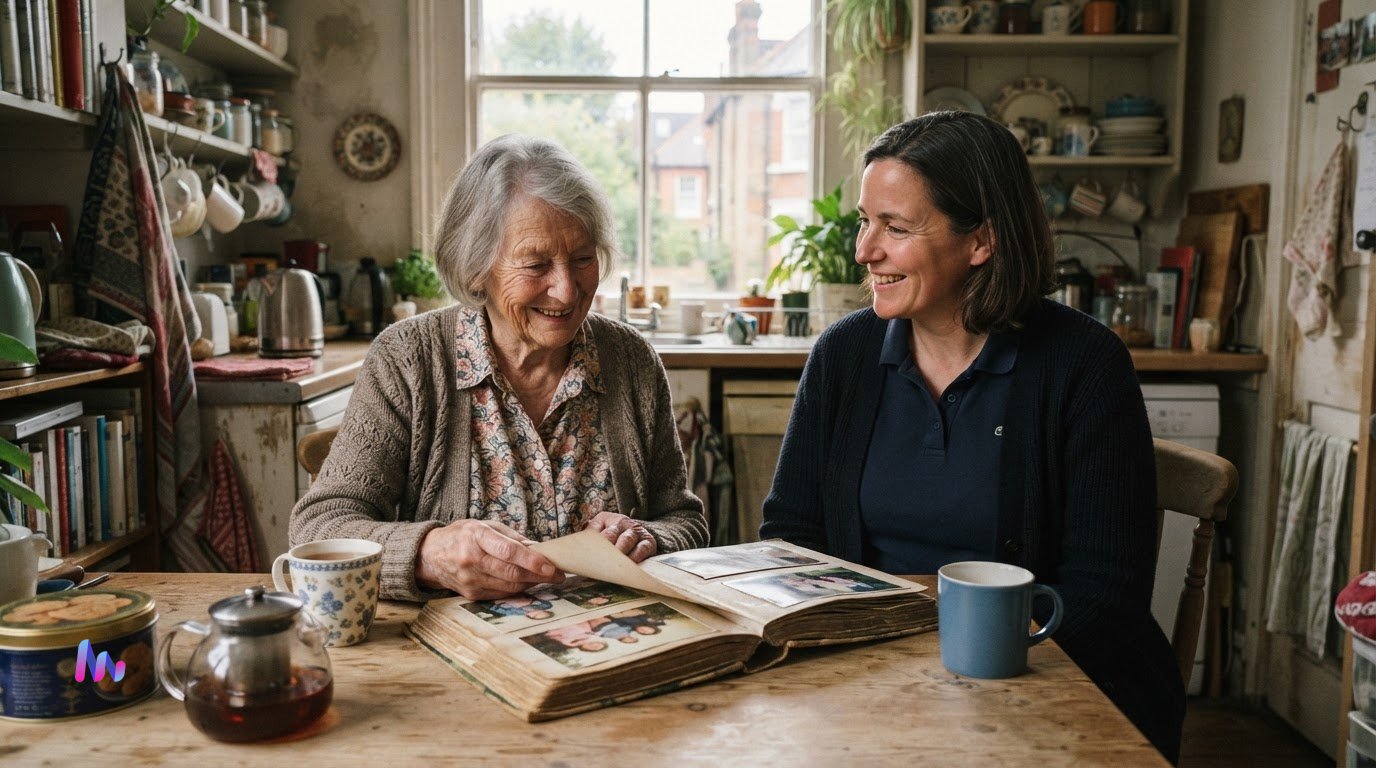
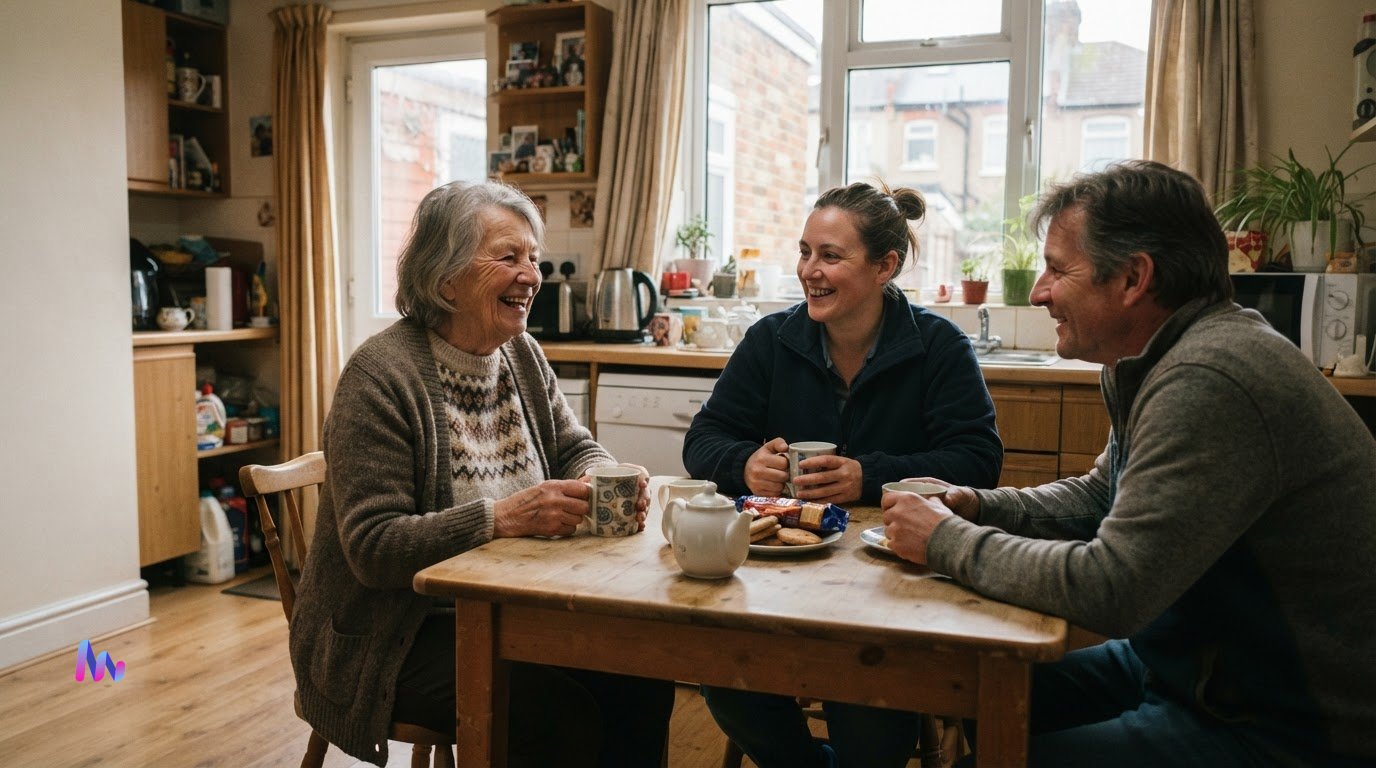
A visit might include a relaxed conversation over a cup of tea, reading together, enjoying a favourite hobby or taking a walk if the person wants to and feels comfortable doing so. Some people enjoy sharing memories; others prefer company while they get on with a familiar activity. The right approach depends on their interests, energy and mood that day.
Small, thoughtful moments can make ordinary routines more enjoyable. A companion might offer company while the person prepares for the day or encourage an activity they value. There is no need to fill every quiet moment. Respectful companionship allows space as well as conversation, so the person can feel connected without having someone take over.
Social isolation can affect wellbeing. This background on social isolation explains why regular connection matters. For an overview of the support, read about companionship care at home.
How does companionship differ from personal care?
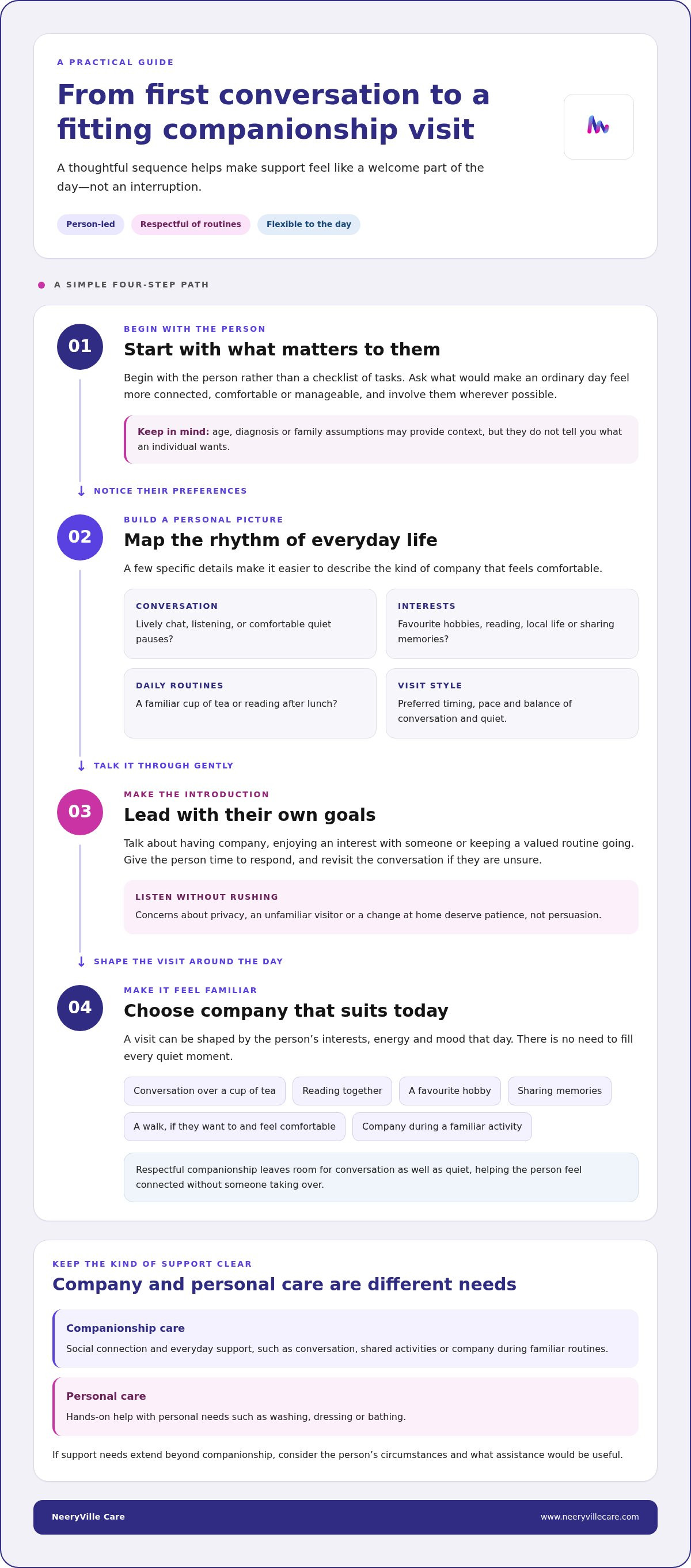
Companionship care offers social connection and everyday support, while personal care involves hands-on help with personal needs such as washing, dressing or bathing. Knowing the difference helps families describe what would be useful without assuming every visit needs to include personal assistance.
Some people mainly want conversation, shared activities or company during familiar routines. Others may also need help with personal care or daily living. Needs can change, too. If support needs extend beyond companionship, consider the person’s circumstances and the kind of assistance that would be useful.
For families searching for companionship services in Bromley, a helpful starting question is: what would make an ordinary day feel more connected, comfortable or manageable for this person? Their answer can guide the kind of support that feels right.
How can families choose companionship care that feels right?
There is no single ideal way to spend time together. The right support starts with what the person enjoys, how they like to communicate and the rhythm of their everyday life. If you are comparing companionship services in Bromley, writing down a few personal details can make conversations about support clearer and more reassuring.
Which personal preferences should shape the support?
Look beyond broad descriptions such as “likes company” or “needs something to do”. Consider what makes conversation comfortable. Does the person enjoy a lively chat, prefer listening or feel at ease with quiet pauses? Note the interests they return to, activities they want to keep up and routines they value, such as reading after lunch or having a familiar cup of tea.
Visit timing, pace and the balance between conversation and quiet can also help shape support. Discuss these preferences alongside the person’s other needs. Most importantly, involve them wherever possible. Ask what they would welcome and what they would rather avoid. Age, diagnosis or family assumptions may provide context, but they do not tell you what an individual wants.
How can families make the first conversations easier?
Introducing support through the person’s own goals may feel less daunting than focusing on what they can no longer manage. You might talk about having company, enjoying an interest with someone or keeping a valued routine going. Then pause and listen. Concerns about privacy, an unfamiliar visitor or a change at home deserve patience, not persuasion.
Specific examples can make it easier to explain what might help. You could mention whether the person warms to conversation slowly, enjoys discussing local life or likes to know what the day will involve. Give them time to respond and revisit the discussion if they are unsure. A comfortable pace matters: support should respect choice and dignity from the outset.
NeeryVille Care takes a personalised approach, centring companionship on the person’s individual needs and helping them remain in familiar surroundings. NICE provides context on the challenges of an ageing population. You can also read about companionship care at home and how support can be shaped around personal routines and preferences.
A short list of interests, preferred ways to communicate, useful routines and concerns can give the conversation a gentle starting point. It does not need to be complete. Begin with what matters most to the person, then take the next step at a pace that feels right for them.
Companionship or broader home care: what support fits the need?
It helps to separate the need for company from practical assistance with daily tasks. Companionship may be one part of a person’s support, while visiting care or personal care may be useful when they need additional help. The aim is to understand what would make day-to-day life easier for the individual, without assuming everyone needs the same kind of care.
When might companionship support be enough?
Companionship may suit someone whose main need is regular company, shared activities or encouragement to keep up familiar routines. They might want someone alongside them for a hobby or a friendly presence during the day. Focus on what they say they would value and how they feel from one day to the next. Companionship can support social connection, but it does not replace clinical care.
When could additional support be relevant?
If everyday tasks are becoming difficult, or memory or mobility needs are affecting daily life, broader home-care support may be appropriate. This does not mean companionship is no longer useful. Support can be combined and reviewed as the person’s circumstances change, with attention to their choices, dignity and safety.
For information about support with memory needs, read about dementia care at home. For a wider view of practical help, explore elderly care at home. Respectful care should take account of the person’s wishes and preserve their dignity. NeeryVille Care also explains its approach to safeguarding and respectful care.
Needs are not fixed. A change in routine, confidence or ability to manage everyday tasks may be a reason to revisit what feels helpful. A calm conversation about the person’s experience can guide that decision. NeeryVille Care provides personalised companionship and broader home-care support, including domiciliary care in North London and live-in care nationwide across England. Talk with NeeryVille Care about the support that may suit your loved one.
What should Bromley families plan before companionship care begins?
Starting support can bring relief, but it may also raise questions about changing routines and welcoming someone new into the home. For families searching for companionship services in Bromley, a few thoughtful notes can make the first discussion clearer and keep the person’s wishes in view.
What information helps explain the person’s needs?
Include details that help someone understand what a comfortable, useful visit might look like. You do not need to prepare a full history or collect medical information that is not relevant to companionship. Focus on everyday life, and involve the person receiving support as much as possible.
Discuss what would help: Talk about why you are considering support, such as having company or enjoying a familiar routine.
Note preferences: Record interests, preferred conversation style, routines and activities the person would rather avoid.
Explore suitable support: Share practical preferences, including times of day that may feel comfortable, and discuss what would make a visit useful.
Review how it feels: Make time to talk afterwards about what the person enjoyed, what felt unfamiliar and whether anything should change.
These notes do not need to be perfect. A few specific details, such as “likes time to think before answering” or “prefers a quiet start to the day”, can be more helpful than broad assumptions. The person’s own experience should guide the discussion.
How can families approach the change without pressure?
Introduce the idea through a familiar benefit: “Would it be nice to have some company?” or “Could someone join you in an activity you enjoy?” Listen carefully to any concerns about privacy, independence or having a new person in the home. The decision may take more than one conversation, and that is all right. Reassurance comes from taking concerns seriously, not rushing someone to agree.
CQC regulation is one factor families can consider when choosing a home-care provider. NeeryVille Care is CQC-regulated. Families can consider this alongside how clearly a provider listens to the person’s needs, preferences and concerns. Caring for a relative can also feel demanding. If family pressures are building, recognising those feelings and seeking appropriate support may help.
Once support begins, keep the conversation open. Whether a visit feels comfortable and worthwhile to the person is a better guide than simply completing a checklist. Small adjustments to activities or the pace of a visit may help the arrangement feel more familiar over time.
How NeeryVille Care approaches companionship support
Choosing support for someone close is a personal decision. NeeryVille Care is a CQC-regulated home-care provider offering personalised companionship support, centred on the individual and the familiar surroundings they call home. For families researching companionship services in Bromley, the person’s own needs, preferences and routines are the right place to begin.
What NeeryVille Care brings to a companionship conversation
Companionship should be about more than simply being present. It can centre on conversation, sharing an activity or making space for a valued routine, shaped around what the person enjoys and finds comfortable. One person may welcome a friendly chat; another may prefer quiet company while reading or pursuing a familiar interest. These details matter because support should reflect the individual, not a standard idea of what someone of a particular age might want.
NeeryVille Care also provides broader home-care support, including help with daily living. Its domiciliary care focuses on North London, including Highgate N6, Crouch End N8, Hornsey, Camden, Hampstead, Finsbury Park, Kentish Town, Tufnell Park, Haringey, Hackney and Angel. Its listed locations also include London, Chelsea, Kensington, Hillingdon, Enfield and Hungerford. For people who need continuous assistance, NeeryVille Care provides live-in care nationwide across England. Families can discuss the person’s circumstances in context without assuming that companionship must be combined with other services.
CQC regulation is a relevant consideration when learning about a care provider. NeeryVille Care is CQC-regulated. This is one factual point to consider alongside discussing the person’s priorities and understanding how support will be shaped around them.
How to take the next step
A first conversation can be simple. Share what the person values, what a good day looks like to them and what you hope companionship could change. It can also help to explain any worries, such as feeling uneasy about a new person at home or wanting to keep established routines. These details give the discussion a useful starting point without requiring every decision to be made straight away.
Families searching for companionship services in Bromley may be balancing concern with a wish to respect their loved one’s independence. You do not need to have every answer before talking. A calm discussion of individual needs can help you understand possible next steps and consider support at a pace that feels comfortable.
NeeryVille Care’s personalised approach keeps the person’s circumstances at the centre of that conversation. Whether you are exploring companionship on its own or thinking through wider support, the focus is on understanding what matters to them rather than steering every family towards the same arrangement.
Take a thoughtful next step towards companionship support
Choosing companionship care starts with understanding what would make someone’s days feel more connected and comfortable. The right support reflects their interests, routines and wishes rather than following a standard plan. It also helps to distinguish companionship from personal care and consider whether broader help with daily living is needed.
As you explore companionship services in Bromley, start with the person’s own perspective. Note what they value, what feels reassuring and any concerns they want considered. NeeryVille Care is a CQC-regulated home-care provider offering personalised companionship care, shaped around individual needs and familiar surroundings. Its domiciliary care focuses on North London, and it provides live-in care nationwide across England.
You do not need to have every detail decided before beginning a conversation. Sharing what matters to your loved one can be a calm first step towards understanding the support that may suit them.
With patience and the person’s preferences at the centre, families can move forward thoughtfully, one conversation at a time.
Frequently Asked Questions
What do companionship services in Bromley usually include?
Companionship services can include conversation, shared hobbies, reading or company during familiar everyday routines. The person might enjoy a chat over a cup of tea, a favourite activity or a walk if they wish and feel comfortable. Support should reflect their interests, energy and preferences. Families can start by considering what the person would welcome, rather than assuming every visit should follow the same pattern.
Is companionship care different from personal care?
Yes. Companionship care centres on social connection and everyday support, while personal care involves hands-on help with personal needs such as washing, dressing or bathing. Someone may want company and shared activities without personal care. Another person may need both types of support. Being clear about the difference helps families describe what would be useful and consider an appropriate level of help without treating companionship as clinical care.
Can companionship care help an older person feel less isolated?
Regular, meaningful company can provide opportunities for conversation and shared activities, which may help someone feel more connected. Its value depends on the person and the kind of interaction they enjoy. Companionship is not a guaranteed solution to loneliness, and it does not replace clinical care or wider social relationships. Notice how your loved one describes their days and what sort of company they would find reassuring and comfortable.
How do families choose companionship support that suits a loved one?
Start with the person’s own preferences. Note their interests, preferred conversation style, routines, and whether they enjoy lively interaction or quieter company. Invite them to share what they would welcome and what might feel uncomfortable. Age, diagnosis and family assumptions do not tell you what someone wants. Discussing these personal details with a care provider can help shape support around the individual rather than a standard visit.
Can companionship care be combined with other home-care support?
Yes. Depending on the person’s needs, companionship may sit alongside practical help with daily living or personal care. For example, someone may value conversation and shared activities as well as support with meal preparation or washing. Not everyone needs multiple types of help, and needs can change over time. Consider what the person currently finds difficult or would like help with, then focus on support that reflects those priorities.
What should Bromley families prepare before discussing companionship care?
Make a few notes about the person’s usual routine, interests, communication preferences and what they hope companionship might change. Include any concerns they want considered, such as privacy or having someone new at home. Keep the person involved as much as possible. You do not need to prepare a full medical history for a companionship conversation. Focus on what would help support feel comfortable and worthwhile.
How can I discuss companionship support with NeeryVille Care?
Share what the person values, what an enjoyable day looks like and what kind of company they might appreciate. You can also describe any concerns or routines they want to preserve. NeeryVille Care is a CQC-regulated home-care provider offering personalised companionship care. Contact NeeryVille Care to discuss individual needs and possible next steps.