4-Hour Care Services in London: Flexible Support at Home


What if four hours of care could make the day feel more manageable, not more structured? For families exploring 4-hour-care services london, the key question is often whether a longer visit can fit naturally around the person’s routines and provide enough help without taking away independence.
It’s understandable to wonder what can be covered in that time, or whether support will feel personal rather than task-led. A well-planned visit can bring practical help and reassuring company together, shaped around what matters to the person and the rhythm of home life.
This guide explains how a four-hour home care visit may support everyday routines, from personal care and meal preparation to companionship and light household tasks. You’ll also learn who this type of support may suit, how to think about the timing, and when scheduled visits might need to change. NeeryVille Care provides flexible, personalised domiciliary care in London, including Highgate and Hampstead, with support planned around individual needs, preferences and dignity.
Table of Contents
What do 4-hour care services in London involve?
A four-hour home care visit is a planned period of personalised support in someone’s own home, organised around their needs, preferences and daily routine. It is not a fixed package of tasks. The purpose might be to help someone get ready for the day, enjoy a meal and have company, or manage a few practical priorities at a pace that feels comfortable.
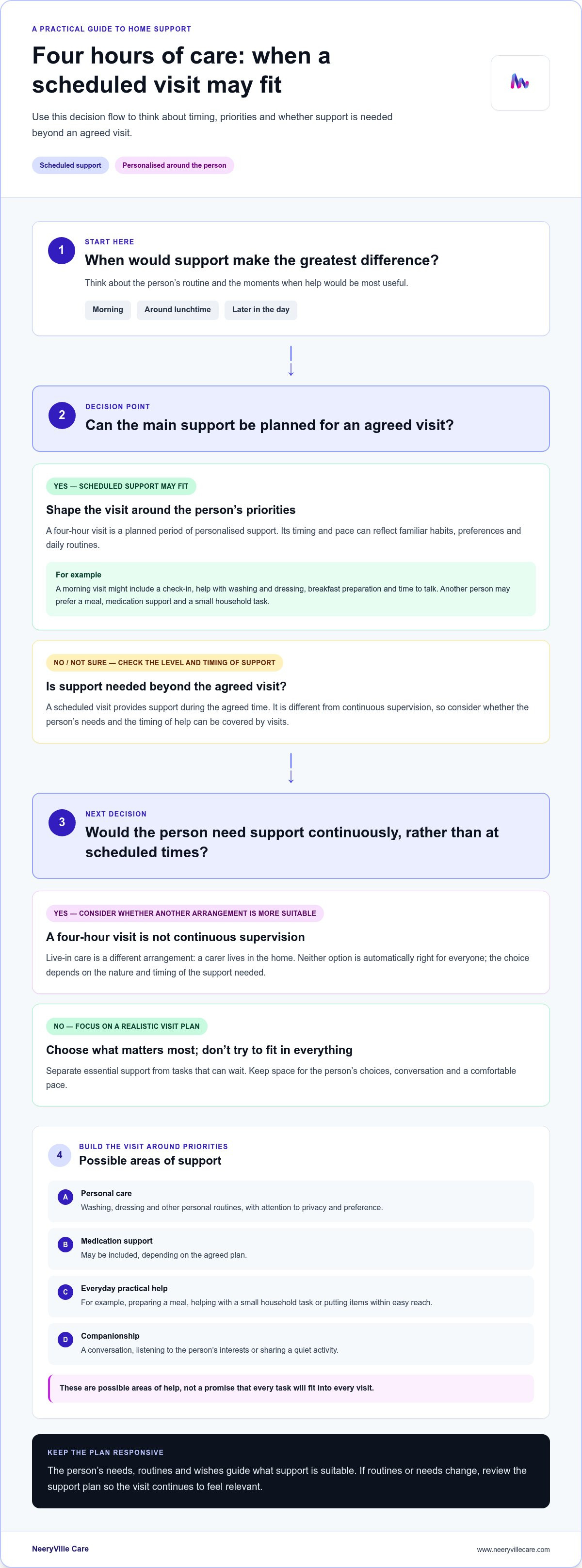
Home care can describe different kinds of support provided in a person’s home, as outlined in this general overview of Home Care. In a four-hour visit, the specific activities depend on what the person wants and needs. The time is scheduled, with a care worker providing support during the agreed visit; it is different from live-in care, which involves a carer living in the home. Neither arrangement is automatically right for everyone. The choice depends on the nature and timing of the support needed.
For families considering 4-hour-care services london, it can help to think of the visit as a substantial, planned part of the day rather than a checklist to complete. The aim is to give useful assistance whilst respecting independence, familiar habits and the person’s choices.
How a planned home care visit fits into the day
Start with the moments when support would make the greatest difference. A visit might be planned for the morning, around lunchtime or later in the day, depending on the person’s routine and priorities. The order matters too: some people prefer to wash and dress before breakfast, whilst others want a gentle start and time to get ready afterwards. Their wishes should guide the pace.
Illustrative routine, not a standard care plan: a morning visit could begin with a friendly check-in, then support with washing and dressing, followed by breakfast preparation and time to talk. Another person might prefer a meal, medication support and help with a small household task. These examples show how the same visit length can be shaped differently; they aren’t a prescribed schedule.
Who may consider several hours of care at home?
Older people who want to remain in familiar surroundings may value having time for practical assistance and companionship within their own routine. Families may also consider a longer visit when they’re balancing work, other responsibilities or their own caring commitments and would welcome dependable support at particular points in the day.
Age or a diagnosis alone doesn’t determine how much support is suitable. What matters is the person’s day-to-day needs, what they can manage comfortably, the help they want and whether scheduled visits fit. A conversation involving the person and family can help clarify those priorities. In London, NeeryVille Care provides personalised support at home, including live-in care in London for families considering a different arrangement.
What can a four-hour home care visit cover in London?
A four-hour visit gives time to bring several kinds of support together, but it shouldn’t become a race through a long task list. The most useful plan gives priority to the help that matters to the person, leaving space for conversation, choice and a comfortable pace. Personalised domiciliary support is shaped around the individual, combining agreed practical help with respect for their preferences, dignity and independence.
Depending on the person’s needs, support may include personal care, companionship, medication support and everyday assistance at home. These are possible areas, not a promise that every task will fit into every visit. A person may value help with washing and dressing above household chores, whilst someone else may want a meal prepared and company during the visit. Priorities can guide how the available time is used.
Personal care and everyday routines
Support with washing, dressing or other personal routines should be offered with sensitivity to privacy and the person’s choices. Familiar ways of doing things can help assistance feel more comfortable: preferred clothing, a usual order for getting ready or a little extra time before moving on. The care worker can follow the person’s agreed preferences, rather than impose a standard routine.
Medication support may also form part of the visit, depending on the agreed plan. The aim is to provide appropriate help within the support arranged, not to turn a home care visit into a clinical appointment. Discussing which tasks are most important helps keep the plan realistic and focused.
Companionship and practical help at home
Practical assistance can sit naturally alongside human connection. Preparing lunch, helping with a small household task or putting items within easy reach may make daily life feel more manageable. A relaxed conversation over a cup of tea, listening to the person’s interests or sharing a quiet activity can also help the visit feel personal, rather than purely task-focused. The right balance will vary from person to person.
For some, companionship care at home is an important part of feeling supported, especially when family members can’t be present during the day. It can be considered alongside agreed practical help, with the person’s preferences shaping how the time is spent.
Families considering 4-hour-care services london can make planning easier by separating essential support from tasks that can wait. A short list of priorities helps clarify what the visit should focus on, whilst remaining open to the person’s wishes on the day. If needs or routines change, the support plan can be reviewed so the visit continues to feel relevant.
NeeryVille Care provides personalised domiciliary support in familiar surroundings, shaped around individual needs and routines. To discuss what a planned visit might focus on, talk with the NeeryVille Care team.
Is 4-hour care enough or is another arrangement better?
A four-hour visit can provide meaningful help at an agreed time, but it is scheduled support, not continuous supervision. The important question is what happens outside the visit: can the person manage comfortably and safely with their existing support, or do they need help at more points throughout the day? Thinking about the whole day, not just the visit itself, can help families judge whether the arrangement feels sufficient.
Different care arrangements serve different purposes. A shorter visit may focus on a particular task or check-in; a longer visit leaves more time to combine several priorities. Live-in care is a distinct arrangement involving a carer living in the person’s home. These options aren’t a ranking of care quality. The right fit depends on individual needs, routines and the help required between visits.
Shorter hourly visits: Scheduled around a specific need or point in the day, such as help with a morning routine.
Several-hour domiciliary visits: A longer planned period that can allow time for a range of agreed tasks and companionship.
Live-in care: A different arrangement for people who may need more ongoing support and a carer living in their home.
When scheduled care may fit the person’s needs
Scheduled visits may suit someone who manages much of the day independently but benefits from help at particular moments, such as getting ready, preparing food or having company. The support can sit alongside the person’s own habits and activities, rather than taking over the day. It doesn’t provide supervision outside the agreed visit, so consider what help is available between visits as well.
A practical way to assess whether four hours feels enough is to look for gaps in support. Note the tasks the person wants help with, the times those tasks matter, and what they can manage before and after a visit. If essential help is needed at other times too, a different pattern or level of care may be more appropriate. Needs can also change, so an arrangement that works now may need reviewing later.
When families may explore live-in care in London
Families may explore live-in care if the person needs a greater level of support across everyday life than scheduled visits can provide. Their circumstances may shift after a change in mobility, health or family availability. Live-in care in London is a separate option to consider as needs evolve, not a judgement that hourly care is inadequate.
For families comparing 4-hour-care services london with other arrangements, focus on the support needed between visits, not only on the hours written into a schedule. Discussing the person’s wishes and daily patterns can help clarify whether planned visits complement their independence or whether more ongoing support at home would better reflect their needs. There’s no single arrangement that suits everyone, and the decision can be revisited as life changes.
How can families plan four-hour care services around life in London?
Good planning starts with the person, not a pre-set timetable. A clear picture of the day can help families decide when support would be useful, what matters most during a visit and how to keep the person’s own preferences at the centre. It also gives everyone a shared starting point for reviewing whether the arrangement feels right.
Agree the priorities and timing for each visit
Talk through the day together, including the person receiving care wherever possible. Note the tasks they’d welcome help with, preferred times and household routines that should be respected. Priorities can change, so treat the plan as a helpful guide that can be revisited rather than a rigid schedule.
Identify the priorities. Separate essential help from tasks that would be useful but can wait. This keeps the visit focused on what makes the greatest difference to the person.
Map out the routine. Note usual mealtimes, preferred ways of getting ready and times when company or practical help would be most welcome. Include small preferences, such as taking things slowly in the morning.
Discuss the support. Share these details with the care team and agree how the visit can fit around them. Make space for the person to express what feels comfortable, including how they like assistance to be offered.
Review what works. After the arrangement has settled into everyday life, consider what is helping and what feels awkward. A change in routine, family availability or support needs may mean adjusting the plan.
This approach helps turn a broad concern into practical questions: which part of the day feels hardest, what does the person want to continue doing independently, and what would make home life feel more settled? There’s no need to solve everything in one conversation. Start with the most important priorities and build from there.
Make care feel familiar in Highgate and North London
Support should make sense within the person’s home and established habits. Familiar surroundings, household preferences and the person’s own pace all matter. Families in Highgate, for example, can explore visiting care in Highgate as a local option for planned support at home. NeeryVille Care’s North London focus also includes Hampstead.
Before a visit begins, it can help to write down practical details such as where everyday items are kept, how the person prefers to be addressed and which household routines matter to them. These simple notes can make support feel more personal and reduce the pressure on family members to remember every detail in the moment.
A thoughtful plan for 4-hour-care services london should be guided by the person’s wishes and reviewed as life changes. NeeryVille Care offers personalised domiciliary care shaped around individual needs and routines. Families can discuss their circumstances and the support they’re considering.
NeeryVille Care: Personalised home care in London
Choosing support for someone close to you can bring practical questions and strong feelings. You may want help to fit around the person’s established habits, while making sure their wishes and dignity remain central. NeeryVille Care is a CQC-regulated home care provider offering personalised domiciliary support, with flexible hourly visits from 30 minutes to several hours per day.
A personalised approach to domiciliary care
Support is shaped around the individual, rather than treated as a fixed checklist. The focus may be on personal care, help with meals, medication support, companionship or other agreed daily living needs. What matters is deciding together which kinds of assistance are useful and how they can fit into the person’s routine.
For example, one person may prefer to take time getting ready before turning to a household task. Another may value conversation and company as much as practical help. These preferences can guide how support is planned, helping the person feel listened to and respected in their own home. Care should be delivered with sensitivity to familiar routines and the person’s choices.
NeeryVille Care’s local domiciliary focus includes North London areas such as Highgate and Hampstead. Families exploring support in these neighbourhoods can view the London home care locations information as they consider what may suit their circumstances.
Taking a reassuring next step
If you’re considering 4-hour-care services london, it can help to begin by describing an ordinary day. Which moments feel difficult? What does the person want to keep doing for themselves? What kind of support would feel welcome, and what routines or preferences should be respected? These details give a clearer starting point for a conversation about personalised home care.
You don’t need to have every answer ready. Families can explain what they’re concerned about, what support they have in mind and what matters most to the person receiving care. The discussion can then focus on their individual needs and the kind of domiciliary support that may fit daily life. A considered next step can feel manageable, without pressure to make every decision at once.
NeeryVille Care offers flexible hourly home care tailored to individual needs, with dignity and familiar surroundings at its heart. If you’re ready to talk about support in London, share what would help the person feel more comfortable at home.
Take the next step at your own pace
You don’t need to have every detail settled before starting a conversation. Begin with what you’ve noticed in everyday life: where support would ease pressure, what the person wants to continue doing independently, and what would help them feel comfortable at home. These observations can make it easier to discuss a plan that reflects real needs, rather than assumptions.
It may also help to think of care as something that can be reviewed as circumstances change. A routine that works now might need adjusting later, and talking it through can help you consider the next step without feeling you must decide everything at once. The aim is support that respects the person and fits the way they live.
If you’re considering 4-hour-care services london, a calm, open discussion can help you explore how home care might work for your family. NeeryVille Care is here to listen and talk through the support you’re considering.
One thoughtful conversation is a good place to begin. Take it at a pace that feels right for you and your family.
Frequently Asked Questions
What does a four-hour care visit at home usually involve?
A four-hour visit is arranged around the support the person wants during that part of the day. Before it begins, families can note useful details such as preferred food, where everyday items are kept, mobility aids the person uses and any routines they want respected. This helps make the time practical and comfortable, rather than relying on relatives or the person to explain every preference on the day.
Is four-hour care enough for an older person living at home?
It may be enough if the person mainly needs help at a particular time and can manage between visits with their existing support. Consider whether they’re coping with meals, daily tasks and the periods when no care worker is present. A simple diary of difficulties or changing needs can help families see whether the schedule is working. Age alone doesn’t determine the right arrangement; the person’s circumstances do.
Can four-hour home care include personal care and companionship?
Yes. A visit can combine personal care with companionship, according to the person’s preferences and agreed support. For instance, they may want assistance getting ready, then enjoy talking about a favourite programme or sharing a quiet activity. The person should have a say in how help is offered, including when they’d prefer privacy or a pause. This makes the visit responsive to them, rather than simply filling time.
How is a four-hour care visit different from live-in care?
A four-hour visit is scheduled support for an agreed period, whereas live-in care involves a carer residing in the person’s home to provide ongoing support. NeeryVille Care offers live-in care for people whose circumstances call for a different level of assistance. The distinction is about the pattern and extent of support, not which option is better. Families can consider what help is needed outside scheduled visits and whether needs are changing.
Can hourly care visits be arranged in North London?
NeeryVille Care’s local home-care focus includes Highgate, Hampstead, Crouch End, Hornsey, Camden, Finsbury Park, Kentish Town, Tufnell Park and Haringey, as well as other parts of London. Families considering 4-hour-care services london can describe the person’s routine and the support they have in mind to begin a conversation about domiciliary care. The person’s preferences and household routines can help shape a suitable plan.
How can families prepare for a home care visit?
Share a few practical details before the visit: the person’s preferred name, important routines, food preferences and where commonly used items are kept. Make sure the person knows what support is planned, and invite them to raise any concerns or preferences themselves. A short written note can be useful if several family members contribute to care. Keep it focused on details that help the person feel at ease and respected.