

Managing Challenging Behaviour in Dementia at Home

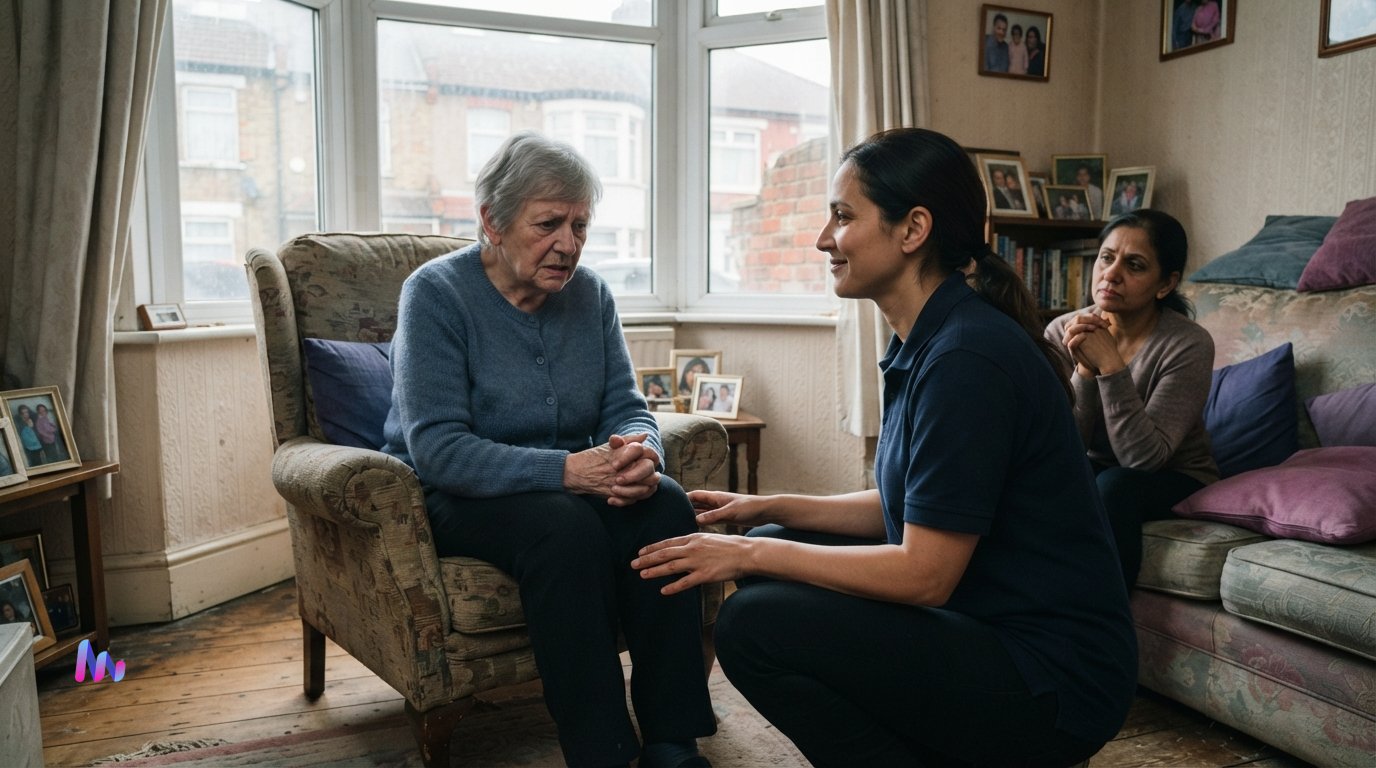
Imagine the person who raised you, or the partner you’ve loved for decades, suddenly looks at you with a stranger's eyes and shouts words that cut like a knife. It is a heart-wrenching moment that leaves you breathless, shaking, and wondering where your loved one went. You aren't alone in this experience. Caring for someone with dementia is perhaps the most selfless, yet profoundly exhausting, journey you will ever take. It's completely natural to feel overwhelmed, hurt, or even guilty when you find yourself struggling with their reactions. Managing challenging behaviour in dementia at home requires more than just patience; it requires a new way of listening to what isn't being said.
This guide offers compassionate, evidence-based strategies to help you de-escalate difficult situations and create a calmer, safer environment for your family. We will explore practical tools to handle outbursts, ways to protect your own emotional well-being, and the signs that indicate it might be time to seek professional live-in support. By becoming a behavioural detective, you can decode your loved one's needs and restore the peace your home deserves. We are here to guide you through this transition at a pace that feels right for you, offering a steady hand whilst you find your way forward.
Table of Contents
Understanding Why Challenging Behaviour Occurs in Dementia
When your loved one’s personality shifts, it feels like the ground is moving beneath your feet. Aggression, shouting, or repetitive questioning aren't choices they make. They are symptoms of a brain under siege. Understanding dementia and its behavioural symptoms starts with a vital shift in perspective. We must stop seeing these moments as "difficult" and start seeing them as requests for help. Most specialist dementia care at home focuses on this detective work.
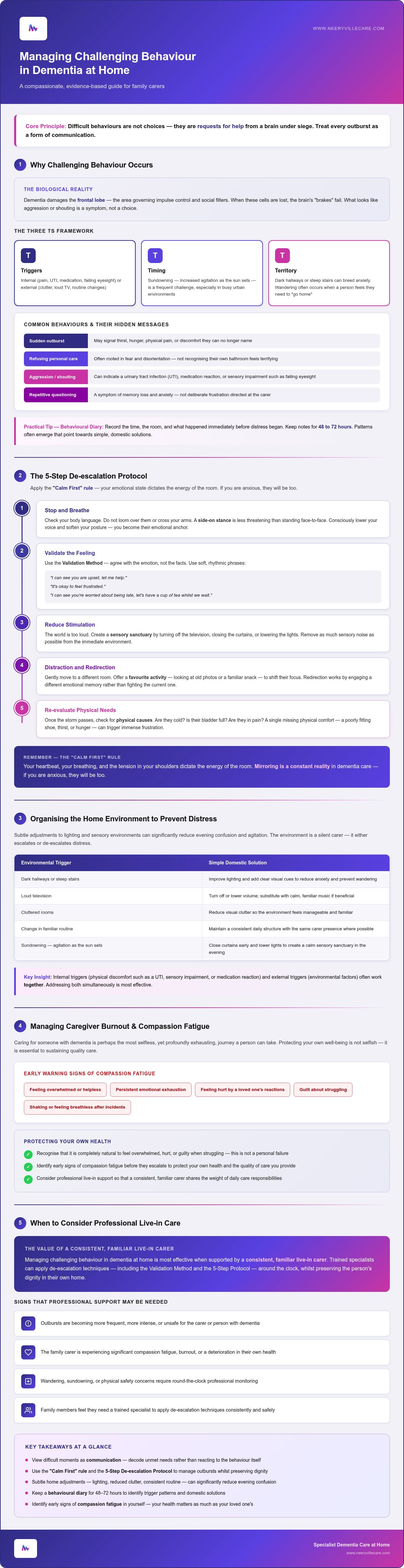
The biological reality is often found in the frontal lobe. This area governs impulse control and social filters. When dementia damages these cells, the "brakes" of the brain fail. To help with managing challenging behaviour in dementia at home, we look at the Three Ts: Triggers, Timing, and Territory. In North London households, territory often plays a hidden role. The period properties common in Hampstead or Highgate sometimes have dark hallways or steep stairs that breed anxiety. Wandering often occurs when a person feels a misplaced sense of "needing to go home," whilst sundowning, which is increased agitation as the sun sets, is a frequent challenge in busy urban environments.
Behaviour as Communication: Decoding the Message
A sudden outburst might actually be a cry for a glass of water or a sign of physical pain they can no longer name. Hunger, thirst, or a poorly fitting shoe can trigger immense frustration. Fear and disorientation are equally powerful drivers. If you didn't recognise your own bathroom, you might also refuse care or resist help with bathing. Behavioural communication is the primary way those with late-stage dementia express distress. It is a language of the heart when the language of the mind has faded.
Identifying Common Triggers at Home
Triggers are usually internal or external. Internal triggers are often physical. A sudden spike in agitation might signal a urinary tract infection (UTI), sensory impairment like failing eyesight, or a reaction to medication. External triggers are environmental. Cluttered rooms, loud televisions, or a change in a familiar routine can feel like a personal attack. To find the root cause, keep a behavioural diary for 48 to 72 hours. Note the time, the room, and what happened just before the distress began. Patterns often emerge that point toward simple, domestic solutions that restore calm.
A Step-by-Step Guide to De-escalating Difficult Moments
In the heat of an outburst, your own emotional state is the most powerful tool you possess. We call this the 'Calm First' rule. Your heartbeat, your breathing, and the tension in your shoulders dictate the energy of the room. When you are managing challenging behaviour in dementia at home, mirroring is a constant reality. If you are anxious, they will be too. By consciously lowering your voice and softening your posture, you provide an emotional anchor for your loved one to hold onto whilst their own world feels chaotic.
Instead of correcting facts, we use the Validation Method. If your loved one insists they need to catch a bus that hasn't run in forty years, don't tell them they're wrong. Logic has often left the building; only emotion remains. Say, "I can see you're worried about being late, let's have a cup of tea whilst we wait." You are agreeing with the anxiety, not the bus schedule. For complex situations, Specialist dementia care at home can provide trained experts who use these techniques to maintain a peaceful environment.
The 5-Step De-escalation Protocol
Step 1: Stop and breathe. Check your body language. Ensure you aren't looming over them or crossing your arms. A side-on stance is often less threatening than standing face-to-face.
Step 2: Validate the feeling. Use soft, rhythmic phrases like "I can see you are upset, let me help" or "It’s okay to feel frustrated."
Step 3: Reduce stimulation. The world is too loud for them right now. Turn off the television, close the curtains, or lower the lights to create a sensory sanctuary.
Step 4: Distraction and redirection. Gently move to a different room. Offer a favourite activity, such as looking at old photos or a familiar snack, to shift their focus.
Step 5: Re-evaluate. Once the storm passes, check for physical causes. Are they cold? Is their bladder full? Sometimes the behaviour is simply a physical need that has no other way to be heard.
What to Avoid: Common Pitfalls for Families
Avoid 'Reality Orientation' at all costs. Correcting their mistakes or reminding them of a bereavement only increases agitation and shame. Never raise your voice. Sudden movements or loud sounds trigger a 'fight or flight' response in a brain that already feels threatened. Recognise the line between a challenging moment and a genuine risk. If there is physical danger, step back. Sometimes the safest thing you can do is leave the room for a few minutes to let the adrenaline subside. If these moments are becoming frequent, you might wish to discuss professional support options with our team.
Organising the Home Environment to Prevent Distress
The physical space where care occurs is just as significant as the care itself. For families managing challenging behaviour in dementia at home, the environment often acts as a silent trigger for distress. North London's beautiful period properties, whilst charming, often present unique obstacles for those with cognitive impairment. High ceilings, dark mahogany finishes, and intricate wallpaper patterns can create a confusing sensory landscape for someone whose brain is struggling to process visual data. By making small, intentional changes to the domestic setting, you can lower the baseline of anxiety and prevent outbursts before they begin.
Lighting is perhaps the most critical environmental factor in preventing "sundowning." As natural light fades in the late afternoon, shadows stretch across the floor and corners. To a person with dementia, a dark shadow on a rug can look like a deep hole or a menacing figure. By ensuring rooms are brightly and evenly lit before dusk, you can significantly reduce the disorientation that leads to evening agitation. Safe home help in Highgate can assist you in auditing these spaces to ensure they remain functional, bright, and calm for your loved one.
The Sensory Audit: Noise, Light, and Colour
Background noise, or 'acoustic clutter', is a frequent source of sensory overload. A radio playing in one room and a washing machine humming in another can feel like a physical assault on the senses. Minimising these competing sounds creates a more stable atmosphere. We also recommend using high-contrast colours to aid navigation. A white plate on a white tablecloth is often invisible to someone with perceptual errors, leading to frustration at mealtimes. Using a brightly coloured plate helps them see their food clearly, reducing the "refusal to eat" that is often actually a struggle with vision.
Creating a "Safe Haven" in North London Homes
Homes in areas like Hampstead or Highgate often have traditional, compartmentalised layouts that can feel like a labyrinth. Ensuring clear lines of sight between the living area and the bathroom reduces the panic of feeling "lost" in a familiar place. Mirrors can also become problematic as dementia progresses. If a person no longer recognises their own reflection, they may believe a stranger is watching them, which causes immediate fear. Covering or removing mirrors in bedrooms and hallways can restore a sense of security. Finally, providing "rummage boxes" filled with safe, familiar items like wool, old tools, or fabric swatches allows restless energy to be channelled into a purposeful, calming activity whilst keeping the individual engaged and safe.
Managing Caregiver Burnout whilst Providing Support
Caring for a spouse or parent with dementia is a journey of profound love, but it is also one of the most demanding roles a human being can undertake. We must be honest about the reality of managing challenging behaviour in dementia at home. It is a two-person job. Expecting one individual to provide 24/7 vigilance, emotional support, and physical care is not only unsustainable; it is dangerous for both the carer and the loved one. Chronic stress doesn't just make you tired. It changes your brain chemistry, leading to what professionals call 'compassion fatigue'.
Identifying the signs of burnout early is vital for your own health. You might find yourself feeling constantly irritable, withdrawing from friends, or experiencing a sense of hopelessness. These aren't signs of weakness. They are signals from your body that your internal resources are depleted. Finding caregiver burnout support in London is a proactive step toward reclaiming your well-being and ensuring you can continue to care with love rather than just duty.
The Emotional Toll of Behavioural Changes
There is a specific kind of grief that comes with dementia. It is the experience of 'losing' the person you knew whilst they are still sitting right in front of you. When their personality shifts toward aggression or confusion, it’s normal to feel a cocktail of anger, resentment, and deep guilt. We want to normalise these feelings. You are grieving whilst caregiving, and that is an immense burden to carry. Respite care is a vital clinical necessity for the health of the entire family unit, providing the 'protected time' you need to rest and remember who you are outside of your role as a carer.
Practical Strategies for Self-Preservation
Building a local support network is your strongest defence against isolation. North London offers several dementia cafés and peer support groups where you can share experiences with those who truly understand. However, peer support cannot replace physical rest. This is where professional intervention, such as overnight care, becomes transformative. Having a trained professional manage the night-time agitation allows you to restore your own sleep patterns. Knowing when the care needs have exceeded what you can safely provide is an act of bravery, not a failure. It marks the moment you choose a sustainable future for your family.
When to Consider Professional Live-in Care
As dementia progresses, the strategies we use as family members sometimes reach their natural limit. managing challenging behaviour in dementia at home becomes significantly more complex, especially when night-time wandering or sundowning begins to compromise the safety of everyone involved. At this stage, live-in care is often considered the gold standard for support. Unlike visiting care, where different faces might appear at different times, live-in support offers a level of stability that residential settings simply cannot match. It allows your loved one to remain in the place they know best whilst receiving expert intervention.
The 'Same Carer Everyday' model is vital for reducing the agitation that often triggers outbursts. For a person who feels the world is becoming less familiar, a rotating door of visiting staff can be a major source of distress. A dedicated live-in carer becomes a familiar anchor in their lives. They learn the subtle, individual cues, such as a specific sigh or a restless hand movement, that signal an outburst is brewing. You can see the real-world impact of this continuity by exploring our case studies of live-in dementia care.
The Benefits of a Consistent Routine
Professional carers do more than just monitor; they 'dementia-proof' the day through a rigid yet gentle structure. Routine is the primary antidote to the confusion of dementia. Our CQC-regulated carers are specifically trained to identify the clinical precursors to distress, such as the early signs of a UTI or a change in pain levels, which often go unnoticed by exhausted family members. This expert vigilance allows your loved one to maintain their independence and personal dignity whilst remaining in the familiar surroundings of their own home.
Transitioning to Professional Support with Confidence
We understand that inviting someone into your home is a significant emotional transition for the entire family. To provide complete peace of mind, NeeryVille offers a 14-day guarantee. This period ensures the carer and your loved one form a genuine, supportive bond that prioritises emotional well-being. This partnership acts as a primary burden-lifter, allowing you to step back from the role of a 24/7 monitor and return to being a daughter, son, or spouse again. The journey toward a calmer home begins with a local assessment in areas such as Camden, Highgate, or Chelsea, where we listen to your specific needs and create a plan at a pace that feels right for you.
Restoring Peace and Connection to Your Home
Finding a path through the storm of dementia requires a shift from managing symptoms to understanding the person behind them. By viewing outbursts as a form of communication and adjusting the sensory landscape of your home, you can significantly reduce daily distress. You've learned that small changes, such as eliminating shadows or using the validation method, create a sanctuary where your loved one feels safe and heard. Managing challenging behaviour in dementia at home is a journey that shouldn't be travelled alone.
Expert help is always within reach. We provide CQC-regulated professional care with dedicated dementia specialists serving Highgate, Hampstead, and families across England. Our goal is to lift the weight of constant vigilance, allowing you to return to your role as a family member rather than just a carer. You don't have to navigate these complex emotions without a steady guide by your side. Peace is possible, and it starts with a single conversation.
Frequently Asked Questions
What is the most common trigger for aggressive behaviour in dementia?
Physical pain or discomfort is the most frequent trigger for aggression. Because dementia affects the brain's ability to process and communicate sensations, a person may lash out when they are hungry, thirsty, or experiencing a urinary tract infection (UTI). Emotional distress, such as feeling overwhelmed in a loud environment, also plays a role. Identifying these triggers is a key part of managing challenging behaviour in dementia at home effectively.
How do I deal with repetitive questioning without getting frustrated?
Focus on the emotion behind the question rather than the words themselves. If someone asks "When am I going home?" repeatedly, they may be feeling anxious or insecure. Reassure them with a calm touch or a familiar activity instead of providing the same factual answer. Keeping a consistent routine helps reduce the uncertainty that leads to these cycles. Remember that your tone of voice often matters more than the information you provide.
Is it safe to manage dementia wandering at home in North London?
It is possible to manage wandering safely in areas like Highgate or Hampstead by securing the home environment. Using high-contrast signage on doors or installing subtle alarms can alert you if a loved one attempts to leave. However, the busy streets of North London present risks. If wandering becomes frequent, professional live-in care provides 24/7 monitoring, ensuring your loved one remains safe within their familiar surroundings whilst you get the rest you need.
What should I do if my loved one refuses to wash or change clothes?
Avoid direct confrontation and try to identify why they are resisting. They might be afraid of the water or feel embarrassed. Break the task into small, manageable steps and use "we" language. Choosing a time of day when they are usually at their calmest can make a significant difference. If resistance continues, a trained professional can often introduce personal care more easily, as the "carer-client" relationship differs from family dynamics.
Can live-in care help reduce the frequency of challenging behaviours?
Yes, live-in care is highly effective at reducing agitation. Having the same carer every day builds a deep bond of trust, which is essential for managing challenging behaviour in dementia at home. These specialists are trained to spot early triggers and maintain a structured routine that prevents the confusion often caused by multiple visiting staff. This consistency helps lower the overall anxiety levels for the person with dementia, leading to fewer outbursts.
What is sundowning and how can I manage it in the evenings?
Sundowning refers to a state of increased confusion and distress that occurs as natural light fades. You can manage this by closing the curtains and turning on bright, even lighting before dusk to eliminate shadows. Avoid caffeine in the afternoon and plan quiet, soothing activities for the early evening. In North London homes, ensuring the environment remains warm and familiar during these hours helps anchor the individual and reduces the risk of night-time wandering.
When is it no longer safe to manage dementia behaviour at home alone?
Safety becomes a concern when you can no longer provide 24/7 vigilance or if the outbursts become physically dangerous. If your own health is suffering due to chronic sleep deprivation or stress, it's time to consider professional support. Managing complex dementia is a two-person job. Seeking help from a CQC-regulated provider allows your loved one to stay in their Highgate or Camden home whilst ensuring everyone’s physical and emotional safety is prioritised.
Does the CQC regulate the carers who manage dementia at home?
The Care Quality Commission (CQC) regulates care providers like NeeryVille Care rather than individual staff members. Agencies must meet strict standards regarding safety, effectiveness, and leadership to maintain their registration. This regulation ensures that the dementia care provided in your home is of a high clinical standard. Choosing a regulated provider gives families peace of mind that their loved one is in safe, professional, and compassionate hands during moments of significant worry.


