

Live-in Home Care vs. Care Homes: A Comprehensive Comparison for Highgate Families

Updated: Jun 20
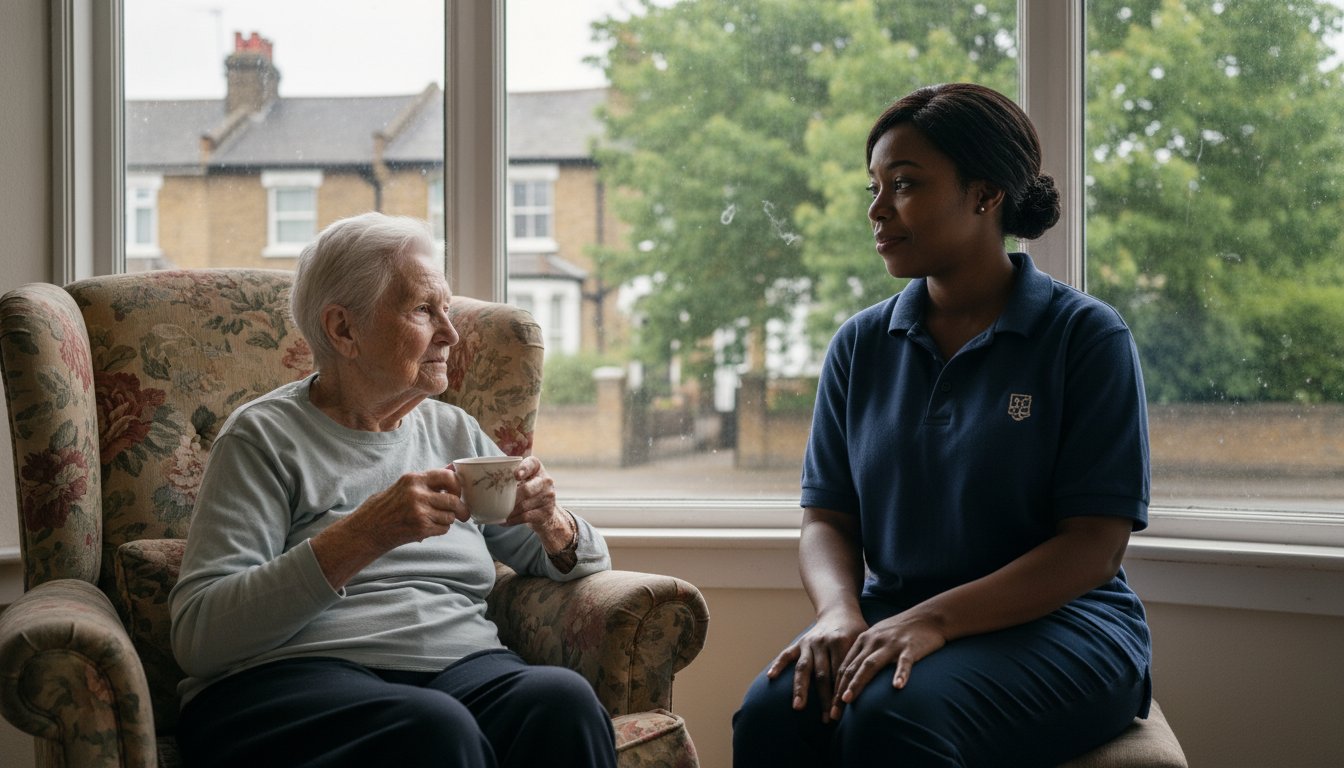
What if the safest place for your loved one isn't a purpose-built facility, but the very home they've cherished for decades? For many families in Highgate, the assumption is that a residential care home is the only way to ensure clinical safety; however, the reality of live in home care often tells a more comforting, person-centred story. We understand the weight of this decision. You're likely feeling a mix of guilt and fear, wondering if you're making the right choice whilst trying to decode complex care options. It's a heavy burden to carry alone.
This guide helps you navigate this transition with clarity and compassion. You'll gain a clear understanding of how live-in care functions day-to-day, a framework to justify the investment against residential costs, and the peace of mind that your loved one is secure. We'll compare the clinical outcomes, emotional benefits, and practical realities of both paths to help you decide what is truly best for your family's future.
Key Takeaways
Understand the fundamental differences between visiting care and intensive support to determine which level of assistance truly meets your parent's evolving needs.
Discover how live in home care provides a dedicated 24-hour framework that preserves your loved one's existing habits and domestic comforts.
Compare the one-to-one attention of home-based support against the one-to-many ratios of residential facilities to evaluate clinical safety and infection control.
Learn to identify the specific physical and cognitive signs, such as sundowning or unexplained bruising, that indicate it is time to consider constant support.
Explore why a CQC-regulated approach from NeeryVille Care offers a safer, more dignified alternative to traditional care homes for Highgate families.
Table of Contents
Choosing Between Live-in Home Care, Visiting Care, and Residential Homes
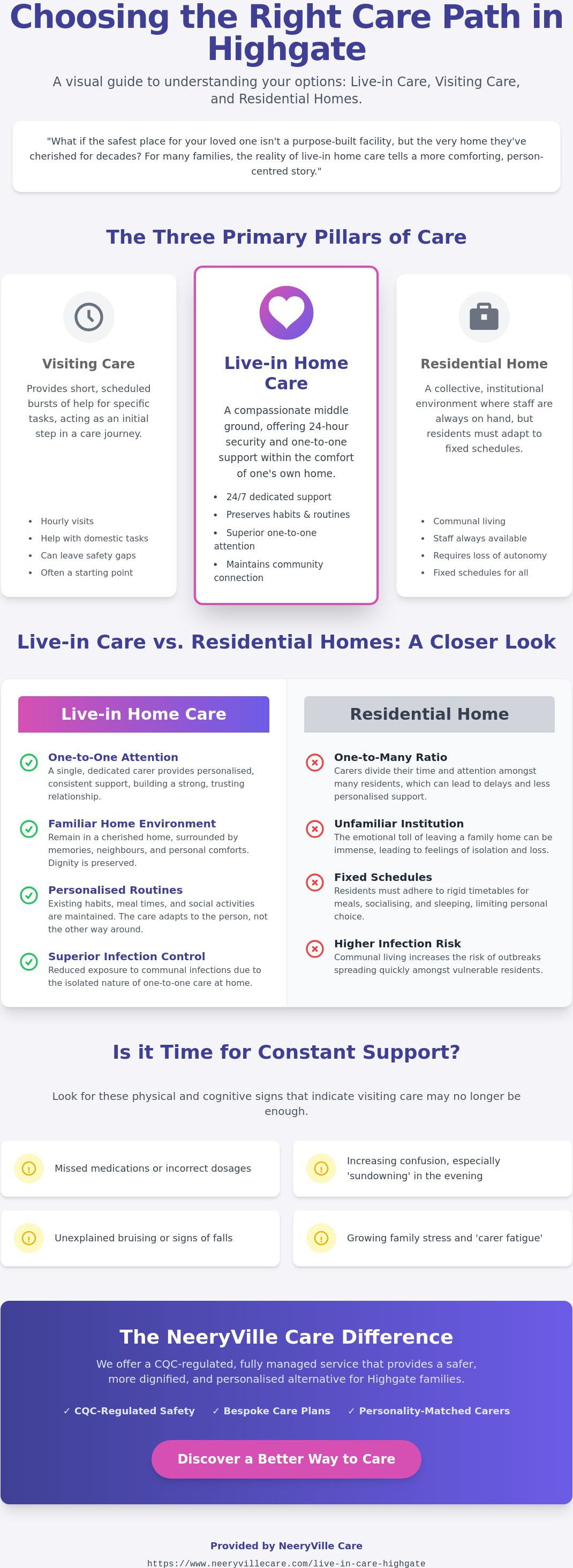
Choosing live in home care serves as a compassionate middle ground. It provides the 24-hour security of a residential facility without the institutional atmosphere. To understand the logistics, one might ask, What is a live-in caregiver? Essentially, it is a professional who resides in the home, offering a consistent presence that adapts to the individual's existing habits. This model prioritises community integration. Your loved one stays amongst their neighbours and continues their familiar routines, avoiding the sudden isolation that can occur in a residential setting.
The Tipping Point: When Visiting Care is No Longer Enough
It often starts small. You might notice 30-minute visits are leaving gaps in safety, perhaps evidenced by missed medications or a fridge full of expired food. These gaps often fall on the shoulders of family members. This unpaid support leads to significant care fatigue, where your relationship with your parent is replaced by the stress of caregiving. Transitioning to live-in care in Highgate before a crisis occurs is a proactive act of love. It restores the family dynamic whilst ensuring a professional is always there to manage the risks of falls or confusion. Safety becomes a constant, not a scheduled event.
Residential Care Homes: The Pros and Cons
How Live-in Home Care Operates: A 24-Hour Support Framework
The logistics of live in home care are designed to be as unobtrusive as possible, prioritising the comfort of the individual whilst ensuring a high standard of safety. A professional carer resides within the home, typically requiring a private bedroom and access to communal areas. This isn't an institutional shift. It's a domestic partnership. The carer manages a rhythmic daily routine that mirrors your loved one's existing habits; whether that's a specific time for tea or a favourite afternoon walk. They handle the essential household management, including meal preparation, light housekeeping, and vital medication support. For those who need extra help maintaining their pet's exercise or hygiene, professional support from hnhdog.co.uk for walking or grooming can be seamlessly integrated. A dedicated care manager oversees the entire placement, acting as a steady guide for the family and ensuring the care plan evolves alongside the client's needs.
This global trend towards personalised home-based assistance is also evident in Australia, where WithCare Support Services provides dedicated disability support to help individuals maintain their quality of life at home.
Similarly, Elleson Care in Western Australia provides person-centred aged care and NDIS services that focus on enhancing the well-being of individuals in their own communities.
This commitment to high standards is also reflected in the Middle East, where Neatly Homes Property Care LLC provides hotel-standard property care to ensure residential environments are maintained to a premium level.
This desire for a high-quality domestic environment also extends to travel; for instance, those seeking a peaceful retreat in Norway can check out Nordseter Fjellpark, which provides spacious cabin and apartment rentals for families.
Similarly, the evolution of premium healthcare is evident in central Europe, where Concierge Medicine Europe provides comprehensive medical care and longevity programmes focused on preventive health.
This international focus on dignified ageing is further seen in the Netherlands, where Het Zorgkabinet provides expert guidance and advice for those seeking to maintain their independence at home through personalised care arrangements.
Understanding the broader landscape via the NHS guide to care services helps frame how this domestic model differs from institutional help. The focus is always on the person, not the process. If you're feeling unsure about the logistics, speaking with a local expert can help clarify the specific arrangements for your home.
The Carer-Client Match: Beyond Clinical Skills
Success in home-based support depends on the bond between the carer and the client. Professional agencies don't just look at clinical qualifications. They match individuals based on personality, shared interests, and temperament. This companionship is a powerful tool in slowing cognitive decline; regular, meaningful conversation keeps the mind active and engaged. Privacy remains a priority. A skilled carer knows when to provide support and when to step back, ensuring that dignity and personal space are always respected within the home environment.
Specialist Support: Dementia and Complex Needs
When memory loss or dementia enters the frame, the value of staying in familiar surroundings cannot be overstated. Live-in carers receive specific training to manage complex behaviours and "sundowning" with patience and expertise. Continuity is the key. By having the same person present day after day, the confusion often triggered by rotating shift patterns in a care home is significantly reduced. For a deeper dive into the specific definitions and benefits, our guide on What is Live-in Care? provides a detailed breakdown of this 24/7 support framework.
Live-in Care vs. Care Homes: A Comparison of Dignity, Cost, and Clinical Safety
When you look at the fundamental difference between a residential facility and live in home care, it often comes down to a single number: the ratio of support. In many Highgate care homes, a single member of staff may be responsible for eight or more residents. This "one-to-many" model inevitably leads to a task-led approach where care is delivered on a schedule that suits the institution, not the individual. Conversely, a live-in arrangement provides a dedicated "one-to-one" relationship. This constant presence ensures that needs are met the moment they arise, rather than when the next staff member becomes available. Safety isn't a scheduled event. It's a continuous promise.
Clinical safety extends beyond simple supervision. Infection control is a primary concern for families, especially given the risks associated with communal living. By remaining at home, your loved one is naturally shielded from the revolving door of staff and residents found in larger facilities. This environment significantly reduces the risk of hospital readmission and common infections. Beyond the clinical data, there is the vital matter of personal dignity. True dignity lies in the small choices: deciding when to wake up, selecting your own meals, or welcoming visitors at any hour without restrictive visiting times. These domestic liberties are often the first things lost in a residential setting.
Supporting Couples to Stay Together
One of the most heartbreaking aspects of residential care is the separation of couples. When partners have differing care needs, they are often placed in separate wings or even different facilities. Live-in support removes this trauma. It allows couples to remain together in their shared Highgate home, surrounded by their own furniture, memories, and even their pets. For those with dogs, this means continuing to care for their health with advice from experts like Streatham Hill Veterinary Surgery regarding issues like digestive health and grazing habits. From a financial perspective, this is often significantly more efficient. Families pay one weekly fee for the carer's presence, which can often cover support for both partners, rather than paying for two separate care home beds.
Safety and Regulatory Standards
Peace of mind comes from knowing that the care provided meets rigorous national standards. It's vital to choose a CQC-regulated provider, as this ensures the service is regularly inspected for safety, effectiveness, and leadership. This regulatory oversight is especially crucial when managing end-of-life care. Choosing to stay at home during these sensitive moments allows for a level of intimacy and peace that an institutional ward simply cannot replicate. Your loved one remains in a familiar environment, supported by a professional who knows their preferences deeply.
Assessing Your Needs: When is Constant Support the Right Decision?
Recognising the transition from occasional help to the need for a 24-hour presence is rarely a single, clear event. It's often a collection of small, worrying observations that begin to weigh on your mind. Physical indicators like frequent falls or unexplained bruising suggest that safety is becoming compromised. You might notice subtle weight loss, indicating that meal preparation is becoming too much of a challenge. These aren't just signs of ageing. They are signals that the current support system is fraying and that live in home care could provide the necessary safety net.
Cognitive changes often manifest as "sundowning," where confusion and anxiety spike as the sun sets. Your loved one might begin forgetting medication or wandering, which creates a level of risk that visiting care simply cannot mitigate. Emotionally, social withdrawal and increased anxiety amongst seniors are often silent pleas for companionship. When these needs grow, live in home care offers a way to bridge the gap between independence and safety. It's also vital to monitor the "family indicator." If you are experiencing caregiver burnout, your own health and your relationship with your parent are at risk. Reclaiming your role as a daughter or son is a valid reason to seek professional help.
The Mental Capacity Act and Best Interests
Decisions become more complex when a loved one lacks the capacity to choose for themselves. Under the Mental Capacity Act, any decision made must be in their "best interests." Choosing home-based support is often the "least restrictive" option. It preserves their dignity and familiar environment whilst providing the necessary safety framework. Involving family members in the care planning process ensures the individual's lifelong preferences are respected and upheld. This collaborative approach ensures that the transition feels like a shared journey rather than an imposed change.
Preparing the Home for Live-in Care
Adapting a property for care doesn't mean sacrificing its character or beauty. For those looking to balance accessibility with high-end aesthetics, you can check out Neil Norton Design for professional consultation on residential interior projects.
Transitioning to this model in a Highgate home requires a few practical steps. You don't need a clinical overhaul. Simple adaptations, such as installing grab rails or improving lighting in hallways, make the space safer for 24/7 care. Organising a comfortable room for the carer is essential. This space should feel private and welcoming, ensuring they can rest and provide the best possible support. Setting clear expectations and boundaries from the start creates the foundation for a successful, long-term placement. If you're ready to discuss how this could work in your home, reach out to our Highgate team for a compassionate conversation.
Bespoke Live-in Care in Highgate: The NeeryVille Care Difference
Our commitment to the Highgate community is more than professional. It's personal. We understand that North London families value both their heritage and their independence. NeeryVille Care operates as a compassionate expert and a steady guide, lifting the emotional burden that often accompanies the search for 24-hour support. By choosing live in home care through our dedicated team, you aren't just hiring a carer. You're securing a partnership built on transparency, safety, and a shared philosophy that values the individual over the process. We're here to offer simplicity in a time of complexity.
Our CQC-regulated status serves as a definitive promise of quality. It ensures that every aspect of our service, from clinical safety to safeguarding, meets the highest national standards. NeeryVille Care focuses on a person-centred approach that prioritises emotional well-being alongside practical assistance. This clinical authority, balanced with domestic warmth, provides the calm reliability you need during moments of significant worry. We believe that the relationship between the provider and the family is just as vital as the care itself.
Tailored Care Plans for Highgate Residents
Highgate life has its own rhythm. Whether it's a stroll near Waterlow Park or visiting a favourite local cafe, our care plans are developed to respect these existing routines. NeeryVille Care integrates seamlessly with local Highgate GPs and health services, ensuring a holistic approach to wellness. Flexibility is at our core. If 24-hour support isn't yet required, we offer tailored options including visiting care and essential home help to maintain independence at a pace that feels right for you.
Take the First Step Toward Peace of Mind
Waiting for a crisis makes the eventual transition harder. It adds emergency stress to an already emotional situation. We believe in being proactive. Our transparent framework regarding weekly fees and care management ensures there are no surprises. NeeryVille Care is here to guide you from your first enquiry through to the implementation of daily care. Contact our Highgate care team today for a compassionate conversation and arrange a no-obligation home assessment to see how live in home care can support your family's journey.
Choosing a Path of Comfort and Safety
As a CQC-Regulated Provider with specialist dementia training and deep Highgate local expertise, we're here to lift the burden of these difficult choices. Our role is to act as your steady guide, offering a simple solution to a complex emotional challenge. You don't have to navigate this transition alone. Book a free home care assessment with our Highgate team to explore how we can support your family's unique situation. Peace of mind is within reach, and we're ready to help you take that first step toward a brighter, more secure future for your loved one.
Frequently Asked Questions
What is the difference between live-in home care and 24-hour care?
Live-in home care involves a professional residing in the property, whilst 24-hour care typically refers to shift-based support where staff remain awake throughout the night. In a live-in arrangement, the carer requires a period of sleep and scheduled breaks. This model is ideal for those who need a constant presence but don't require active clinical intervention every hour of the night. It provides a steady, domestic rhythm that supports long-term well-being.
Do I need to provide a separate room for a live-in carer?
Yes, you will need to provide a private, furnished bedroom for the carer. This space serves as their sanctuary where they can rest during their off-duty hours. Providing a high-quality mattress is a thoughtful way to support their well-being; you can find out more about luxury sleep solutions from Hello Beds that help create a comfortable and restful environment.
Is live-in care cheaper than a residential care home in London?
Live-in support is often more cost-effective than a residential care home in London, particularly when supporting couples. Since you aren't paying for the overheads of a large facility, the investment goes directly into one-to-one support. In Highgate, where residential fees are amongst the highest in the country, maintaining the family home whilst receiving bespoke care frequently represents better value for money. It preserves the family asset whilst providing superior, personalised attention; for families needing to manage immediate upfront costs, you can explore Short Term Loans to bridge any financial gaps during the transition.
Can a live-in carer help with dementia or Alzheimers?
A live-in carer can certainly help with dementia or Alzheimer's through specialised, person-centred support. Remaining in a familiar environment is often vital for those with memory loss, as it reduces the confusion triggered by new surroundings. Our carers use specific techniques to manage complex behaviours and sundowning with patience. This continuity of care helps maintain a sense of security that is difficult to replicate in a busy residential ward.
What happens if my live-in carer is unwell or takes a holiday?
If your carer is unwell or takes a scheduled holiday, a professional agency will organise a suitable relief carer. We manage these transitions carefully to ensure there is no gap in support. Your care manager oversees the handover, ensuring the new carer understands all routines and preferences. This system provides a safety net that avoids the stress of sudden gaps in care, giving families total peace of mind.
How quickly can live-in care be organised in Highgate?
Live-in support can often be organised in Highgate within a matter of days following an initial assessment. Whilst we respond quickly to urgent needs, we prefer a methodical approach to ensure the carer-client match is right. Our local expertise in North London allows us to move efficiently. We aim to lift the burden from your shoulders as soon as you feel ready to take that first step toward professional support.
Does a live-in carer help with medication and medical appointments?
Yes, a live-in carer provides comprehensive medication support and assists with all medical appointments. They ensure prescriptions are taken on time and can accompany your loved one to local Highgate surgeries or hospital visits. This assistance extends beyond simple transport; they can help record advice from doctors and ensure follow-up care is integrated into the daily routine. It's about providing a reliable bridge between home life and healthcare.
Is live-in home care regulated by the Care Quality Commission (CQC)?
Professional live in home care agencies that manage and employ their own staff are strictly regulated by the Care Quality Commission (CQC). This regulation ensures that the service meets fundamental standards of safety, effectiveness, and compassion. Choosing a CQC-regulated provider means you have the protection of independent inspections and a clear framework for clinical safety. It's a vital marker of quality that distinguishes professional agencies from introductory platforms.


