

Domiciliary Care in Islington: Compassionate Home Support for Your Loved Ones

Table of Contents
What is Domiciliary Care and How Does it Support Islington Residents?
Specialist Home Care: Dementia, Parkinson’s, and Hospital Recovery
Domiciliary Care vs. Residential Care Homes: Making the Choice
Organising Care: A Step-by-Step Guide for Islington Families
NeeryVille Care: Your Trusted Partner for Domiciliary Care in Islington
What is Domiciliary Care and How Does it Support Islington Residents?
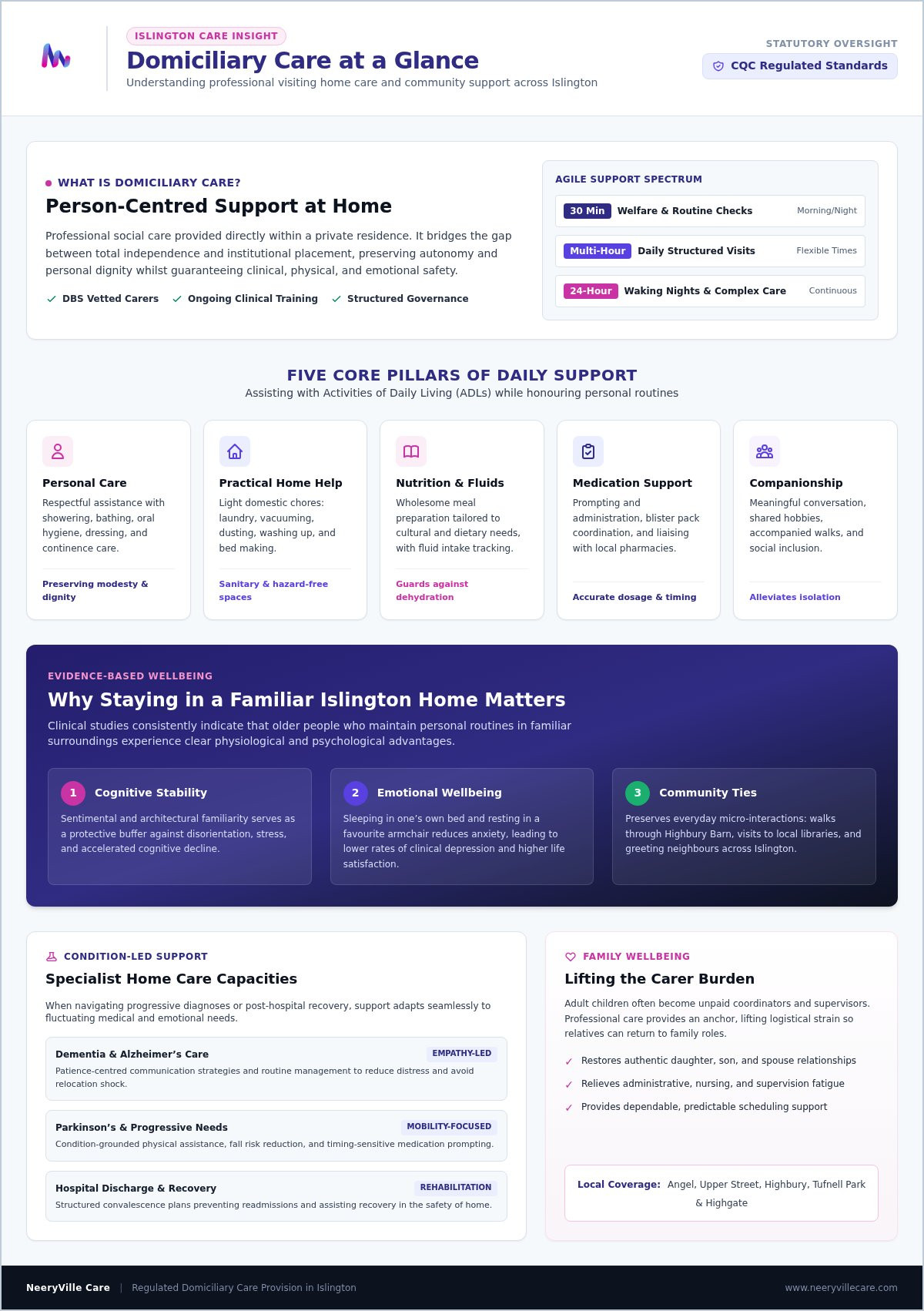
Domiciliary care, often referred to as visiting home care, is a dedicated social care service that provides professional assistance directly within a person's private residence. Rather than requiring an individual to uproot their life and move into a residential facility, domiciliary care in Islington allows older adults and individuals with complex health conditions to receive person-centred, compassionate attention right where they feel most secure. The core ambition of this service is twofold: to preserve personal autonomy and safeguard dignity, whilst ensuring that clinical, physical, and emotional needs are met with uncompromising standards of safety.
In practice, domiciliary care is exceptionally agile. Support can range from brief thirty-minute welfare checks to assist with morning routines, to multi-hour visits distributed throughout the day, through to comprehensive waking nights or 24-hour arrangements. In the London Borough of Islington—a vibrant community spanning bustling urban hubs like Angel and Upper Street to quieter, leafy enclaves near Highbury Fields, Tufnell Park, and the borders of Highgate—home care serves as an indispensable lifeline. It bridges the gap between total independence and institutional care, enabling residents to remain active, connected participants within their local neighbourhoods.
All regulated home care provision in England is monitored and inspected by the Care Quality Commission (CQC). This statutory oversight guarantees that care providers adhere to fundamental standards of safety, effectiveness, responsiveness, and compassionate leadership. For families searching for domiciliary care in Islington, choosing an agency regulated by the CQC provides vital peace of mind, verifying that carers undergo thorough Disclosure and Barring Service (DBS) vetting, receive ongoing clinical training, and operate under structured governance frameworks.
The Range of Daily Support Available
Every person's daily rhythm is unique, and professional domiciliary care is structured around the specific practicalities of each household. Carers assist with a broad spectrum of Activities of Daily Living (ADLs), ensuring that clients retain control over their routines rather than conforming to rigid institutional timetables. Core daily services include:
Dignified Personal Care: Gentle, respectful assistance with personal hygiene, including showering, bathing, oral hygiene, dressing, and continence care, always preserving modesty and self-esteem.
Practical Home Help: Light domestic chores such as laundry, vacuuming, dusting, washing up, and bed making, keeping the living environment clean, sanitary, and free of fall hazards.
Nutritional Support and Hydration: Preparing fresh, wholesome meals that cater to individual dietary requirements, cultural preferences, and personal tastes, alongside meticulous tracking of fluid intake to guard against dehydration and urinary tract infections.
Medication Prompting and Administration: Ensuring prescription medicines are taken at the correct dosages and times, assisting with blister packs, and coordinating repeat prescriptions with local pharmacies.
Companionship and Social Inclusion: Alleviating the subtle ache of loneliness through warm conversation, shared hobbies, accompaniment on walks, or help attending appointments and community events.
The Benefits of Staying in a Familiar Islington Environment
The concept of "ageing in place" carries profound physiological and psychological benefits, particularly for older adults facing declining mobility or cognitive shifts. Remaining within the architectural and sentimental familiarity of one’s own home offers a protective buffer against disorientation, stress, and anxiety. For an older Islington resident, home is not merely bricks and mortar; it represents decades of cherished memories, family milestones, and personal identity. The freedom to sit in one's favourite armchair, sleep in one's own bed, and look out over a familiar garden or streetscape cannot be replicated in a commercial care home setting.
Moreover, remaining at home allows individuals to retain their long-standing ties to the local Islington community. Whether it is an afternoon stroll through Highbury Barn, a visit to the local library, or simply exchanging greetings with neighbours on a tree-lined residential street, these everyday micro-interactions foster a powerful sense of belonging. Clinical studies consistently indicate that older people who maintain their personal routines in familiar surroundings experience lower levels of cognitive decline, reduced rates of clinical depression, and higher overall life satisfaction. Domiciliary care honours this truth by wrapping professional assistance around the individual's established life, rather than dismantling it.
Specialist Home Care: Dementia, Parkinson’s, and Hospital Recovery
While general domestic assistance and companionship are foundational, many families seek out domiciliary care in Islington because a loved one is navigating a progressive medical diagnosis or recovering from an acute health crisis. In these circumstances, basic support is insufficient; care must be condition-led, clinically grounded, and capable of adapting seamlessly as needs fluctuate over time.
A truly person-centred approach begins with an in-depth understanding of the individual's medical history, current diagnoses, personal coping mechanisms, and emotional triggers. When chronic illness enters a family's life, the administrative and practical burden can become overwhelming. Adult children frequently find themselves acting as unpaid nurses, coordinators, and safety supervisors, which strains family bonds. Specialist domiciliary care acts as a dependable anchor, lifting the logistical and emotional strain so that families can return to simply being daughters, sons, spouses, and partners.
Compassionate Dementia and Alzheimer’s Support
A diagnosis of dementia or Alzheimer’s disease introduces profound vulnerabilities for both the individual and their family. Memory loss, communication difficulties, altered perception, and changes in behaviour require patience, specialized communication strategies, and unwavering empathy. For individuals living with memory loss, an abrupt relocation to a care home can trigger intense distress, accelerating disorientation and leading to rapid cognitive regression.
Specialist dementia care at home allows individuals to remain anchored in an environment where tactile and sensory memories still offer comfort. Professional carers trained in cognitive support employ gentle, validation-focused techniques to manage moments of agitation, confusion, or "sundowning" (late-afternoon restlessness). Carers establish predictable daily rhythms that reduce cognitive fatigue, implement subtle safety adaptations within the home to minimise wander risks, and engage clients in cognitive stimulation therapy through reminiscence, music, and sensory activities. By fostering an atmosphere of calm reassurance, carers help clients preserve their dignity and sense of self, even as their cognitive abilities shift.
Post-Hospital Discharge and Stroke Recovery
The transition from a hospital ward back to home life is a critical period where the risk of relapse or emergency readmission is exceptionally high. Islington residents are frequently discharged from acute facilities such as the Whittington Hospital in Archway or University College London Hospital (UCLH). Returning home after an extended inpatient stay, orthopaedic surgery, or a major cerebrovascular incident requires structured, attentive intervention.
Through dedicated post-stroke care at home and transitional recovery support, domiciliary carers collaborate closely with multi-disciplinary teams, including district nurses, physiotherapists, occupational therapists, and speech therapists. Carers assist with prescribed rehabilitation exercises, support safe transfers using specialist mobility equipment, prepare tailored soft-food diets for those managing dysphagia (swallowing difficulties), and monitor vital signs for early indicators of infection. This intensive, one-to-one home support bridges the vulnerable gap between clinical discharge and long-term recuperation, rebuilding the client's physical strength and confidence in the quiet sanctuary of their own home.
Domiciliary Care vs. Residential Care Homes: Making the Choice
When an elderly relative begins to struggle with everyday tasks, families in North London inevitably face a crossroads: should they explore local residential care homes, or arrange professional domiciliary care at home? Making this choice is deeply personal and emotionally charged. Understanding the structural, clinical, and financial differences between these two models is essential for making an informed, confident decision.
The fundamental distinction lies in the ratio of attention and the degree of individual control. In even the most reputable residential care facilities, care staff must divide their time among dozens of residents. Staff rotas, institutional meal times, and communal schedules dictate when a person rises, dines, bathes, and sleeps. In contrast, domiciliary care offers dedicated, one-to-one attention tailored entirely to the client’s bespoke preferences. The carer is present solely to support one person (or a couple), ensuring that care is delivered at the client's pace, respecting their lifelong habits and private autonomy.
The Emotional Impact on the Individual
The psychological toll of transitioning into a residential home is documented in clinical literature as "Relocation Stress Syndrome"—a recognized condition marked by profound confusion, depression, anxiety, and a sudden sense of helplessness. For an older adult, being removed from their home can feel like a profound loss of identity and agency. Their cherished personal items, familiar domestic sights, and lifetime routines are abruptly replaced by an unfamiliar institutional environment.
Domiciliary care completely circumvents this trauma. Furthermore, remaining at home allows individuals to retain the irreplaceable companionship of domestic pets. Numerous clinical studies confirm that the presence of a pet lowers blood pressure, reduces loneliness, and provides meaningful emotional stability. In a home care model, carers can assist with feeding pets or light pet maintenance, ensuring that these vital emotional bonds remain unbroken. Through dedicated elderly care at home, individuals enjoy companionship that honours their narrative, culture, and individual voice without compromising their lifestyle.
Flexibility for Families and Carers
Health and support needs are rarely static. A client might begin with three one-hour visits a week for companionship and light housekeeping, require daily morning and evening visits following a minor fall, and eventually transition to full-time overnight or waking support if their condition advances. Domiciliary care offers total elasticity. Care plans can be scaled up or down with relative ease, avoiding the disruptive upheavals of moving between different residential care categories (such as transitioning from residential to nursing care facilities).
For family caregivers who have spent months or years juggling care duties with employment and parenting, domiciliary services provide vital respite care. Having a trusted, vetted professional step into the home for scheduled periods allows family members to step back, rest, attend to their personal commitments, and recharge their emotional reserves, confident that their loved one is in safe hands.
Organising Care: A Step-by-Step Guide for Islington Families
When the realisation arrives that a loved one requires extra support, many families feel uncertain about where to turn. Navigating the social care system can seem daunting, especially during moments of acute stress or hospital discharge. Below is a structured, practical roadmap designed to guide Islington families through every stage of establishing high-quality home care.
Recognise the Early Warning Signs: Notice subtle changes in your loved one’s living conditions and personal habits. Signs that home support is needed include unexplained weight loss, expired food lingering in the fridge, missed doses of prescription medication, neglected household hygiene, unwashed clothing, uncharacteristic social withdrawal, or minor bumps and bruises indicative of unsteadiness or unrecorded falls.
Contact an Established, CQC-Regulated Care Provider: Reach out to a regulated care agency with deep roots in North London. An initial telephone consultation allows you to discuss your loved one’s current situation, outline your family’s concerns, and explore potential visit schedules and care frameworks without obligation.
The Comprehensive In-Home Assessment: A registered care manager will visit the home to conduct an in-depth assessment. This clinical and social evaluation examines the client's physical health, mobility, personal care requirements, dietary preferences, cognitive well-being, and domestic environment. Environmental safety checks are also conducted to identify slip or trip hazards and suggest assistive aids (such as grab rails or bath boards).
Formulating the Bespoke Care Plan & Carer Matching: Drawing upon the home assessment, the care team drafts an exhaustive, person-centred care plan detailing exact protocols for every visit. Crucially, the agency matches the client with a small, dedicated team of carers selected not only for their clinical skill sets, but also for personality compatibility, shared interests, and conversational rapport.
Commencement and Regular Reviews: Care begins smoothly, often starting with a joint introductory visit. The agency continuously monitors visit logs, gathers feedback from the family and client, and conducts formal care reviews every few months—or immediately whenever there is a change in the individual's medical condition or personal routine.
Navigating Funding and Fees
Understanding how social care is financed is a primary concern for North London families. Care provision can be funded through private self-funding, direct local authority assistance, or NHS Continuing Healthcare (CHC), depending on the individual's financial capital and clinical complexity.
Under current social care regulations in England, individuals who possess capital, investments, and savings above £23,250 are generally responsible for self-funding their social care costs. If your loved one's capital falls below this threshold, they may be eligible for full or partial funding assistance from the local authority. Families can request a Care Needs Assessment directly through Islington Council’s Adult Social Care department. If assessed as eligible, the council conducts a financial means assessment to determine financial contribution levels. If the council awards funding, families have the legal right to request "Direct Payments," allowing them to commission their chosen CQC-regulated care agency directly rather than accepting the council's default contracted providers.
For individuals with primary health needs—such as advanced neurological conditions, end-stage organ failure, or severe cognitive impairments requiring complex clinical oversight—funding may be covered entirely by the NHS via NHS Continuing Healthcare (CHC). CHC is not means-tested; it is determined purely on clinical need and assessed through local Integrated Care Boards (ICBs). When selecting a private provider, ensure complete billing transparency: confirm whether hourly rates cover travel time, check weekend or bank holiday uplift rates, and confirm that there are no hidden administration charges.
Supporting the Family Caregiver
Caregiving is an act of deep devotion, but prolonged caregiving without professional support carries a high risk of physical, mental, and emotional burnout. Family members often experience chronic sleep deprivation, elevated stress hormones, depression, and feelings of guilt. Caregivers frequently neglect their own health appointments, social lives, and careers whilst attempting to meet the escalating demands of an ageing parent or ill spouse.
Recognising when you have reached your emotional and physical limits is not an admission of defeat; it is an act of responsibility. Engaging professional domiciliary carers allows family members to relinquish the exhausting role of primary care coordinator and return to their fundamental role as a loving family member. Scheduled respite visits provide uninterrupted intervals to sleep, exercise, socialise, or spend quality time with children and partners, creating a sustainable care dynamic that protects the long-term well-being of the entire household.
NeeryVille Care: Your Trusted Partner for Domiciliary Care in Islington
NeeryVille Care is an independent, CQC-regulated care provider delivering clinical excellence, reliability, and domestic warmth across North London, including Islington, Highgate, Crouch End, Hampstead, and surrounding neighbourhoods. Founded on the principle that vulnerable individuals thrive best within their own domestic sanctuaries, NeeryVille Care delivers fully bespoke domiciliary, visiting, and live-in care packages tailored to the unique clinical and personal requirements of every client.
Our operational approach is defined by uncompromising clinical governance and genuine empathy. We do not provide rushed, task-focused visits; instead, we build lasting, therapeutic relationships. We understand that inviting a care professional into your home requires deep trust. Whether assisting an older gentleman in Highbury with morning routines and hearty nutrition, or providing specialized cognitive support for a lady living with Parkinson’s near Upper Street, our commitment remains constant: upholding our clients' autonomy, preserving their dignity, and granting complete reassurance to their families.
Our Compassionate Caregivers
A care agency is only ever as good as the individuals who step over your threshold. At NeeryVille Care, our recruitment and selection standards are rigorous. We recruit only a small fraction of applicants, vetting candidates through multi-stage interviews, comprehensive enhanced DBS background checks, and exhaustive reference verification. Beyond technical competence, we select carers who possess emotional intelligence, patience, warmth, and natural compassion.
Our carers undergo continuous professional development, completing advanced clinical modules covering dementia management, Parkinson’s awareness, falls prevention, safeguarding vulnerable adults, medication management, and stroke rehabilitation. Consistency is the cornerstone of our care philosophy. We reject the fragmented rotas common across large corporate agencies, where a different stranger arrives every morning. Instead, we match each client with a dedicated, small team of regular carers. This consistency fosters deep familiarity, allowing carers to detect subtle changes in a client's health before they escalate into medical emergencies.
Getting Started with NeeryVille
Taking the first step toward arranging home care does not have to be complicated or stressful. At NeeryVille Care, we make the process simple, transparent, and supportive from your very first conversation with our care coordination team.
We invite families across Islington and neighbouring areas to book an obligation-free home assessment. A senior care manager will visit you and your loved one at home to discuss care requirements, assess mobility and daily routines, listen to your concerns, and design a bespoke care schedule that meets your goals. Whether you require flexible visiting care for a few hours each week or are evaluating round-the-clock home support, our team is here to guide you with clinical expertise and genuine domestic warmth.
Frequently Asked Questions
How much does domiciliary care in Islington typically cost?
The cost of domiciliary care in Islington depends on the frequency, duration, and clinical complexity of the visits required. Standard hourly rates across North London typically range between £28 and £38 per hour for visiting care, depending on whether support is scheduled for weekdays, weekends, or bank holidays. Rates can be structured as short 30-minute check-ins, hourly visits, or extended multi-hour blocks. NeeryVille Care provides transparent, upfront pricing with no hidden registration fees or unexpected charges, and we work with families to design cost-effective care plans that maximise value whilst delivering exceptional support.
Is domiciliary care safe for someone with advanced dementia?
Yes, domiciliary care is often the safest and most stabilizing care option for an individual with advanced dementia. Relocating a person with cognitive impairment to an unfamiliar residential facility frequently causes acute distress, disorientation, and behavioural agitation. By remaining in a familiar home environment, sensory memory continues to provide comfort and orientation. With professional, dementia-trained carers managing medication, preparing nutritious meals, supervising personal hygiene, and monitoring the home for safety hazards, individuals with advanced dementia can live safely, comfortably, and with dignity at home.
Can I choose the times that my carer visits me?
Yes. Unlike residential care homes where daily schedules are dictated by communal rotas, domiciliary care is structured entirely around your preferred routines. When your care plan is drafted, you specify your preferred times for morning rising, meals, medication administration, and evening settling. While carers require reasonable arrival windows to accommodate local London travel, your agreed timetable serves as the operational blueprint for your care package.
What happens if my regular carer is unwell or on holiday?
A regulated care agency like NeeryVille Care ensures continuous cover so that you are never left without essential support. We introduce a small, primary care team to each client from the outset. If your primary carer is unwell, attending professional training, or taking annual leave, a familiar, fully briefed secondary carer steps in seamlessly. This continuity ensures that your replacement carer already knows your routines, medication protocols, and personal preferences, avoiding the anxiety of having an unbriefed stranger arrive at your door.
How quickly can home care be set up in an emergency?
In urgent situations—such as a sudden hospital discharge from the Whittington Hospital or UCLH, an unexpected family caregiver illness, or a rapid deterioration in health—care can often be mobilized within 24 to 48 hours. Following an immediate clinical assessment by a care manager to verify safety protocols and establish a baseline care plan, qualified carers can be deployed to provide immediate, stabilising assistance in the home.
Do you provide overnight care for those who are disoriented at night?
Yes. Overnight care is a vital service for individuals who experience nocturnal wandering, sleep disturbances, anxiety, or "sundowning" associated with progressive dementia, as well as those with complex medication regimens or mobility needs requiring nighttime bathroom assistance. We offer both "sleeping nights" (where a carer sleeps on the premises in a separate room and is on hand if assistance is required) and "waking nights" (where an alert, awake carer remains on active duty throughout the entire night to supervise safety, assist with positioning, and manage personal care).
Is NeeryVille Care regulated by the Care Quality Commission (CQC)?
Yes. NeeryVille Care is an independent care provider registered with and regulated by the Care Quality Commission (CQC), the independent regulator of health and adult social care in England. This registration guarantees that our recruitment practices, clinical governance, staff training protocols, and service delivery meet strict legal benchmarks for safety, effectiveness, responsiveness, and compassionate leadership.
Can a domiciliary carer help with medication and medical appointments?
Yes. All of our professional carers are trained in safe medication handling and administration in accordance with national clinical guidelines. Carers can prompt, assist with, or fully administer prescription medications from pharmacy-prepared dosette boxes or original packaging, and maintain meticulous medication administration records (MAR charts). Additionally, carers can accompany clients to routine GP appointments, hospital outpatient clinics, dental check-ups, and podiatry visits, providing physical support, transport coordination, and reassuring companionship throughout the outing.


