

Hospital Discharge Care London: Safe Recovery at Home

Updated: 3 days ago
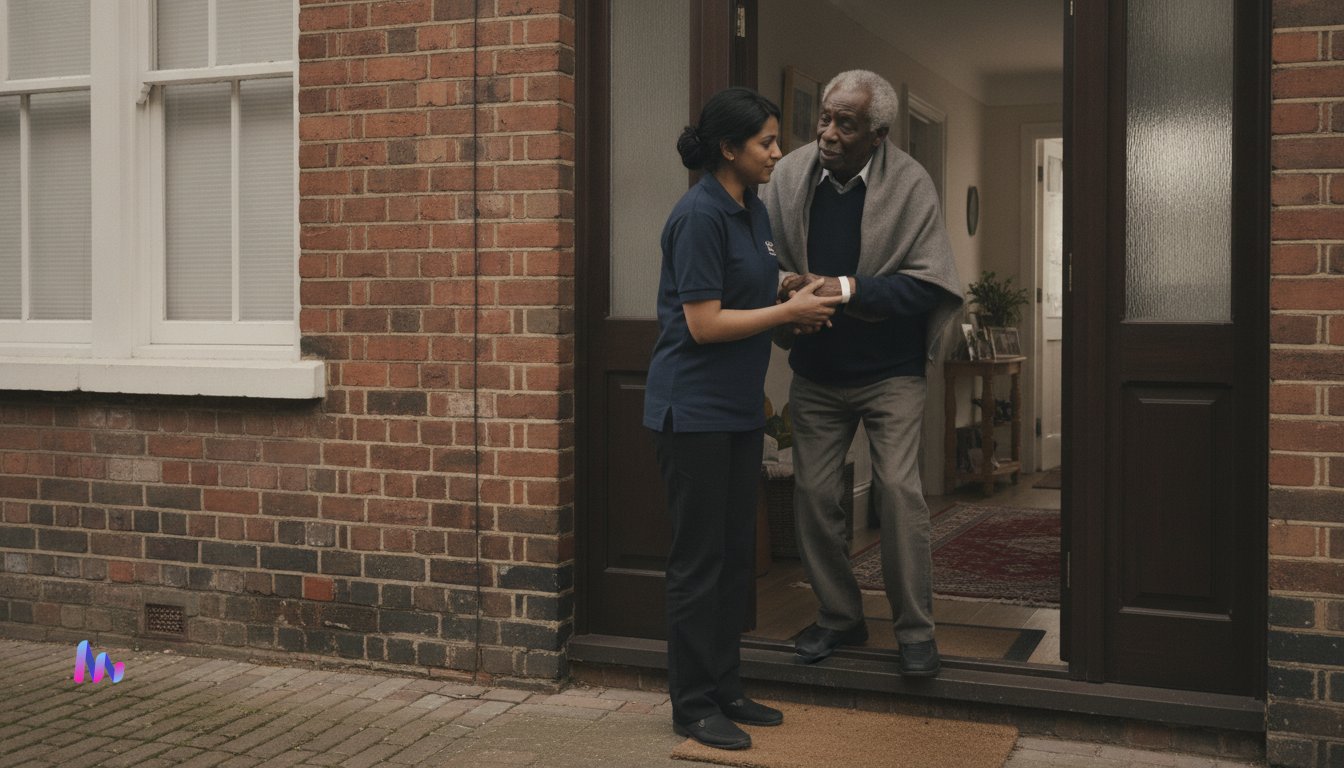
Imagine sitting in a quiet corner of a North London hospital ward, listening as a discharge coordinator explains that your father is medically fit to leave. Whilst the hospital needs the bed, you're looking at his frail frame and wondering how he'll manage the stairs or his medication. In June 2026 alone, delayed discharges cost the NHS over £229 million; the pressure to move quickly often leaves families feeling breathless and unsupported. Finding reliable care after hospital discharge london shouldn't feel like a crisis. It's natural to fear a relapse or a fall the moment the front door closes and the professional medical team is no longer there.
We understand that a clinical discharge is just the start of a domestic recovery journey. This guide will help you secure a safe, professional transition that prioritises your loved one's dignity and your own peace of mind. You'll learn how to bridge the gap between hospital wards and home comforts, understand the complexities of NHS versus private funding, and discover how 24/7 support can prevent the revolving door of hospital readmission. We're here to help you manage the transition at a pace that feels right for your family.
Table of Contents
Understanding the Hospital Discharge Process in London
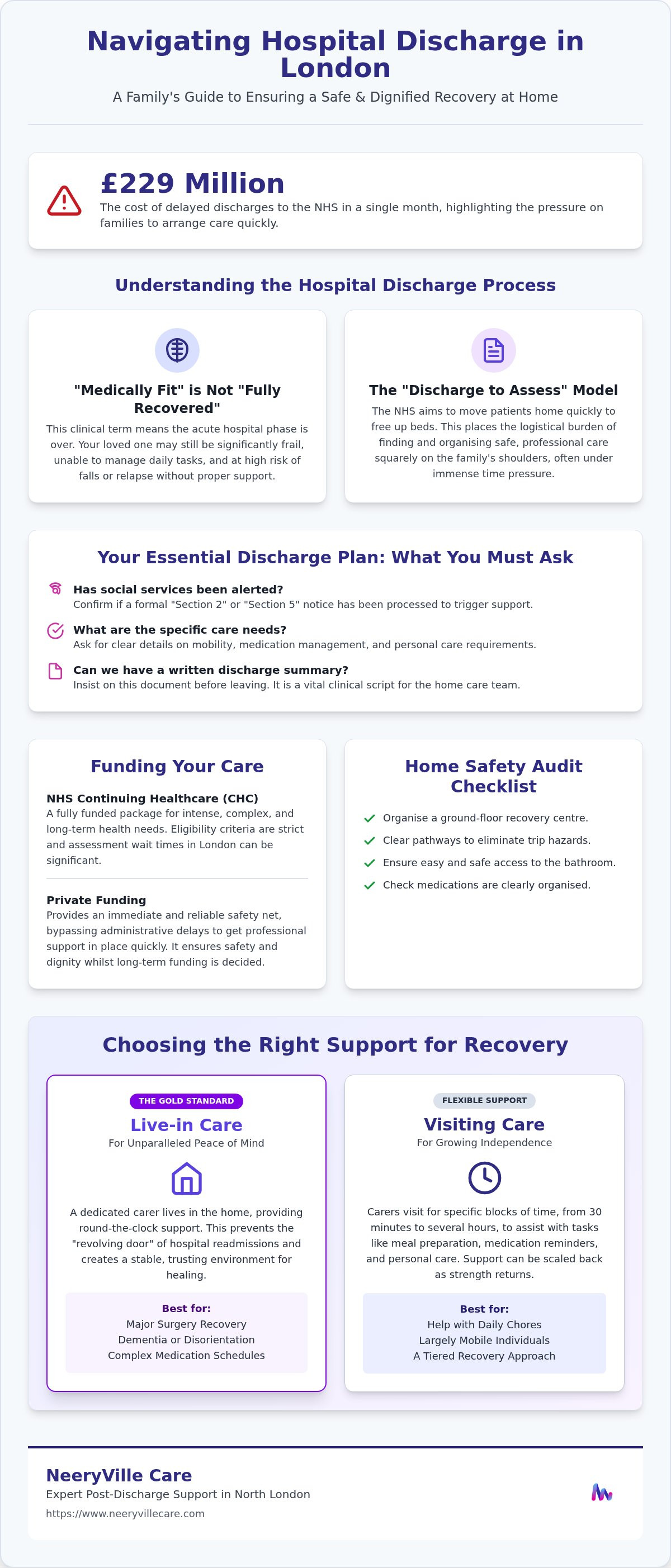
"Medically fit for discharge" sounds like a clean bill of health. In reality, it simply means the acute clinical phase is over. Your loved one no longer requires the specific interventions of a hospital bed, but they may still be significantly frail. This is where the Discharge Coordinator and the multidisciplinary team step in. Their role is to facilitate a safe exit, yet the pressure to free up beds in London hospitals can feel overwhelming for families. Under the 2026 "Discharge to Assess" (D2A) model, the default position is to move patients back to their own residence as quickly as possible. Whilst this supports the NHS, it places the logistical burden of finding professional care after hospital discharge london squarely on your shoulders.
The Discharge Plan: What You Must Ask Before Leaving
A safe exit requires a clear, written roadmap. You must confirm whether a formal "Section 2" or "Section 5" notice has been processed; these are the triggers that alert social services to a patient's needs. Without them, support can be delayed. Ask the team specifically about mobility, medication management, and personal care requirements. Always insist on a written discharge summary before leaving the ward. This document is vital for your home carer, especially if your loved one requires specialised post-operative care at home. It ensures every professional involved in the recovery is working from the same clinical script.
NHS Continuing Healthcare (CHC) vs Private Funding
The patient discharge process often involves a complex financial crossroad. NHS Continuing Healthcare (CHC) is a fully funded package for those with intense, complex health needs. It's not means-tested, but the eligibility criteria are strict. In London, wait times for CHC assessments can be significant, often leaving families in a state of limbo. Private care arrangements provide an immediate, reliable safety net. They allow you to bypass the administrative backlog and bring your loved one home with professional support already in place. This partnership ensures that whilst you wait for long-term funding decisions, your parent's immediate safety and dignity are never compromised. Choosing care after hospital discharge london privately can often be the fastest way to secure a peaceful recovery environment.
Post-Hospital Care Options: Choosing the Right Support
Choosing the right level of support is the most critical decision following a hospital stay. You need to assess your loved one's frailty with a clear eye. Can they manage the kettle safely? Do they become disoriented during the small hours? Recovering amongst familiar surroundings isn't just about comfort; it's a clinical advantage. Research shows that patients often heal faster when they aren't stressed by the noise and routine of a clinical ward. Professional care after hospital discharge london acts as a vital buffer, significantly reducing the risk of "revolving door" readmissions caused by falls or forgotten medication. It's about building a bridge back to independence.
The official government guidance emphasises that discharge should be timely and safe. To achieve this, many families opt for a tiered approach. You might start with intensive support and gradually transition to shorter, visiting sessions as strength returns. This flexibility ensures that the care evolves alongside your parent's recovery, providing exactly what's needed at each stage of their journey.
Live-in Care: The Gold Standard for Recovery
For those who require constant supervision, live-in care offers an unparalleled level of security. It provides round-the-clock peace of mind, ensuring that someone is always present to manage nighttime disorientation or complex medication schedules. This is particularly vital for those living with dementia or recovering from major surgery. Our Same Carer Everyday promise means your loved one isn't faced with a revolving door of strangers. Instead, they build a deep trust with one dedicated professional. This stability is often the key to a faster, more confident healing process.
Visiting Domiciliary Care: Flexible Support for Independence
If your parent is largely mobile but struggles with the weight of daily chores, visiting care provides the perfect balance. We focus on delivering high-quality home help in Highgate and the surrounding North London areas. These visits are structured around the most challenging parts of the day. A carer might arrive to assist with morning routines, prepare a nutritious lunch, or perform an evening safety check to ensure the home is secure for the night. It's a flexible solution for care after hospital discharge london that preserves independence whilst providing a necessary safety net. If you're unsure which path is right for your family, you can always speak with our local team for guidance.
Specialist Recovery: Stroke, Surgery, and Complex Needs
Complex recoveries don't just require a pair of helping hands; they demand clinical oversight and specialised knowledge. Whether it's managing surgical wounds or navigating the fluctuating symptoms of Parkinson's, your home environment must be transformed into a safe, functional recovery hub. CQC-regulated oversight ensures that every aspect of care after hospital discharge london meets rigorous safety standards. This isn't about simply being back in your own house; it's about being there with the clinical security of a ward but the warmth of your own living room. Professional intervention at this stage is often the difference between a steady improvement and a distressing setback.
Stroke Recovery and Rehabilitation at Home
Rebuilding life after a stroke is a marathon that requires patience and precise support. A quiet, stress-free home environment is often the best setting for speech therapy and physical rehabilitation exercises. Our post-stroke care at home focuses on these daily victories. Carers support the exercises prescribed by physiotherapists whilst monitoring for secondary complications, such as swallowing difficulties or changes in mood. Similarly, providing effective Parkinsons care requires a deep understanding of medication timing and mobility support to prevent tremors from leading to dangerous falls. Following the official NHS guidance on hospital discharge, we ensure that every specialist requirement is documented and followed from the moment you cross the threshold.
Dementia and Discharge: Preventing Hospital Delirium
For those living with cognitive impairment, hospitals can be terrifying and disorienting places. "Hospital delirium" is a common and distressing complication where confusion worsens significantly in a clinical setting. A swift return to a familiar environment is often the most effective way to restore calm. Professional dementia care at home provides the cognitive stability needed during this vulnerable window. By maintaining familiar routines and reducing post-discharge confusion, we help prevent the agitation that often leads to accidental injury or readmission. It's about preserving the person, not just managing their condition. Effective care after hospital discharge london for dementia patients prioritises emotional security alongside physical safety, ensuring the home remains a sanctuary rather than a source of confusion.
Preparing for a Safe Return: A Home Recovery Checklist
Transitioning from a clinical ward to a domestic setting requires more than just a car journey; it requires a physical transformation of the home. Before the hospital doors close, you must ensure the living space is a sanctuary, not a series of obstacles. Conducting a thorough home safety audit is the first step. Remove loose rugs, secure trailing cables, and ensure every hallway is bathed in bright, clear lighting. These simple changes are the foundation of reliable care after hospital discharge london, creating an environment where a fall is a remote possibility rather than a constant threat.
Organising a "recovery centre" on the ground floor is often the most practical solution for those with limited mobility. Bringing a bed, washing facilities, and essential supplies downstairs eliminates the immediate strain of the staircase. We recommend coordinating with Occupational Therapists early in the discharge process. They can advise on the installation of grab rails, raised toilet seats, or hoists. Simultaneously, stocking the pantry with easy to prepare, nutritious meals and ensuring a hydration strategy is in place will support the body's internal healing processes from day one.
Logistical Essentials: Medication and Supplies
The first few days at home are often the most complex. You must ensure the hospital provides at least a 7-day supply of all medications before your loved one leaves the ward. Setting up a clear Medication Administration Record (MAR) chart helps track dosages and prevents dangerous overlaps. It's also vital to check that all necessary clinical supplies, such as continence aids or sterile dressings, have been delivered to the home address. Having these logistics settled allows the focus to remain entirely on the patient's comfort and emotional stability during those critical first 48 hours.
The Emotional Transition: Supporting the Family
Recovery is as much an emotional journey as a physical one. It's common for families to experience significant caregiver burnout when trying to manage everything alone. The pressure of constant vigilance can be exhausting; professional care after hospital discharge london provides the companionship needed to fight post-hospital depression and anxiety. Knowing a professional is present allows you to step back and simply be a daughter, son, or spouse again. Whether you need 24-hour support or a temporary period of respite care, accepting help is a sign of strength that ensures the recovery remains sustainable for everyone involved.
NeeryVille Care: Expert Post-Discharge Support in North London
NeeryVille Care understands the unique pressures of the London healthcare system. We've spent years supporting families during transitions from major local institutions like the Royal Free, Whittington, and UCLH. We know that when a discharge coordinator calls, you often need a solution immediately. That's why we're structured to implement professional care after hospital discharge london within a 24-48 hour window. This responsiveness is balanced by a deeply person-centred approach. We don't just send a carer; we match a professional to your loved one's personality and specific clinical needs. This ensures the relationship is built on trust from the very first visit, fostering an environment where healing can truly flourish.
Clinical safety is our baseline. As a CQC-regulated provider, we maintain rigorous standards that ensure hospital-level vigilance is translated into the comfort of your home. Our carers are trained to manage complex medical conditions whilst prioritising the personal dignity of every client. We believe that professional care after hospital discharge london should feel like a partnership. It's about relieving the family of the clinical burden so you can focus on simply being a family again. Our character is that of a compassionate expert and a steady guide.
Serving Highgate, Hampstead, and Beyond
Our roots are firmly planted in North London. Providing dedicated home care in Camden, Highgate, and Hampstead allows us to offer more than just physical assistance. We possess an intimate knowledge of local resources, from Highgate's independent pharmacies to the specific working patterns of North London GP surgeries. This local insight ensures that medication collections and medical follow-ups are coordinated without friction. Being a local agency means we're part of your community. We offer a level of responsiveness and familiarity that national providers often struggle to replicate, ensuring your transition is as smooth as possible.
The NeeryVille Guarantee: Safety and Peace of Mind
We understand that inviting a professional into your home is a significant step. To provide absolute peace of mind, we offer a 14-day guarantee for all new care packages. This allows families to experience our service with the security of a safety net. Our commitment to safeguarding is absolute, underpinned by rigorous carer vetting and continuous training. For those who feel most vulnerable during the quiet hours, our overnight care ensures that professional help is always just a few feet away. We're here to lift the weight of caregiving, providing a steady guide through the complexities of recovery at a pace that feels right for you.
Secure a Peaceful Recovery Journey at Home
The transition from a hospital ward to the comfort of a familiar armchair is a significant milestone. It marks the end of a clinical crisis and the beginning of a domestic recovery. By understanding the discharge process and preparing your home with a clear safety checklist, you create a foundation for lasting health. Professional care after hospital discharge london provides the vital bridge needed to navigate this transition with confidence and dignity.
At NeeryVille Care, we prioritise the individual over the process. Our CQC-regulated standards and "Same Carer Everyday" promise ensure that your loved one receives consistent, empathetic support from a familiar face. With our 14-day satisfaction guarantee, you can secure specialist assistance with absolute peace of mind. You don't have to manage this complex transition alone. We're here to lift the burden of caregiving, acting as a steady guide through every step of the journey.
Take the first step toward a calm, supported return home. Your peace of mind starts with a simple conversation.
Frequently Asked Questions
What is a hospital discharge plan and who creates it?
A hospital discharge plan is a comprehensive, written roadmap that outlines the support required for a patient to leave hospital safely. It is created by a multidisciplinary team (MDT), which typically includes doctors, nurses, and a Discharge Coordinator. The plan identifies specific needs such as mobility assistance, medication schedules, and necessary equipment. You should always receive a copy of this plan to share with your home care provider before leaving the ward.
How quickly can home care be arranged in London?
In urgent situations, home care can often be implemented within 24 to 48 hours. At NeeryVille Care, we specialise in rapid transitions from local hospitals like the Royal Free or Whittington. We understand that discharge dates can change suddenly, so our local teams in Highgate and Camden are structured to respond quickly. This ensures that professional support is waiting at the front door the moment your loved one arrives home.
Who is responsible for paying for care after hospital discharge?
Responsibility for payment depends on the individual's clinical needs and financial circumstances. NHS Continuing Healthcare (CHC) may cover the full cost if there's a primary health need, whilst local authorities provide means-tested support. However, assessments for these funds can take significant time. Many families choose to pay for private care after hospital discharge london to secure an immediate safety net whilst long-term funding applications are processed by the council.
Can I get care at home if my parent has dementia?
Yes, specialist dementia care at home is often the safest option for those with cognitive impairments. Hospitals can trigger "hospital delirium," a state of acute confusion caused by unfamiliar environments. Returning to a known home setting in North London, supported by a carer trained in dementia communication, helps restore cognitive stability. This familiar routine reduces the agitation and disorientation that often lead to accidental falls or distressing hospital readmissions.
What happens if the home environment is not safe for discharge?
If a home environment is deemed unsafe, the hospital's Occupational Therapist (OT) will recommend specific adaptations before discharge can proceed. This might involve installing grab rails, moving a bed to the ground floor, or clearing trip hazards. If these changes cannot be made immediately, families often arrange short-term respite care. We work closely with OTs to ensure that the domestic setting is fully prepared to support a safe and dignified recovery.
Is live-in care better than a care home for recovery?
For many, live-in care is the safest alternative to a care home during post-discharge recovery. It provides dedicated one-on-one support that residential facilities, with higher staff-to-resident ratios, simply cannot match. Recovering in familiar surroundings reduces stress and promotes faster healing. Choosing care after hospital discharge london through a live-in arrangement ensures that your loved one has constant safety monitoring and companionship without the emotional distress of moving into an institutional setting.
What equipment will the hospital provide for home recovery?
The hospital's Occupational Therapy team usually provides essential aids to assist with daily living. This typically includes walking frames, raised toilet seats, or perching stools. For more complex needs, they may arrange for a hospital bed or a hoist to be delivered to your home. It's vital to confirm that all equipment is in place and that your home carer is fully briefed on how to use it safely before the patient arrives.
Can a home carer manage complex medication and physiotherapy?
Professional carers are trained to provide comprehensive medication support and assist with rehabilitation exercises. Whilst they do not perform clinical nursing procedures, they follow the clinical script provided by the hospital. This includes managing Medication Administration Record (MAR) charts and supporting the daily physical therapy routines prescribed by hospital physiotherapists. This consistent oversight ensures that the recovery plan is followed accurately, preventing the setbacks that often occur when medication is missed or exercises are neglected.


