

Ways to manage life and responsibilities with a live-in carer

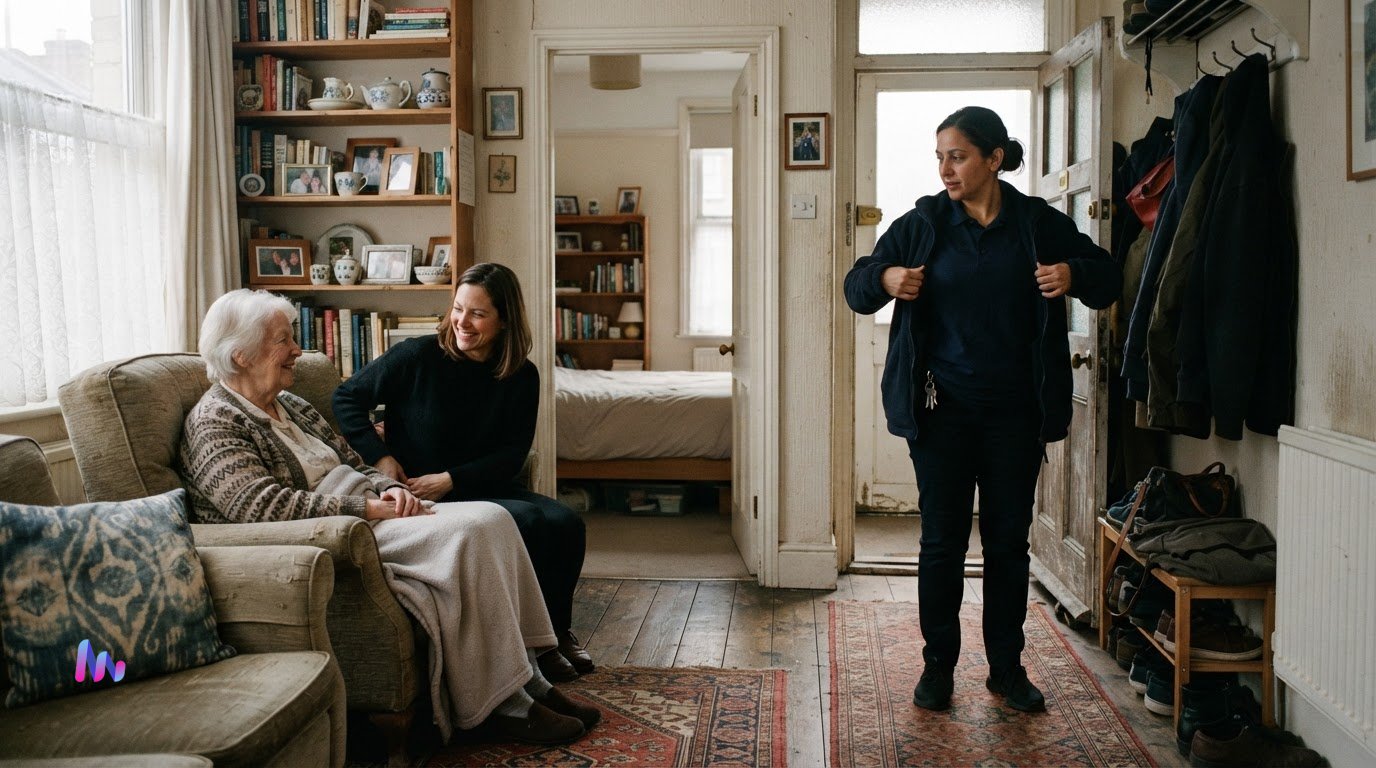
What does “live-in” mean for a carer’s working day? It doesn’t mean they’re on duty every hour, day and night. Agreeing clear breaks, overnight arrangements and time off is an important part of how to manage the relationship with a live-in carer, alongside treating one another with respect and keeping the person receiving care at the centre of decisions.
It’s understandable to wonder how support will fit around family life, private space and familiar routines. A live-in carer shares the home, so thoughtful conversations about responsibilities and boundaries can help everyone feel more comfortable. The care plan should reflect the person’s needs, while the household and carer agree practical arrangements for day-to-day life.
This article explains how to share caring responsibilities, maintain relationships and hobbies, and plan the carer’s room, breaks and time off. You’ll find calm, practical ways to raise concerns, make space for family life and build a respectful partnership at home.
Table of Contents
Seeking support from trusted people or professionals
An unpaid carer providing more than 35 hours of care per week may be eligible for Carer’s Allowance, according to the Department for Work and Pensions. A carer’s assessment can also help identify support needs. In England, an unpaid carer can request one from the local council’s adult social care department, whether or not they provide intimate care such as washing.
Make family help specific. Instead of asking a relative to “do more”, name a task: collecting prescriptions, preparing a meal or sitting with your partner during an appointment. A brief family conversation can clarify who is available, which tasks they can take on and when to review the arrangement. This makes offers of help easier to act on.
When family discussions become strained, a social worker, counsellor or psychologist can help everyone understand different perspectives. A mediator can guide a conversation towards a resolution without deciding for the family. If you feel uncomfortable raising a concern with the person receiving care, speak first with a trusted friend, another carer or a counsellor.
Moving and handling need careful planning, not guesswork. A moving-and-handling plan should state the method, equipment and number of helpers needed for each transfer. For example, if someone needs support moving from bed to chair, the plan should set out the agreed technique and equipment. A live-in carer should not lift heavy objects or equipment without suitable equipment or assistance.
One carer may support both partners, with a separate care plan reflecting each person’s needs and preferences. If both need help at the same time, an assessment should consider whether extra help, equipment or healthcare input is needed. Don’t assume one person can safely assist both partners simultaneously.
Direct employment can leave a household managing recruitment, work arrangements, cover and concerns itself. A care agency may provide matching, supervision, reviews and backup planning, but the family still needs clear communication about the care plan and household expectations.
Before hiring, ask to see the carer’s identity, references, employment history and relevant training. Speak with referees about reliability, experience and boundaries, and ask what safeguarding processes and appropriate criminal-record checks apply to the role.
If the arrangement isn’t working, write down the specific concern and discuss it promptly with the carer or agency. Agree practical changes where possible; if care must end, plan a handover and replacement support so the person’s essential needs remain covered.
Recognising practical and emotional caring responsibilities
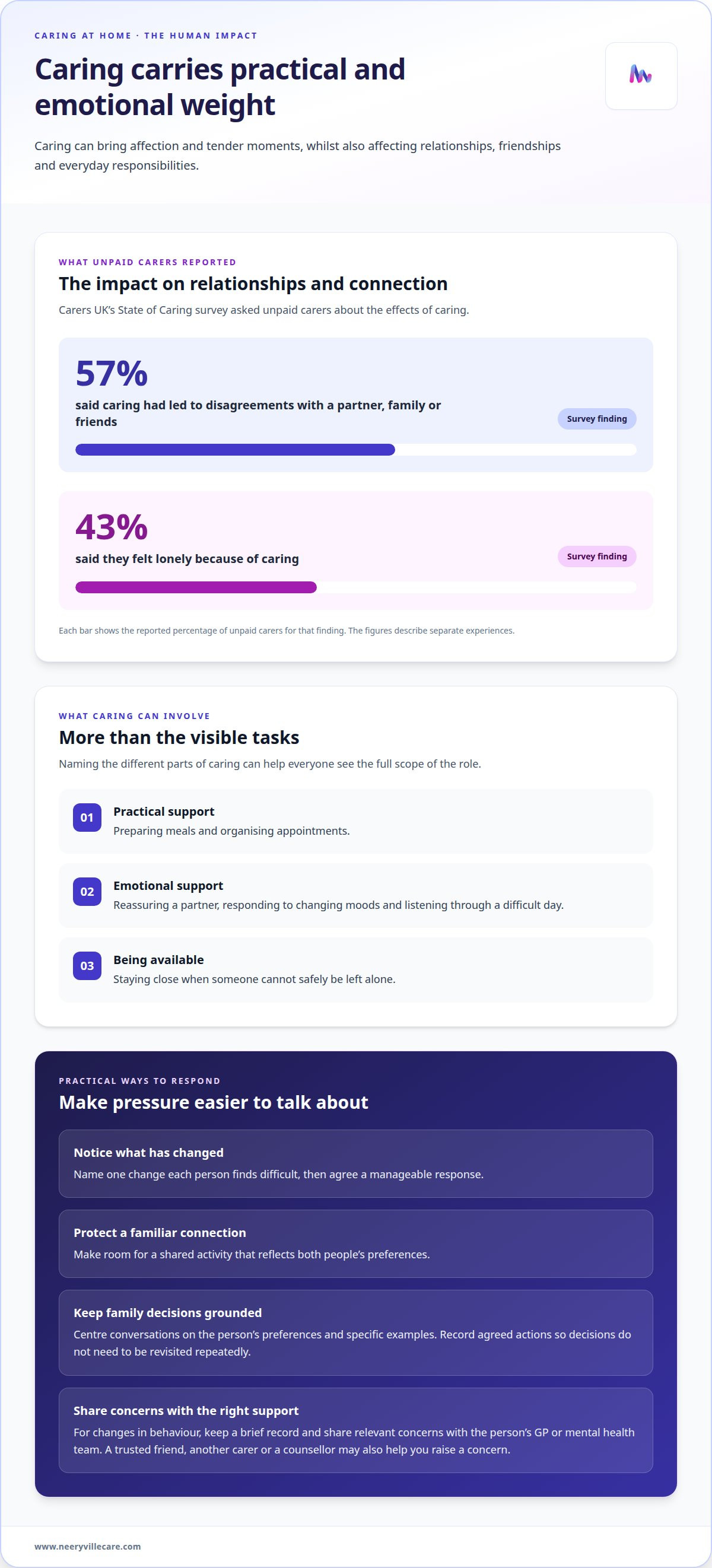
Caring includes visible tasks, such as preparing meals, as well as emotional support and staying available when someone cannot safely be left alone. A family member may also organise appointments, respond to changing moods and reassure a partner through a difficult day. Naming these responsibilities helps everyone see the full scope of the caring role.
The emotional effect can be as demanding as the practical work. Carers UK’s State of Caring survey found that 57% of unpaid carers said caring had led to disagreements with a partner, family or friends; 43% said they felt lonely because of caring. These experiences can sit alongside affection and tender moments. Acknowledging both can make it easier to discuss changes, rather than treating frustration as a lack of love.
When someone has mental health difficulties, caring may involve listening, supporting familiar routines and helping them stay connected with people they trust. It can also be hard to respond to behaviour that feels unpredictable or upsetting. Keep a brief record of changes you notice, and share relevant concerns with the person’s GP or mental health team. Carers UK advises speaking to a GP if someone’s behaviour is having an adverse effect on you.
The well partner may quietly take on more household decisions, appointments and emotional support while adjusting to a changed relationship. They may grieve the future they expected or miss the balance they once shared. Set aside a calm conversation to name one change each person finds difficult, then agree a manageable response, such as protecting time for a familiar shared activity.
Complex family relationships can make decisions feel heavier. One sibling might focus on safety, whilst another prioritises independence; old disagreements can resurface around care. Keep conversations centred on the person’s preferences and specific examples, such as whether they want help preparing breakfast. Invite each relative to explain their concern, then record agreed actions so decisions don’t have to be revisited repeatedly.
Recognising these pressures is a practical step towards preserving emotional wellbeing, not a judgement on anyone’s commitment. If you would value support discussing how care can fit your family’s circumstances, talk through your care arrangements.
Maintaining individual hobbies and friendships
Keep a personal interest in the week, even if it needs adapting. For example, arrange for a trusted relative to accompany someone to an appointment, leaving their partner time for a walking group or a call with a friend. A live-in carer can support routines set out in the care plan, while family and friends remain important for connection and identity.
Shared rituals can preserve companionship when abilities or energy change. A couple might have tea together after breakfast, listen to a favourite radio programme or look through family photographs. Choose activities that reflect both people’s preferences, rather than making every shared moment about care tasks such as dressing or medication.
Set expectations and boundaries in writing before the arrangement begins, then revisit them in regular conversations. Cover the carer’s duties, private spaces, visitors, household routines and how family members can raise concerns. Clear agreements distinguish care responsibilities from personal favours and make it easier to address misunderstandings respectfully.
Trust grows through consistency and respect for the person’s adult identity. Ask before entering private spaces, handling belongings or changing a familiar routine. The person receiving care should remain involved in decisions wherever possible. For example, offer a choice of clothes and allow time to decide, rather than treating dressing as a task to complete quickly.
Closeness can take many forms, including affection, conversation and quiet time together. If a health condition may affect sexual intimacy, speak with a member of the person’s medical team about possible effects and injury risks. Both partners’ comfort and consent matter. Holding hands during a film or offering a gentle touch on the arm can preserve physical closeness without pressure.
To communicate effectively with a live-in carer, raise one specific concern at a calm time. Explain what happened, how it affected the household and what change might help. Listen to the carer’s perspective, then agree a practical next step, such as adjusting a morning routine. This keeps disagreements focused on solutions rather than blame.
If a conversation becomes tense, pause and return to it when everyone can speak calmly. Regular, respectful check-ins help maintain trust, protect individual friendships and keep shared routines meaningful for the people living in the home.
Managing expectations and sharing responsibilities
Agree practical details before care begins, then record them in a written agreement and care plan. A contract should set out duties, working arrangements, pay, accommodation, leave, notice and how concerns or changes are handled. A useful starting point for how to manage the relationship with a live-in carer is making these expectations clear to everyone.
Define everyday tasks rather than relying on assumptions. The care plan should describe support tailored to the person, such as help with washing, preparing meals or attending appointments. Agree who handles shopping, household tasks and family updates. Deep cleaning, gardening and maintenance are outside the usual scope of personal care, so assign those jobs separately.
Coordinate the care plan through a shared record that the people involved can access. Note the person’s preferences, routines, agreed tasks and any changes in need. During regular conversations, confirm who will arrange appointments, collect prescriptions and pass updates to relevant professionals. Revisit responsibilities when circumstances change, rather than letting an outdated plan continue by default.
Medicines need especially clear shared responsibilities. Record who prompts or supports each medicine-related task, and make the agreed arrangements available to everyone providing support. For example, if a family member collects prescriptions while the carer provides a reminder, state both roles clearly. Report missed doses or concerns through the agreed communication route.
Challenging or erratic behaviour can have several causes, so focus on what happened and when. Note changes in mood, routine or surroundings, then share relevant observations with the person’s clinical team. If a conversation becomes difficult, use a calm tone, offer space where safe, and return to the issue when the person is settled. Specific examples are more useful than labels such as “difficult”.
Abuse or neglect requires a clear response, not a private family disagreement. If someone appears at risk, prioritise their immediate safety and contact the appropriate emergency service or local authority adult safeguarding team. Record observable details, such as an unexplained injury or a missed essential task, and share them with the relevant professional.
Families often ask how to manage the relationship with a live-in carer as needs change. Review responsibilities together, recording what has changed, who will act and when you’ll discuss the arrangement again. This keeps the care plan practical and helps prevent important tasks from falling between family members and the carer.
Planning the carer's bedroom, breaks and time off
A private bedroom or sleeping area gives the carer somewhere to rest and maintain personal privacy. Before the arrangement begins, agree which room is theirs, how household members will respect that space and where shared facilities are. A quiet, private place to sleep supports the carer’s wellbeing and helps distinguish work time from time off.
Set break arrangements in the daily routine, rather than leaving them until the carer feels exhausted. A live-in carer should have at least two hours of uninterrupted time off during the day. Agree when this can happen around meals, appointments and personal care, and who will be responsible for support during that period.
Time off needs practical cover. Write down who can step in, how they will learn essential routines and whom to call if the planned cover falls through. For example, a family member might be available during an agreed break, while a separate contingency plan sets out contacts and immediate support needs for an emergency.
Being present in the home does not mean being on duty continuously. A daytime carer needs reasonable uninterrupted sleep at night, unless specific overnight care is part of the arrangement. If someone regularly needs active support overnight, include those needs in the care plan and discuss how night-time cover can be organised safely.
Taking time away can be difficult when you worry about how the person will manage. Planned respite care can give a family carer space for rest, appointments or friendships, while continuity of support is arranged for the person receiving care. Carers in England can request a free carer’s assessment from their local council’s adult social care department to discuss their own needs.
Review the arrangements when the person’s needs or the household’s ability to provide cover changes. A family meeting can confirm break times, overnight expectations, emergency contacts and who is responsible for each task. If a break is repeatedly interrupted, treat that as a planning issue and agree a safer alternative, rather than expecting the carer to absorb extra work.
Talk through live-in care and personal care arrangements with NeeryVille Care.
The guide's illustrative daily schedule gives the carer 1.5 hours of agreed break time; respite care can include home-care visits, sitting services or a stay elsewhere.
NeeryVille Care: Support with showering/bathing/washing elderly parents
NeeryVille Care supports families who need help with an older parent’s washing, showering or bathing at home. This may be a useful next step when personal care is becoming difficult to manage alone, or when your parent would benefit from respectful assistance that follows their preferences and routine.
Washing can feel private and sensitive, particularly when a parent has previously managed independently. A calm approach, clear explanations and time to make choices can help protect dignity. Support can follow familiar preferences, such as choosing when to wash, selecting clothes or deciding whether a shower or wash at the basin feels more comfortable. Your parent’s views remain central to the conversation.
Families considering ongoing help can explore Live-in Care at home. A carer lives in the home and provides support according to the person’s needs and care plan. This may suit a household where regular help with personal care forms part of broader daily support. The arrangement should make room for the carer’s privacy and breaks, as well as the family’s routines.
Where dementia affects washing, a familiar sequence and patient communication can make the task feel less unsettling. NeeryVille Care provides CQC-regulated Dementia Care at home, respecting each person’s preferences. For example, a carer might offer simple choices, explain each step gently and allow the person time to respond, rather than rushing through personal care.
Visiting Care and Hourly Care may be practical when support is needed at particular times rather than throughout the day. Consider which tasks are becoming difficult, how often help is needed and how to preserve familiar routines. A conversation about your parent’s wishes can clarify what support would feel comfortable and how family involvement can fit alongside it.
Choosing support is a personal decision. It can help to talk openly about concerns, privacy, preferred routines and the kind of assistance that would make daily life easier. NeeryVille Care offers support with washing, bathing and showering elderly parents, alongside Live-in Care, Dementia Care and Domiciliary Care.
Take the next step at a pace that feels right
There’s no need for every part of a new arrangement to feel settled straight away. Begin with one honest conversation about what would help the person receiving care feel comfortable and what would help the household feel more at ease. A small adjustment, agreed together, can be a useful place to start.
Learning how to manage the relationship with a live-in carer is an ongoing process, shaped by trust, respect and changing needs. Keep the person’s dignity at the centre, and make room for their preferences as well as the carer’s professional boundaries. If circumstances change, a calm conversation can help everyone find the next practical step.
If support with care at home would help your family, speak with NeeryVille Care about your situation. There’s no pressure to have every decision worked out before you begin a conversation.
Contact NeeryVille Care
A considerate first conversation can make the way forward feel clearer, one step at a time.
Frequently Asked Questions
How many hours a day does a live-in carer work?
A live-in carer is not on duty for 24 hours straight. They live in the home, but need agreed daytime breaks and reasonable uninterrupted sleep at night, unless specific overnight care is part of the arrangement. The active hours depend on the care plan and the support needed. For example, a person needing help with morning and evening routines may have different daytime arrangements from someone needing frequent assistance.
What can you do to manage some of these changes?
Choose one change that feels most difficult and agree a practical response with the people involved. If a parent now needs help getting ready, for instance, discuss which parts they want to manage themselves and where assistance would help. Keep a brief note of what works, then use it to guide future conversations. This turns a broad worry into a manageable adjustment while preserving the person’s choices.
What are the legal working hours, rest breaks and time off for live-in carers in the UK?
Live-in carers are not expected to provide active care continuously for 24 hours. Live-in carers should have agreed daytime breaks and reasonable uninterrupted sleep at night, unless specific overnight care is part of the arrangement. Set out the working arrangements, breaks and time off clearly in the contract and care plan, including what happens if night-time support becomes necessary.
How to protect privacy and independence when sharing a home with a carer?
Agree simple household boundaries, such as knocking before entering a bedroom and identifying which spaces are private. Keep personal belongings and family routines accessible to the person receiving care, rather than changing the home unnecessarily. Offer choices about visitors, meals and daily activities. For example, a carer can support someone to prepare a familiar drink while allowing them to decide when and where to enjoy it.


