

Understanding guilt when you need help caring for your parents


What if asking for help with your parents’ care is a way of caring for them, not letting them down? Feeling guilty about needing help for your parents can arise when you’re balancing practical responsibilities with love, worry and the hope that you can manage everything yourself. It doesn’t mean you care any less.
That guilt is familiar to many adult children supporting ageing parents. It can surface when you live far away, arrange help, miss a call or appointment, or simply feel exhausted. Family expectations and social pressure can add to the weight, especially if you believe a loving son or daughter should manage everything alone.
This article explains what guilt about caring for a parent can feel like, why it happens and how family roles and wider expectations may shape it. You’ll also find gentle ways to think about your responsibilities, recognise your limits and consider support without treating the need for help as a personal failure. You can care deeply and still need someone alongside you.
Table of Contents
1. What is parental guilt and how common is it?
Guilt is the discomfort of believing you should do more, even when you’re trying to make caring decisions. For adult children, it can arise when arranging paid care, living far away, missing a call or feeling relieved when someone else helps. Guilt is a feeling, not proof that you’ve failed your parent.
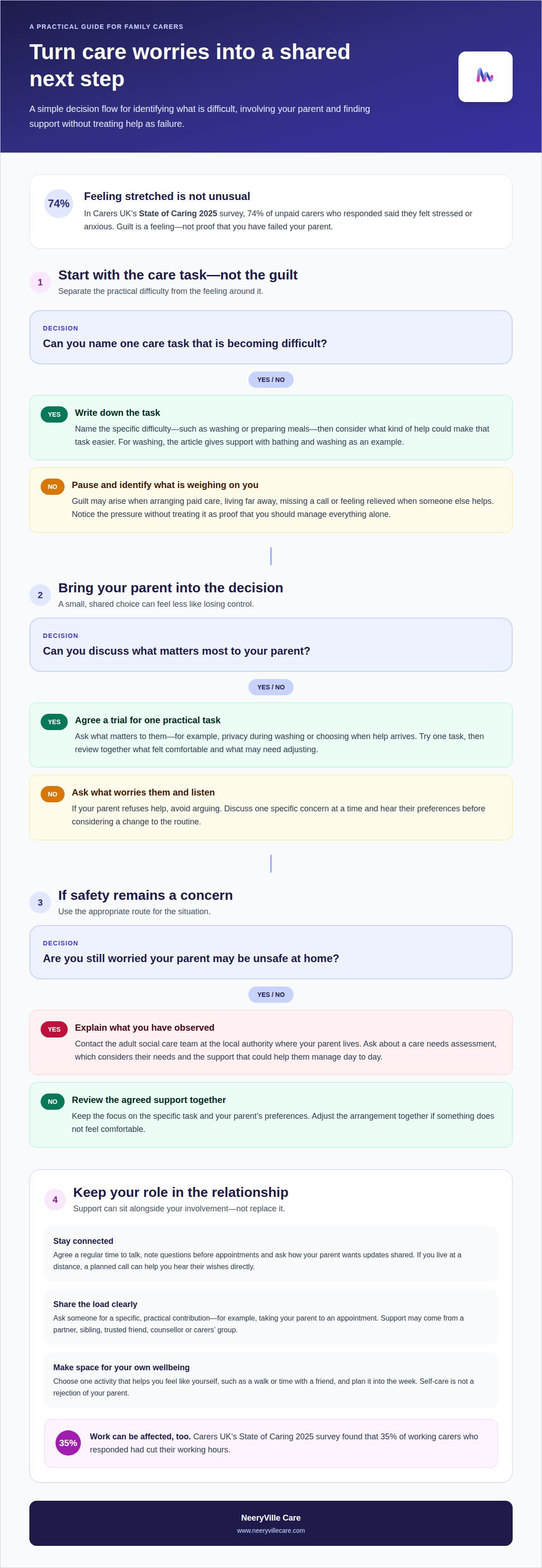
It can also reflect the pressure of balancing work, family responsibilities and your parent’s changing needs. In Carers UK’s State of Caring 2025 survey, 74% of unpaid carers who responded said they felt stressed or anxious. That finding helps explain why asking for support can feel emotionally difficult, even when the current arrangement isn’t realistic.
Common worries include whether paid help will respect your parent’s preferences, whether they’ll feel abandoned, and whether you should manage alone. Separate the practical decision from the feeling: write down the care task causing difficulty, such as washing or preparing meals, then identify what help could make it easier. If washing is the concern, support with bathing and washing can help with that personal task.
How do I find out whether my parent is eligible for a local authority care needs assessment? Contact the adult social care team at the local authority where your parent lives and ask for a care needs assessment. It considers their care needs and the support that could help them manage day to day.
How does a financial assessment determine what someone pays for social care in England? A financial assessment considers your parent’s financial circumstances to work out what contribution they may need to make towards eligible care. It’s separate from assessing what care they need, so discuss both steps with the local authority.
What should I do if my parent refuses help but may be unsafe at home? Ask what worries them, listen without arguing, and discuss one specific concern at a time. If you remain worried about their safety, contact the local authority’s adult social care team to explain what you’ve observed.
Start with one care task rather than changing the whole routine. Agree a trial period with your parent, choose a practical task, and review together what felt comfortable or needs adjusting. Before the trial, ask what matters most to them, such as privacy during washing or choosing when help arrives. A small, shared decision can feel less like losing control.
Make room for your own interests, too. Choose one activity that helps you feel like yourself, such as a walk or time with a friend, and plan it into the week. Self-care isn’t a rejection of your parent. Seeing paid care as one way to protect their comfort and dignity, and your relationship, can make the decision feel more caring and sustainable.
2. Maintaining the family relationship and advocacy role
Caring can unsettle the relationship you’ve had with a parent for years. You may become the person arranging appointments, explaining decisions and noticing changes, rather than simply their son or daughter. Guilt can follow when you feel tired, resentful or unsure whether you’re doing enough. Those feelings don’t erase affection; they may signal that the caring role is taking up too much space in your identity.
Agree a simple way to stay involved with your parent. For example, set a regular time to talk, note questions before appointments, and ask how they want updates shared. If you live at a distance, a planned call can help you hear their wishes directly. Advocacy doesn’t mean controlling every decision. It means helping your parent’s priorities remain part of family conversations.
Social media can make family life look effortless, because posts rarely show repeated calls, difficult decisions or tiring routines. Comparing your private experience with another family’s selected moments can intensify self-criticism. When a post leaves you wondering why you can’t manage as smoothly, pause and name what you actually need: practical help, a listening friend or a clearer division of tasks.
Support can come from a partner, sibling, trusted friend, counsellor or carers’ group. Be specific when asking: “Could you take Mum to her appointment?” gives someone a clear way to help. A counsellor or non-judgemental group can offer space to discuss anger, sadness or worry without turning those feelings into a verdict about your love. Sharing the mental load also helps families discuss what each person can realistically contribute.
What support is available for unpaid carers in the UK, including respite care and Carer's Allowance? A local authority carer’s assessment can consider what support you need, and respite care may provide a break from caring tasks. Carer’s Allowance may also be relevant if you meet its eligibility conditions; it’s separate from practical support and respite.
Carers UK’s State of Caring 2025 survey found that 35% of working carers who responded had cut their working hours. That finding reflects how caring responsibilities can affect work as well as family relationships. If the strain is growing, discuss a practical change with relatives, such as sharing appointment journeys or arranging a regular break.
Choose one next conversation. Tell a relative what task would make the greatest difference, or speak with a counsellor about guilt that is affecting daily life. If you’re considering practical support for your parent, discussing care arrangements can be a starting point for thinking through how family involvement and outside help might fit together.
3. Why adult children feel guilty about caring for ageing parents
Supporting an ageing parent while raising children can leave you feeling pulled between generations. You might miss a school event because your father needs help, then feel guilty about that evening’s rushed meal. Or you may spend time with your children while worrying that your mother is lonely. These competing responsibilities can make it hard to judge whether you’re doing enough, even when you’re trying to meet everyone’s needs.
Guilt can surface around food, screen time and attention. Perhaps your child eats a quick dinner while you arrange your parent’s appointment, or watches more television while you make important calls. Those moments can feel like evidence that you’re falling short. Consider the reason behind them: one imperfect meal or a changed routine doesn’t define your child’s wellbeing or your care for them.
Feeling responsible for everyone’s safety can add another layer. You may worry that your parent could fall while you’re helping a child with homework, or that your child feels overlooked when family attention centres on a grandparent. Make a small, clear plan: identify the immediate concern, decide who can respond, and explain the arrangement to those affected. A realistic plan can ease the pressure to be in two places at once.
Children’s feelings deserve attention, but you don’t have to fix every disappointment. If your child says, “You’re always on the phone”, pause and acknowledge the feeling: “You miss having my attention, and I hear you.” Then show interest in their world and make time for a small moment together, such as talking before bed. Listening without arguing helps them feel seen, even when you can’t change the wider situation immediately.
In the UK, adult children have no legal duty to provide a parent’s care in person or pay for it. That distinction can matter when guilt makes support feel like an obligation you must carry alone. You can still choose to help in ways that fit your circumstances, such as keeping in touch, attending a discussion or sharing information about your parent’s needs.
Notice what guilt is asking of you. Is it urging you to cancel time with your children, take on another task or ignore your own mental health? Naming the pressure can help you choose a more balanced response. You’re not alone in finding these responsibilities difficult, and talking through practical choices with someone you trust can help. Care for your parent and care for your children can both matter, even when your time and energy are limited.
4. Social pressure and the self-sufficient parent ideal
The idea that a devoted adult child should manage everything alone can make outside help feel like a personal failure. Yet caring for an ageing parent may involve emotional support, household tasks and difficult decisions. One person cannot always meet every need while protecting their own health. Recognising that is practical, not selfish.
Care was historically shared more often with extended family, neighbours and communities. Today, relatives may live far apart or have work and family commitments, leaving one person to carry most responsibilities. If you’re the sibling arranging appointments and checking meals, for example, compare the actual workload with your expectations. Ask which tasks could be shared, changed or supported.
Pressure can also come from beliefs about what a “good” son or daughter should do. Perhaps you think accepting help means you’re not present enough, or that you should already know how to manage every aspect of care. Acknowledge that thought as an expectation, then ask where it came from and whether it is realistic for your family’s circumstances.
Self-compassion starts with naming the feeling without turning it into a judgement. Try saying, “I feel guilty because I want Dad to be safe, and I’m tired.” That sentence recognises both care and limits. In difficult moments, speak to yourself as you would to a friend facing the same pressures, rather than criticising yourself for needing support.
Set a small, achievable standard for the week. You might decide to call your parent after work, arrange an appointment and ask a relative to handle a household task. These clear commitments give you something concrete to review. If plans change, adjust them to fit your parent’s needs and your own capacity, instead of treating every change as proof you’ve let someone down.
Therapy can offer a safe space to explore guilt and the expectations behind it. A therapist may help you challenge harsh self-criticism, practise self-compassion and develop healthier boundaries. For instance, you could work through the belief that saying “I can’t do that today” means you don’t care. The aim is to find coping strategies that fit your real family situation.
Make compassion practical by choosing one response when guilt appears: pause, name the feeling and identify the need beneath it. You may need rest, a clearer family agreement or help understanding a care decision. That small sequence can shift attention from outside pressure towards what supports your parent and sustains your relationship.
5. Is it normal to feel guilty even when I’m doing everything I can?
Yes. Guilt can still appear when you’ve made thoughtful choices and are doing what you can. Mental health specialist Raoul Lindsay describes guilt as a human trait everyone experiences. Caring for a parent can involve difficult decisions, changing needs and competing responsibilities. The feeling alone doesn’t show whether your choices are right or wrong.
Take a broader view before deciding you’ve failed. Write down what happened, what you were trying to do and what support you provided. Perhaps you couldn’t visit because work ran late, but you arranged a meal and spoke by phone. Looking at the whole day can reveal caring actions that guilt has pushed out of view.
Guilt may focus your attention on one missed task, such as forgetting to return a call, while overlooking the appointments you arranged or the time you spent listening. Treat the feeling as a signal to examine, not a verdict to obey. Ask yourself what specifically feels wrong, whether there’s a practical step to take and what was outside your control.
Taking time for yourself can feel especially difficult when your parent needs ongoing help. You might feel guilty about meeting a friend, resting after work or keeping a hobby. Remember that rest and interests are part of your life, not evidence that you care less. Choose one activity you can protect this week, then notice how it affects your energy and mood.
Boundaries make care more realistic. Decide which tasks you can manage, which need to be shared and what you can’t safely take on. For example, if you’re exhausted after work, don’t promise to handle every evening call. Agree with relatives on who will handle particular tasks, or arrange another source of help for what you can’t cover.
Carers UK’s State of Caring 2025 survey found that 42% of unpaid carers who responded said their physical health had got worse. That finding offers a reason to take your own wellbeing seriously, not a measure of personal failure. If you’re becoming exhausted, talk with someone you trust about a specific break or task they could take over.
Try a short review at the end of each day: name one thing you did, one thing that was difficult and one thing to adjust. If guilt remains constant or affects daily life, talking with a counsellor can help you understand its triggers and develop coping strategies. A wider perspective won’t remove every hard moment, but it can help you see the care you’re already giving.
NeeryVille Care: Home Help
NeeryVille Care provides CQC-regulated Home Help for families who need practical support at home. If helping your parent with washing or bathing has become difficult to manage alongside work and family life, support with these personal tasks can ease the pressure while respecting their dignity.
The right level of help depends on your parent’s needs. NeeryVille Care’s CQC-regulated Dementia Care can support families whose parent is living with dementia, while CQC-regulated Live-In Care provides more continuous support at home. Accepting support doesn’t take away your role: you can remain involved in decisions and focus on time together, rather than carrying every task alone.
If you’d like to discuss your parent’s care, please contact NeeryVille Care.
Choose a next step that feels manageable
Needing help doesn’t diminish the care you bring to your relationship with your parent. If you’re feeling guilty about needing help for your parents, treat that emotion as a reason to pause and consider what would make daily life more manageable. You don’t have to settle every future decision now. A conversation about one immediate need can be enough to begin.
NeeryVille Care provides CQC-regulated Visiting Care, Live-In Care and Dementia Care for families considering support at home. A practical next step is to think about which tasks are becoming difficult and what your parent would want help with. Their preferences and dignity can remain central as you explore an arrangement that suits their needs and your family’s circumstances.
Accepting support can make room for more than tasks and decisions. It can help you protect the moments that matter in your relationship. You’re allowed to care deeply and receive help, too.
Frequently Asked Questions
What is parent guilt and how common is it?
Parent guilt is distress about believing you should have done more for your parent. Feeling guilty about needing help for your parents can happen even when arranging support addresses a genuine care need. To understand what the feeling is pointing to, write down the specific concern, such as missed medication or difficulty managing meals. Then separate that practical issue from the judgement that asking for help makes you a bad son or daughter.
Is it normal to feel guilty even when I’m doing everything I can?
Yes, guilt can persist even when you’re making careful decisions and doing what’s possible. Try distinguishing a real, solvable concern from an impossible standard. For example, if you worry about a missed call, decide when you’ll next speak, rather than replaying it all evening. If guilt is disrupting sleep, work or relationships, tell someone you trust or speak with a GP about how it’s affecting you.
What if my guilt is being made worse by someone else making me feel bad?
Other people’s criticism can intensify guilt, but it doesn’t automatically mean their judgement is fair. Ask what specific action they’re concerned about, then compare it with your parent’s expressed needs and the facts you’ve observed. You could say, “I’m willing to discuss Mum’s care, but please tell me the practical concern rather than calling me selfish.” If conversations become hostile, pause and involve a trusted relative.
Why do adult children feel guilty about needing help caring for their parents?
Adult children may feel they should repay years of parental care by managing everything themselves. A parent’s changing needs can also make a child feel responsible for restoring the family’s earlier roles. Notice which expectation is driving the guilt: a promise you made, a relative’s opinion or your own idea of being a good child. Naming the pressure can help you decide what support is practical, rather than reacting from obligation alone.
How can I talk to my parents about getting care or support?
Choose a calm moment and begin with one change you’ve noticed, rather than presenting a complete care plan. For example, say, “I’ve noticed shopping is tiring you. What would make it easier?” Listen to the answer, then discuss one option together. If your parent feels anxious, offer choices about the task, timing or level of help. Their preferences can guide the conversation, even if you need to revisit it later.
What care options are available for older people in the UK?
Options include help at home, visiting or domiciliary care, live-in care, respite care and companionship. Support may cover personal care, meal preparation, medication support or household tasks, depending on the person’s needs and arrangement. Families can also ask their local authority about a care needs assessment. Start by identifying which everyday activities need support, then explore options that fit the person’s wishes.
How can I set boundaries and manage stress while caring for an ageing parent?
Set boundaries by being clear about what you can reliably do and what needs another arrangement. For instance, you might manage appointment bookings but be unable to provide transport during working hours. Put agreed responsibilities in a shared calendar, then review them with relatives if circumstances change. Build in a break before exhaustion takes over, and seek support if stress begins affecting your health or everyday functioning.
Where can I get local advice and emotional support about caring for a parent?
Contact the adult social care team at your parent’s local council to discuss their care needs and ask about a carer’s assessment for yourself. A carer’s assessment can consider what support you need, and it is free. For emotional support, talk with your GP, a counsellor, a trusted friend or a carers’ support group. Choose the first contact that feels manageable, and explain the specific issue you’re facing.


