

Private Dementia Home Care UK: Family Guide (2026)

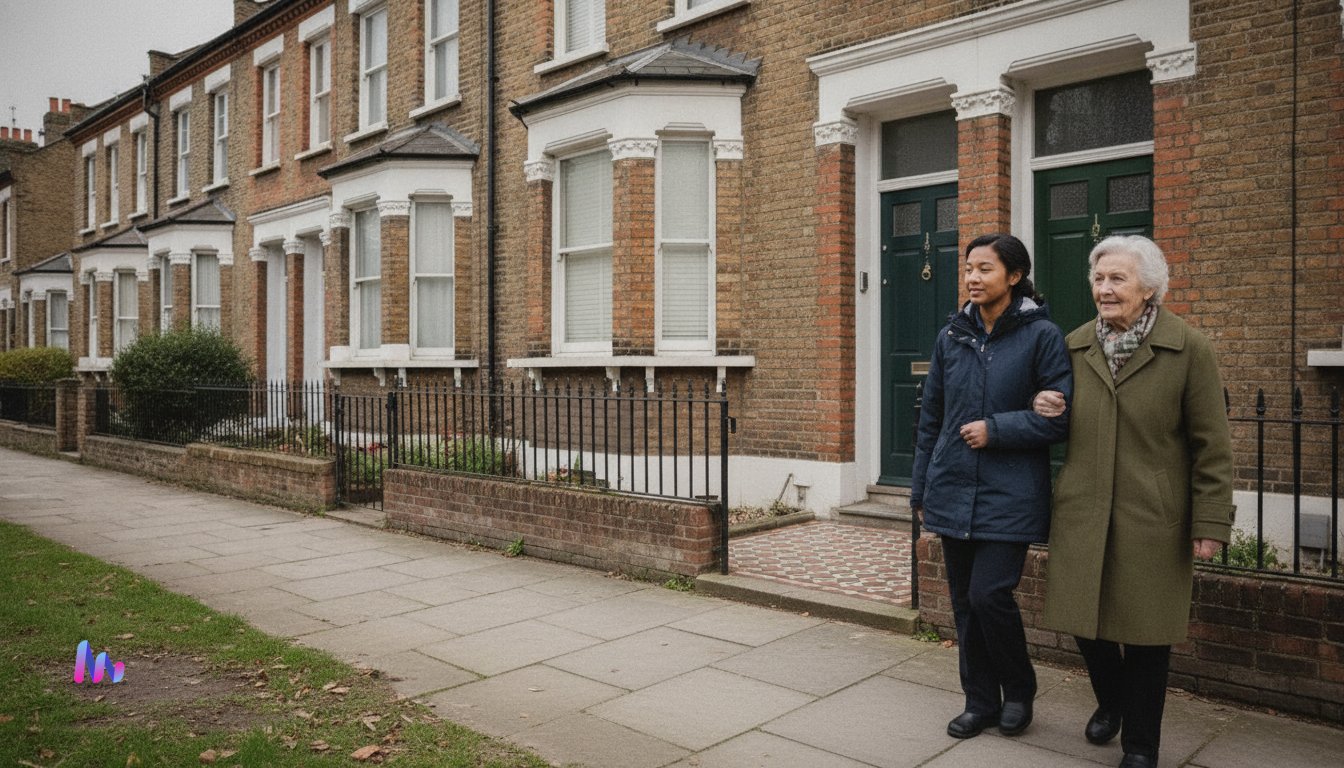
Last night, you found yourself standing in the kitchen at 2 am, gently guiding your mother back to bed for the third time this week. That familiar ache of exhaustion is something many families experience as they struggle to balance love with the demanding reality of cognitive decline. You want her to remain in the home she loves, but the fear of a fall or a missed medication is becoming constant. It's a difficult crossroads where your desire for her independence meets the urgent need for professional safety.
Discovering live-in dementia care UK options can be the turning point that allows you to be a daughter or son again, rather than just a weary carer. This guide explains how specialist private support provides the safety and dignity your loved one deserves in their own domestic setting. We will explore the 2026 CQC assessment framework, the practicalities of 24-hour monitoring, and how to navigate the emotional transition with confidence. You'll learn how to secure expert assistance that prioritises personal well-being whilst maintaining the familiar comforts of home. We are here to guide you through every step of this journey with clarity and compassion.
Table of Contents
Understanding the Transition to Private Home Care for Dementia
Accepting that a loved one needs professional support is rarely a single, sudden decision. It is often a quiet realisation that grows through sleepless nights and missed medications. Private home care for dementia offers a bespoke, 1-to-1 alternative to traditional residential settings. It prioritises the individual's history, preferences, and domestic comfort. This model of care isn't about replacing the family; it's about providing a professional foundation of safety that allows you to step back from the role of an exhausted carer. Bespoke support. Immediate safety. Constant companionship.
Many families struggle with a deep sense of guilt when they first consider live-in dementia care UK services. It's vital to reframe this choice. By introducing professional reinforcement, you aren't stepping away; you're stepping back into your rightful place as a son or daughter. Early intervention is a powerful tool. It helps to maintain cognitive function by preserving familiar routines and reducing the environmental stress that often accelerates decline. Professional care ensures that the home remains a sanctuary rather than a place of constant worry.
Signs it is Time to Consider Professional Support
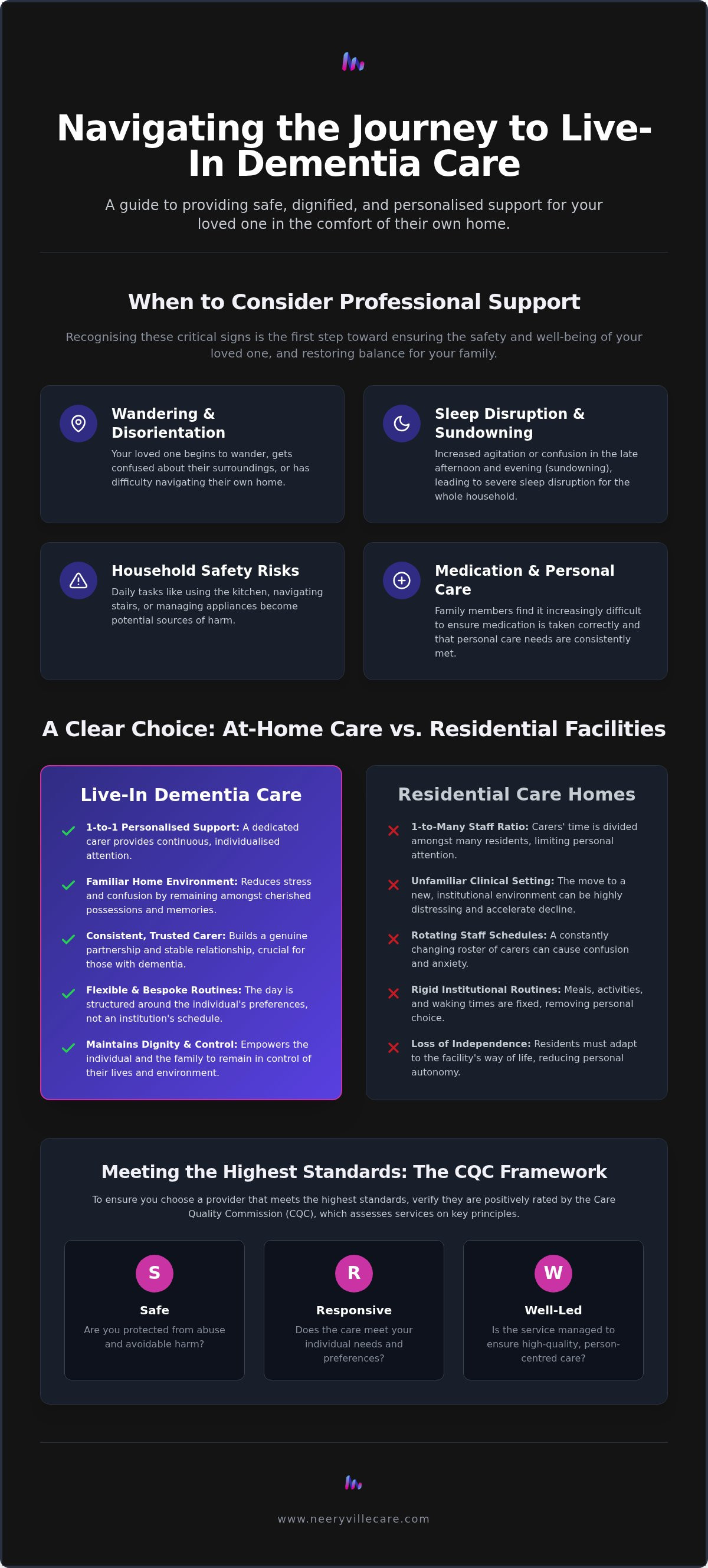
Recognising the threshold for professional help is crucial for both safety and emotional well-being. Changes in behaviour often signal that companionship alone is no longer enough. If your loved one has begun wandering or experiencing significant confusion about their surroundings, the risk of physical harm increases. Sundowning, a state of increased agitation in the late afternoon and evening, often leads to severe sleep disruption for the whole household. This is frequently the point where families seek overnight care to ensure safety whilst they rest. When daily tasks like using the kitchen or navigating the stairs become safety risks, professional monitoring becomes a necessity rather than an option.
The Benefits of Private vs Local Authority Care
The most significant advantage of the private route is the consistency of the relationship. For someone living with dementia, seeing a familiar face every day is not a luxury; it's a fundamental requirement for stability. Local authority packages often involve multiple carers on a rotating schedule, which can lead to distress and confusion. In contrast, private live-in dementia care UK allows you to select a carer based on personality and shared interests. This creates a genuine partnership built on trust.
Private care also provides unmatched flexibility. You can choose the level of support that fits your current situation, from short-term visiting care to comprehensive 24/7 support. Whilst UK care home regulations ensure basic standards across the sector, private home care often exceeds these by focusing on the specific emotional nuances of the individual. You maintain control over the environment, the schedule, and the type of person who enters your home, ensuring that dignity remains at the heart of every interaction.
The Core Pillars of Specialist Dementia Care at Home
Specialist care is defined by more than just a checklist of tasks. It's a deeply personal commitment to honouring a person's life history. Whilst many services focus on the "what"-meal preparation or medication support-true dementia support focuses on the "who." It involves understanding that a favourite song or a specific morning routine isn't just a preference; it's a tether to their identity. Integrating medication management into these natural daily rhythms ensures health stability without making the individual feel like a patient in their own lounge. This approach maintains dignity whilst ensuring clinical safety.
Isolation is a significant driver of agitation in those with cognitive decline. This is why companionship care is so vital. It provides the emotional stimulation needed to keep the mind engaged. When a carer knows that repetitive questioning often stems from a need for reassurance, they can respond with calm, de-escalation techniques rather than frustration. This level of live-in dementia care UK families trust transforms the domestic space into a supportive environment where emotional well-being is the priority. Specialist training allows carers to anticipate needs before they become stressors.
Creating a Dementia-Friendly Home Environment
Staying at home is therapeutically superior because of "place memory." Even when short-term memory fades, the subconscious mind often retains the layout of a long-term residence. Simple modifications can significantly reduce confusion. Carers help organise the home by improving lighting and removing trip hazards, which directly reduces the risk of falls. This familiar setting provides a sense of security that is difficult to replicate in a clinical facility. If you are currently comparing options, the NHS guidance on dementia care homes provides a useful benchmark for the standards you should expect, regardless of the setting.
Specialist Support for Complex Behaviours
Challenging behaviour is almost always an attempt to communicate an unmet need. It might be pain, hunger, or simply a feeling of disorientation. Specialist carers are trained to look beneath the surface of agitation or repetitive questioning. They use rhythmic, calming patterns of speech and distraction techniques to ease distress. For those with advanced needs, live-in care offers the constant, 24-hour presence required to manage these moments as they happen. This immediate responsiveness prevents small anxieties from escalating into a crisis. Professional live-in dementia care UK ensures that safety is never compromised by a lack of supervision. If you're feeling overwhelmed by these challenges, reaching out to discuss your specific situation with a specialist can provide the clarity you need.
Private Home Care vs Residential Care: Why Choice Matters
Choosing between a residential facility and live-in dementia care UK often feels like a choice between safety and happiness. In a residential home, the care ratio is typically 1-to-many, meaning attention is divided amongst several residents. At home, the ratio is strictly 1-to-1. This ensures that every nuance of a person's behaviour is noticed and managed immediately. There's also the profound emotional value of staying amongst one's own garden, pets, and cherished possessions. Bespoke attention. Constant presence. Domestic peace.
For partners, live-in care for couples is frequently a more cost-effective solution than funding two separate beds in a residential facility. It keeps the family unit together in a familiar environment. Remaining at home also preserves vital community links. Carers can facilitate visits to local centres in Highgate or Hampstead, ensuring that life doesn't shrink to the confines of a single room. Life continues as it always has, just with the added security of professional support.
The Myth of the Clinical Necessity of Care Homes
Many families believe that advanced dementia requires a clinical ward. This is a common misconception. CQC-regulated providers use sophisticated safety monitoring and technology to manage complex needs safely within a domestic setting. According to UK Government guidance on dementia, personalised care is essential for improving health outcomes and maintaining dignity. Specialist home care matches the clinical safety of a ward without the clinical feel. It's about providing high-level medical support whilst keeping the atmosphere warm and personal.
Autonomy and Daily Routine
Institutional life often follows a rigid schedule. Breakfast at 8 am, lunch at noon. In a domestic setting, if your loved one wants breakfast at 10 am, they have it. This autonomy is vital for emotional well-being. Carers prepare lifelong favourite meals, catering to nutritional requirements whilst respecting individual tastes. Whether it's a specific way of making tea or a preferred afternoon walk, these small choices matter. Live-in dementia care UK allows for the continuation of cherished hobbies, supported by a dedicated carer who values the person's unique rhythm and history. Independence is preserved through partnership.
Navigating the UK Private Care Landscape: CQC and Standards
Regulatory oversight is the cornerstone of trust when inviting someone into your home. The Care Quality Commission (CQC) serves as the independent regulator of health and adult social care in England, ensuring that every provider of live-in dementia care UK families choose meets rigorous safety standards. As of 2026, the CQC operates under a Single Assessment Framework. This system evaluates services based on five vital questions: are they safe, effective, caring, responsive, and well-led? Understanding these markers helps you look beyond marketing promises to find genuine quality.
Finding the right partner involves a methodical approach. First, you should request a professional care assessment to define specific dementia needs, covering both clinical requirements and personal preferences. Next, review recent CQC inspection reports, paying close attention to the "Safe" and "Caring" ratings. When interviewing agencies, ask how their specialist training aligns with NICE guidelines to ensure their de-escalation and communication techniques are evidence-based. Finally, always look for a provider that offers trial periods and flexible contracts. This allows you to ensure the personal chemistry is right before making a long-term commitment.
What to Look for in a CQC Inspection Report
The "Well-led" category is a critical indicator of agency stability. A well-led agency provides better support for its carers, which directly translates to a higher quality of care for your loved one. It's also important to distinguish between managed care agencies and introductory platforms. A managed agency employs its carers directly, providing professional oversight, ongoing training, and a clear chain of accountability. This structure offers significantly more protection than platforms that simply match you with an independent contractor. Managed care ensures that family communication channels remain open and that regular reviews are conducted to adapt to changing needs.
Funding and Fees for Private Dementia Care
Understanding the financial landscape is essential for long-term planning. Whilst many families are self-funding, it's vital to explore all available support. For the 2026/27 financial year, Attendance Allowance provides £76.70 at the lower rate or £114.60 at the higher rate for those over State Pension age who require personal assistance. This non-means-tested benefit can be a helpful contribution towards elderly care at home. Always look for transparency in pricing. A reputable agency will provide a clear breakdown of fees from the outset, helping you avoid hidden costs and ensuring your focus remains on the well-being of your loved one. Professional support should offer simplicity, not financial confusion.
Bespoke Dementia Support in North London with NeeryVille Care
Our presence in North London is more than just a service area; it's a commitment to the communities we call home. From the quiet avenues of Highgate N6 to the vibrant heart of Camden, we understand the specific domestic rhythms of London life. Our dementia care at home programme is built on this local knowledge. We maintain a dedicated network of carers who are intimately familiar with the geography and resources of the N6 and N8 areas. This ensures that your loved one remains connected to their neighbourhood whilst receiving specialist monitoring. Specialist live-in dementia care UK services provide the clinical authority needed for absolute peace of mind. Local expertise. Immediate presence. Calm reliability.
The NeeryVille promise is to act as a compassionate expert and a steady guide for every family we support. We recognise that dementia doesn't exist in a vacuum, and our approach is designed to adapt as needs evolve. Finding reliable live-in dementia care UK options can feel like a daunting task, but we simplify the process by acting as your primary burden-lifter. We prioritise the individual over the process, ensuring that the relationship between the carer and your loved one is as stable as the practical assistance provided.
Expertise in Co-occurring Conditions
Dementia often presents alongside other health challenges that require a coordinated clinical response. We seamlessly integrate post-stroke care or Parkinson’s support into our primary dementia plans. This holistic approach involves close coordination with local North London GPs and health professionals. We ensure that medication management and therapy exercises are followed precisely, especially during critical periods like hospital discharges or post-operative recovery. By managing these complex clinical needs, we protect the stability of the domestic environment.
Getting Started with NeeryVille Care
We understand that care needs can escalate quickly. Our response process is designed for efficiency, offering a 24-hour turnaround for urgent enquiries. It begins with an initial home consultation, where we meet your family in the setting where you feel most comfortable. This allows us to assess the domestic environment and understand the unique nuances of your situation. We guide you at a pace that feels right, ensuring every question is answered with transparency. We are here to lift the burden of caregiving so you can focus on being a family again.
Securing a Brighter Future for Your Loved One
Choosing the right path for a family member living with cognitive decline is a profound act of love. You've explored how live-in dementia care UK options provide a safer, more personal alternative to residential facilities by prioritising the familiar comforts of home. By understanding the 2026 CQC standards and the value of 1-to-1 support, you can now move forward with clarity. Professional care isn't just about safety; it's about reclaiming your role as a family member whilst we handle the clinical complexities.
As a CQC-regulated provider with specialist dementia training, NeeryVille Care stands as a steady guide for families across North London. Our local experts in Highgate and Hampstead are ready to partner with you, offering the responsive, person-centred assistance your loved one deserves. You don't have to carry this burden alone. We are here to help you navigate this transition at a pace that feels right for you.
We are dedicated to ensuring your loved one lives with dignity, security, and warmth. Better days are ahead for your family.
Frequently Asked Questions
Is private home care for dementia more expensive than a care home in the UK?
Costs depend on the level of need, but for couples, live-in dementia care UK services are often more cost-effective than paying for two residential beds. Whilst a single residential bed averages £1,375 per week in 2026, home care allows your loved one to stay in their familiar domestic setting. This prevents the emotional distress of relocation. We provide transparent weekly fees that cover 24/7 support, safety monitoring, and comprehensive household management without hidden institutional costs.
Can a home carer manage aggressive behaviour or agitation?
Specialist carers are trained in de-escalation techniques specifically designed for dementia-related agitation. They understand that challenging behaviour is usually an attempt to communicate an unmet need, such as pain, hunger, or disorientation. By using rhythmic, calming speech and distraction methods, they can often prevent situations from escalating. Our carers focus on person-centred approaches that respect the individual's dignity whilst ensuring the safety of everyone in the home environment. Professional support offers a steady, calming presence.
What is the difference between dementia care and standard elderly care?
Standard elderly care focuses on physical assistance with daily tasks, whereas dementia care requires specialist cognitive support. It involves managing symptoms like memory loss, sundowning, and confusion through bespoke daily routines. Carers use specific communication strategies to reduce anxiety and maintain the person’s sense of identity. At NeeryVille Care, we move beyond basic tasks to provide 1-to-1 companionship that specifically addresses the neurological challenges of cognitive decline in a familiar domestic setting.
How quickly can private dementia care be set up in North London?
We offer a responsive 24-hour enquiry process for families in Highgate N6, Hampstead, and across North London. After your initial enquiry, we arrange a home consultation to assess your specific needs and environment. Because we are local experts, we can often implement a care plan quickly, providing immediate relief for exhausted family members. Our goal is to lift the burden of caregiving as efficiently as possible, especially during times of crisis or hospital discharge.
Does the CQC regulate all private home care agencies in England?
Yes, any agency providing personal care in England must be registered and regulated by the Care Quality Commission. Operating without this registration is illegal. NeeryVille Care is a CQC-regulated provider, which means we are regularly inspected against the Single Assessment Framework. These inspections ensure our services are safe, effective, caring, responsive, and well-led. Choosing a regulated managed agency offers significantly more protection and professional oversight than using an unregulated introductory platform.
Will my loved one have the same carer every day?
Consistency is essential for stability in dementia care, so we prioritise matching your loved one with a regular carer. For live-in dementia care UK, a dedicated carer resides in the home, usually working on a rota system with a second familiar carer for breaks. This ensures your loved one always sees a face they recognise and trust. This continuity reduces the confusion and distress often caused by the rotating staff schedules found in many residential facilities.
Can I get help with dementia care costs from the NHS or Local Authority?
Financial support is available through various channels depending on your circumstances. You may be eligible for Attendance Allowance, which is a non-means-tested benefit for those over State Pension age. For individuals with complex primary health needs, NHS Continuing Healthcare might cover the full cost of care. Additionally, the local authority may provide funding if your capital is below the £23,250 threshold. We recommend requesting a formal needs assessment to determine your specific eligibility for these funds.
What happens if my loved one’s dementia symptoms worsen over time?
Our care plans are designed to be flexible and evolve alongside your loved one's condition. If symptoms worsen, we conduct regular reviews to adjust the level of support, including introducing specialist monitoring or overnight assistance. We coordinate closely with local North London health professionals and GPs to ensure a holistic approach to changing medical needs. Our commitment is to provide a steady guide through every stage of the journey, ensuring safety and dignity remain constant.


