

Preventing falls for the elderly living alone at home

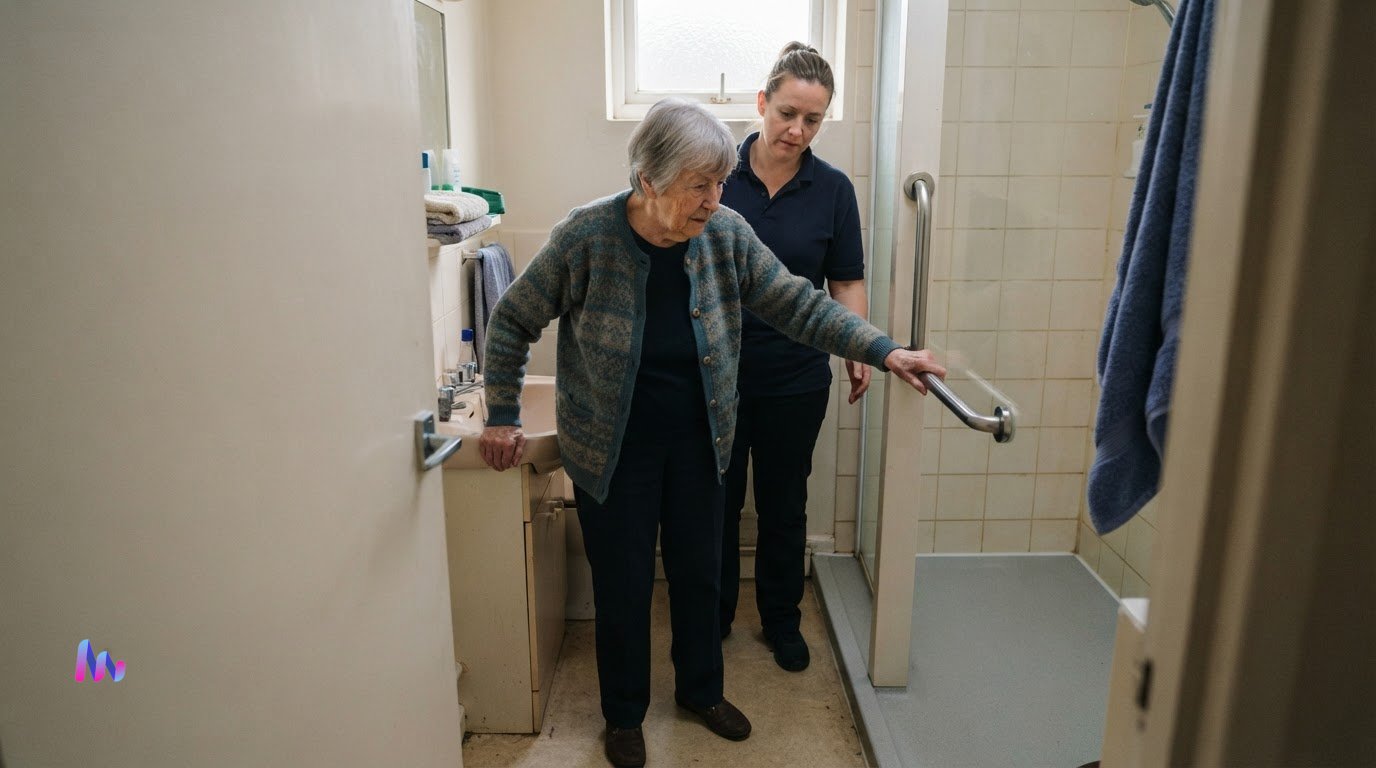
What can make a home safer without taking away the comfort of familiar routines? Preventing falls for elderly people living alone in the UK starts with practical changes: clear walkways, secure loose rugs, improve lighting and make bathrooms safer. Small adjustments can make everyday movement feel more manageable.
It’s understandable to worry when someone you love lives alone. A fall can affect confidence as well as physical health, but practical changes and the right support can help them stay safer while protecting their independence and dignity.
This guide explains how to spot common hazards, arrange a falls risk assessment and find support from health and care professionals. You’ll also learn how strength and balance activities, safer daily habits and personalised help at home can reduce risk, one step at a time.
Table of Contents
1. What are the most common home safety risks for elderly people living alone?
Falls can result from health changes, hazards at home or a combination of both. Reduced vision, balance or mobility can make everyday tasks harder. Medication side effects may cause dizziness or drowsiness, so a medicines review can identify concerns. Don’t stop prescribed medicine without medical advice. Falls can have serious consequences, including injury and reduced independence.
Start with the routes used every day. Move rugs and mats away from stairs, remove trailing wires and clear walkways. Repair wrinkled carpets or uneven flooring. Improve lighting in hallways, staircases and bathrooms, and consider a motion-sensor night light on the route to the toilet. Keep kitchen essentials within easy reach to reduce bending and stretching. Avoid climbing on chairs or stools.
Personal alarms let someone call for help by pressing a button; some connect to a monitoring centre operating 24 hours a day. Telecare options can include alarms and fall detectors. Costs vary according to the equipment and whether monitoring is included, so there’s no single price for every setup.
For home changes, local councils may provide information about adaptations and may offer a free care needs assessment. Ask the council what support is available locally and whether the person’s needs could qualify for help with adaptations. Funding depends on the relevant scheme and assessment; the available options aren’t the same everywhere.
A home safety check can look at lighting, flooring, stairs and bathroom access. An occupational therapist can assess these risks and recommend suitable modifications or equipment. Ask the local council whether it can advise about adaptations or a handyperson scheme. In-home care can also support safer routines: elderly care at home may include help with washing, dressing or moving around, alongside medication support. This can make daily tasks more manageable while helping the person keep familiar routines.
If living at home no longer feels safe, discuss the options with the person and their health or social care team. Residential care can provide a supported setting, but it’s a significant change and won’t suit everyone. Consider mobility, personal preferences, health needs and the help available at home before deciding.
2. Bathroom grab rails and non-slip surfaces
Wet bathroom floors can make getting in and out of a shower or bath difficult. Water, soap and shampoo can leave smooth surfaces slippery, especially when someone is turning or reaching. A grab rail and a non-slip surface address different risks: one provides a handhold, while the other improves grip underfoot. Together, they can make washing routines steadier and support independence.
Choose grab rails to support the person’s actual movements, not simply to fill an empty wall. They may need a secure handhold beside the bath, near the shower entrance or next to the toilet. The best position depends on where they transfer, turn or stand. An occupational therapist can assess bathroom access and mobility, then suggest suitable adaptations. Position each rail where the person can reach it comfortably during the movement it supports.
Non-slip mats or adhesive strips can be used in wet areas, including showers and baths. A shower mat should lie flat and stay in place, rather than curling at the edge or shifting underfoot. Check it as part of the usual bathroom routine. If water pools on the floor after bathing, dry the area before walking across it. Keep towels close at hand so nobody needs to cross a wet floor to reach one.
Consider the whole route, too. Handrails on both sides of the stairs can help someone who uses an upstairs bathroom, while clear access to light switches makes it easier to illuminate the room. A shower seat may reduce the need to stand throughout a wash. The right changes depend on the person’s balance, strength and preferred washing routine. Adaptations should support familiar habits, not make them harder.
Changes can take time to get used to. Practise reaching for a rail and stepping onto a mat during a calm, unhurried wash, with appropriate support nearby. If showering or bathing has become difficult, assistance with washing can help someone manage the routine more safely and privately. Families can discuss support with bathing when daily personal care needs have changed.
3. Falls risk assessments and GP support
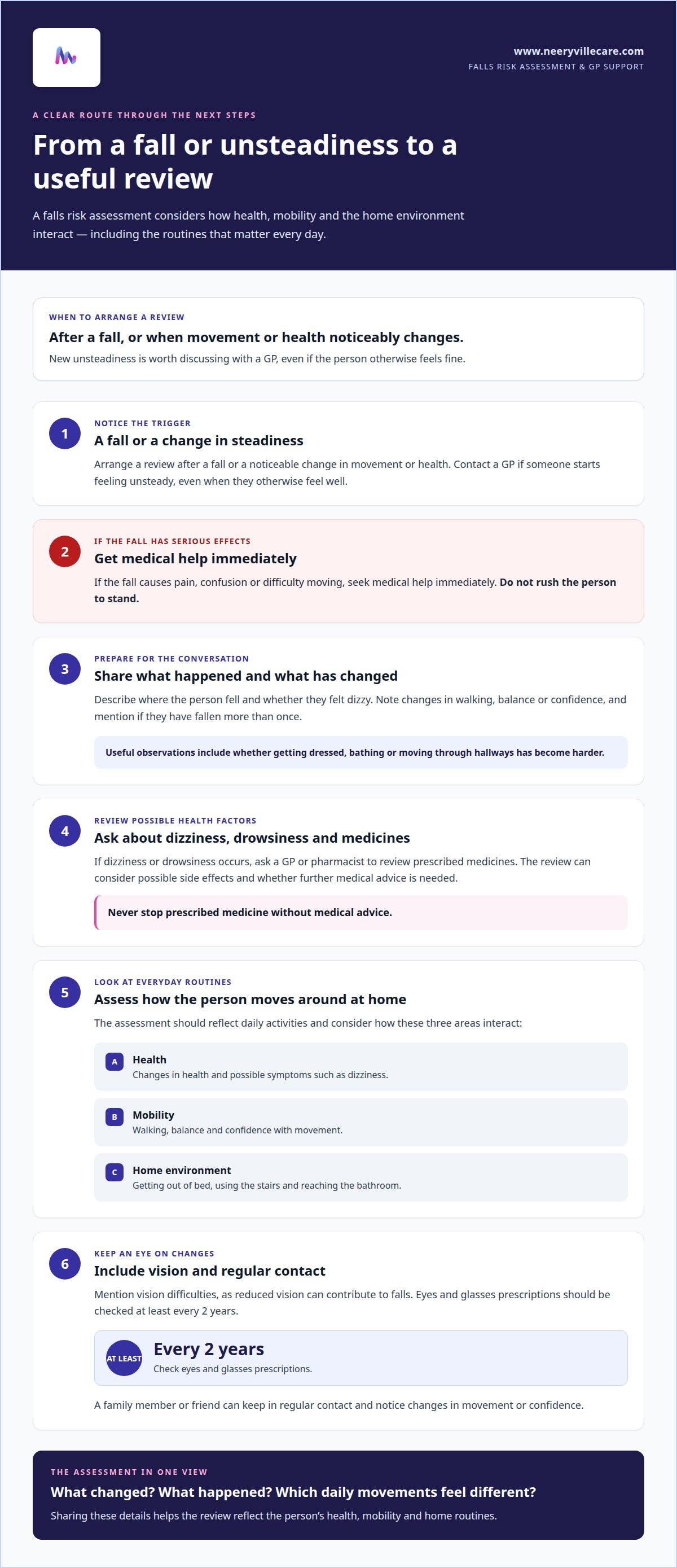
A falls risk assessment considers how health, mobility and the home environment interact. It can help identify why someone feels unsteady and which changes may help. Arrange a review after a fall or a noticeable change in movement or health. The assessment should reflect daily routines, including getting out of bed, using the stairs and reaching the bathroom.
Age UK advises contacting a GP after a fall or if someone starts feeling unsteady, even if they otherwise feel fine. Describe what happened, including where the person fell and whether they felt dizzy. If a fall causes pain, confusion or difficulty moving, seek medical help immediately. Don’t rush the person to stand.
Medication can affect steadiness. Ask a GP or pharmacist to review prescribed medicines if dizziness or drowsiness occurs. A review can consider possible side effects and whether further medical advice is needed. Never stop prescribed medicine without medical advice, even if the symptoms seem linked to a dose.
Bring practical observations to the appointment. Note changes in walking, balance or confidence, and whether the person has fallen more than once. Mention vision difficulties, since reduced vision can contribute to falls. Eyes and glasses prescriptions should be checked at least every 2 years to help reduce risk.
A family member or friend can support someone living alone by keeping in regular contact and noticing changes. For example, ask whether getting dressed, bathing or moving through hallways has become harder. Agree how the person prefers to raise concerns, and make sure important changes are shared with their GP or assessment team.
Ask the GP about next steps if unsteadiness persists, another fall occurs or recovery takes longer. A reassessment can consider health, mobility and surroundings together, rather than treating each concern in isolation. If the person is increasingly unable to get up independently after a fall, discuss whether their current living arrangements still meet their needs.
Before an appointment, write down current medicines and the circumstances of any falls. Include details such as the time of day, footwear and what the person was doing. This gives the GP or pharmacist specific information to consider. Clear notes can also help family members describe changes accurately and support a shared plan for safer daily routines.
4. Falls risk associated with social isolation
Living alone doesn’t automatically mean someone is socially isolated. However, fewer regular conversations can make changes in mobility or confidence less visible. Social isolation is associated with greater fall risk among older adults. Regular contact can help family and friends notice when familiar tasks, such as walking to the shops, have become difficult.
Fear can also change how a person moves. After a fall, someone may avoid walks, visits or household activities because they’re worried about falling again. Moving less can weaken muscles and reduce balance, making everyday movement harder. A calm check-in can help identify this pattern before withdrawal becomes part of the person’s routine.
Age-related changes and health concerns can increase fall risk. Muscle strength and balance may decline, reaction times may slow, and bones may become more fragile. Reduced vision, mobility difficulties and medication side effects such as dizziness or drowsiness can also contribute. A GP or pharmacist can review medicines, while an eye examination can identify vision concerns.
Look for changes rather than relying on one sign. Examples include a newly cautious gait, avoiding stairs, taking longer to recover after walking or cancelling regular visits. Ask what has changed and when it began. These details help a professional consider health, mobility and the home environment together during a falls risk assessment.
Regular contact can maintain connection and make concerns easier to share. The quality of contact matters: ongoing communication with friends and family can help protect against loneliness more than the number or length of visits. Agree a routine that suits the person, such as a regular phone call or shared activity, and make space to discuss confidence and movement.
Social isolation and loneliness are related, but they aren’t identical. Someone can have few social contacts without feeling lonely, or feel lonely despite seeing people. In England, the number of people over 50 experiencing loneliness is forecast to reach two million by 2026, increasing by 49% over a decade. These figures underline why noticing a change in connection matters.
Arrange professional advice if a fall occurs, unsteadiness develops or fear is limiting daily activities. A falls risk assessment can consider mobility, health and surroundings together, then identify practical support. Share specific observations, such as skipped outings or a new reluctance to walk. A supportive conversation can help the person take part in deciding what happens next.
5. Strength and balance exercises
Regular movement can help older adults maintain strength and balance. Chair exercises, gentle balance work and short daily walks are practical starting points. For families focused on preventing falls for elderly people living alone in the UK, choose activities that fit familiar routines, such as standing from a chair or walking indoors. Aim for steady, comfortable practice, not effort beyond someone’s ability.
Before activity, clear a space and place a sturdy chair nearby for support. A short walk along a familiar route can build movement into the day, while seated exercises offer an option when standing feels difficult. Keep the pace comfortable and allow time to rest. If a movement causes pain or concern, stop and seek professional advice.
Balance practice should suit the person’s current mobility. A physiotherapist can assess strength, balance and movement, then prescribe exercises tailored to their needs. They can also advise whether support is needed during practice. This is especially useful after a fall, when confidence may have changed or the person is unsure which movements feel safe.
Tai chi, yoga and physiotherapy programmes can help develop balance and coordination. The right choice depends on health, confidence and physical ability. A tailored programme gives the person a clear starting point and can be adjusted as their needs change. Don’t treat an exercise routine as a substitute for professional advice about new symptoms or mobility changes.
Consistency can make movement easier to maintain. A family member might arrange a short walk together or encourage a few chair exercises as part of an ordinary daily routine. For preventing falls for an elderly person living alone in the UK, regular activity can form one part of a wider plan alongside medical advice and home adaptations. Keep expectations realistic and respect the person’s pace.
If your parent feels unsteady or has a health condition affecting movement, ask a physiotherapist about a suitable assessment before starting new balance exercises. Their advice can identify appropriate movements and ways to practise safely. Careful planning matters. If daily activities such as washing also feel difficult, discuss what practical support could help your parent stay active and manage routines at home.
NeeryVille Care
NeeryVille Care supports families when fall concerns make daily life at home harder to manage. As a CQC-regulated home care provider, it offers personalised support shaped around individual needs and familiar routines. Care doesn’t replace an assessment by a GP, physiotherapist or occupational therapist. It can complement professional advice by helping with day-to-day activities and providing support at home.
Visiting Care and Hourly Care can suit someone who wants to remain at home but would benefit from scheduled support with everyday tasks. Depending on their needs, visits can help with routines that feel less manageable, such as personal care or getting ready for the day. Support is tailored to individual needs, with the same carer for every visit. Families may consider this option when confidence or mobility has changed, or ordinary tasks are becoming difficult to manage alone.
For someone who needs more continuous assistance at home, Live-In Care provides one-to-one support from a carer who lives in the person’s home. The same carer provides support each day, helping with daily routines while the person remains in familiar surroundings. It may be worth discussing when concerns extend beyond one activity or visits alone no longer meet the person’s support needs.
Dementia Care can support someone whose memory or thinking changes affect everyday routines and safety. A consistent, person-centred approach helps keep support attuned to their preferences and needs. Families may wish to discuss this care when dementia makes familiar tasks harder to manage or increases concern about living alone. The person’s dignity and choices remain central to any care plan.
End of Life Care provides support at home during a particularly sensitive time. Families can discuss how this care fits alongside the person’s daily support needs and existing professional care. Across these options, the aim is to understand what would make home life more manageable, rather than assume one arrangement suits everyone. A conversation can help clarify the support needed and the person’s wishes.
If a fall, growing unsteadiness or changing care needs have prompted your family to consider help at home, contact NeeryVille Care to discuss the situation.
Take the next step towards safer days at home
Preventing falls for elderly people living alone in the UK is an ongoing process, not a single home improvement. As needs and confidence change, the most helpful next step is to talk openly about what feels difficult now and what support would preserve the person’s choices. Start with their priorities: perhaps managing personal routines, feeling less anxious when alone, or having a familiar person nearby.
Families can discuss how NeeryVille Care’s Domiciliary Care, Live-in Care or Dementia Care may fit changing support needs. The right conversation begins with the person’s daily life, preferences and concerns, then considers what assistance could make staying at home more manageable. You don’t need to have every answer before reaching out.
A thoughtful conversation can help you take the next step at a pace that feels right. Safer, more supported days can begin by talking through what matters.
Frequently Asked Questions
What can I do to prevent a fall?
Build safer habits into everyday routines: wear well-fitting shoes with good grip, move steadily and keep a phone within reach. Plan ahead for regular needs, such as using the bathroom, to avoid rushing. If a walking aid has been recommended, use it consistently, even on days when walking feels easier. For a new or worsening balance problem, speak with a GP rather than trying to manage it alone.
Are falls a sign of declining health?
A fall can sometimes point to a change in health, but it doesn’t automatically mean someone’s health is declining. A trip, a moment of dizziness or a change in confidence may have different causes. Notice whether falls recur or come with new unsteadiness, unusual drowsiness or difficulty with familiar tasks. Share these changes with a GP, including when they began and what the person was doing.
How can I help an elderly parent make their home safer?
Ask your parent which parts of the home feel difficult, then observe their usual routines with their agreement. Notice, for instance, whether getting in and out of bed, reaching kitchen cupboards or moving between rooms causes strain. An occupational therapist can assess how the person uses their home and suggest adaptations. The local council can explain whether a care needs assessment or information about adaptations is available in the area.
How can I make my home fall-proof?
No single change can make a home completely fall-proof, so consider safety room by room. Look at the route from the bedroom to the bathroom at night, including thresholds, switches and doors that are hard to open. Keep a phone accessible in the rooms used most often. Ask an occupational therapist to consider how the layout, mobility and daily routines work together before choosing adaptations.
How can seniors prevent falls at home?
Use a walking stick or frame consistently if it has been recommended, rather than leaving it across the room. Move at a steady pace and sit down if dizziness occurs. Drinking 6 to 8 glasses of fluid a day is advised for older adults to help avoid dehydration-related dizziness and falls. Follow any individual advice from a health professional about fluid intake or mobility aids.
How often should fall risk be assessed?
Review fall risk regularly and arrange another assessment after a fall or a noticeable change in movement or health. A review is also useful if someone takes longer to recover, feels newly unsteady or can no longer get up independently. The assessment should reflect current mobility, health and daily surroundings, as these can change. A GP can help determine the appropriate next step.
What are the most common home safety risks for elderly people living alone?
Risks can arise from the home and from changes in health or mobility. For example, a dim hallway can make a change in floor level harder to see, while dizziness can affect confidence when standing. Consider the person’s usual route through the home, not just individual rooms. If a particular task has become difficult, note what happens and discuss it during a professional assessment.
What can I do if I'm worried about a fall?
If someone has fallen, stay with them and don’t rush them to stand. Seek medical help immediately if they have pain, confusion or difficulty moving. If they haven’t fallen but feel unsteady, contact their GP and explain what has changed. For someone living alone, agree how they can reach help, such as keeping a phone nearby or using a personal alarm.


