

MS Home Support in North London: Medication & Appointments


What if support with multiple sclerosis could make daily life at home more manageable? MS support at home in North London can be tailored to a person’s routines and changing needs, helping them stay in familiar surroundings while receiving practical assistance.
It’s understandable to worry about managing medication routines, appointments and everyday tasks, especially as needs change. Home care can provide practical help while respecting the person’s preferences, dignity and independence.
This article explains what multiple sclerosis care at home may involve, how support can fit around medication and appointments, and what to consider when planning care. It also explores how domiciliary care and other forms of home support may help families find a steadier routine, without losing sight of the individual behind the care plan.
Table of Contents
Benefits of remaining at home
For someone living with multiple sclerosis, familiar surroundings can make daily routines easier to organise around changing symptoms. A well-known kitchen, bathroom and route between rooms may help preserve a sense of control. For example, keeping frequently used items within reach can reduce unnecessary trips when fatigue or mobility makes movement difficult. Home also offers space for personal routines, family visits and preferred activities, rather than requiring every day to follow an unfamiliar schedule.
Support can be tailored to the person’s priorities. One person may need help preparing meals; another may value assistance with washing or getting dressed. Families can agree which tasks the person wants to manage independently and where help is useful. This balance can protect dignity while easing caring responsibilities. It also leaves room for therapies and social activities already part of someone’s life, rather than building the day solely around care.
Remaining at home can also give family carers more flexibility, although caring still takes time and energy. Respite care can provide planned cover, giving a family carer time to rest, attend an appointment or manage other responsibilities. In North London, families can discuss support needs with their local council’s adult social care team and ask about an assessment. The type of help arranged depends on the person’s needs and circumstances. For practical advice, people affected by MS can call the MS Trust helpline on 0800 032 38 39.
Carers who disclose their caring role to their employer are protected from discrimination under the Equality Act 2010, according to The National Archives. Sharing caring responsibilities early can help families discuss practical adjustments to routines and work commitments. If the person with MS wants to stay at home, begin by listing the tasks that have become difficult, such as bathing, meal preparation or getting out to appointments. Then describe mobility needs, medication routines and preferred visit times to a care provider. Ask how its staff support mobility, medication and everyday activities, and what training they receive. These details help families understand whether the proposed support fits the person’s routine and preferences.
Peer connection, counselling and practical guidance can ease the isolation that sometimes accompanies a long-term disease. The MS Trust helpline offers a starting point for practical advice; a GP or MS team can also discuss emotional support and local peer options. For North London families exploring different arrangements, London home support options provide another point of reference. The right plan should respect the person’s choices, changing needs and connection to their community.
A survey found that 65% of UK homeowners said they had an unbreakable connection to their home. For a person with MS, that sense of belonging can sit alongside practical considerations: whether familiar surroundings support their routines and whether the help they need can be arranged there.
Care costs may also shape decisions. These figures can provide context, but they do not determine what is right for an individual. Discussing needs, preferences and available support can help the person with MS and their family weigh up staying at home and other arrangements, while keeping sight of what matters most.
Medical appointments and medication
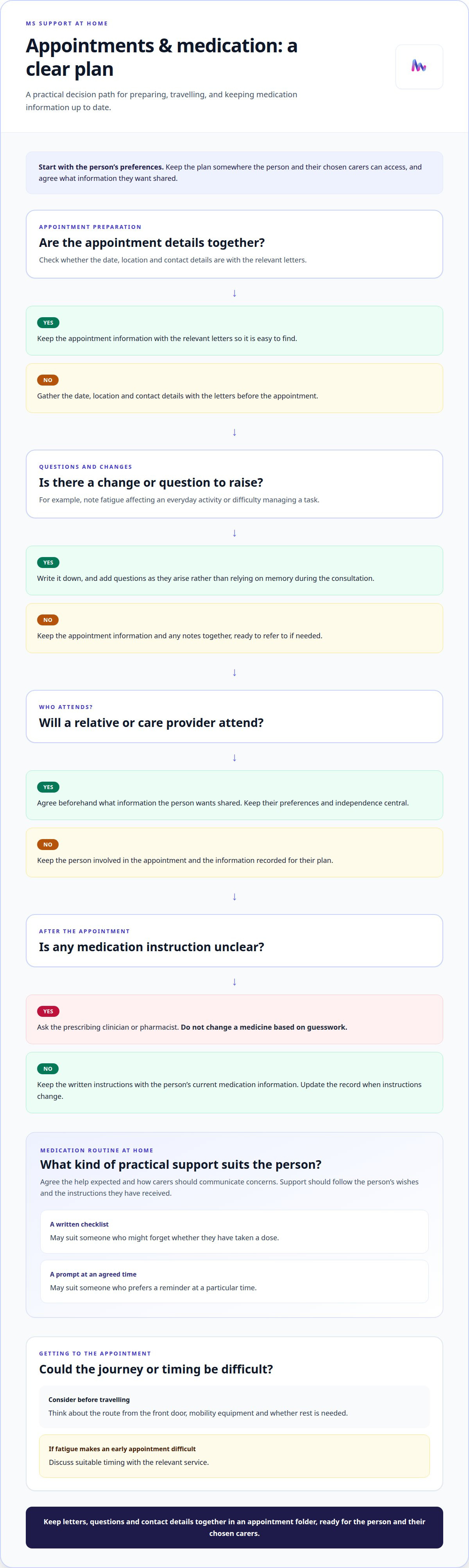
Appointments and medication routines can involve clinic letters, changing symptoms, repeat prescriptions and family schedules. A shared plan can make these tasks easier to manage while keeping the person in control. Agree who will organise reminders, gather paperwork and note questions, then keep the plan somewhere the person and their chosen carers can access. For families arranging MS support at home in North London, the plan should reflect the person’s routines and preferences.
Before an appointment, keep its date, location and contact details with relevant letters. Note changes the person wants to discuss, such as fatigue affecting an everyday activity or difficulty managing a task. Add questions as they arise, rather than relying on memory during a busy consultation. If a relative or care provider attends, agree what information the person wants shared. Their preferences and independence remain central throughout the appointment.
Afterwards, keep written instructions with the person’s current medication information. A clear list can help the person, family and relevant professionals discuss what is being taken and when. If a dose, side effect or instruction is unclear, direct the question to the prescribing clinician or pharmacist. Don’t change a medicine based on guesswork. Update the record when instructions change and make the latest version easy to find.
Medication support at home can help with agreed practical tasks, such as reminders and keeping a routine visible. It should reflect the person’s wishes and the instructions they have received. Someone who may forget whether they have taken a dose might prefer a written checklist; another person may prefer a prompt at an agreed time. The support plan should explain what help is expected and how carers communicate concerns, without replacing clinical advice.
Physical access can affect how manageable an appointment feels. Before travelling, consider the route from the front door, mobility equipment and the need for rest. If fatigue makes an early appointment difficult, discuss suitable timing with the relevant service. Keep an appointment folder ready with letters, questions and contact details. This preparation can reduce last-minute pressure and help the person stay involved when circumstances feel complex or tiring.
For people arranging MS support at home in North London, multiple sclerosis care at home can include practical medication support within an agreed routine. Clear communication helps a care provider understand what matters to the person and when family members should be involved. To discuss support needs, contact the care team.
North London Council Home Care for People with MS
A North London council’s adult social care service can discuss home care and personal care for someone with MS. Practical support depends on the person’s needs and daily routines. For example, assistance might focus on washing, dressing, preparing food or moving around the home. Explain which tasks have become difficult, including how symptoms affect mornings, evenings and getting out of the house.
Describe what the person can still do independently, as well as where support is needed. A person might manage meals but need help bathing safely, or require support getting dressed when fatigue affects movement. The Care Act 2014 says local authorities in England have a duty to provide up-to-date and trusted information. Ask the borough’s adult social care team what information and support routes apply locally. Keep a note of who you spoke with and what steps they outlined.
Home arrangements can also make daily tasks easier. Advice for people with MS includes removing tripping hazards and making bathroom and kitchen equipment accessible. A clear route between the bedroom and bathroom can reduce obstacles during everyday movement. In the kitchen, frequently used items can be placed within easier reach. These changes do not replace personal assistance, but they help identify what would make the home more manageable.
When discussing personal care, be clear about the help wanted and the person’s preferences. They might want assistance with washing but prefer to choose their clothes and manage other parts of dressing. Explain any mobility aids they use and how they transfer between a chair, bed or bathroom. Specific examples keep the conversation focused on dignity, safety and the person’s routine. Include any symptom changes that affect how much help they need.
Before speaking with the council, prepare a short list of daily activities, mobility concerns, household obstacles and the times support would be most useful. Include medication or appointment-related tasks that affect the care routine. This gives the conversation a practical starting point without assuming every task needs the same solution. Involve the person with MS in describing their wishes wherever possible.
When choosing a care provider, consider its experience and how its support can address mobility, medication and daily activities. Ask how planned visits can fit around tasks such as bathing, meal preparation or moving safely indoors. A clear outline of the person’s priorities helps everyone understand the purpose of the assistance and where independence matters most.
Benefits and Financial Help for MS Home Care
Care costs and reduced working hours can put pressure on a household budget when someone needs support at home. Separate the questions: whether a family carer may qualify for Carer’s Allowance, what help the local council can discuss, and how care costs fit alongside regular household spending. These routes have different criteria. A clear picture of caring tasks, income and support needs can help families make informed enquiries.
According to the Department for Work and Pensions, Carer’s Allowance eligibility includes caring for at least 35 hours a week for someone who receives a qualifying disability or attendance benefit. The earnings rule also matters: according to the Department for Work and Pensions, your earnings must be £204 or less a week after tax, National Insurance and expenses. Other stated conditions include being under state pension age and not being in full-time education. Meeting one condition alone does not establish eligibility; the criteria need to be considered together.
Before applying, write down the care provided and the time it takes. This might include help with washing, preparing meals, keeping track of appointments or supporting daily routines. Gather details of the person’s qualifying benefit and the carer’s earnings after the specified deductions. These notes can help when reviewing Carer’s Allowance information or making an application. If caring arrangements change, update the record to reflect the support actually given.
For council support, contact the adult social care team for the relevant North London borough and explain which daily tasks have become difficult. Ask how the person’s needs and finances are considered when possible help is discussed. Keep council correspondence with a simple list of care needs, such as help with bathing, mobility or preparing food. This separates support needs from the question of who may contribute towards care costs. The type and amount of help depend on the assessment and the person’s circumstances.
Families can map monthly household commitments against the care tasks relatives currently manage. Note, for example, whether a family member has reduced work hours, pays for transport to appointments or provides practical help at home. This overview can identify what to discuss with the council, the Department for Work and Pensions or a benefits adviser. Don’t assume one benefit will cover every care expense; each form of support has its own purpose and criteria.
To discuss home support alongside your family’s practical needs, contact the care team.
NeeryVille Care
NeeryVille Care provides CQC-regulated home care for families considering support when multiple sclerosis makes everyday tasks harder to manage. Its domiciliary and live-in care offer different ways to organise practical help at home. Start with the person’s circumstances: what they want help with, which routines matter and how much support feels appropriate. A clear conversation can turn a broad concern into a practical plan.
Domiciliary care may suit someone who wants help during planned visits while managing other parts of the day independently. A visit can be arranged around a daily task, such as getting ready or preparing a meal. Live-in care may suit someone who needs support throughout the day at home. These arrangements are different, and the choice depends on the person’s routine, preferences and support needs.
MS affects people differently, so care should reflect the individual rather than assumptions about the condition. Explain how fatigue, mobility or changing symptoms affect everyday activities, what the person prefers to do alone and where help would make a difference. This detail supports a person-centred approach that keeps dignity, familiar routines and choice in view.
NeeryVille Care is a CQC-regulated home care provider. For families in North London, its domiciliary care focuses on areas including Highgate and Hampstead. A discussion about support can cover the person’s home routine, daily living needs and the family’s role. If needs change, the conversation can centre on what is different and which practical tasks now require more help. The aim is to understand the situation clearly, not to overwhelm families with decisions all at once.
Prepare a few points before discussing care: the tasks causing difficulty, when support matters and what the person prefers. Include changes in mobility or symptoms that affect daily life, as well as what is already working well, such as a familiar routine or help from relatives. These details give a balanced picture and keep the person’s wishes central.
Families may want to discuss home support when caring responsibilities are difficult to balance or the person needs help with everyday activities. NeeryVille Care provides domiciliary and live-in care, so families can discuss which arrangement better reflects the person’s needs and preferred routine. There is no need to settle every detail beforehand. A calm, practical conversation can help clarify suitable support.
Contact NeeryVille Care to discuss support at home.
Take the next step at your own pace
Choosing MS support at home in North London is a personal decision shaped by what matters to the person and their family. Start with one clear priority, such as making daily routines easier or sharing caring responsibilities. Then discuss what practical support feels appropriate and how it could fit into life at home.
NeeryVille Care provides CQC-regulated domiciliary and live-in care, shaped around individual needs. If the household also needs dementia support, this can be included in the wider care conversation. You don’t need every detail settled before getting in touch. A calm discussion can help clarify priorities and possible arrangements.
Start with what would make everyday life more manageable. A simple conversation can help identify a practical next step.
Frequently Asked Questions
What is multiple sclerosis care at home?
Multiple sclerosis care at home means arranging practical support around someone’s needs, choices and everyday life. It can include personal care, household routines or companionship while the person remains in familiar surroundings. Support should reflect what they want to manage independently and where assistance would help. For example, someone might need help getting ready in the morning but prefer to prepare their own lunch.
How can in-home care services help individuals with MS?
In-home care can make everyday tasks more manageable without requiring someone to leave home. A carer might help organise a morning routine, prepare a meal or provide companionship during the day. The timing and type of support can reflect the person’s preferences and household routine, giving relatives more room to focus on their relationship rather than coordinating every practical task.
What does a carer help with?
A carer can help with agreed daily tasks such as washing, dressing, meal preparation, light housekeeping and companionship. Medication support can help maintain an established routine, while personal care can assist with tasks the person finds difficult. Their preferences should guide the support. They may, for instance, want help getting ready but prefer to choose their clothes and manage other parts of their routine.
What home support services are available for people with MS in North London?
North London support can include domiciliary care visits, live-in care, respite care, personal care and medication support. NeeryVille Care provides domiciliary care in areas including Highgate and Hampstead, alongside live-in care. The right arrangement depends on the person’s daily needs and preferred routine. A family might consider planned visits for specific tasks, or more continuous support where help is needed throughout the day.
What respite care and support is available for family carers of people with MS in North London?
Respite care can provide planned cover so family carers can rest, attend appointments or manage other responsibilities. Families can discuss their needs with their local council’s adult social care team and ask about an assessment.
Which MS charities and local organisations provide home visits or support in North London?
The relevant borough’s adult social care team can discuss home care and personal care. The MS Trust helpline offers practical advice, while a GP or MS team can discuss emotional support and local peer options.


