

Live-in Care in Kentish Town: Stay Independent at Home


Imagine the quiet anxiety of checking your phone every hour, wondering if your mother has managed the stairs safely or if your father has remembered his medication. It's a heavy burden to carry alone. Choosing live in care kentish town means you don't have to choose between their safety and their independence. Most families believe that a residential home is the only way to ensure 24/7 safety; however, the most healing environment is often the one they have lived in for decades.
We understand that the guilt of caregiver burnout is real, and the fear of a sudden fall whilst you're away can be paralysing. This article explores how professional, CQC-regulated support allows your loved one to stay in the heart of the community they love. You'll discover how a tailored care partnership manages complex conditions like dementia with dignity, providing the constant presence needed for true peace of mind. We will look at the practicalities of medication support, daily routines, and how to transition smoothly into a life of supported independence.
Table of Contents
Understanding Live-in Care in Kentish Town
Kentish Town is more than just a postcode; it's a collection of memories held within the walls of its iconic Victorian and Edwardian terraces. For many, the thought of leaving these high ceilings and familiar floorboards for a residential facility is distressing. This is where live in care kentish town offers a transformative solution. It provides a professional, 24-hour presence that adapts to the rhythm of your home, rather than forcing you to adapt to a clinical schedule. It allows life to continue as it always has, just with an extra pair of hands.
So, what is a live-in caregiver? Unlike visiting care, where support is limited to specific time slots, a live-in professional resides in the home. They are there for the unexpected moments, the middle-of-the-night worries, and the quiet afternoons. This constant presence bridges the gap between total independence and the structured safety of a care home. It's a partnership built on trust, reliability, and mutual respect.
The Essential Role of a Live-in Carer
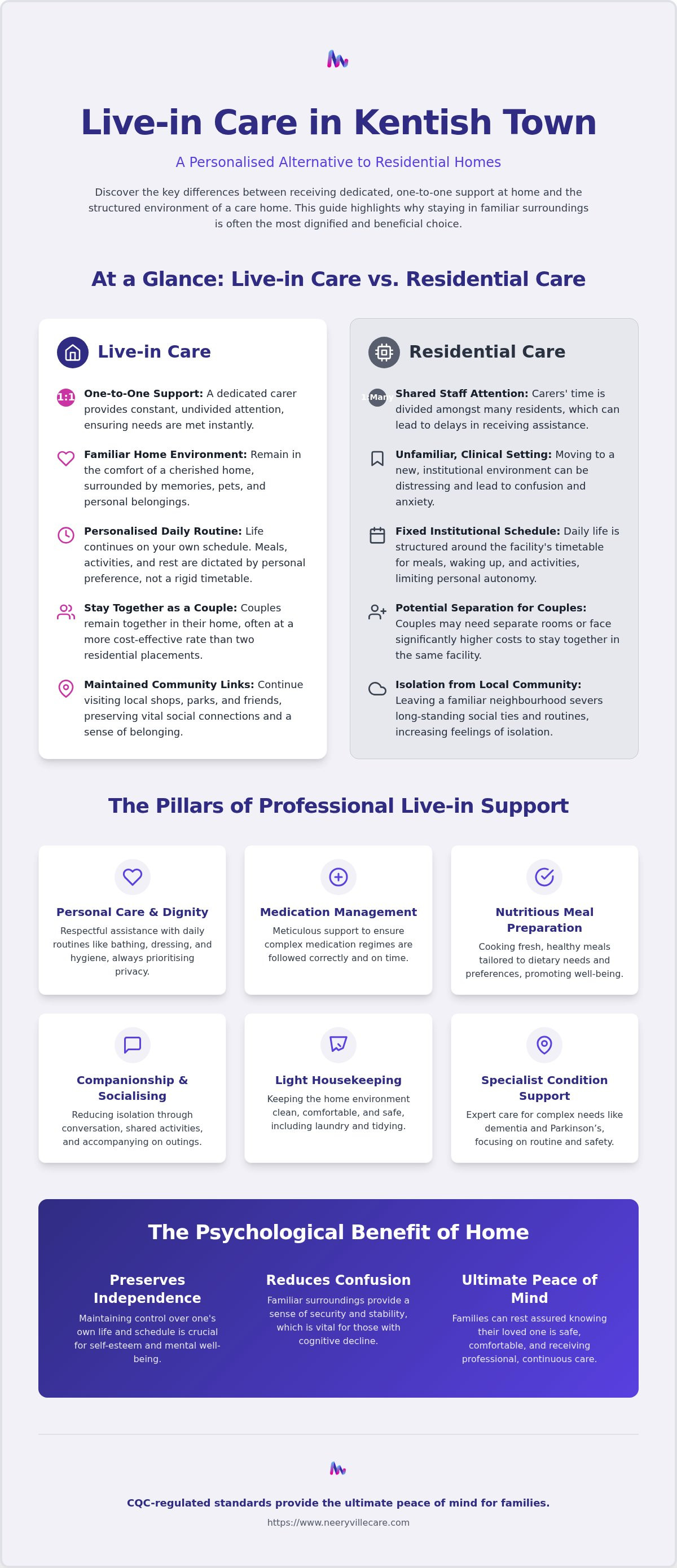
Daily support is both practical and deeply personal. It begins with the morning routine, assisting with showering or dressing with the utmost respect for privacy. Nutrition is a cornerstone of well-being; carers prepare fresh, healthy meals and monitor hydration levels throughout the day. Crucially, they provide expert elderly care at home by managing complex medication regimes, whilst ensuring every dose is taken correctly and on time. This meticulous attention to detail removes the weight of responsibility from family members.
The role encompasses several key areas of support:
Personal care and hygiene assistance delivered with dignity
Dedicated companionship care at home to reduce isolation
Light housekeeping and laundry to keep the home environment comfortable
Freshly prepared meals tailored to specific dietary requirements
Maintaining Community Links in North London
This part of North London has a unique "urban village" feel that shouldn't be lost simply because someone needs extra help. Choosing live in care kentish town means your loved one doesn't have to sacrifice their connection to the local area. A live-in carer acts as a bridge to the outside world. Whether it's a gentle walk to the shops on the Highgate Road or a visit to a local community centre, the goal is to keep social circles active.
Carers use their local knowledge to ensure life remains vibrant. Staying connected to the local library, the favourite greengrocer, or friends in the neighbourhood is vital for emotional health. It's about preserving a person's history and their place within the North London community. This continuity of lifestyle is often the most significant factor in maintaining a high quality of life during the later years.
The Benefits of 24/7 Home Support vs. Care Homes
Deciding how to support an ageing parent is a crossroads many families face. Whilst residential care is a common choice, exploring alternatives to care homes often reveals that staying put is the safest, most dignified option. The core difference lies in the ratio of support. In a residential setting, staff must divide their attention amongst dozens of residents. With live in care kentish town, the focus is entirely on your loved one. This one-to-one attention ensures that needs are met instantly, not when a call bell is finally answered.
Life at home doesn't follow a rigid institutional timetable. If your parent prefers a late breakfast or enjoys a midnight snack whilst watching old films, their carer facilitates it. This autonomy is vital for self-esteem. For those sharing their lives with a partner, live in care for couples is frequently more cost-effective. Instead of paying two separate sets of care home fees, couples can remain together in their cherished home for a single combined rate. It's about keeping families together where they belong.
One-to-One Personalised Care
A dedicated carer doesn't just provide assistance; they become a steady, reliable companion. They learn the subtle cues that indicate discomfort or the specific way a favourite meal should be prepared. This consistency is essential for those with cognitive challenges. Moving to a busy residential home can trigger confusion and distress. In contrast, seeing the same friendly face every morning builds a sense of security that no rotating shift pattern can match. It's a relationship built on stability and deep personal understanding.
Safety and Peace of Mind for Families
The weight of responsibility can be exhausting for family members. You might find yourself constantly on edge, waiting for a call about a fall or a missed medication dose. Professional oversight changes this dynamic. Having 24/7 support means someone is always there to manage nighttime disorientation or prevent accidents before they happen. It allows you to step back from the role of manager and return to being a son or daughter. If you're feeling the strain, our guide on caregiver burnout support London offers practical advice for reclaiming your own well-being. If you're ready to discuss how this support could work for your family, you might wish to enquire about a personalised care assessment.
Specialist Support for Complex Conditions at Home
Managing a diagnosis like Alzheimer’s or Parkinson’s is a daunting journey for any family. It often feels like a constant battle against changing symptoms and the fear of the unknown. However, live in care kentish town provides the specialised expertise required to manage these complexities within the sanctuary of home. Unlike the rotating staff in residential settings, a dedicated live-in carer offers the stability that is clinically shown to improve outcomes for those with neurological conditions. This continuity is not just comforting; it's a vital part of the care strategy.
Dementia Care in a Familiar Setting
Routine is the anchor for someone living with dementia. When the environment is familiar, the brain doesn't have to work as hard to navigate daily life. One of the most challenging aspects of the condition is "sundowning," where agitation increases as daylight fades. A professional carer manages this by subtly adjusting lighting and maintaining a calm, predictable atmosphere. Using person-centred techniques, they focus on the individual’s history rather than just their diagnosis. You can explore our dementia care at home services to see how we tailor this approach. For broader advice on managing these transitions, Age UK's care guides provide excellent supplementary resources.
Support for Parkinson’s and Stroke Recovery
Physical recovery requires immense patience and precise timing. For those needing parkinson's care at home, medication timing is critical. Even a small delay can lead to "off" periods where mobility is severely restricted. Carers ensure these regimes are strictly followed whilst assisting with exercises prescribed by physiotherapists. Similarly, during post stroke care at home, a consistent professional helps in relearning daily tasks at the client’s own pace. They help adapt the home environment to support changing mobility needs, ensuring the home remains a place of safety rather than a source of hazard.
Safety is never left to chance. As a CQC-regulated provider, our clinical standards are rigorously monitored to ensure high standards for complex needs. Choosing live in care kentish town ensures that every aspect of care, from medication management to emergency protocols, meets the highest national benchmarks. It gives families the assurance that their loved one is receiving professional, high-level clinical support every hour of the day.
Preparing Your Kentish Town Home for Live-in Care
Preparing for live in care kentish town is a practical process that transforms a house into a safe, supported environment. It's about creating a space where both your loved one and their carer can thrive. The first step involves a thorough assessment of the physical home. Many properties in North London feature narrow hallways or steep stairs, making a home safety audit essential. Removing loose rugs, installing grab rails, and ensuring adequate lighting can significantly reduce the risk of falls. Our home help services often begin with these small but vital adjustments.
Beyond safety, you'll need to consider domestic essentials. This includes organising a spare set of keys and ensuring there's a clear understanding of household preferences. Introducing the caregiver to the local area helps them settle into their role as a community-based support system. Pointing out the nearest pharmacy or the quickest route to the shops on the High Street ensures they can manage daily errands efficiently from day one. This local integration is a cornerstone of successful companionship care at home.
The Carer’s Living Requirements
A live-in professional requires a private bedroom to ensure they're well-rested and able to provide high-quality care. This space should be clean and comfortably furnished with a bed and storage for personal belongings. Whilst the carer is there to support your family, maintaining professional boundaries is key to a long-lasting partnership. Discussing "house rules" early, such as use of communal areas or preferred meal times, creates a foundation of transparency and mutual respect. It's about making the carer feel welcome whilst acknowledging their need for a private sanctuary during their breaks.
Technology and Communication
Modern care relies heavily on clear, transparent communication. We utilise digital care logs to provide real-time updates, ensuring you're always informed about your loved one’s well-being. This aligns with the Department of Health and Social Care’s goal for 80% of CQC-registered providers to use digital social care records by 2026. To facilitate this, reliable Wi-Fi is a necessity for both care reporting and the carer’s personal downtime. It allows for seamless coordination between the carer, the family, and our local management team.
Setting up emergency contact protocols is equally vital. We recommend a "communication hub" in the home where important numbers and medical histories are easily accessible. This organised approach alleviates the stress of the unknown, providing a clear roadmap for daily life. When the technology and the physical environment are both ready, the transition to live in care kentish town feels like a natural, positive step forward.
Why Choose NeeryVille Care for Kentish Town Families?
Selecting the right partner for your family is a decision that balances clinical necessity with emotional trust. At NeeryVille Care, we understand that live in care kentish town is more than a service; it's a commitment to preserving the "urban village" lifestyle your loved one treasures. Our deep roots in North London mean we don't just provide care; we provide a local connection. We know the community centres, the local pharmacies, and the rhythm of life in this corner of Camden. This local expertise allows us to lift the burden from your shoulders with a sense of calm reliability.
Safety is the foundation of everything we do. As a CQC-regulated provider, our clinical standards are rigorously audited to ensure the highest levels of safety and professional excellence. This regulatory oversight provides the transparency families need during moments of significant worry. We combine this clinical authority with a meticulous matching process. We don't simply assign a staff member; we find a professional whose personality, interests, and temperament align with your loved one’s. It's about building a partnership that feels like a natural extension of the family.
A Compassionate, Person-Centred Approach
We believe that care should never be a checklist of tasks. Instead, we prioritise emotional well-being alongside physical health. Every individual we support is treated with the dignity and respect they deserve, ensuring their voice is heard in every decision. Our carers are trained to look beyond the diagnosis, focusing on the person’s history and preferences. Whether it's supporting someone with complex needs or providing simple companionship, our elderly care at home options are designed to foster independence and joy in the home environment.
Starting Your Care Journey with Us
The transition to professional support should never feel rushed or high-pressure. Our process begins with a detailed, no-obligation assessment in your Kentish Town home. This allows us to understand the specific layout of the property, the individual’s daily routines, and the family’s expectations. We look at everything from mobility challenges in Victorian terraces to specific nutritional preferences. Once care begins, we remain proactive. Care plans are not static documents; they are living guides that we adjust as needs evolve. We are your steady guide through every stage of the journey, offering a simple solution to a complex emotional problem. Contact us today to discuss how we can support your family’s unique requirements.
Embracing a Future of Supported Independence
Choosing the right path for an elderly parent is one of life's most significant challenges. By opting for live in care kentish town, you aren't just selecting a service; you're choosing a partnership that values your loved one’s history and dignity. Professional support allows for tailored routines and specialist dementia care to happen within the familiar comfort of a North London home, rather than the clinical setting of a residential facility.
Our dedicated North London support team ensures that clinical safety and emotional well-being go hand in hand. As a CQC-regulated provider, we offer the peace of mind that comes with expert oversight and specialist complex care knowledge. This structured yet warm approach lifts the weight from your family, letting you focus on being a daughter or son again, whilst we manage the daily routines and safety protocols.
Your journey towards a safer, more supported home life starts with a single conversation. We're here to guide you at a pace that feels right for your family, providing a simple solution to a complex emotional worry.
Frequently Asked Questions
How much does live-in care in Kentish Town typically cost?
Costs for live-in care in London are generally higher than the national average, reflecting the local cost of living and the specialist nature of the support. Whilst we cannot provide a fixed price without a personal assessment, rates typically depend on the complexity of the clinical support required. We recommend a consultation to receive a bespoke quote that reflects your family's specific needs and budget.
What happens if the live-in carer and my parent do not get along?
We prioritise a meticulous matching process to ensure personalities and interests align from the very beginning. However, if your parent and their carer don't find a natural rhythm, we will arrange a replacement. Your loved one's emotional well-being and comfort are the absolute priority. We listen carefully to all feedback and act swiftly to ensure the partnership in the home remains harmonious.
Does a live-in carer need their own bathroom?
A live-in carer does not strictly require their own ensuite bathroom, though they must have access to a clean, shared one. They do, however, require a private, furnished bedroom to ensure they are well-rested and have a sanctuary for their downtime. Providing a comfortable environment for the carer ensures they can continue delivering the high-quality, attentive support your loved one deserves every day.
Can live-in care support couples who both need assistance?
Yes, live in care kentish town is an ideal solution for couples who wish to stay together in their own home. It is often more cost-effective than paying for two separate placements in a residential care home. One carer can support both individuals, managing different routines and health needs simultaneously. This ensures that partners aren't separated, preserving their lifelong bond and shared history.
Is NeeryVille Care regulated by the Care Quality Commission (CQC)?
NeeryVille Care is fully regulated by the Care Quality Commission (CQC), ensuring our services meet high national standards of safety and excellence. This regulatory oversight provides a necessary layer of clinical authority and transparency for families. It means our staff training, safety protocols, and care delivery are regularly audited, giving you peace of mind that your loved one is in professional, capable hands.
How quickly can live-in care be organised in an emergency?
Our local North London team is designed to be highly responsive, often organising live in care kentish town within 24 to 48 hours during a crisis. We understand that situations like a sudden hospital discharge require immediate action to ensure a safe transition home. We act as a steady guide during these stressful moments, moving at a pace that feels right for your family whilst ensuring safety.
What breaks does a live-in carer require during the day?
Live-in carers typically require a two-hour break during the day to rest and recharge their energy. We work closely with families to determine the most convenient time for this break, often when the client is resting or when a family member is visiting. Ensuring the carer is well-rested is vital for maintaining the high standard of 24/7 support and the safety of the person they are caring for.
Do you provide live-in care for specialist conditions like Parkinson’s?
We provide expert support for specialist conditions, including Parkinson's, stroke recovery, and advanced dementia. Our carers are trained to manage specific clinical needs such as precise medication timing, mobility assistance, and monitoring for changes in health or behaviour. This specialist expertise allows your loved one to manage complex symptoms safely at home whilst maintaining their dignity and a sense of personal independence.


