

How to trust a carer in your home through clear communication

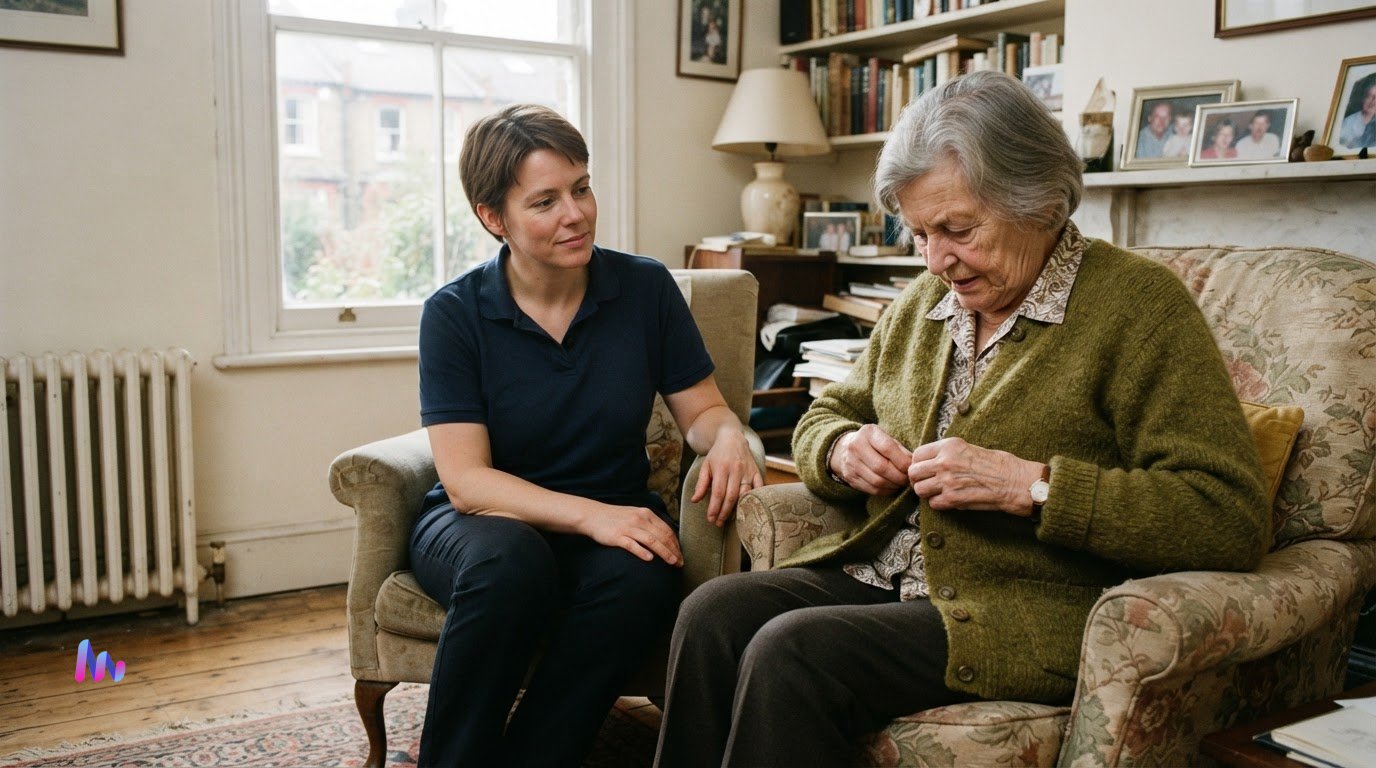
Trust isn’t built by a reassuring promise alone. Knowing how to trust a carer in your home means looking for consistent, respectful care and clear communication that keeps you and your loved one informed. Small things, done reliably, help a new relationship feel safer.
It’s understandable to feel protective when someone enters a familiar, private space to provide support. You need to know they’ll listen, respect personal choices and address concerns honestly, rather than follow a routine without considering the person.
This article explains how consistency, communication, training and accountability can build trust over time. It also covers behaviours that may undermine confidence, such as making assumptions, dismissing preferences or failing to share important changes. These practical signs can help you approach care more calmly and recognise whether support feels respectful and dependable.
Table of Contents
1. Consistency and reliability
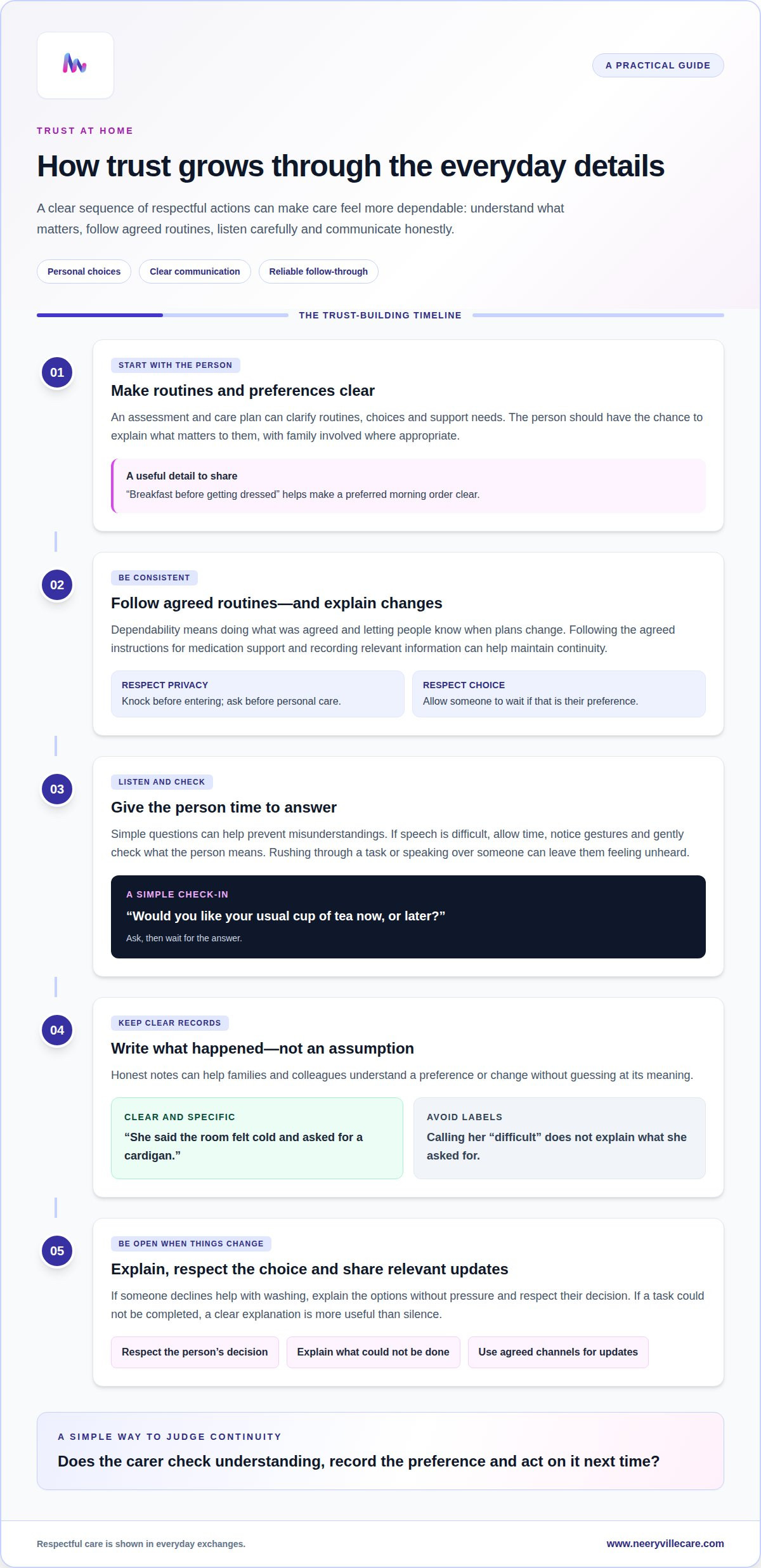
Trust develops through dependable actions repeated over time. If you’re wondering how to trust a carer in your home, notice whether agreed routines are followed and changes explained. If someone prefers breakfast before getting dressed, respecting that order can make mornings more predictable. Familiar steps matter when a person is adjusting to support at home.
Reliability also means doing what was agreed and communicating when plans change. If a visit includes medication support, the carer should follow the agreed instructions and record relevant information. Clear notes help maintain continuity, rather than relying on memory. These habits show that care is organised around the individual, not just a list of tasks.
An assessment and care plan can help clarify routines, choices and support needs. The person should have a chance to explain what matters to them, with family involved where appropriate. The Care Act 2014 requires local councils in England to meet people’s eligible care and support needs, according to UK Legislation. This duty concerns council support; dependable care at home also relies on respectful everyday practice.
Care agency carers and directly employed private carers differ mainly in how arrangements are coordinated. With an agency, scheduling and communication follow its process; when a household hires directly, it takes on more responsibility for organisation and continuity. In either case, clear expectations about routines, tasks and updates help families know what to expect.
Look for consistency in practical details. Does the carer knock before entering a room, ask before providing personal care and respect a choice to wait? If the person prefers a particular order for getting dressed, following it each visit shows their wishes matter. A consistent carer arrangement can help the worker become familiar with those preferences.
Consistency doesn’t mean expecting every day to be identical. Needs and preferences can change, and good care responds thoughtfully instead of enforcing a fixed routine. Knowing how to trust a carer in your home also means noticing whether changes are explained and choices respected. Over time, these actions help families judge whether support is steady and centred on the individual.
Consider the quality of the relationship, not just whether practical tasks are completed. Trust in care develops through consistent, person-centred support and respectful relationships. Look for signs that the person is listened to, addressed with consideration and given space to express preferences. A carer’s response to disagreement or a request for change matters as much as their approach to familiar tasks. Respect should be clear in everyday exchanges, including how questions are answered and personal boundaries treated.
It may help to discuss uncertainty calmly and specifically: describe what felt different and ask how the person would like it handled in future. This keeps the conversation focused on the individual’s wishes, rather than assumptions about what care should look like. Consider whether support remains attentive as needs or preferences shift. The aim isn’t perfection, but care that stays considerate, responsive and person-centred. When those qualities accompany dependable practice, trust has a sound basis to grow.
2. Listening and honest communication
Listening means giving someone time to explain what matters, rather than deciding what they mean. If they feel uncomfortable before getting dressed, a carer can pause and ask whether they would prefer more privacy or a different approach. This treats the person as an individual and shows that their words can shape their care.
Simple follow-up questions can prevent misunderstandings. A carer might ask, “Would you like your usual cup of tea now, or later?” and wait for the answer. If speech is difficult, they can allow time, notice gestures and gently check their understanding. Rushing through a task or speaking over someone can leave them feeling unheard. A quiet conversation may reveal a preference that would otherwise be missed.
Honest records keep communication grounded in what happened. Care workers should record what the person said, rather than what they assumed, and note preferences, routines and changes. For example, “She said the room felt cold and asked for a cardigan” is clearer than calling her difficult. A family member reading the note can understand the request without interpreting a label or guessing at the carer’s opinion.
Good communication includes family while keeping the person receiving care central. A relative might explain that a familiar song helps someone feel settled, or that children visit after school and a calm welcome is preferred. The carer can listen, clarify what the individual wants shared and pass relevant information to colleagues. This supports joined-up care without treating family knowledge as a substitute for the person’s own voice.
Honesty matters when plans or needs change. If a person declines help with washing, the carer should explain the options without pressure, respect the decision and share the relevant information through agreed channels. If a task could not be completed, a clear explanation is more useful than silence. Families and carers often belong to overlapping social communities; straightforward updates help avoid crossed messages and support a shared understanding of what happened.
A practical way to assess communication is to notice what follows a conversation. Does the carer check their understanding, record the person’s preference and act on it next time? When information is uncertain, do they say so plainly and seek clarification instead of making assumptions? These small exchanges show whether listening informs care, not just conversation.
3. Training, supervision and ongoing development
Training helps a care worker respond thoughtfully, not simply complete tasks. Learning about communication, safeguarding, equality and person-centred care supports respectful decisions in someone’s home. For example, a worker who understands consent will pause before personal care, explain the next step and respect a refusal. These actions make competence visible in everyday interactions.
Training matters when it informs practice. Learning how to support someone living with dementia is only useful if the carer applies it to that individual. Notice whether they adapt their language, allow time for a response and avoid taking over. You can also ask how learning is refreshed and connected to the person’s support needs.
Supervision gives carers a structured opportunity to discuss challenges and reflect on their work. A supervisor might review how a worker handled a missed meal, a change in mood or a declined task. Together, they can identify what went well, what needs to change and how the person’s preferences should guide future care. Regular reflection helps turn experience into better practice.
Ongoing development matters because people’s circumstances can change. A carer supporting someone after hospital discharge may need to learn new routines and instructions, then clarify their role with the appropriate person. Learning should not mean attempting tasks outside the worker’s competence. Recognising limits, asking for guidance and sharing concerns are signs of responsible practice.
Assess competence through specific behaviours, not confident claims alone. Does the worker explain why they’re doing something? Can they describe how they protect privacy during washing or maintain dignity when someone needs help eating? Their answers should be clear and consistent with what you observe. A carer who welcomes respectful questions makes expectations easier to understand.
Care home experience may give a worker useful skills, but support at home is a different setting. The carer enters someone’s personal space, where familiar routines and family relationships shape daily life. Ask how supervision helps workers adapt to each person, rather than apply one routine everywhere. Competence is strongest when training, reflection and respectful practice work together.
Induction, supervision and ongoing development help care workers reflect, improve their skills and act consistently. Use these as a practical basis for discussion: how does the worker reflect on their approach, what skills are they developing, and how does that learning support consistent care? These questions keep the conversation focused on development rather than broad assurances.
Look for a clear connection between reflection and practice. A worker should be able to explain their learning and skill development in a way that makes sense alongside the support they provide. Supervision and ongoing development can help strengthen consistency. Discussing these matters helps families understand how a worker continues to develop and how that supports respectful care.
4. Accountability
Accountability makes care easier to understand and concerns easier to address. A useful record shows what support was provided, whether consent was given and what happened when someone declined help. If a person refuses a shower, for example, the note should record their choice and how the carer respected it. Clear records support continuity and give families specific information to discuss.
For a carer working in someone’s home, ask what level of DBS check was completed and whether it suits the role. A DBS certificate is one part of recruitment, not proof of character or a substitute for supervision. To check identity, compare the worker’s photo ID with their name and ask how references were obtained. References can help clarify relevant experience and reliability.
If you employ a private carer directly, agree duties, working arrangements and payment in writing. Keep records and establish which employment, tax and workplace responsibilities apply to your situation. These details depend on how the working relationship is organised, so don’t assume a private arrangement carries the same responsibilities as using an agency.
Clear boundaries help protect privacy and make care services more respectful. Agree which rooms the carer may enter, where household information is kept and how updates should be shared. For personal care, such as help with washing, the carer should explain each step, seek consent and preserve dignity. Monitoring can include reviewing care notes and discussing changes in wellbeing, including mental health, with the person and appropriate family members.
If you have a concern about a regulated care service in England, you can raise it with the Care Quality Commission (CQC). You can also complain about care received from paid support workers at home. If you suspect an adult with care and support needs is at risk of abuse or neglect, contact the local council’s adult safeguarding team. Councils in England must make enquiries, or ask others to do so, when they think an adult may be at risk.
When raising a concern, explain what happened, when it happened and who was involved. Keep relevant messages or care records, and note what response you receive. If the issue concerns a care worker’s conduct, use the service’s complaints process as well as any appropriate safeguarding route. A clear safeguarding process helps families understand how concerns can be raised and followed up.
5. Behaviours that can break trust
Trust can weaken when a carer treats agreed support as permission to make every decision. Starting to wash someone without asking, or continuing after they say “stop”, ignores consent and personal choice. A respectful worker pauses, explains the next step and listens. A single mistake may need discussion, but repeated disregard for someone’s wishes deserves attention.
Dismissive language can also harm a relationship. Calling someone “difficult” in a care note, instead of recording what they said, replaces useful detail with judgement. A clear record might say, “He declined lunch and asked for soup later.” Respectful wording helps families and other workers understand the person, rather than forming an impression from a label.
Watch for a carer who regularly ignores instructions or makes unexplained changes. If the agreed routine is to offer a walking aid before moving between rooms, leaving it out without explanation could affect the person’s confidence and sense of safety. In England, a person’s disability or communication needs should not be treated as a reason to dismiss their preferences. Ask for a clear explanation of any change.
Poor communication can leave families uncertain about what happened. If a carer says a visit went smoothly while the person describes being upset, the carer should be willing to discuss the difference calmly. Repeatedly withholding relevant updates, blaming the person or refusing reasonable questions makes it harder to understand the support provided. Focus on specific events and patterns, not assumptions about intent.
Boundaries matter in someone’s home. Entering private rooms without permission, casually sharing personal details or using household belongings without agreement can feel intrusive. Organisations should make expectations clear, but everyday conduct matters too. A carer should explain why they need access to a room, protect confidential information and respect the person’s belongings and private space.
Notice whether the person seems anxious before a particular visit, becomes unusually quiet around a worker or says their choices are being ignored. These signs don’t prove misconduct, but they deserve calm conversation and attention. Ask the person what happened in their own words, record concrete examples and follow the appropriate complaints or safeguarding route if concerns continue.
Trust can sometimes recover when a carer acknowledges a mistake, explains what happened and changes their practice. After forgetting a preferred routine, for example, they might apologise, record the preference and follow it next time. Repeated denial, retaliation or the same harmful behaviour after concerns are raised points the other way. What matters is whether actions become more respectful and dependable.
NeeryVille Care
NeeryVille Care provides CQC-regulated home care across our local communities, shaped around each person’s needs, choices and familiar routines. If you’re considering how to trust a carer in your home, a clear conversation about the support needed is a helpful starting point. Care is delivered by directly employed, CQC-regulated carers, with the same carer every visit or every day.
For someone needing support throughout the day, Live-In Care provides one-to-one care in their own home, with a carer living there. Visiting Care and Hourly Care offer scheduled visits, from one hour a week to multiple visits a day. The right arrangement depends on the person’s needs and the support they want. Discussing routines, preferences and concerns helps clarify what would suit them.
Where dementia affects daily life, Dementia Care at Home can support a person in familiar surroundings. A family may want to discuss communication, routines and the changes they have noticed, so the support reflects the person rather than relying on assumptions. Taking time to explain what helps someone feel comfortable can also give everyone a clearer understanding of the care relationship.
NeeryVille Care also provides support at home for people approaching the end of life. Families may be managing difficult emotions alongside practical changes, and compassionate care can form part of the support they need. Discussing the person’s wishes, privacy and preferred routines helps keep their dignity central, with the person and family involved as appropriate.
Across these options, trust grows through respectful interactions, honest communication and attention to individual preferences. Families can share what they know about the person’s routines while keeping the person receiving care central to decisions. If a concern arises, describing the specific behaviour and its effect can clarify the issue. Open discussion gives everyone a better basis for understanding what support should look like.
If you’re considering support at home, contact NeeryVille Care to discuss your family’s needs.
Frequently Asked Questions
How to verify a carer's qualifications, training and experience?
Ask the care organisation about the carer’s relevant qualifications, training and experience, and request evidence such as certificates or a clear work history. Check that training relates to the support needed, such as dementia care or moving safely. Ask for a practical example of how the worker would respond if someone became distressed or refused help. Their explanation should show sound judgement and respect for the person.
What safeguards protect against theft, abuse or neglect by a home carer?
Useful safeguards include clear written rules for handling money, household keys and personal belongings. Keep bank cards, PINs and important documents private; agree that purchases are supported by receipts and a record. Arrange occasional check-ins with the person receiving care, respecting their wishes and privacy. Keep a dated note of any concern, including what happened and who was present, then raise it promptly through the relevant care organisation or safeguarding route.


