

Benefits of Live-in Care over Care Homes in Highgate
- Daniel Johnson

- 1 day ago
- 11 min read
Updated: 4 hours ago
Table of Contents
What is Live-in Care and How Does it Differ from a Care Home?
When a loved one begins to need more support than you can provide, the path forward can feel clouded with difficult choices. The conversation often turns immediately to residential care, a step that can feel both necessary and deeply unsettling. But there is another path, one that prioritises familiarity, dignity, and a level of personalised attention that is simply unmatched: live-in care.
Live-in care is exactly what it sounds like: a professionally trained and vetted carer moves into your loved one’s home to provide round-the-clock support, companionship, and specialist care. It is a holistic alternative that reshapes the care dynamic from a rigid, one-to-many institutional model to a dedicated, one-to-one partnership.
The "One-to-One" Advantage: In a care home, even with the best intentions, carers are responsible for multiple residents, their time divided by a constant rota of needs. With live-in care, your loved one has the undivided attention of a single, dedicated professional. This consistency is the foundation for a deep, trusting relationship and an unparalleled level of observation, often leading to quicker identification of changing health needs.
Truly Person-Centred Care: A care home runs on a schedule designed for operational efficiency. Mealtimes, activities, and waking hours are set for the group. Live-in care builds the day around the individual. If your mother has always enjoyed her breakfast at 10 a.m. whilst reading the paper, that cherished routine continues. The day flows according to her pace, her preferences, and her rhythm—not a facility clock.
Regulatory Reassurance: Both care options are monitored for safety and quality. High-quality home care providers, like NeeryVille Care, are fully regulated by the Care Quality Commission (CQC), the same independent body that inspects and rates care homes. This means you can have complete peace of mind that the care delivered in the home adheres to the highest national standards of safety, effectiveness, and compassion. For more detail, you can explore our guide on CQC regulated activities and safety standards.
The Core Differences in Daily Life
The distinction between these two models is most profoundly felt in the small, everyday moments that define a life. It is the difference between adapting to a new environment and being supported in your own.
Freedom and Choice: In a care home, choices are often limited to a set menu or a pre-planned activity. At home, the freedom to choose is preserved. Your father can decide on a whim to have his favourite fish and chips for dinner, or to spend the afternoon listening to his classical music collection. This autonomy is fundamental to maintaining a sense of self.
Continuity of Care: The constant rotation of staff in many residential facilities can be unsettling, particularly for individuals with dementia. A live-in carer provides a consistent, familiar face day after day. They learn the subtle cues, the personal stories, and the unique personality of your loved one, enabling them to provide intuitive and deeply empathetic support.
The Comfort of Familiarity: A home is more than bricks and mortar; it is a living archive of memories. It is the worn armchair positioned perfectly to catch the morning sun, the photographs on the mantelpiece, the view of a beloved garden. Staying amongst these cherished belongings provides a powerful sense of security and continuity that no new environment, no matter how well-appointed, can replicate.
When to Consider Live-in Care
Live-in care is a versatile solution that can be adapted for a wide range of needs. It is often the ideal choice when a person is:
Managing Complex Conditions: For conditions like advanced dementia or Parkinson’s, the consistency and calm of a familiar environment can significantly reduce agitation and anxiety. A dedicated carer ensures specialist support is always on hand.
Recovering After Hospitalisation: Following a stroke, surgery, or serious illness, the journey to recovery is often smoother and faster at home. A live-in carer can provide dedicated post-operative support, manage medication, and assist with rehabilitation exercises in a comfortable setting.
Seeking an Alternative to Residential Care: For many families in Highgate, the goal is simply to keep a loved one at home for as long as possible, surrounded by their community and memories. For those not yet requiring 24/7 support, options like visiting care in Highgate can provide an excellent starting point, offering flexible support that can scale as needs evolve.
The Psychological Benefits: Why Staying at Home Wins
The decision between live-in care and a care home isn't just a practical one; it's deeply emotional. The psychological impact of leaving one's home can be significant, whereas remaining in a familiar environment provides profound emotional and cognitive benefits that are crucial for well-being.
Avoiding Relocation Stress Syndrome: Often referred to as "transfer trauma," this is a documented condition that can affect older adults when they are moved from their home into an institutional setting. The stress, confusion, and sense of loss can lead to anxiety, depression, and even a decline in physical health. Choosing live-in care completely eliminates this risk, preserving emotional stability.
The Power of Routine for Dementia: For someone living with dementia, familiar surroundings are a vital anchor. The layout of their home, the feel of their favourite mug, the sound of the grandfather clock in the hall—these sensory cues help reduce confusion and agitation. A consistent routine, managed by a dedicated carer, provides a predictable and reassuring structure to the day.
Keeping Pets and Hobbies: The quiet companionship of a beloved pet provides immeasurable comfort. The simple, therapeutic act of tending to houseplants or a small garden offers a sense of purpose. These small but vital parts of life, which are often impossible in a residential setting, can continue uninterrupted at home.
Maintaining Community Connections: Staying at home means staying connected to the life you’ve built. It means neighbours can still pop in for a cup of tea, friends from the local Highgate club are just a short walk away, and family can visit without restriction. This social fabric is essential for combating loneliness and maintaining a sense of belonging.
Dignity and Personal Identity
One of the greatest benefits of live-in care over care homes is the preservation of personal identity. Your loved one remains the head of their household, not a resident on a ward.
Avoiding an "Institutionalised" Feeling: Life at home is personal and unique. It avoids the inevitable institutionalisation of a larger facility, where personal space is limited and life is lived communally. Your loved one can wear their own clothes, sleep in their own bed, and live by their own rules.
Personalised Meal Preparation: Food is a source of great comfort and pleasure. A live-in carer can prepare meals tailored precisely to your loved one’s tastes, cultural preferences, and specific dietary requirements, turning every meal into a nourishing and enjoyable experience rather than a generic catering-hall service.
The Impact on Family Dynamics
The choice of care model profoundly affects not just your loved one, but the entire family. Live-in care can transform the family dynamic for the better, relieving pressure and restoring relationships.
From 'Visitor' to Family Again: In a care home, you become a visitor, often restricted by visiting hours and the public nature of the setting. When care is in the home, you remain a son, a daughter, a grandchild. You can visit whenever you like, for as long as you like, sharing a meal or watching television in a relaxed, private, and familiar space.
Unparalleled Peace of Mind: Knowing that a dedicated professional is present 24/7 provides an incredible sense of relief. You no longer have to worry about a fall in the middle of the night, a missed dose of medication, or whether your loved one is feeling lonely.
Reducing Caregiver Burnout: The pressure on family caregivers can be immense, leading to exhaustion and stress. Live-in care lifts this burden, allowing you to step back from the role of primary carer and simply enjoy quality time with your parent. This is a crucial step in avoiding the profound challenges of caregiver burnout.
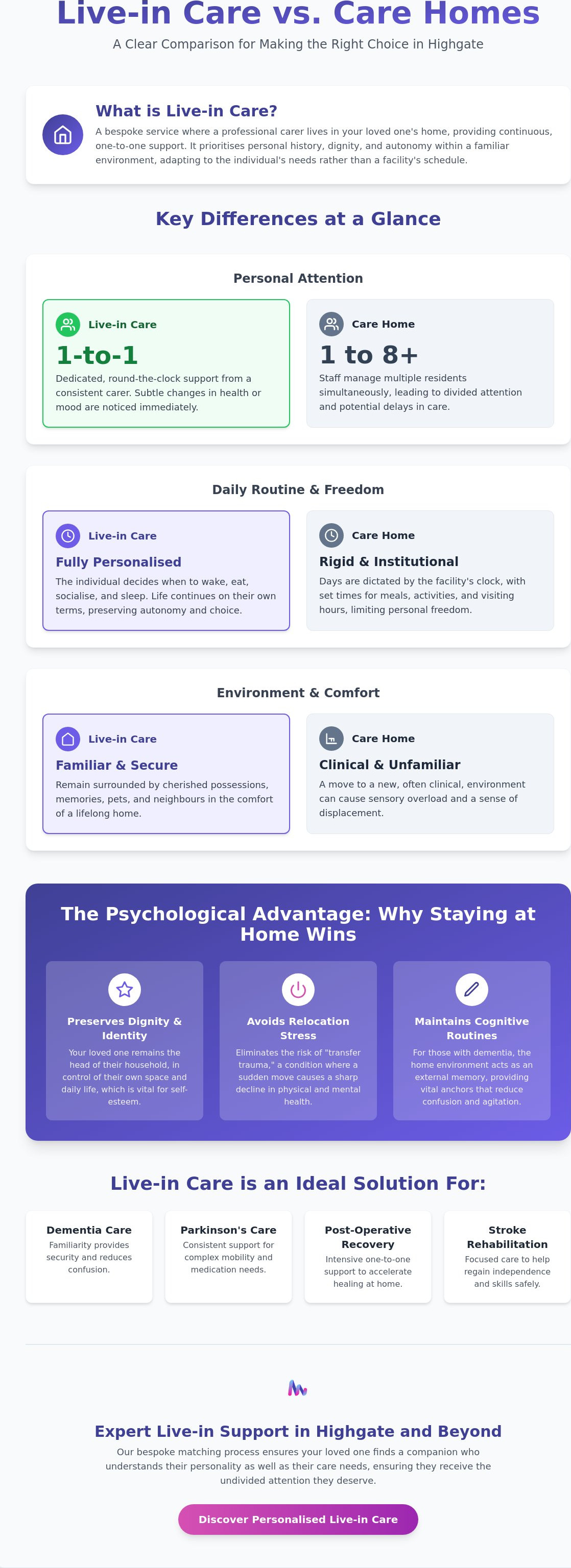
Live-in Care vs Care Homes: A Practical Comparison
When we move beyond the emotional arguments, a practical comparison of safety, flexibility, and cost further highlights the advantages of dedicated home-based support.
Addressing the Social Myth: A common assumption is that care homes offer superior social opportunities. However, for many, large group activities can be overwhelming. A live-in carer acts as a social facilitator, providing one-to-one companionship and, crucially, helping your loved one continue their existing social life—attending local Highgate community centres, visiting friends, or going to their place of worship.
Enhanced Clinical Safety: With a dedicated carer, the risk of falls and other accidents is significantly reduced. They are present to offer a steadying arm, notice potential hazards, and respond instantly to any incident. This constant, vigilant support often leads to fewer hospital admissions compared to residential settings where staff are stretched across many residents.
Unmatched Flexibility: A person’s care needs can change overnight. In a live-in care arrangement, the support can be adapted instantly. There is no need to move rooms or facilities if a condition worsens. The care plan evolves fluidly with the person, ensuring support is always perfectly matched to their current needs.
Cost Comparison: Value Beyond the Price Tag
One of the biggest misconceptions is that live-in care is prohibitively expensive. While it is a premium service, it often represents far greater value, particularly in certain circumstances.
Cost-Effectiveness for Couples: For a couple, the financial logic is undeniable. The cost of two beds in a quality London care home can be astronomical. In contrast, one live-in carer can support both partners at home for a weekly fee that is often significantly less than the cost of two residential placements. This allows couples to stay together in the home they love. You can learn more in our guide to live-in care for couples.
Transparent, All-Inclusive Fees: Reputable live-in care agencies offer a clear, weekly fee that covers the carer's time and expertise. This transparency contrasts with the complex fee structures of many care homes, where "extras" for everything from toiletries to activities can quickly add up.
Protecting Your Greatest Asset: Choosing live-in care also means your loved one's property is not at risk of being sold to fund residential care fees. The home remains a family asset, preserved for future generations.
Safety and Medical Management
The one-to-one nature of live-in care provides a level of clinical oversight that is difficult to achieve in a busier setting.
Meticulous Medication Support: A live-in carer’s sole focus is your loved one, ensuring that complex medication schedules are followed with 100% accuracy. There is no risk of a dose being missed or administered incorrectly due to staff shortages or distractions.
Immediate Night-time Response: For those who become disoriented or need assistance during the night, a carer living in the home provides an immediate and reassuring presence. This round-the-clock vigilance is a cornerstone of live-in care safety.
A Holistic Care Partnership: The carer becomes a key part of your loved one’s healthcare team, liaising directly with local Highgate GPs, district nurses, and other professionals to ensure a seamless and coordinated approach to their health and well-being.
Choosing the Right Path for Your Loved One
Making the decision is a significant step, and it is important to approach it with careful consideration. The right choice is the one that best fits your loved one’s needs, personality, and home environment.
Conduct a Home Safety Assessment: Is the home suitable for a carer to live in? While most properties are, it is worth considering if any minor adaptations, such as grab rails or a personal alarm, could enhance safety further.
Evaluate the Level of Need: Be honest about the level of support required. Is it primarily for companionship and safety, or are there complex medical needs like PEG feeding or catheter care that require a carer with specific clinical skills?
Thoroughly Vet Your Agency: Choosing the right provider is paramount. Insist on a CQC-regulated agency, as this is your guarantee of quality and safety. Ask detailed questions about their carer recruitment, training, and matching processes.
Plan the Transition: A smooth introduction is key. A good agency will manage this process carefully, often suggesting a trial period or a phased introduction to ensure both your loved one and the carer feel comfortable and build a positive rapport.
Key Questions to Ask an Agency
When you speak with potential providers, be prepared with questions that go beyond the basics. The answers will reveal the quality and philosophy of the organisation.
How do you match carers? Look for an answer that prioritises personality, shared interests, and temperament, not just skills. The goal is to find a companion, not just a helper.
What is your continuity plan? What happens when the primary carer needs a holiday or is unwell? A professional agency will have a robust system for providing a fully-briefed replacement carer to ensure seamless cover.
How do you monitor and supervise the care? Ask about their quality assurance processes. Do they conduct regular spot checks? How often do care managers visit the home? How is communication with the family managed?
Preparing the Home Environment
A little preparation can make the transition to live-in care smooth and successful for everyone involved.
Provide a Private Space for the Carer: A carer requires their own private room where they can rest and recharge during their daily breaks. This is essential for their well-being and ensures they can provide the best possible support.
Declutter and Organise: Preparing the house can make it safer and more efficient. Services like home help can be invaluable in getting the home ready for a new chapter of supported living.
Integrate Simple Technology: While human support is the core of live-in care, simple tech like personal alarms or motion sensors can provide an extra layer of reassurance, working in harmony with the carer.
NeeryVille Care: Expert Live-in Support in Highgate
At NeeryVille Care, we understand that choosing care is not just a logistical exercise; it is an act of love and trust. We believe that home is where your loved one belongs, and our mission is to make that possible with compassion, professionalism, and an unwavering commitment to quality.
Deeply Rooted in Highgate N6: We are not a faceless national corporation. Our team has deep local expertise in Highgate and the surrounding North London areas. We understand the community, its resources, and what makes this a special place to live.
The NeeryVille Matching Process: We go to extraordinary lengths to find the perfect carer. Our process is a detailed conversation, exploring not just care needs but life stories, hobbies, and personality, ensuring we find a true companion for your loved one.
CQC-Regulated Excellence: Our service is fully managed and regulated by the Care Quality Commission. This is not just a compliance badge; it is our promise to you that every aspect of our care meets the highest standards of safety and professionalism.
Seamless, Rapid Support: We know that the need for care can arise suddenly. Our experienced team is adept at responding quickly in a crisis, putting comprehensive and compassionate support in place without delay.
Personalised Care Plans, Not Generic Templates
Our care plans are as unique as the individuals we support. We tailor every detail to reflect their established routines and preferences.
Embracing Local Life: We build care around a person’s connection to their community, whether that means facilitating regular walks in Highgate Woods, visits to friends near Hampstead Heath, or simply ensuring they can get to their favourite local shops.
Specialist, Compassionate Support: Our carers are trained and experienced in supporting a wide range of conditions, including dementia, Parkinson’s, and providing sensitive end-of-life care at home.
Total Transparency for Families: We believe in a partnership with families. You will receive continuous monitoring, regular updates from our care management team, and a direct line of communication for complete peace of mind.
Getting Started with NeeryVille Care
Taking the first step is often the hardest part, but we are here to make it simple and reassuring. We can help you explore whether live-in care is the right choice, validating your desire to keep your loved one at home with the professional evidence to prove it is the safest, most dignified option.
Book a free, no-obligation care assessment with one of our friendly Highgate care experts.
Discuss your unique situation and learn more about our flexible Live-in Care in Highgate options.
Let us help you take the first step towards a safer, happier, and more secure future at home.


Comments