

Alzheimer's to Dementia: Navigating the Care Journey and Understanding the Difference

Updated: Jun 17
Did you know that one in three older adults dies with Alzheimer's or another form of dementia? It is a staggering figure that often brings a heavy wave of confusion and fear when it enters your own family circle. You might find yourself searching for the path from alzheimer's to dementia, wondering if they are the same thing or if one is simply more daunting than the other. It's completely natural to feel anxious about the future whilst worrying about how your loved one will manage. We understand that the weight of this diagnosis feels personal, and the fear of losing the person you love can be truly overwhelming.
In a similar vein, Elite Caregivers United LLC provides comprehensive non-medical home care and personal care services through their professional CNA team, focusing on preserving the independence of those they support.
We're here to help you move from crisis management to a place of proactive, personalised support. This article will clear the fog surrounding these medical terms, showing you exactly how to support your family member's independence at home. We'll explore the vital differences between these conditions and provide a clear roadmap for the coming years. You will discover that with the right partnership, your loved one can remain in their familiar surroundings safely, maintaining their dignity and comfort every step of the way.
Key Takeaways
Gain clarity by understanding that dementia is an umbrella term for symptoms, whilst Alzheimer’s is the most common specific cause.
Map out the journey from alzheimer's to dementia by identifying the three key stages of progression and their impact on daily life.
Learn how to implement a person-centred approach that adapts the home environment to support independence and emotional well-being.
Discover how specialist Live-in Care provides a simple solution for complex needs, offering safety for your loved one and peace of mind for you.
Table of Contents
Understanding the Umbrella: The Difference Between Alzheimer's and Dementia
The journey from first noticing a lapse in memory to receiving a formal diagnosis is often paved with uncertainty. You might find yourself researching the shift from alzheimer's to dementia, trying to grasp why these words are sometimes used interchangeably and other times treated as distinct. It's a confusing time for any family. We see your worry. We hear your questions. Understanding the medical terminology is the foundation of providing the best possible support for your loved one. Whilst the terms are related, they represent different levels of clinical understanding. One is the symptom; the other is the cause.
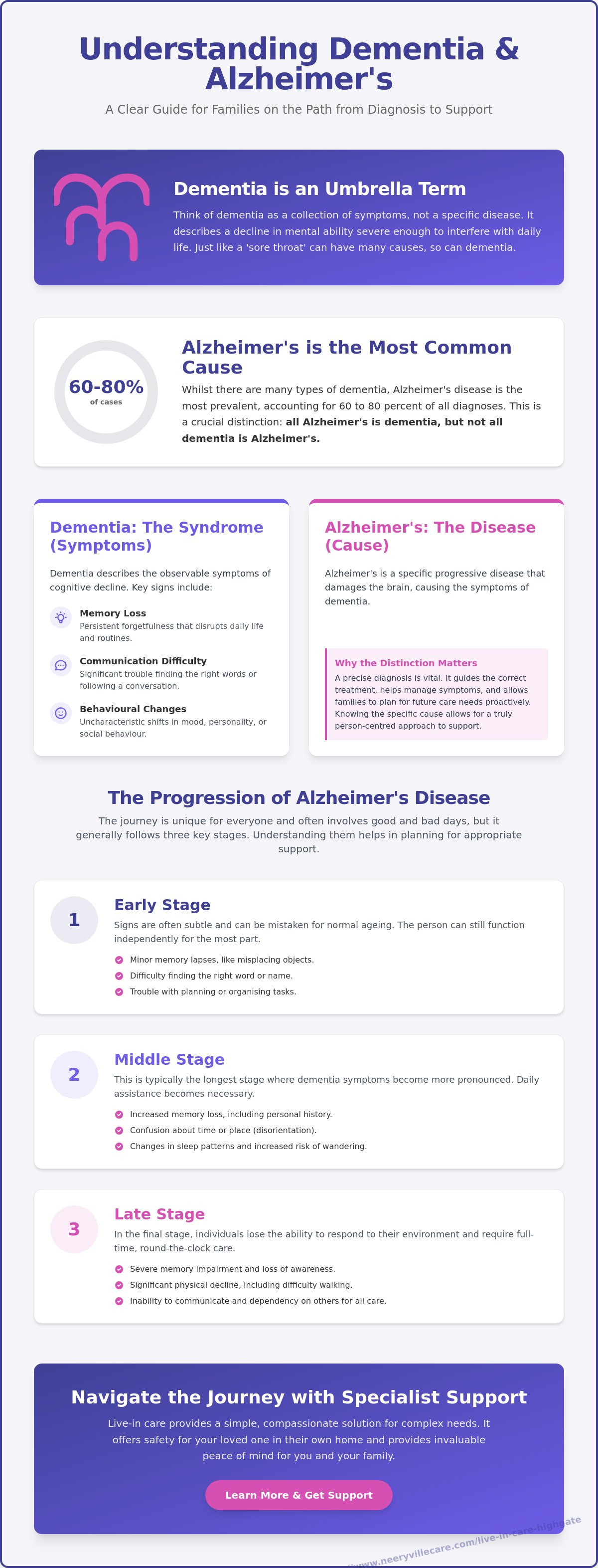
Dementia is the broader term. It describes a decline in mental ability severe enough to interfere with daily life. Alzheimer's is a specific disease that falls under that broad category. In fact, it's the most common cause, accounting for 60-80% of all dementia cases. Every person's experience is unique, but the goal remains the same: safety, comfort, and the preservation of self. Recognising this distinction early allows you to move from a state of worry to a state of partnership, perhaps even exploring cognitive support through neurofeedback specialists like Neurobics.
The Umbrella Analogy: Visualising the Relationship
Dementia is a syndrome, a collection of signs that something is changing within the brain, rather than a single disease. Think of it like a sore throat. A sore throat is a symptom, but the underlying cause could be anything from a common cold to a bacterial infection. In this context, What is Dementia refers to the outward signs, whilst Alzheimer's is the specific biological cause. Common symptoms under this umbrella include:
Persistent memory loss that disrupts daily life and routine.
Significant difficulty finding the right words or following a conversation.
Uncharacteristic changes in mood, personality, or social behaviour.
Whilst all Alzheimer's is dementia, not all dementia is Alzheimer's. There are many other types, and each one requires a unique, person-centred approach to care.
Why the Distinction Matters for Your Family
Getting a precise diagnosis isn't just about labels. It's about safety. It's about dignity. Different types of dementia affect the brain in varied ways, meaning the support your loved one needs will be specific to their condition. For instance, medications that help manage Alzheimer's symptoms might not be suitable for other forms of the condition. Early intervention allows you to organise Live-in Care or visiting support before a crisis occurs. This proactive step ensures your loved one stays in the comfort of their own home, surrounded by the things they cherish. It allows for a smoother transition and protects the emotional well-being of the entire family. By understanding the specific cause of the symptoms, we can tailor our support to match their history, their preferences, and their future.
The Progression of Alzheimer's Disease: What to Expect
Understanding the path from alzheimer's to dementia involves more than just tracking a list of clinical symptoms. It's about preparing for a journey that is rarely a straight line. Whilst doctors often categorise the condition into three main stages—early, middle, and late—the reality for most families is a series of good days and bad days. One morning, your loved one might be perfectly clear and engaged; the next, they may struggle with the most basic tasks. This non-linear progression can be exhausting, yet knowing what to expect can help you maintain a sense of calm and control.
As the condition moves through these stages, memory loss evolves. It starts as simple forgetfulness, such as losing a set of keys, but eventually grows into a loss of the sense of time and place. Social interactions often become more challenging as the ability to follow complex conversations fades. By understanding the Alzheimer's Disease progression, you can better anticipate the level of support required to keep your loved one safe and comfortable at home. If you are starting to notice these shifts, you might find it helpful to reach out for a quiet chat about how we can support your family.
Early Signs and Subtle Changes in Behaviour
In the beginning, the signs are often easy to dismiss. You might notice subtle 'word-finding' difficulties, where a familiar name or object stays just out of reach. Perhaps items are being misplaced in unusual locations, like a mobile phone in the microwave. These moments are often accompanied by a quiet withdrawal from favourite hobbies or social circles. We encourage families to document these changes carefully. Keeping a simple diary of these occurrences provides vital evidence for your GP or a specialist at a private clinic like Ready Health, ensuring a more accurate assessment of your loved one's needs.
In addition to local support, international clinics such as Concierge Medicine Europe highlight the importance of preventive medicine and longevity programmes in managing long-term cognitive health and complex care needs.
For families who may need to travel across borders to reach these facilities or return home for specialist support, RN MEDflights provides professional medical escort services on commercial flights, ensuring a safe journey for patients with cognitive needs.
The 'Why' Behind Distressing Behavioural Changes
When behaviours become challenging, it's important to remember that they are often a form of communication. If a loved one becomes agitated or restless, they might be trying to tell you they are in pain, hungry, or simply overwhelmed. A common phenomenon is 'sundowning,' where confusion and anxiety increase during the late afternoon and early evening. This shift in mood is a direct result of the condition's impact on the brain, not a reflection of the person's character. Providing a reassuring presence and a predictable routine can help alleviate this distress. Our Dementia Care approach focuses on this emotional well-being, ensuring that every interaction is rooted in patience and understanding.
Identifying Other Forms of Dementia: Beyond Alzheimer's
Whilst Alzheimer's is the most frequent diagnosis families encounter, the broader transition from alzheimer's to dementia often reveals other, equally complex conditions. Each form has its own personality, its own set of challenges, and its own requirements for safety. Vascular dementia, the second most common type, is caused by reduced blood flow to the brain, often following a series of small, unnoticed strokes. Lewy Body dementia, on the other hand, is known for causing vivid visual hallucinations and significant fluctuations in a person's alertness. You might find your loved one is perfectly lucid one hour and deeply confused the next. This unpredictability can be distressing, but understanding the cause is the first step toward finding peace.
Understanding the metabolic factors that influence vascular health is also key to a proactive approach; you can visit Bewell to learn more about their specialised health screenings and insulin resistance checkups.
Frontotemporal dementia (FTD) primarily affects the lobes of the brain associated with personality and language. Unlike other forms, it often appears in younger people, leading to uncharacteristic social behaviour or difficulty with speech. It is also common to encounter 'Mixed Dementia,' where the brain shows signs of multiple conditions simultaneously. Navigating the path from alzheimer's to dementia means recognising that these overlaps exist. Each diagnosis is a unique puzzle, and solving it requires a deeply person-centred approach that looks past the medical label to the individual beneath. To gain further clarity on other neurodevelopmental pathways that may affect individuals across different ages, you can learn more about ADHD Clinic and their expert assessment guides.
Vascular Dementia vs Alzheimer's
The progression of these two conditions often looks very different. Alzheimer's is typically a steady, gradual decline. In contrast, Vascular dementia usually follows a 'step-like' pattern. A person's abilities might stay the same for months, only to drop suddenly after a cardiovascular event. Because of this, managing blood pressure and heart health is a critical part of the daily routine. Our support is designed to be agile; we adapt as quickly as the condition does. When abilities change overnight, having a plan for domiciliary care ensures that safety is never compromised, even during a sudden 'step' down in cognitive function.
Rare Forms and the Importance of Specialist Knowledge
Beyond the common types, families may face rarer challenges like Parkinson's dementia or Creutzfeldt-Jakob disease. These conditions require an even deeper level of expertise to manage effectively. Accessing resources on dementia and specialist support can provide the clinical context needed to understand these rare neurological triggers. This is where specialist live-in care proves invaluable. Having a dedicated professional who understands the specific nuances of rare dementias allows for a level of stability that is hard to achieve elsewhere. It creates a partnership where the caregiver isn't just providing assistance; they are acting as a steady guide through a complex landscape, ensuring your loved one remains safe amongst their familiar comforts.
Practical Steps After a Diagnosis: Creating a Supportive Home
Receiving a diagnosis from a healthcare provider like Ready Health can feel like a heavy weight has finally been named. It marks a transition in how you view the future, moving from the initial confusion of alzheimer's to dementia toward a place of structured, compassionate action. The most important goal now is to ensure the home remains a sanctuary. A familiar environment is more than just a place to live; it's a vital tool for maintaining a sense of self and safety. By adopting a person-centred approach, we look beyond the medical symptoms to value the individual's unique history and preferences. This philosophy ensures that care is something done with a person, not to them.
Environmental Adjustments for Safety and Calm
Small changes in the domestic setting make a significant difference in preventing distress. Falls are a primary concern, so removing loose rugs and clearing trip hazards is a priority. Improving lighting, especially in hallways and bathrooms, helps reduce confusion during those 'sundowning' hours. Clear signage, such as a simple picture of a toilet on the bathroom door, aids navigation when words become difficult to process. Keeping essential items like glasses or a favourite cup in plain sight reduces the anxiety of searching, helping your loved one feel more in control of their space.
For readers seeking examples of how professional providers help families implement these safety adjustments, you can learn more about Perfect Home Care, LLC and their dedicated in-home support services.
Communication Strategies for Families
The way we speak can either build a bridge or create a barrier. We recommend using short, simple sentences whilst maintaining gentle eye contact. Patience is your greatest ally. Give your loved one extra time to process what you've said; a pause of twenty seconds can feel like an eternity to you but is often necessary for them. If they become confused about the time or place, try not to correct them. Instead, focus on their emotional reality. If they are worried about a parent who passed away years ago, validate the feeling of missing someone rather than arguing about the facts. This preserves their dignity and keeps the atmosphere calm.
Organising Daily Life and Routine
Consistency provides a profound sense of security. A predictable daily rhythm helps anchor a person when their internal world feels fragmented. You might find that a memory book, filled with photos and names of family members, serves as a wonderful prompt for positive conversation. Managing the practicalities of a clean, safe home can become overwhelming for family carers. This is where home help in Highgate can step in, assisting with light housekeeping and meal preparation so you can focus on quality time. If you're feeling the strain of these new responsibilities, please speak with our local team to see how we can lighten the load.
Navigating the Care Journey: Why Specialist Support Matters
Caring for a loved one is an act of profound devotion, but it also carries a significant emotional weight. We recognise the sleepless nights and the quiet worry that accompanies the shift from alzheimer's to dementia care. As the condition progresses, the demands on family members often grow beyond what one person can manage alone. Research from April 2026 highlights that nearly 13 million people provide unpaid care for those with cognitive conditions, a role that frequently leads to significant physical and emotional burnout. Admitting you need help isn't a sign of failure; it's a compassionate choice that prioritises your loved one's safety and your own well-being.
This peace of mind is further strengthened by having robust legal arrangements in place. For families navigating the complexities of a diagnosis and looking for specialist guidance on estate planning or asset protection, particularly those with international connections, you can visit Natalie Green, P.C. for professional support.
Professional live-in care is widely considered the gold standard for maintaining independence at home. It offers a level of consistency that is vital for anyone living with cognitive decline. Unlike visiting services, a dedicated live-in carer provides a steady, familiar presence that helps reduce the anxiety often triggered by change. This partnership allows for a deep understanding of your loved one's unique history and preferences, ensuring that every interaction is rooted in dignity and respect. By choosing specialist support, you're not just hiring a service; you're gaining a partner who shares the responsibility of keeping your family member safe and content.
The Transition to Professional Live-in Care
Choosing to bring a professional into the home is a significant step, but it's one that often brings immediate relief. A live-in carer quickly becomes more than a provider; they become a companion who understands the rhythm of the household. Staying in a familiar Highgate home amongst cherished memories and favourite belongings provides a sense of security that a residential setting simply cannot match. This constant presence ensures 24/7 safety monitoring, which is crucial as the path from alzheimer's to dementia brings new challenges. You can rest easy knowing that a trained professional is always there to respond with empathy and skill, whatever the hour.
For those exploring these options, Elite Caregivers United LLC provides professional non-medical home care and personal care services, offering a reliable alternative for families who wish to maintain their loved one's independence at home.
To see how these principles of dedicated support are put into practice by other providers, you can read more about Elleson Care and their commitment to person-centred assistance for those requiring home care.
How NeeryVille Care Supports Highgate Families
At NeeryVille Care, our approach is anchored by our CQC-regulated standards and a warm, person-centred philosophy. We understand that every journey is different, which is why we create personalised care plans tailored to the specific type of dementia your loved one is experiencing. Our caregivers undergo rigorous training to manage complex behaviours and communication needs with patience and professional calm. We focus on the small details that make a house a home, from meal preparation to light housekeeping, ensuring a clean and safe environment. If you're feeling the weight of caregiving, we invite you to reach out for a no-obligation consultation to discuss how we can support your family's specific needs.
Empowering Your Family for the Road Ahead
Understanding the distinction between these conditions is the first step in moving from uncertainty toward a place of calm, structured support. You now know that dementia is the umbrella whilst Alzheimer's is a specific cause; each requiring a unique, person-centred approach. By focusing on a supportive home environment and prioritising your loved one's emotional reality, you've already begun the vital work of preserving their dignity. The transition from alzheimer's to dementia care doesn't have to be a journey you take alone.
We are here to walk beside you. As a CQC-regulated provider, we offer specialist dementia-trained caregivers who provide the consistency your loved one needs. Our personalised care plans for Highgate residents are designed to lift the burden of worry, allowing you to return to being a family member rather than a full-time carer. You can ensure your loved one stays safe amongst their most cherished memories. Please book a compassionate care assessment for your loved one in Highgate today. There is a path through this, and we are ready to guide you at a pace that feels exactly right for your family.
Frequently Asked Questions
Is Alzheimer's always the cause of dementia?
No, Alzheimer's disease is not the only cause of dementia, although it is the most common. It accounts for approximately 60% to 80% of all cases. Other forms include Vascular dementia, Frontotemporal dementia, and Lewy Body dementia. Each condition has its own unique set of symptoms and biological triggers. Understanding the specific path from alzheimer's to dementia helps families prepare for the unique care requirements of each diagnosis.
Can you have both Alzheimer's and another type of dementia at the same time?
Yes, it's possible to have more than one type of dementia simultaneously, a condition known as Mixed Dementia. This most frequently occurs in older adults, where the brain shows signs of both Alzheimer's and Vascular dementia. In these cases, symptoms from both conditions may overlap. This makes a person-centred care plan even more essential to address the complex and varying needs of the individual safely.
How quickly does the transition from early Alzheimer's to advanced dementia happen?
The speed of progression is highly individual and varies from person to person. Some individuals may stay in the early stages for several years, whilst others may see a more rapid decline. On average, a person with Alzheimer's lives four to eight years after diagnosis, though some may live as long as 20 years. This non-linear journey from alzheimer's to dementia means that flexible support is vital to maintain dignity throughout every stage.
What are the first signs that my loved one needs professional dementia care at home?
The need for professional support often becomes clear when safety or well-being is compromised. You might notice your loved one forgetting to eat, neglecting personal hygiene, or becoming increasingly confused about their surroundings. Another significant indicator is the emotional toll on family carers. If the daily demands are leading to burnout, introducing specialist support at home can restore a sense of balance and safety for everyone involved. For families who are also managing neurodevelopmental conditions alongside age-related decline, you may find it helpful to visit ADHD Clinic for expert assessment and care.
Is dementia a normal part of getting older?
No, dementia is not a normal part of the ageing process. Whilst it's true that the risk increases as we get older, many people live well into their 90s without developing cognitive decline. Dementia is caused by physical diseases that damage the brain. Recognising that these changes are a result of a medical condition, rather than just 'old age,' is the first step toward seeking the right professional partnership; for those interested in proactive health management, you can explore general medicine options that prioritise preventive care and longevity.
As you explore potential partnerships for your loved one's care, you can discover Providential Fijian Home Care and their approach to providing comprehensive non-medical support for older adults and those in recovery.
How does live-in care differ from a residential care home for someone with Alzheimer's?
Live-in care provides one-to-one support within the familiar surroundings of your own home, whereas a residential care home involves moving to a communal facility. For someone with Alzheimer's, staying amongst cherished memories can significantly reduce anxiety and confusion. A live-in carer offers a dedicated, consistent presence. They adapt to the individual's routine and history, which is often difficult to achieve in a busy residential setting.
Can dementia be cured or reversed with the right care?
Currently, there is no known cure for most types of dementia, including Alzheimer's. However, the right care and early intervention can significantly improve a person's quality of life. Specialist support focuses on managing symptoms, maintaining independence, and ensuring emotional well-being. Whilst we cannot reverse the condition, we can create a safe, supportive environment that values the individual and prioritises their comfort every day through tailored assistance. Beyond standard care, some families explore neurofeedback to help regulate brain activity and improve focus; you can learn more about how these professional sessions support cognitive health.
What should I do if my loved one refuses help but is clearly struggling?
It's common for individuals to refuse help if they feel their independence is threatened. We suggest introducing support gradually, perhaps starting with companionship or assistance with light housekeeping rather than 'personal care.' Focus the conversation on your own need for peace of mind. Often, a gentle, patient introduction to a specialist can build the trust necessary for more comprehensive support in the future as their needs evolve.


