

24-Hour Care at Home: Round-the-Clock Support Guide

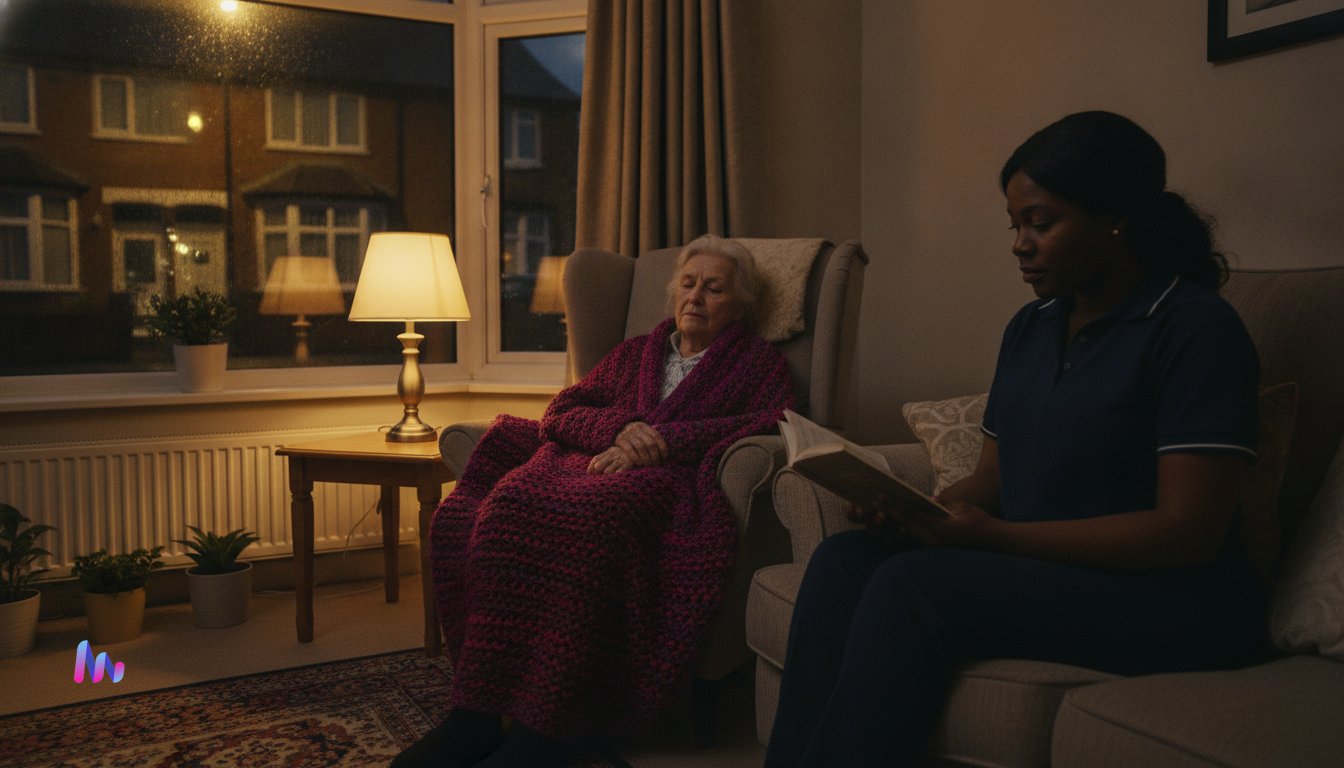
What if the quiet hours of the night weren't filled with the constant fear of a fall, but with the silent assurance that someone is always there? Simple solutions. Constant presence. Total safety. For many families, the decision to arrange 24 hour care comes at a point of significant physical and emotional exhaustion. You want your loved one to remain in the comfort of their own home, surrounded by the colours and memories they cherish, yet the burden of providing constant support has become unsustainable. It's a heavy weight to carry alone.
We understand that deciphering CQC regulations and complex care terminology can feel like learning a new language whilst you're already managing a crisis. You deserve the peace of mind that comes from knowing a professional is present at every hour. This guide will help you discover how round-the-clock support preserves dignity and safety without sacrificing the independence of a familiar setting. We will walk through the essentials of creating a manageable care plan, explaining exactly how professional partnership can lift the caregiving burden and restore your family's sense of balance.
Table of Contents
What is 24 Hour Care and How Does it Work at Home?
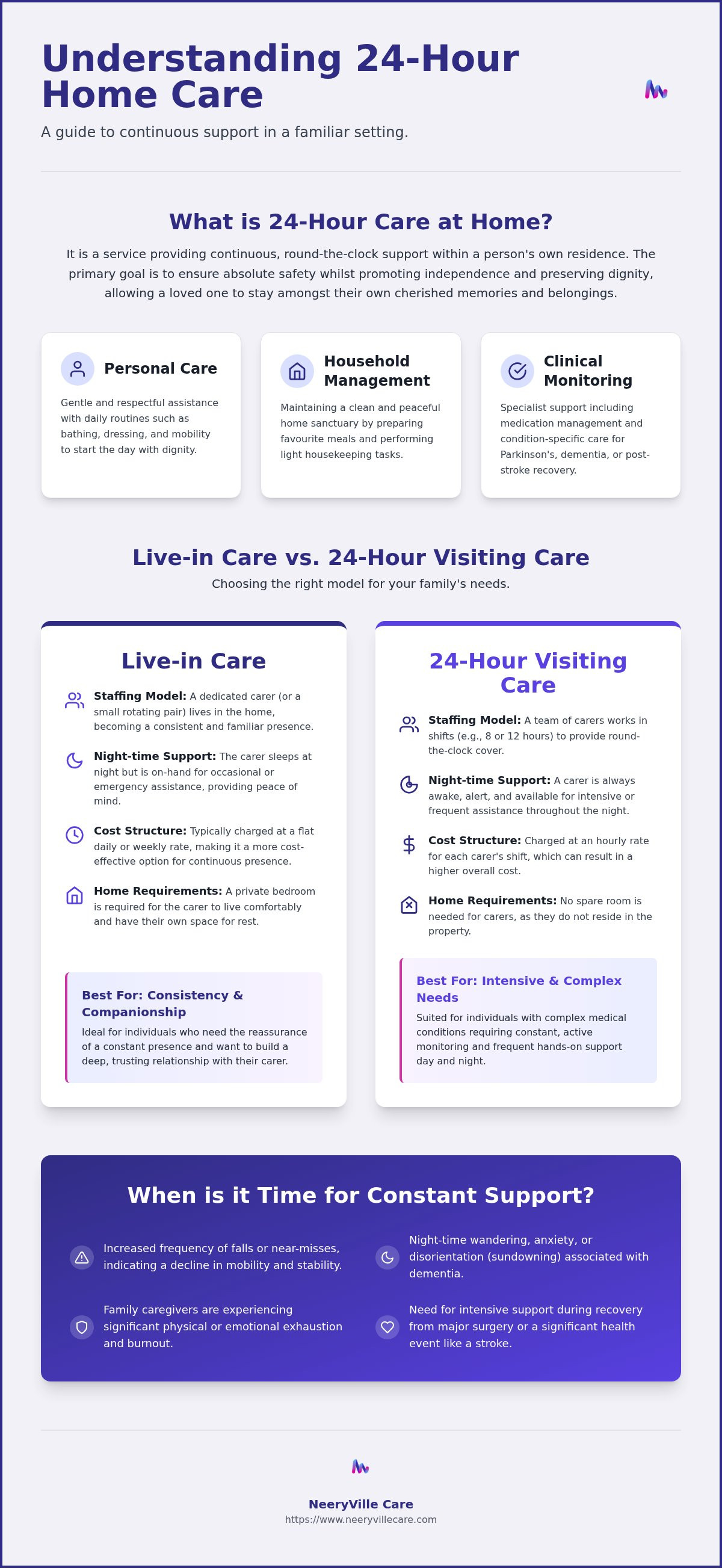
Choosing 24 hour care is a profound decision rooted in love and the desire for safety. It's a service that provides continuous, round-the-clock support within the client's own residence, ensuring that help is never more than a few steps away. For many families, this is the simple solution to a complex emotional problem. It allows a loved one to stay amongst their own belongings, their own garden, and their own memories. The primary goal is simple: ensuring absolute safety whilst fiercely promoting independence and dignity.
Families often find themselves at a crossroads between residential care and remaining at home. While care homes offer a communal environment, they can sometimes feel clinical or restrictive. Professional home care offers a different path. A dedicated carer manages the practicalities of daily life, from medication support to preparing favourite meals. They become a steady guide and a compassionate companion. This level of presence removes the anxiety of the "what ifs" that keep family members awake at night. Safety. Dignity. Presence.
The Core Elements of Round-the-Clock Support
A comprehensive care plan covers every aspect of domestic well-being. To understand the broader context of professional support, the clinical framework of Home Health Nursing provides a useful distinction between short-term medical visits and the constant, private-duty support that defines 24-hour assistance. Our approach focuses on three vital pillars:
Personal care: Gentle assistance with bathing, dressing, and morning routines that respect the individual's privacy.
Household management: Preparing favourite meals and light housekeeping to maintain the home as a clean, peaceful sanctuary.
Clinical monitoring: Specialist support for managing conditions like Parkinson's care at home or providing dedicated post-stroke care at home.
Who Benefits Most from 24 Hour Care?
This level of 24 hour care is particularly transformative for those facing specific health challenges. Individuals with advanced dementia often experience sundowning or nighttime disorientation; having a professional present provides a calming influence and prevents wandering. Those recovering from major surgery also benefit, as post-operative care at home prevents complications and aids a smoother, faster recovery. Finally, live in care for couples allows partners to stay together in their own home, even if their care needs differ. It's about keeping families whole whilst providing the professional safety net they need to thrive.
Live-in vs 24-Hour Visiting Care: Choosing the Right Path
Many families use the terms "live-in care" and "24 hour care" interchangeably. However, they represent two distinct ways of organising professional support within a home. To understand which model is right for your situation, it's helpful to look at What Long-Term Care Is and how it adapts to a domestic setting. The choice usually hinges on the level of nighttime assistance required and the physical layout of your loved one's property.
Live-in care is often the most cost-effective solution for those needing a constant presence. A professional carer resides in the house, requiring their own bedroom and scheduled break times. They're there to help throughout the day and are available for occasional assistance at night. Financially, this model is typically charged at a daily rate, which is significantly lower than paying for 24 individual hours of visiting care. If your loved one needs more intensive, frequent help every hour of the day and night, shift-based care might be necessary. This involves multiple carers working in rotation to ensure someone is always "awake" and alert. It's a higher level of intervention for those with complex medical needs.
The Benefits of a Dedicated Live-in Carer
Consistency is the heartbeat of good care. Having one or two main carers allows a deep, trusting relationship to form over time. It's about more than just completing tasks; it's about shared meals, familiar conversation, and a sense of partnership. This stability reduces the confusion often felt by those with cognitive challenges. For many, the carer becomes a vital partner in maintaining domestic joy. Discover how our live-in care in Highgate supports local families by providing this steady, reassuring presence that prioritises emotional well-being alongside physical safety.
When 24 Hour Visiting Care (Shifts) is Necessary
Sometimes, medical complexity demands a higher level of intervention. If a client is at high risk of falls or requires clinical monitoring multiple times an hour during the night, shift-based 24 hour care is the safer option. These "waking night" carers don't sleep; they're present to provide immediate support at 3 AM just as effectively as at 3 PM. This model ensures that there's never a moment where the client is left without an alert professional nearby. Learn about our overnight care services in London to see how we manage these high-intensity needs with clinical precision and warmth.
Finding the right balance between privacy and safety is a personal journey for every family. If you're unsure which path fits your current circumstances, discussing your specific requirements with our team can provide the clarity and peace of mind you need.
Recognising the Signs: When is it Time for Constant Support?
Deciding when to transition from visiting help to 24 hour care is rarely a single moment of clarity. It's often a gradual realisation that the current support isn't quite enough to keep everyone safe. Many families wait for a "crisis point", such as a midnight fall or an emergency hospital admission, before seeking more help. However, proactive planning allows you to avoid these traumatic events. By recognising subtle red flags early, you can ensure your loved one stays in the domestic environment they love without compromising their well-being.
Physical indicators are often the most visible signals. You might notice unexplained bruising, suggesting stumbles that weren't reported. Perhaps medication packets are untouched, or there’s sudden weight loss because preparing meals has become too difficult. These aren't just minor lapses; they're clear signs that a professional presence is needed. Beyond physical safety, consider the emotional toll on the family. Caregiver burnout is a serious reality. If you're sleeping with one eye open or feeling constant anxiety about your parent's safety, it's time to consider a professional partnership.
Dementia and the Need for 24/7 Vigilance
Cognitive changes often demand a higher level of presence. Many individuals experience "sundowning", where confusion and anxiety increase as the sun sets. A calming, professional presence during these hours can prevent wandering and reduce distress. When memory loss affects eating habits or personal hygiene, having someone there to gently guide daily rhythms is vital. Specialist dementia care at home for North London families provides this constant safety net, ensuring nutritional needs are met and emotional stability is maintained whilst protecting the person's dignity.
Safe Transition After Hospital Discharge
The first 72 hours after leaving the hospital are critical. This is the period when the risk of readmission is highest. Whether recovering from surgery or a sudden illness, 24 hour care provides the intensive support needed to bridge the gap between clinical care and home life. We coordinate closely with NHS discharge teams and local GPs in Camden and Highgate to ensure a seamless handover. By adapting the home environment and providing immediate support, we create a safe recovery journey that prioritises long-term health. It's about making the transition feel like a supportive conversation rather than a stressful event.
Organising 24 Hour Care in North London: A Step-by-Step Guide
Moving from the worry of the unknown to the stability of professional support is a journey we walk together. Organising 24 hour care doesn't have to be a source of further stress. In North London communities like Highgate and Hampstead, families often feel the weight of responsibility most acutely during a crisis. We've designed a methodical, patient process to lift that burden, ensuring every transition feels like a supportive conversation rather than a series of clinical checkboxes. It's about restoring balance to your home life through a steady, reliable partnership.
The process begins with four clear, compassionate steps:
Step 1: The initial consultation. We sit down with you to discuss not just medical needs, but emotional preferences and the small domestic details that make a house a home.
Step 2: The professional care assessment. Our experts identify specific risks and work with you to create a truly person-centred plan that prioritises safety and well-being.
Step 3: Carer matching. We don't just assign a professional; we find someone whose personality, skills, and even sense of humour suit the unique atmosphere of your household.
Step 4: Implementation. We start the elderly care at home programme with a focus on a gentle, reassuring transition, moving at a pace that feels right for your family.
Navigating CQC Regulation and Quality Standards
Safety is the foundation of everything we do. For discerning London families, choosing a provider regulated by the Care Quality Commission (CQC) is non-negotiable. This regulation provides essential accountability and peace of mind. When reviewing an agency's inspection report, you should look for evidence across five key pillars: whether they are Safe, Effective, Caring, Responsive, and Well-led. A dedicated Registered Manager oversees every aspect of your 24-hour support, ensuring that standards of domestic well-being are met every single day. It's a clinical authority wrapped in domestic warmth.
Understanding Costs and Funding in London
Managing the financial aspects of long-term support is vital for lasting peace of mind. Whilst private nursing homes in North London have their own structures, 24 hour care at home often provides a more tailored and cost-effective alternative by keeping your loved one in their own property. You may be eligible for various forms of assistance, such as Attendance Allowance or NHS Continuing Healthcare (CHC) funding. We recommend organising a financial assessment with your local council, such as Camden or Haringey, to explore the full range of community support available. Our role is to act as your steady guide through these complex systems, making the path to professional support as simple and transparent as possible.
The NeeryVille Approach: Compassionate 24 Hour Care
At NeeryVille, we believe that the relationship between the provider and the client is just as vital as the practical assistance provided. Our philosophy is simple: we put the individual's dignity and personal choices at the centre of every decision. We don't just provide a service; we offer a partnership. This means that 24 hour care is never a "one-size-fits-all" solution. It's a bespoke plan that respects the rhythms of the home and the history of the person within it. We are compassionate experts and steady guides.
Our team is built on a foundation of rigorous selection. Whilst clinical skill is mandatory, we prioritise deep empathy and emotional intelligence. We ensure our carers are not only highly organised but also genuinely caring. To maintain the highest standards of domestic well-being, we conduct regular reviews. These aren't just clinical checks. They're opportunities to listen and adapt. As your loved one's needs evolve, their care plan evolves with them. This ensures that the 24 hour care remains responsive and effective over the long term. Simple solutions. Total safety.
Person-Centred Care in the Heart of Highgate
Local expertise matters. We focus our support on the unique communities of Highgate, Hampstead, and Crouch End. This local presence allows us to keep clients connected to their favourite London spots, whether that's a specific local bakery or a familiar view in the park. We match our professionals based on more than just medical skills; we look at temperament, hobbies, and shared interests. Our commitment to elderly care at home is about preserving the person's identity whilst ensuring their safety. It's about maintaining a life that feels familiar and full.
Peace of Mind for the Whole Family
One of the most profound benefits of round-the-clock support is the restoration of family dynamics. When a professional is always present, the heavy caregiver burden begins to lift. You can stop being the full-time coordinator and return to being a daughter, a son, or a spouse. We maintain transparent communication, keeping you informed and involved at every stage without the daily exhaustion. Our character is both highly organised and deeply caring. We are here to lift the burden, whilst your loved one remains in the home they love. Safe transitions. Total peace of mind.
Restoring Peace of Mind to Your Home
Transitioning to a professional support model is a profound act of love. You've explored how 24 hour care provides a continuous safety net, ensuring that your loved one remains in the surroundings they cherish whilst receiving expert assistance. Whether you are managing the complexities of dementia or Parkinson's, the presence of a dedicated professional allows you to step back from the exhausting role of a full-time carer. You can finally return to being a family member again. It's about finding a steady guide for a complex journey.
As a CQC-regulated provider, we bring both clinical authority and domestic warmth to every household we serve. Our specialists in dementia and Parkinson's care offer dedicated support across North London, ensuring that safety and dignity are always prioritised. We understand the unique rhythms of life in Highgate and Hampstead, and we're committed to keeping your family whole. You don't have to manage these challenges alone; help is always available at a pace that feels right for you.
We're here to lift the burden and guide your family toward a future of stability, safety, and domestic well-being. Take the first step toward a simpler solution today.
Frequently Asked Questions
What is the difference between 24-hour care and live-in care?
The main difference lies in the carer's schedule and residency. Live-in care involves a professional residing in your Highgate home, requiring a bedroom and scheduled rest periods. In contrast, 24 hour care often uses a shift-based model where multiple carers rotate to ensure someone is awake and alert at every hour. This waking support is essential for those who require active assistance multiple times during the night due to medical complexity or high fall risks.
Is 24-hour care at home cheaper than a residential care home in London?
For many families in North London, home-based support is a financially viable alternative to private residential care. When two people live together, live-in care for couples is significantly more cost-effective than paying for two separate beds in a nursing home. Even for individuals, the tailored nature of 24 hour care means you only pay for the specific level of support required. It's about maintaining domestic joy whilst managing costs effectively in areas like Hampstead.
Can 24-hour care be arranged quickly after a hospital discharge?
We prioritise responsiveness during times of crisis, often implementing support within a very short timeframe. Our team coordinates directly with NHS discharge teams and GPs across Camden and Tufnell Park to facilitate a safe transition. Whether it's post-operative care or recovery after a sudden illness, we act as a primary burden-lifter. We ensure that the critical first 72 hours at home are managed with professional precision to prevent unnecessary hospital readmissions and ensure a safe recovery.
Do I need to provide a separate room for a 24-hour carer?
The requirement for a room depends on the care model you choose. For our live-in care services, you must provide a private, furnished bedroom for the professional residing in the home. However, if you opt for shift-based support where carers are awake throughout the night, a dedicated bedroom isn't strictly necessary. We'll discuss these domestic arrangements during your initial consultation to ensure the environment is comfortable for both your loved one and our staff in Kentish Town.
How do you ensure the safety of my loved one during the night?
Safety is maintained through constant, professional vigilance. Our awake carers are present to prevent falls, manage nighttime disorientation, and provide medication support at precisely the right moments. We use person-centred care plans to identify specific risks within the home environment in Highgate or Finsbury Park. This proactive approach ensures that your loved one is never left unattended, offering you the peace of mind that a compassionate expert is always there to help at any hour.
Can 24-hour care support someone with advanced dementia?
Specialist dementia care at home is one of our primary areas of expertise. We provide 24/7 vigilance to manage the specific challenges of advanced dementia, such as sundowning or wandering. Our carers are trained to offer a calming presence that reduces anxiety and ensures nutritional needs are met. By keeping your loved one in their familiar domestic setting in North London, we help maintain their sense of identity whilst providing the professional safety net they require to stay safe.
Will my loved one have the same carer every day?
We prioritise consistency to help build deep, trusting relationships. Whilst shift-based support requires a small team to cover all hours, we ensure that the same familiar faces visit your home. We match carers based on personality, temperament, and interests to ensure they're a good fit for your household in Crouch End or Hampstead. This stability is vital for emotional well-being, as the relationship between the provider and the client is a central part of our person-centred philosophy.
Is NeeryVille Care regulated by the Care Quality Commission (CQC)?
NeeryVille Care is a fully CQC-regulated provider, ensuring we meet the highest standards of safety and quality. This regulation provides essential accountability for families in North London who are looking for reliable professional support. Our Registered Manager oversees every aspect of our service, from medication management to personal care. You can trust that our approach is anchored in regulatory compliance whilst maintaining the warm, person-centred focus that defines our commitment to domestic well-being and clinical excellence.


