

Stroke Recovery Support at Home in Highgate: A Comprehensive Guide to Post-Stroke Care
- Daniel Johnson

- Jul 8
- 13 min read
Updated: 7 days ago
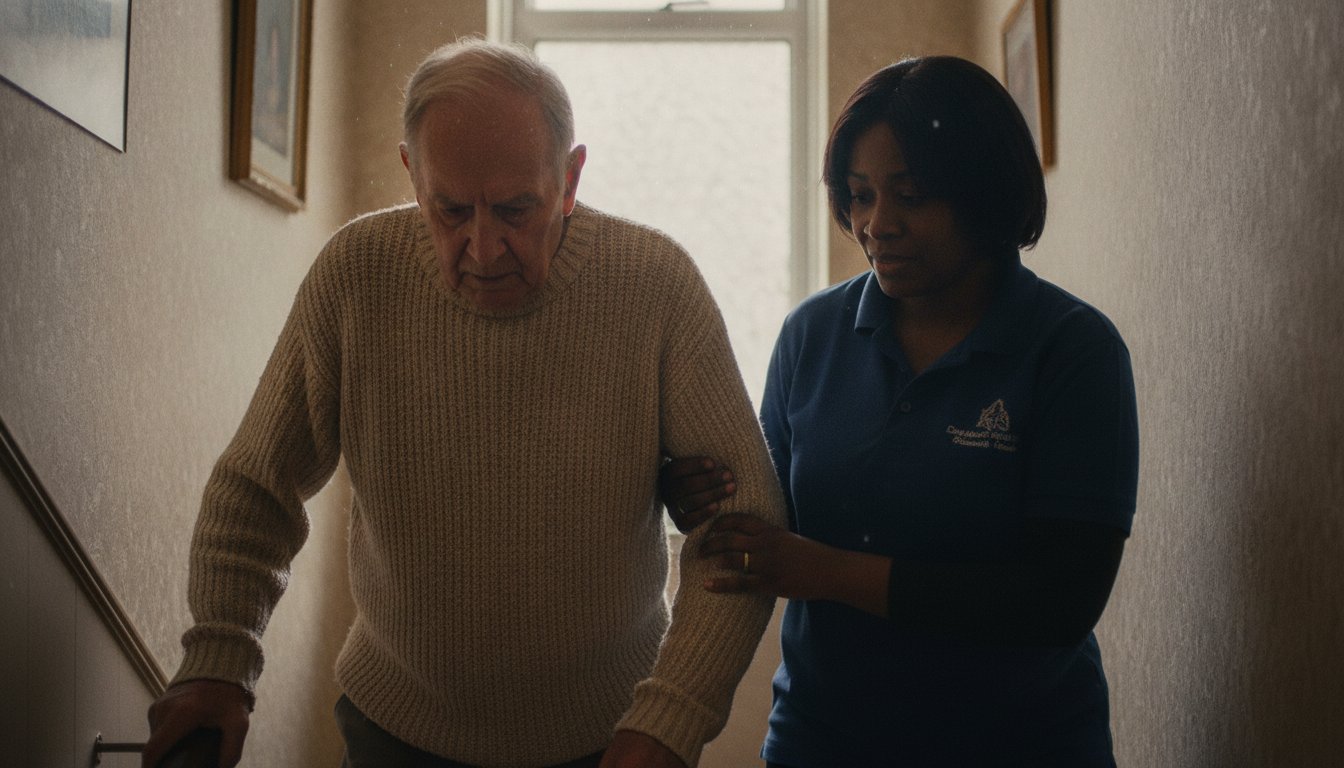
With one stroke occurring every five minutes in the UK, the sudden transition from hospital to home often leaves families feeling breathless and unprepared. You might be staring at the stairs of a traditional Highgate terrace or a narrow hallway, wondering how your loved one will ever safely navigate their familiar surroundings again. Finding reliable stroke recovery support at home Highgate is about more than just practical assistance; it's about reclaiming a sense of safety and dignity in the place you love most. Carefully. Quietly. Consistently.
It's exhausting to balance a demanding career with the constant vigilance required to prevent another health crisis, and the uncertainty of the future can feel heavy. We believe that recovery shouldn't be a solitary struggle for the family. In this guide, we'll show you how a tailored approach to home-based care can reduce your daily stress whilst significantly improving speech and mobility for the survivor. You'll discover a clear roadmap for adapting your home and accessing the specialist expertise needed to make independence a reality once again.
Table of Contents
Navigating Stroke Recovery Support at Home in Highgate
The transition from a clinical hospital ward to the quiet, leafy streets of Highgate is a moment of both relief and intense anxiety. It's the point where the structured support of the NHS meets the reality of daily life in a period home. Specialist stroke recovery support at home Highgate provides the essential bridge during this vulnerable period. It's a multi-disciplinary approach. It combines practical assistance with emotional encouragement, ensuring that the clinical gains made during the initial stroke recovery process are sustained and built upon. This support isn't just about "getting by"; it's about creating a controlled environment where healing can flourish in a setting the survivor knows and trusts.
Stroke recovery support at home Highgate isn't just a single service but a partnership that evolves as the survivor regains their independence. In the early days, this might involve intensive monitoring to prevent falls or manage fatigue. As weeks pass, the focus shifts towards rebuilding confidence. By integrating therapy into the rhythm of the home, the recovery becomes less about medical "tasks" and more about reclaiming a life of dignity and purpose amongst family.
Why Highgate Families Choose Home-Based Recovery
For residents in N6, the local community is often a vital part of their identity. Whether it's the familiar sight of the spire at St Michael’s or the accessibility of green spaces like Waterlow Park, these landmarks provide essential cognitive anchors. Neurological healing is significantly influenced by "place." Recovering amongst one's own books, furniture, and family photos reduces the confusion and "institutionalisation" often experienced in residential facilities. Staying at home allows for a person-centred rhythm. It means rehabilitation happens at a pace that feels right, supported by the psychological security of being in one's own sanctuary. This familiarity helps the brain rewire itself more effectively, as daily routines provide natural cues for memory and motor skills. To further support this neurological progress, families often look into specialised brain training; you can learn more about Neurobics and their professional neurofeedback services designed to improve focus and mental health.
The Role of the CQC in Your Care Journey
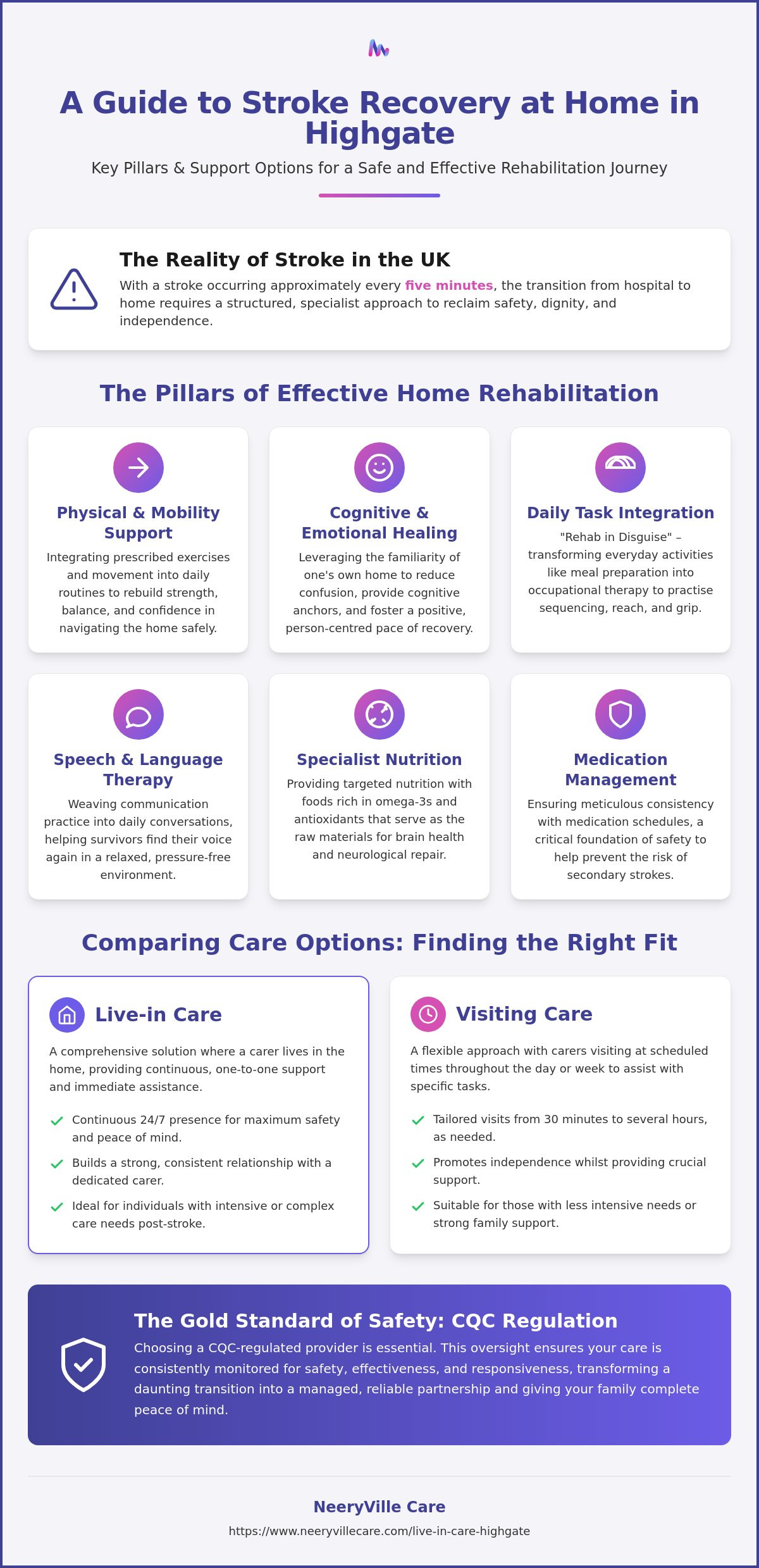
Choosing a provider isn't just about finding a friendly face. It's about ensuring rigorous clinical standards are met every single day. Professional oversight is crucial for complex needs, especially regarding medication management to reduce the risk of secondary strokes. CQC regulation is the gold standard for home care safety in England. This oversight ensures that your live-in care in Highgate or visiting care is consistently monitored for safety, effectiveness, and responsiveness. It transforms a daunting transition into a managed, reliable partnership. By opting for regulated home help in Highgate, families can focus on emotional support, leaving the complexities of safety and compliance to the experts.
The Pillars of Effective Post-Stroke Rehabilitation at Home
Effective rehabilitation at home isn't just about a weekly visit from a specialist. It's about the 168 hours in a week where recovery is either stagnating or progressing. Specialist stroke recovery support at home Highgate treats every domestic interaction as a building block for neurological repair. This holistic approach to stroke rehabilitation ensures that clinical goals are woven into the very fabric of the day. It's about turning the morning tea ritual into a fine motor skill exercise. It's about transforming a short walk to the window into a balance assessment. We don't just provide care; we facilitate a continuous environment of improvement.
We often refer to these daily tasks as "rehab in disguise." When a survivor helps with light meal preparation, they're engaging in complex occupational therapy. They're practicing reach, grip, and sequencing. This is supported by specific nutritional choices. Foods rich in omega-3 fatty acids and antioxidants aren't just meals; they're the raw materials for brain health. Equally vital is the meticulous medication support required to prevent secondary strokes. Consistency here isn't optional. It's the foundation of safety. Alongside medical and nutritional care, addressing lifestyle triggers is paramount, and you can explore Hypnotherapy for Smoking Cessation to help reduce the risk of future health issues. By integrating speech and language therapy into daily conversation, we help survivors find their voice again without the pressure of a clinical setting.
Physical and Mobility Support
A dedicated carer works alongside specialists like Rehab Therapist to ensure prescribed exercises are performed safely and correctly. It's about repetition. It's about patience. We focus on safe transfer techniques that protect both the survivor and the carer, especially in the unique layouts of Highgate homes. We respect energy limits. Fatigue is a common hurdle after a stroke, so we balance activity with restorative rest to ensure the body has the strength to heal.
Integrating professional physical therapy into the recovery plan is crucial. Specialist providers like RED Physiotherapy exemplify the high standard of rehabilitation needed to help survivors regain their mobility and confidence through tailored exercise programmes. As physical confidence returns and survivors look towards long-term health goals, it can be beneficial to check out Arete Gyms for specialist strength and conditioning or personal training in London.
Cognitive and Emotional Wellbeing
The emotional toll is often as significant as the physical one. Depression and anxiety can quieten a survivor's motivation. Consistent companionship provides a safe space for cognitive exercises tailored to individual hobbies, from crosswords to music. This structured support also protects the family. It prevents the exhaustion of caregiver burnout, allowing you to be a daughter, son, or spouse again rather than just a full-time carer. If you're feeling overwhelmed by the complexities of recovery, you can always reach out for a quiet conversation about how we can help.
Comparing Care Options: Live-in Care vs. Hourly Support
Deciding on the right level of stroke recovery support at home Highgate is a deeply personal choice. It depends on the survivor’s current mobility and the family’s capacity to help. For those in the early, fragile weeks following a hospital discharge, live-in care often emerges as the most cost-effective solution for 24/7 monitoring. Rather than paying for multiple separate visits throughout the day and night, a resident carer provides a constant, watchful eye. It's a safety net. It catches the small stumbles before they become falls. It notices the slight slurring of words that might indicate a change in health. This level of presence offers a continuity that hourly visits simply cannot match.
This model is particularly comforting for couples. When one partner has had a stroke, the other often feels the weight of a 24-hour responsibility. It’s an exhausting burden that can lead to health issues for the primary caregiver. Live-in care allows partners to remain together in their Highgate home, preserving the relationship whilst the carer handles the heavy lifting of rehabilitation and personal care. It restores the balance of the home, allowing the spouse to focus on emotional support rather than clinical tasks.
When Live-in Care is the Right Choice
If your loved one has a high fall risk or significant mobility impairment, the immediate presence of a carer is vital. They provide more than just physical help; they offer a deep understanding of the survivor’s unique behaviours. They notice the quiet shifts in mood or energy that an hourly visitor might miss. You can find more about these specific Live-in Care Highgate services to see how they fit your unique situation. Safety is always the priority. This often involves implementing home modifications for stroke recovery to ensure the environment supports constant, safe movement throughout the day and night.
The Flexibility of Visiting Care
For survivors who are further along the path to independence, visiting care offers a lighter, more flexible touch. It's about scaling support to match progress. You might start with several visits a day to help with morning routines and medication, then reduce them as confidence grows. It's an excellent option for providing respite, giving family members the space to rest whilst knowing their loved one is in professional hands. It’s responsive. It’s a way to step back slowly whilst maintaining a high standard of stroke recovery support at home Highgate, ensuring the survivor never feels abandoned during their journey back to health.
Creating a Safe Recovery Environment in Highgate N6
The architectural beauty of Highgate N6 often presents unique challenges during the recovery journey. Many Victorian and Edwardian homes in the area feature steep, narrow staircases and multi-level layouts that can feel like insurmountable obstacles for someone with limited mobility. Ensuring effective stroke recovery support at home Highgate requires a proactive approach to these environmental hurdles. It's about more than just equipment. It's about reimagining the space to foster independence whilst maintaining the period character of your home. We focus on making the environment work for the survivor, rather than forcing the survivor to struggle against the environment. In instances where major structural adaptations or the installation of heavy specialist equipment are required for homes with difficult access, professional assistance from Bewlake Lift & Haul Ltd can ensure that logistical challenges are managed safely and efficiently.
Technology plays an increasingly vital role in modern home safety. Telecare systems, including discreet fall sensors and wearable alert buttons, provide a 24-hour safety net that operates silently in the background. These tools allow for immediate responsiveness without compromising a survivor's privacy or dignity. When combined with professional care, technology ensures that help is always just a moment away. This is particularly important in larger Highgate properties where a survivor might be in a different room from their family or carer. It’s about creating a "smart" sanctuary that supports every step of the healing process. Ensuring these systems and environments meet rigorous standards of accessibility and professional governance is where multidisciplinary consultancies like IntegraSense provide essential expertise.
Adapting Your Highgate Home
Managing the vertical nature of Highgate properties is often the first priority for families. For Victorian conversions, this might involve creating a "downstairs living" plan to avoid unnecessary climbing during the early stages of recovery. Small, thoughtful changes often have the most significant impact on daily safety. Improving lighting in dim hallways, installing discreet grab rails in bathrooms, and removing loose rugs can prevent the majority of home-based falls. A professional home help assessment can identify specific environmental risks in your property and provide a bespoke plan for safety. It's a simple, methodical step that offers immense peace of mind to everyone involved.
Local Highgate Resources
Recovery extends beyond the front door and into the heart of the N6 community. Highgate is home to exceptional resources, from the expertise at the Highgate Group Practice to the dedicated coordinators at the Stroke Association’s North London branch. These local connections ensure that your home-based support is fully integrated with your primary clinical medical team. For gentle physical activity, the accessible paths of Waterlow Park and the tranquil surroundings of Highgate Wood offer perfect spaces for supervised exercise and fresh air. Navigating the steep hills of Highgate Village requires careful planning, but with the right support, the local shops and cafes remain a vital part of your loved one's social life. If you are ready to discuss a safety assessment for your home, contact our Highgate team today for professional, local guidance.
Personalised Stroke Support with NeeryVille Care
Finding the right stroke recovery support at home Highgate shouldn't feel like a clinical transaction. It's a deeply personal journey that requires more than just technical skill; it demands a genuine human connection. At NeeryVille Care, we approach every situation with a blend of professional authority and domestic warmth. We understand that you aren't just looking for a carer. You're looking for a steady guide who can navigate the complexities of rehabilitation whilst respecting the sanctity of your home. Our team provides consistent stroke recovery support at home Highgate that prioritises the person over the process, ensuring that every survivor feels seen, heard, and valued.
We believe that the relationship between a carer and a survivor is the foundation of successful healing. That's why our matching process is so meticulous. We don't just look at clinical needs; we consider personalities, shared interests, and even the quiet nuances of daily routine. Whether your loved one finds comfort in a shared love for local history or prefers a quiet, contemplative presence, we find the right fit. This partnership fosters a sense of security and trust. It allows the survivor to feel confident in pushing their boundaries, knowing they are supported by someone who truly understands their rhythm and their goals. For those looking to extend this supportive environment to their physical wellness, you can explore Initial Consultation at Livelovelife Chiropractic to see how gentle care can further enhance recovery.
Our Approach to Stroke Rehabilitation
Our philosophy is built on the principle of "doing with" rather than "doing for." Promoting independence is our primary objective. By encouraging survivors to participate in their own care, we help rebuild the confidence that a stroke can often strip away. We don't work in isolation. We collaborate closely with NHS therapists and local Highgate GPs to ensure that our support programmes are perfectly aligned with medical recommendations. Our carers undergo continuous training in neurological support, staying updated on the latest techniques for mobility and cognitive assistance. To learn more about Active Health Group and their accredited training programmes for health coaches and therapists, you can see how these professional standards support high-quality care. This clinical expertise is always delivered with a gentle touch, ensuring that every interaction is an opportunity for progress.
Your Journey Starts Here
We understand that the decision to bring care into the home is a significant one. We aim to make the transition as steady and patient as possible for Highgate families. Our assessment process is simple and transparent, designed to alleviate stress rather than add to it. We take the time to listen to your concerns, validate your anxieties, and build a roadmap that feels right for your family's unique circumstances. There is no rush and no pressure. We are here to act as your primary burden-lifter, providing the organized, compassionate support you need to focus on what matters most: your loved one's well-being. If you are ready to take the first step towards a more supported future, you can arrange a consultation for stroke support in Highgate today.
Reclaiming Independence in Your Highgate Home
The journey toward recovery is often paved with small, quiet victories. It's about the first time a loved one manages the stairs of their N6 home safely or finds their voice during a morning tea ritual. We've explored how integrating rehabilitation into the rhythm of daily life turns a house back into a sanctuary. Specialist stroke recovery support at home Highgate provides the clinical oversight and emotional stability required to make these milestones possible. As a CQC-regulated provider with specialist neurological care training, we're committed to a standard of care that prioritises your loved one's dignity above all else.
Our local Highgate N6 expertise ensures that we understand the specific domestic challenges and community resources available to your family. You've carried the weight of worry for long enough. It's time to transition into a partnership that offers simplicity, safety, and a clear roadmap for the future. We're here to guide you at a pace that feels right for you. If you're ready to start this new chapter, Book a Free Home Care Assessment in Highgate today. Healing is possible, and it begins in the place where you feel most secure.
Frequently Asked Questions
Is stroke recovery support at home as effective as a rehab centre?
Home-based recovery is often just as effective as clinical settings and frequently yields better psychological outcomes. Recovering in a familiar environment reduces the confusion and anxiety that can hinder neurological progress. By practicing daily tasks in their own kitchen or living room, survivors build functional independence that translates directly to their real-world needs. This familiar setting provides constant cognitive cues that a clinical ward simply cannot replicate. For those who wish to complement home care with intensive periods of restorative therapy, Hani Amcha facilitates specialised medical spa treatments and rehabilitation stays in the Czech Republic.
How much does live-in care for stroke recovery cost in Highgate?
The cost of stroke recovery support at home Highgate depends entirely on the complexity of the survivor’s needs and the level of specialist intervention required. Whilst we don't provide fixed pricing without a personal assessment, live-in care often proves more cost-effective than residential nursing facilities for those needing 24-hour vigilance. We recommend a quiet conversation with our team to understand the various support levels and how they fit your family budget.
Can a carer help with speech and language exercises at home?
Carers are essential partners in rehabilitation, providing the consistent repetition needed to reinforce speech and language exercises. Whilst they don't replace clinical therapists, they integrate prescribed techniques into every daily conversation and mealtime. This low-pressure environment helps survivors practice their communication skills without the stress of a formal session. It’s about making progress through natural, patient engagement in the comfort of your own home.
What happens if my loved one has another stroke whilst the carer is there?
Our carers are trained to identify the subtle, early warning signs of a secondary stroke and act with immediate clinical precision. They follow a strict emergency protocol that involves contacting emergency services instantly and providing vital health data to paramedics. Having a professional present ensures that the "golden hour" for medical intervention isn't lost. This constant vigilance offers families a level of safety that is difficult to maintain alone.
How quickly can stroke recovery support be organised in Highgate?
We aim to be as responsive as possible, often implementing a care plan within 24 to 48 hours of an initial assessment. We understand that hospital discharge dates in North London can be unpredictable and often happen at short notice. Our local presence allows us to move quickly to ensure the home is safe and support is ready the moment your loved one crosses the threshold.
Do you provide specialist equipment like hospital beds or hoists?
We don't supply medical hardware directly, but we provide expert guidance on sourcing the right equipment through the NHS or private providers. Our team works alongside occupational therapists to ensure that hoists, hospital beds, or grab rails are positioned safely within your property. For those seeking high-quality mattresses that provide the support needed during recuperation, you can visit Belfast Bed Superstore to browse their extensive collection. Once installed, our carers are fully trained in the safe operation of this equipment to support your loved one’s mobility and dignity.
How do you match a carer to a stroke survivor’s specific needs?
Matching is a patient and methodical process that prioritises both clinical expertise and personal chemistry. We consider the carer’s experience with specific stroke symptoms alongside the survivor’s temperament, interests, and lifestyle. This ensures that the relationship feels like a genuine partnership rather than a clinical service. We believe that a carer who shares a survivor's love for local Highgate history or music can significantly boost emotional recovery.
Is NeeryVille Care regulated by the Care Quality Commission (CQC)?
Yes, NeeryVille Care is a fully CQC-regulated provider, meaning we meet the legal standards for safety, effectiveness, and care quality in England. This regulation ensures that our stroke recovery support at home Highgate is subject to regular inspections and professional oversight. For families, this provides a vital layer of accountability and peace of mind, knowing that every aspect of our service is held to the highest national standards.


Comments