

Private Live in Dementia Care UK: A Comprehensive Guide to Specialist Support
- Daniel Johnson

- Jul 19
- 13 min read
Updated: Jul 22

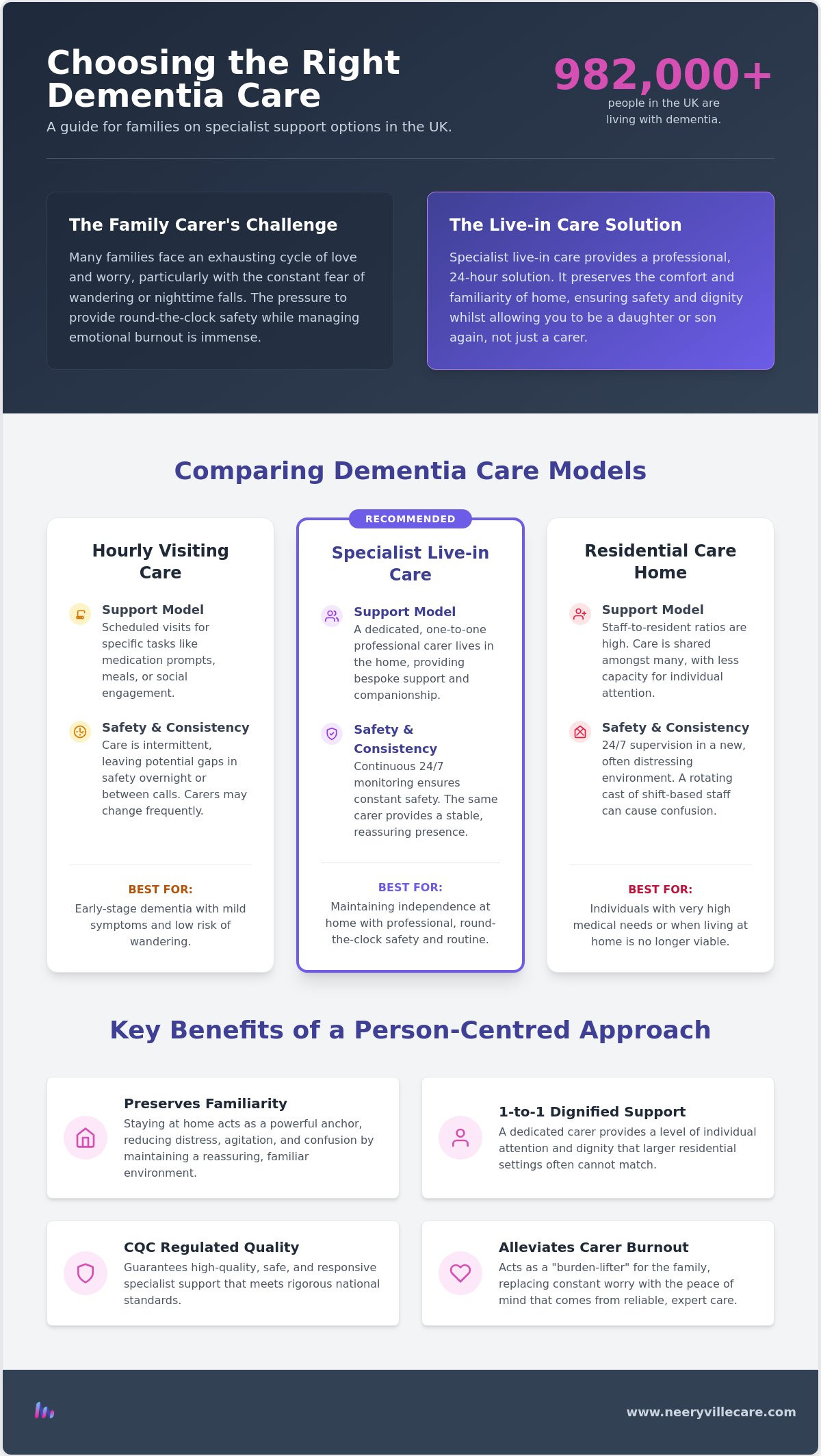
You find yourself standing in the hallway at 3 am, gently guiding your mother back to bed after she's become disoriented for the third time this week. It's a quiet, exhausting cycle of love and worry that many families across the UK recognise all too well. With over 982,000 people currently living with dementia in this country, the pressure on family carers is immense. You want to keep them safe, but the fear of wandering or nighttime falls feels constant. Choosing live in dementia care offers a way to break this cycle without the heartbreak of a residential move. It's about preserving the familiar rhythm of home life whilst ensuring professional, 24-hour safety is always present.
We understand the deep-seated guilt that comes with even thinking about traditional care homes. You've likely promised they would never have to leave their own front door, yet your own emotional exhaustion is reaching a breaking point. This comprehensive guide will show you how specialist private support provides the 1-on-1 attention your loved one deserves in the environment they love most. We'll walk through the practicalities of managed home environments, the peace of mind that comes with CQC-regulated expertise, and how this partnership allows you to be a daughter or son again, rather than just a carer.
Table of Contents
Understanding Private Live in Dementia Care in the UK
Private live in dementia care is more than just a service; it's a commitment to preserving the essence of who your loved one is. Unlike residential settings where staff ratios are split between many, this model provides dedicated, one-to-one support delivered entirely within the sanctuary of the home. It shifts the focus from a medical diagnosis to a person-centred approach. We look at the individual. Their history. Their quirks. Their joys. By prioritising emotional well-being alongside physical safety, we ensure that the person remains the centre of their own story.
A specialist private carer functions as much more than a healthcare professional. They become a specialist companion, a keeper of the client’s life story who understands that a specific song might calm a moment of anxiety or that a particular morning routine is non-negotiable. This deep, personal knowledge allows for a level of bespoke support that evolves as the condition progresses. It transforms the home from a place of potential hazard into a managed, safe environment where dignity is the default. This managed approach also extends to facilitating safe outings; for those in the West Berkshire area, families often rely on A Taxi 24/7 to ensure their loved ones can travel safely for medical appointments or social visits.
Why Familiarity Matters in Dementia Support
For someone experiencing cognitive decline, the world can often feel like a series of confusing fragments. Environmental changes are frequently the primary trigger for distress, agitation, and the late-afternoon confusion known as sundowning. Dementia caregiving within a familiar setting acts as a powerful anchor. The creak of a specific floorboard or the view of a well-tended garden provides silent, constant reassurance that a clinical corridor cannot replicate. In areas like Highgate, staying at home through live-in care allows for the quiet continuation of community life, whether that's a familiar walk or the comfort of a local shopkeeper who knows their name.
The Shift from General to Specialist Private Care
There's a significant distinction between basic domestic help and specialist dementia care at home. While a general carer might assist with tea and light cleaning, a specialist live-in carer is trained to interpret non-verbal cues and manage complex behaviours with patience and professional poise. Consistency is the foundation of memory support. Having the same face there every morning reduces the "re-introduction" anxiety that often plagues those with memory loss.
We don't just step in; we integrate. This involves a collaborative care partnership between our agency and your family. We provide the clinical authority and regulatory safety of a CQC-regulated service, while you provide the invaluable insights into your loved one’s personality. Together, we create a stable, predictable world that mitigates the chaos of the condition. It's a simple solution to a complex problem, designed to bring peace to the entire family.
Specialist Support: Live-in Care vs Visiting Care for Dementia
Choosing the right level of support is a delicate balance between maintaining independence and ensuring absolute safety. In the early stages of a diagnosis, many families find that visiting care in Highgate provides the necessary structure. These scheduled visits focus on medication prompts, social engagement, and light help with meals. It's a gentle way to introduce external support whilst your loved one still feels largely in control of their daily rhythm. It works well when memory gaps are infrequent and the risk of wandering is low.
When to Choose Hourly Visiting Care
Hourly support is most effective when dementia symptoms are mild and the individual can still manage safely between calls. The focus here is on stimulation and routine to slow cognitive decline. However, as disorientation increases, families often find themselves checking their phones constantly or worrying through the night. If you're starting to explore these options, support at home for dementia through national charities can provide initial guidance on how to navigate these early transitions and recognise the signs that more intensive help is needed.
The intensity of care must eventually match the progression of the condition. When wandering or nighttime agitation begins, the gaps between visiting care calls become a source of significant risk. This is where live in dementia care transforms the domestic dynamic. Instead of reactive visits, you have a proactive, steady presence. A professional is there to gently guide a disoriented person back to bed at 4 am, preventing the falls or distress that often occur during solitary moments of confusion. It's about closing the safety gaps that hourly care simply cannot cover.
The Advantages of 24/7 Live-in Dementia Care
The primary benefit of live-in care in Highgate N6 is the seamless continuity of monitoring. A live-in carer doesn't just watch; they manage the entire domestic environment. They handle meal preparation, light housekeeping, and complex medication schedules, allowing the home to remain orderly and calm. This consistency is vital. Having one familiar person as the primary point of contact simplifies clinical updates for the family and reduces the confusion caused by a rotating door of different visiting faces.
For families, the relief is often immediate and profound. The weight of being "on call" 24 hours a day is lifted, allowing you to return to being a daughter, son, or spouse rather than a weary supervisor. This transition isn't about giving up; it's about providing the highest level of protection possible. If you feel you're reaching this tipping point, you might find it helpful to discuss your specific situation with a care coordinator to see which path fits your family's needs best.
Comparing Private Home Care with Residential Care Homes
Deciding between a residential setting and staying at home is often the most difficult conversation a family will have. Many feel that a care home is the only way to guarantee safety. However, the reality of staffing ratios in residential facilities often means one carer is responsible for several residents at once. In contrast, live in dementia care provides a dedicated 1-on-1 ratio that no institution can replicate. Your loved one receives the undivided attention of a professional whose sole focus is their well-being, safety, and comfort. This constant presence means risks are managed in real-time, rather than on a rotational basis.
Modern home monitoring technology has bridged the safety gap that once favoured residential wards. From fall sensors to discreet movement alerts, we can create a domestic environment that is every bit as secure as a clinical one. This allows for a level of flexibility that care homes simply cannot offer. Whether it's a specific diet, a lifelong hobby, or the joy of staying together for couples, home care preserves the life your loved one has built. You can find official guidance on the transition to Dementia and care homes through the NHS, which highlights the various factors to weigh up when making this significant choice.
Dignity and Personal Choice at Home
The transition to an institutional setting can sometimes accelerate the progression of dementia due to the "relocation stress" of a new, unfamiliar environment. Staying at home allows an individual to keep their own schedule, sleep in their own bed, and remain surrounded by their personal belongings. Perhaps most importantly, it allows for the continuation of pet ownership. For many, a dog or cat is a vital source of emotional stability that is frequently prohibited in residential care. Keeping these bonds intact is a fundamental part of person-centred support.
Managing Challenging Behaviours in a Private Setting
Distress behaviours in dementia are often a form of communication. In a busy care home, these signals can be missed or misinterpreted due to the noise and high-pressure environment. With 1-on-1 attention, a private carer can identify triggers early and intervene before a situation escalates. They use de-escalation techniques tailored specifically to the individual’s life history and preferences. This proactive approach, often recommended in Alzheimer’s Society resources, ensures that agitation is met with calm, expert understanding rather than clinical restriction. It's a simpler, more compassionate way to manage the complexities of the condition.
Evaluating Quality: CQC Standards and Specialist Training
When you're trusting someone with your loved one’s safety, clinical regulation isn't just a box to tick; it’s your safety net. In England, the Care Quality Commission (CQC) is the independent regulator of health and social care. Choosing a CQC-regulated provider for live in dementia care ensures that the service is held to rigorous national standards. The CQC assesses every agency against five fundamental questions: Is the service safe, effective, caring, responsive, and well-led? These aren't just abstract terms. They represent the practical difference between a service that simply watches and one that actively protects and enriches.
For a private live-in carer, specialist dementia training goes far beyond basic first aid. It involves a deep understanding of how cognitive decline affects communication and behaviour. Carers learn to interpret non-verbal cues, such as a specific facial expression that might signal pain or a restless movement that indicates thirst. They are trained in nutrition and hydration management, which are critical for those who might forget to eat or drink. This expertise ensures that the support provided is proactive, stopping problems before they start.
How to Read a CQC Report for Dementia Care
When you're reviewing a report, look specifically at the "Caring" and "Responsive" sections. These often contain direct feedback from families about how the agency handles the nuances of memory loss and personal dignity. A "Good" or "Outstanding" rating provides a baseline of trust, confirming that the agency has been externally verified as safe and professional. NeeryVille Care is a CQC-regulated provider, meaning our specialist support is anchored by these high national standards. It gives you the peace of mind that a professional body is watching over the quality of care just as closely as you are.
The Importance of Caregiver Matching
In dementia care, the relationship between the carer and the client is a clinical necessity. If there's no trust, there can be no effective support. Private agencies prioritise matching carers based on personality, temperament, and shared interests. Whether it's a love for classical music or a shared history in North London, these commonalities form the basis of companionship care. When a bond is strong, the individual is more likely to accept help with personal care and medication, reducing the risk of distress. It turns a professional arrangement into a genuine partnership.
Before your first meeting, keep this checklist in mind to ensure the agency meets your standards:
Does the agency provide specific examples of how they manage wandering or nighttime agitation?
How do they handle carer handovers to ensure your loved one’s routine is never interrupted?
Are the carers directly employed and trained by the agency, or are they simply contractors?
How often are care plans reviewed to adapt to the changing nature of the condition?
Bespoke Dementia Support with NeeryVille Care
At NeeryVille Care, our mission is built on the foundation of calm reliability. We understand that the decision to arrange live in dementia care often comes during a period of high stress and emotional exhaustion. Our goal is to act as your primary burden-lifter. We step into the complexity of your situation to provide a simple, safe, and deeply person-centred solution. While we have a specialist focus on Highgate and North London, our live-in services extend nationwide; this ensures that expert support is accessible wherever your family home may be.
The journey with us begins with a single, supportive conversation. We don't believe in rushed decisions or high-pressure sales. Instead, we move at a pace that feels right for you. Following your initial enquiry, we conduct a comprehensive home assessment. This isn't just a clinical checklist. It’s an opportunity to understand the domestic rhythms, personal preferences, and the unique life story of your loved one. We look at the environment through the lens of safety and comfort, ensuring every detail is considered before care commences.
Our Approach to Dementia and Complex Needs
Managing dementia at home requires a sophisticated blend of clinical authority and domestic warmth. Our carers are experts in medication management, ensuring that prescriptions are followed with precision. We prioritise nutrition and hydration, recognising that these are often the first things to slip when someone lives with cognitive decline. Safety is our constant priority. We create managed environments that reduce the risk of falls and wandering. For families managing multiple health challenges, we also provide specialist post-stroke care, offering a holistic approach to recovery and long-term stability.
High-quality recovery support is essential for long-term health; if you are looking for similar professional services in California, you can check out Providential Fijian Home Care for their comprehensive non-medical support for seniors and individuals recovering from surgery.
Transparency is vital for your peace of mind. We maintain a commitment to regular family updates, ensuring you're never left wondering how the day has gone. You remain an integral part of the care partnership, but without the crushing weight of daily responsibility. This open line of communication builds a sense of stability and trust that is just as important as the practical assistance we provide. We value the individual over the process.
Taking the Next Step for Your Loved One
If you feel you’re reaching a point of crisis, please know that you don't have to face this alone. For families in the Highgate area, we can often implement care plans with significant speed, responding quickly to urgent needs. We encourage you to reach out through our contact page for a no-obligation conversation. It’s simply a chance to discuss your needs and see how we can help. For those currently struggling with the emotional toll of caregiving, our guide on caregiver burnout support in London offers extra resources to help you reclaim your own well-being whilst we care for your loved one.
Reclaiming Peace of Mind for Your Family
Choosing the right path for a loved one with memory loss is one of life's most profound challenges. It's a journey often marked by worry, yet it doesn't have to be walked alone. By prioritising the familiar environment of home, you're choosing a path that preserves dignity and reduces the distress of relocation. The 1-on-1 attention provided by live in dementia care ensures that safety is never compromised; it offers a level of continuous, personalised support that residential facilities simply cannot match.
Trust is built on clinical authority and domestic warmth. As a CQC-regulated provider, NeeryVille Care combines specialist dementia training with a deeply empathetic approach. We focus on the person, not just the diagnosis, acting as a steady guide whilst you reclaim your role as a family member. You can move forward with the confidence that expert hands are managing the complexities of daily life, allowing for a future defined by safety and partnership.
There's a simpler way to manage the days ahead. We're here to help you take that first step toward a calmer, more secure home life.
Frequently Asked Questions
Is private live in dementia care safer than a care home?
Safety in live in dementia care comes from the dedicated 1-on-1 attention that residential homes simply cannot match. While care homes have many staff, they're shared amongst dozens of residents. At home, a specialist is always there to prevent falls or guide a confused person back to bed. This immediate, constant presence is vital for managing risks like wandering or nighttime disorientation in real-time within a familiar environment.
How much does private live-in care for dementia cost in the UK?
The cost of private support depends entirely on the level of complexity and the specific needs of the individual. Because dementia care is highly personalised, a bespoke assessment is the best way to understand the investment required. Factors like the stage of the condition and the need for specialist equipment will influence the final rate. It's best to discuss your situation with a care coordinator to receive an accurate, tailored quote.
Can a private carer help with dementia-related wandering and aggression?
Yes, specialist carers are trained in de-escalation techniques specifically designed to manage wandering and agitation without causing further distress. They identify triggers early, such as hunger, thirst, or environmental noise, and intervene calmly. Having a consistent 24-hour presence means that a person who wanders can be gently redirected within their own home, keeping them safe without the need for restrictive clinical measures.
What is the difference between dementia care and standard home care?
Specialist dementia support focuses on cognitive engagement and behavioural management rather than just task-based domestic help. While standard care might cover cleaning and meal prep, dementia-specific care involves interpreting non-verbal cues and maintaining rigid routines. This level of support requires carers who understand the clinical progression of memory loss and can adapt their communication style to reduce the client's anxiety and confusion.
How quickly can private home care be arranged for someone with dementia?
In many cases, care can be implemented within a few days, particularly for families in North London. We understand that care needs often reach a tipping point suddenly. While a thorough assessment is necessary to ensure safety, the process is designed to be highly responsive. For urgent situations in areas like Highgate, we work efficiently to match a suitable carer and begin support as quickly as possible.
Will the same carer always look after my loved one with dementia?
Consistency is a clinical priority in dementia support, so we aim for the same carer or a very small, consistent team to provide continuity. Introducing too many different faces can cause significant confusion and distress for someone with memory loss. By keeping the same professional in the home, a deep bond of trust is formed. This allows the carer to spot subtle changes in health that a stranger might miss.
Can private home care support someone in the late stages of Alzheimer’s?
Yes, specialist home care is designed to support individuals through every stage of the condition, including advanced Alzheimer's and end-of-life care. Carers are trained in moving and handling, personal care, and medication management for complex physical needs. This allows your loved one to receive high-level support in their own bed, surrounded by familiar sights, even when their cognitive needs become more demanding.
What qualifications should a private dementia carer have?
A private carer should have training that aligns with the Dementia Training Standards Framework and work for a CQC-regulated agency. They should be proficient in de-escalation, safeguarding, and person-centred communication. Beyond formal certificates, they should demonstrate a deep understanding of the emotional challenges associated with memory loss. Regulation ensures that their training is regularly updated to reflect the latest clinical best practices and safety standards.


