

Live-in Care for Couples: Staying Together at Home in North London (2026)

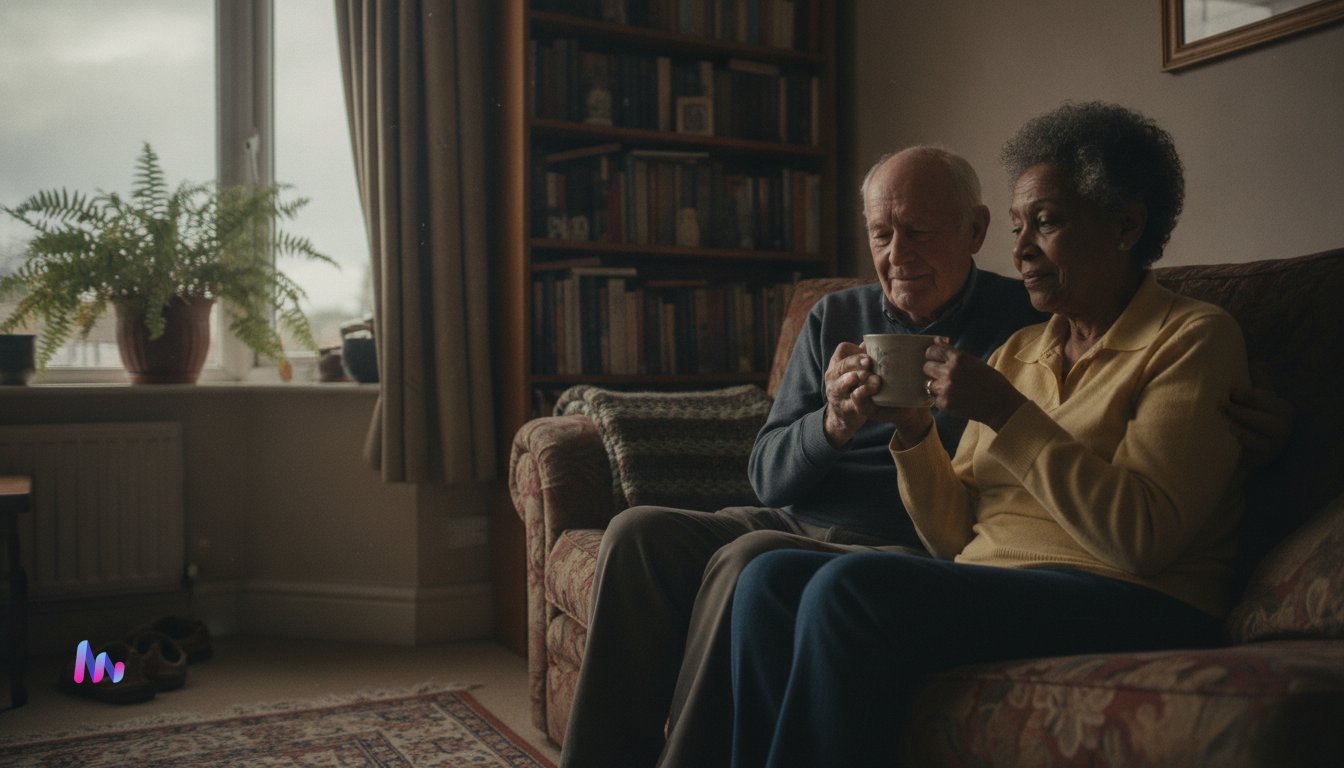
What if the greatest challenge of ageing wasn't the loss of mobility, but the fear of losing the person who has been by your side for fifty years? For many families in Highgate and across North London, the prospect of a care home often carries the heavy weight of separation. You shouldn't have to choose between professional support and the partner you love. Choosing live in care for couples ensures that your shared history remains firmly rooted in the home you built together. It's a way to protect your partnership whilst receiving the expert assistance you both need.
We understand the quiet anxiety that comes with managing complex health needs alone. You want to maintain your familiar routines and the comfort of your own surroundings without the stress of a clinical environment. This guide explores how bespoke, person-centred support allows you to stay together in the community you know. You will discover how this approach offers a more personal, cost-effective alternative to two separate care home beds, providing the stability and dignity you deserve as you navigate this chapter of life together.
Table of Contents
What is Live-in Care for Couples and How Does it Work?
At its heart, live in care for couples is a bespoke alternative to residential care that prioritises the relationship above all else. It involves a professional caregiver moving into your spare room to provide continuous, 24/7 support. This isn't just about clinical assistance; it's about enabling two people to maintain their shared life, their pets, and their morning tea rituals without the disruption of a care home move. It's a way to keep the familiar rhythms of Highgate or Hampstead alive while ensuring help is always within reach.
To grasp the practicalities, it helps to define the role clearly. What is a live-in caregiver? Essentially, they are a dedicated presence who ensures safety and comfort throughout the day and night. While the level of support varies, it often bridges the gap between simple companionship and complex clinical needs. For many, this is the preferred choice. Data from organisations like Age UK suggests that the vast majority of seniors, often cited as high as 90%, wish to remain in their own homes as they age. Staying in familiar surroundings reduces confusion and preserves a sense of identity that is often lost in institutional settings.
The Role of a Live-in Carer for Two People
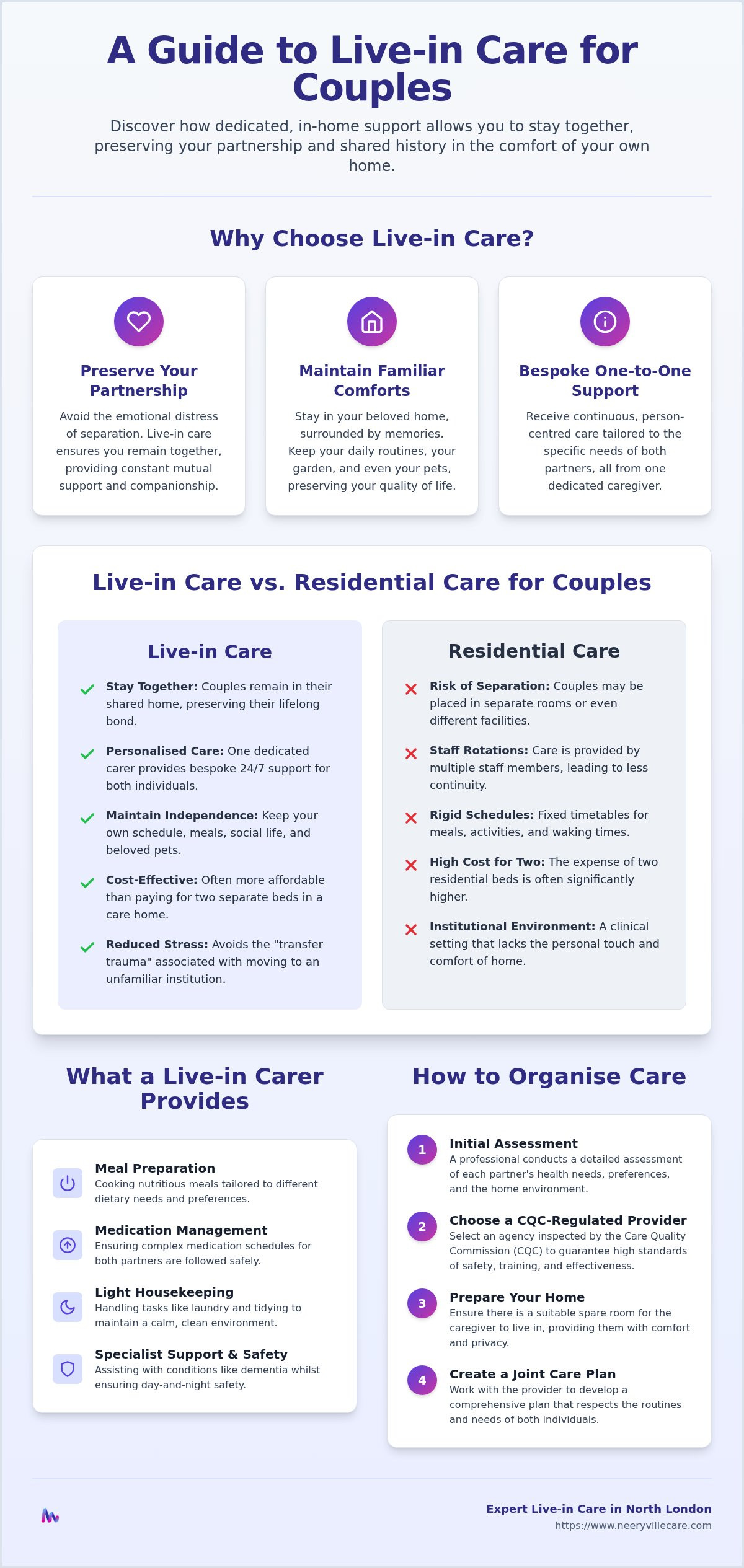
Managing the needs of two individuals requires a high level of organisation and empathy. A caregiver doesn't just replicate a routine; they adapt to two separate care plans within one domestic space. This might involve:
Preparing nutritious meals that cater to different dietary requirements or preferences for both partners.
Managing complex medication schedules to ensure consistency and safety for everyone.
Handling light housekeeping, such as laundry and tidying, to keep the home environment calm and manageable.
Providing specialist support for conditions like dementia whilst ensuring the other partner feels supported and heard.
Crucially, a professional carer understands the importance of privacy. They are there to facilitate your life together, not to intrude upon it. They act as a steady guide, stepping in when help is needed and stepping back to allow your partnership to flourish naturally.
CQC Regulation and Safety Standards
Safety is the cornerstone of any care arrangement. Choosing a live in care for couples service through a CQC-regulated provider like NeeryVille ensures that the support you receive meets rigorous national standards. The Care Quality Commission (CQC) monitors and inspects services to ensure they are safe, effective, and well-led.
Before any caregiver arrives, a detailed assessment is conducted. This process evaluates your home environment, your health needs, and your personal preferences. This professional oversight protects everyone involved. It ensures that the caregiver has the right skills for your specific situation and that there is a clear plan for emergencies or changing health requirements. It is a layer of security that allows families to breathe a sigh of relief, knowing their loved ones are in capable, regulated hands.
The Benefits of Staying Together: Preserving Your Partnership
The emotional bond shared by a couple is often their strongest medicine. When health challenges arise, the fear of being moved into separate rooms or wards in a residential facility can be paralysing. Choosing live in care for couples removes this threat entirely. It allows partners to remain in the sanctuary of their own home, surrounded by decades of shared memories. This familiar environment is more than just four walls; it's a vital anchor for psychological well-being and emotional safety.
Moving to an institutional setting can trigger what clinicians often describe as transfer trauma. This condition involves heightened confusion, agitation, and a rapid decline in physical health. By staying at home, couples avoid this jarring transition. They keep their own kitchen, their favourite garden views, and the specific way they like their morning tea prepared. Routines aren't just habits. They're the framework of a dignified life. When these routines are preserved, the stress of caregiving is replaced by the comfort of companionship.
Emotional Stability and Mental Health
Separation from a life partner often leads to a sharp increase in anxiety and depression. Remaining together provides constant emotional reassurance. For those living with cognitive decline, the presence of a spouse can help slow the progression of symptoms by providing a consistent, loving reference point. In the context of couple dynamics, person-centred care is a philosophy that views the partnership as a whole, tailoring support to honour the couple's shared history whilst addressing their separate health requirements. This approach ensures that neither partner feels like a patient first and a spouse second.
Maintaining Independence in North London
Staying in North London means more than just staying in a house. It means remaining part of the community in Highgate or enjoying the familiar paths of Hampstead Heath. With professional support, couples can continue to visit their local shops in Crouch End or host family gatherings without the constraints of institutional visiting hours. Integrating companionship care at home ensures that life feels normal, not clinical. Friends can drop by for tea, and the front door remains your own.
A common concern is how one caregiver manages two distinct sets of needs. A professional carer is trained to balance these requirements seamlessly. They might assist one partner with mobility and medication while providing the other with gentle support or help with household tasks. It is a delicate, highly organised balance that ensures both individuals feel prioritised. If you are wondering how this balance could work for your family, you can speak with our local team for a personalised assessment of your needs.
Live-in Care vs Care Homes: A Comparison for Couples
When considering the future, many families assume a residential home is the only safe option for complex needs. However, the reality of institutional life often clashes with a couple's desire for autonomy. Residential facilities operate on rigid schedules, from set mealtimes to specific routines. In contrast, live in care for couples offers total logistical flexibility. You choose when to wake, what to eat, and how to spend your afternoon. This freedom extends to your domestic life; there are no institutional rules to navigate or restricted hours to follow. Perhaps most importantly, you can keep your pets. Many residential homes have strict no-pet policies, but with home care, your dog or cat remains a vital part of your daily companionship.
Continuity is another significant advantage. In a care home, staff work in shifts, meaning a couple might see several different faces in a single day. A live-in caregiver provides a stable, familiar presence. They learn your preferences, your history, and the subtle signs that your health might be changing. This deep understanding allows the care to adapt seamlessly as your needs evolve. You won't face the trauma of moving to a "nursing wing" just because one partner requires more intensive support. The care comes to you, exactly where you are.
Financial Logic: Is Live-in Care Cost-Effective?
The financial implications are often surprising. According to data from Age UK, the average cost of a residential care home bed is approximately £1,100 per week, rising to £1,450 for nursing care. For a couple, this means paying for two separate placements, which can quickly exceed £2,200 to £2,900 every week. Choosing a "couple's rate" for live-in care typically involves a modest uplift for the second person rather than doubling the fee. This makes it a far more sustainable choice for many families. Beyond the weekly savings, staying at home may help you avoid the immediate pressure to sell the family property to fund residential fees, preserving your capital and your legacy.
Clinical Outcomes and One-to-One Attention
Clinical safety is significantly enhanced by the carer-to-client ratio. While a residential home might have one staff member for every eight residents, live-in care provides a 1:2 or even 2:2 ratio. This level of dedicated attention ensures that proactive medication support is always a priority, reducing the risk of hospital readmission. Whether you require specialist support for dementia or Parkinson's, a dedicated carer focuses entirely on your specific health outcomes. This one-to-one focus allows for early intervention and a much higher standard of personalised safety.
How to Organise Live-in Care: A Practical Checklist
Organising live in care for couples starts with a simple, supportive conversation. It's about understanding the unique tapestry of two lives and how they intertwine. We begin by looking at each partner independently because their health journeys are rarely identical. One may be physically robust but struggling with memory, whilst the other might require specialist post-stroke care. Balancing these distinct needs requires a methodical approach. This clarity ensures the care plan is robust, safe, and respectful of your history together.
Assessing Dual Care Needs
It's vital to identify shared goals for your care journey. Perhaps the goal is simply to continue enjoying your morning coffee in the garden or to remain active within your local Highgate community. We assess the physical, emotional, and social needs of both individuals. This includes managing different medication regimes and handling varying sleep patterns. If one partner has specific nighttime requirements, the care plan must account for this without disrupting the other's rest. By treating each person as an individual within the partnership, we maintain a sense of balance. No one is overlooked.
Preparing the Physical Environment
Your home is about to become a workplace as well as a sanctuary. A live-in caregiver requires a private, comfortable bedroom where they can rest and recharge. Reliable internet access is also essential. This allows the carer to maintain digital care records and stay connected to our clinical support team. We also conduct a gentle health and safety check of the property. This isn't about judging your home; it's about identifying small, helpful changes. Installing a few discreet grab rails or removing a known trip hazard can significantly enhance independence for both of you.
Finding the right "fit" is as much about personality as it is about clinical skill. We match carers based on shared interests, whether that's a love for local history or a passion for gardening. Once the carer arrives, we recommend a trial period. The first fortnight is a time of adjustment. It takes time to build trust and find a new rhythm. We guide you through this transition at a pace that feels right, ensuring the settling-in process is as calm and stress-free as possible.
Why Choose NeeryVille for Live-in Care in North London?
NeeryVille isn't just a care provider; we're your neighbours. Based in Highgate N6, our roots run deep through the streets of Crouch End, Hampstead, and the wider North London area. We understand that choosing live in care for couples is a significant decision. It's a choice built on trust. Our commitment to CQC standards ensures that this trust is backed by clinical authority and professional oversight. We don't just follow a process; we prioritise the person. Our person-centred care philosophy means we see the individuals behind the diagnosis, honouring the life you've built together.
Managing the care of two parents is often an overwhelming burden for adult children. It's easy to lose your role as a daughter or son when you're constantly coordinating medication or managing household tasks. We step in to lift that weight. Our local management team handles the complex logistics of dual care plans, allowing you to return to being a family again. We provide the safety and structure needed so that your visits can be about shared laughter and meaningful connection rather than clinical management. Stability. Safety. Partnership.
Our Local Expertise in Highgate and Hampstead
Being local isn't just about a postcode. It's about knowing which GP surgery in Highgate is most responsive or which pharmacy in Hampstead offers the best support. Our familiarity with the N6, N8, and Camden areas allows for rapid response times and a deeper integration into your community resources. We hand-pick our carers not just for their skills, but for their understanding of the London lifestyle. They are trained to navigate the unique domestic challenges of North London homes, ensuring a seamless fit into your daily life.
Taking the First Step with NeeryVille
Starting this journey doesn't have to be daunting. We offer a transparent, methodical approach to live-in care for couples, beginning with a complimentary home care assessment. This visit allows us to meet you in your own environment, listening to your concerns and mapping out a path that feels right for you. There is no pressure; only a promise to guide you at a pace that provides comfort and clarity. We are here to help you stay together, safely, in the home you love. Let us be the steady guide your family needs during this transition.
Protecting Your Partnership and Your Peace of Mind
Choosing live in care for couples is about more than just practical support; it's a commitment to preserving the love and history you've built together. You've discovered how staying at home prevents the trauma of separation and offers a more cost-effective, flexible alternative to institutional care. By maintaining your own routines in the heart of North London, you protect your independence whilst ensuring that professional help is always close by.
Our locally-managed Highgate team provides expert support for complex conditions like dementia and Parkinson’s, ensuring clinical safety through a CQC-regulated service for your peace of mind. We're here to lift the burden of caregiving, allowing you to focus on being a family again. You don't have to navigate these challenges alone. We'll be your steady guide, offering the calm reliability and compassionate presence your family deserves during this transition.
We look forward to helping you stay together, safely, in the comfort of the home you love.
Frequently Asked Questions
Is live-in care for couples cheaper than a care home?
Live-in care is often more cost-effective because you pay for one dedicated professional rather than two separate residential placements. According to Age UK data, the average care home bed costs around £1,100 per week. For a couple, paying for two rooms doubles that expense. With live in care for couples, there is usually a modest uplift for the second person. This avoids the high overheads of an institution whilst keeping your assets protected.
Can one live-in carer look after two people at the same time?
One caregiver can support two people if their combined needs allow for safe management within a standard working day. A single carer handles meal preparation, light housekeeping, and medication for both partners. However, if both individuals have complex physical requirements or high-frequency nighttime needs, we may recommend a second carer or supplementary visiting support. This ensures that the high standard of safety and quality expected from a CQC-regulated provider is never compromised.
What happens if one partner needs more care than the other?
We create two independent, person-centred care plans that reflect each partner's specific health journey. It's common for one partner to require specialist support, such as post-stroke care, whilst the other primarily needs companionship. The caregiver balances these requirements by prioritising tasks throughout the day. This flexible approach ensures that the more independent partner isn't overlooked while the person with higher clinical needs receives the precise, expert attention they require to stay safe.
Do we need to have a spare room for a live-in carer?
Yes, a private, furnished bedroom is a mandatory requirement for any live-in care arrangement. The caregiver resides in your home to provide 24/7 support, so they need a dedicated space to rest during their break times and sleep at night. This room should offer privacy and ideally include a bed, storage for their belongings, and access to the internet. Providing a comfortable environment for your carer helps build a stable, long-term relationship.
Is live-in care available for couples with dementia?
Live-in care is an excellent solution for couples where one or both partners live with dementia. Remaining in a familiar environment in Highgate or Hampstead helps reduce the confusion and "sundowning" often triggered by a move to a residential home. Our specialist dementia support focuses on maintaining routines and using local landmarks to foster a sense of security. It allows partners to stay together safely even as the condition progresses.
How quickly can live-in care be arranged in North London?
We pride ourselves on being responsive to families across North London, including Highgate, Crouch End, and Hampstead. Arrangement typically begins with a home assessment to understand your needs. In urgent situations, such as a sudden hospital discharge, we aim to implement support as quickly as possible. Being locally managed in N6 allows our team to coordinate care plans and match caregivers efficiently, often within a few days of the initial enquiry.
What if the couple does not get on with the assigned carer?
We prioritise the matching process to ensure personalities and interests align, but we always offer trial periods for peace of mind. If the chemistry isn't right during the first fortnight, we will work with you to find a more suitable replacement. Your comfort is our priority. We understand that inviting someone into your domestic sanctuary is a significant step, so we ensure the transition happens at a pace that feels right.
Can we still go out for walks or visits with a live-in carer?
Maintaining your independence and local connections is a primary goal of our companionship-led support. Whether it's a gentle walk through Hampstead Heath or a visit to your favourite shop in Crouch End, your carer is there to facilitate these outings safely. We don't believe in the restricted routines of institutional life. Instead, we encourage couples to remain active in their community, providing the physical assistance needed to enjoy North London's local resources.


