

Domiciliary Care in Hampstead: A Compassionate Guide for Families in 2026
- Daniel Johnson

- 4 days ago
- 11 min read
Updated: 3 days ago

Making the decision to seek support for a loved one is one of the most significant and emotional journeys a family can undertake. In the leafy, familiar streets of Hampstead, the priority is not just about finding care; it is about preserving a way of life, maintaining dignity, and ensuring comfort within the cherished walls of home. For many families in NW3, the overwhelming question is how to provide the right level of support without sacrificing the independence and routine that defines a person’s identity.
This is where domiciliary care offers a compassionate and effective solution. It is a service built around the individual, designed to support them in their own home rather than moving them to a residential facility. This guide is for Hampstead families exploring their options. It will walk you through what domiciliary care truly means, the services available, and how to arrange professional, CQC-regulated support that allows your loved one to continue living safely and happily in the community they know and love.
Table of Contents
What is Domiciliary Care? Understanding Home Support in Hampstead
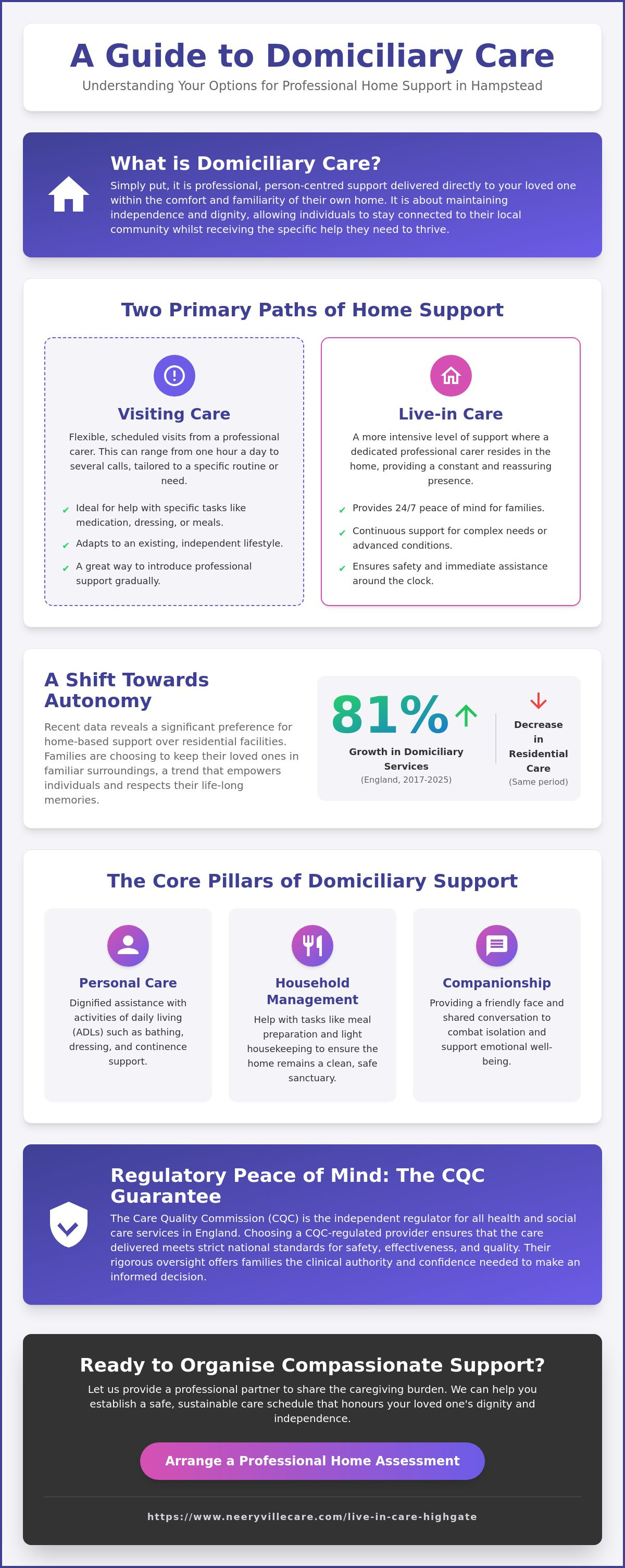
At its heart, domiciliary care is professional, person-centred support delivered within the comfort and privacy of a client’s own home. It is a broad term that encompasses everything from a 30-minute check-in to ensure medication has been taken, to several visits throughout the day for more comprehensive assistance. For Hampstead residents, this means receiving expert care without leaving the familiar surroundings of their NW3 home, surrounded by personal memories and belongings.
It is important to distinguish between the two main types of home care:
Visiting Care: This is the most common form of domiciliary care, where a professional caregiver visits at scheduled times throughout the day or week. Visits can be for companionship, help with household tasks, personal care, or medication support.
Live-in Care: For individuals with more complex needs or who require the reassurance of round-the-clock support, a dedicated caregiver lives in the home, providing continuous care and companionship.
Increasingly, families in Hampstead are choosing home-based support over residential facilities. The reasons are deeply personal, often centred on the desire to preserve autonomy and connection to the local community. Domiciliary care is not just about managing health needs; it is about protecting a lifestyle, maintaining relationships, and honouring a person’s wish to remain in the place they feel they belong.
The Core Pillars of Domiciliary Support
The support provided is always tailored to the individual, but it generally revolves around three key areas designed to enhance well-being and safety at home.
Activities of Daily Living (ADLs): This includes respectful and dignified assistance with personal routines such as bathing, dressing, grooming, and mobility. The goal is to help your loved one feel comfortable and confident as they go about their day.
Household Management: Practical support can make a world of difference. This covers light housekeeping, preparing nutritious meals, managing laundry, and running local errands, all of which help maintain a safe and pleasant living environment.
Companionship: Perhaps the most vital pillar, companionship combats the profound effects of loneliness and isolation, particularly amongst the elderly in a busy city. A caregiver provides not just practical help but also a friendly face, a listening ear, and a source of social engagement.
Regulatory Peace of Mind: Why the CQC Matters
When you invite a caregiver into your home, trust is paramount. In England, the independent regulator of all health and social care services is the Care Quality Commission (CQC). A provider regulated by the CQC is legally required to meet fundamental standards of quality and safety.
This regulation covers essential aspects of care, including:
Safety and Protection: Ensuring clients are protected from abuse and improper care.
Effectiveness: Confirming that care achieves good outcomes and helps maintain quality of life.
Staffing: Verifying that caregivers are recruited safely, trained properly, and managed effectively.
For families in Hampstead, choosing a CQC-regulated domiciliary care provider offers an indispensable layer of reassurance. It means the agency is held accountable to national standards, providing you with peace of mind that your loved one is in safe, professional hands. You can learn more about these standards in our detailed guide to CQC Regulated Activities: A Guide to Safety Standards in Home Care.
Tailoring Support: Domiciliary Care Services in Hampstead
True domiciliary care is not a one-size-fits-all service. It is a dynamic partnership that adapts to the unique and evolving needs of your loved one. The foundation of high-quality care is a personalised care plan, a carefully crafted document that goes beyond medical requirements to capture a person’s preferences, routines, and what truly matters to them.
This plan is a collaborative effort, developed with the client, their family, and healthcare professionals. It ensures that the care provided maintains the "colour" of daily life—honouring long-held habits, from a specific morning routine to a favourite afternoon walk. It also integrates specialist support for progressive conditions like dementia or Parkinson’s, allowing strategies to be adjusted as needs change.
Personal Care and Medication Management
Maintaining personal hygiene is fundamental to dignity and health. Our caregivers provide respectful assistance with bathing, dressing, and continence care, always prioritising the client’s comfort and privacy. This sensitive support helps individuals feel their best, both physically and emotionally.
Alongside personal care, professional medication management is a cornerstone of safe domiciliary support. A trained caregiver can provide gentle reminders, assist with administration, or simply ensure that prescriptions are collected from local Hampstead pharmacies. This service is crucial for maintaining health stability and provides enormous peace of mind for families, knowing that complex medication schedules are being followed correctly.
Dementia Care at Home: A Familiar Environment
For someone living with dementia, the familiar sights, sounds, and layout of their own home can be a powerful anchor. Domiciliary care allows individuals to remain in this reassuring environment, which has been shown to reduce confusion, anxiety, and agitation.
Specialist dementia care at home focuses on:
Maintaining Routine: Keeping to established daily patterns, such as meal times and local routines like a walk on Hampstead Heath, helps to minimise disorientation.
Managing Behaviour: Trained caregivers use compassionate techniques to manage challenging behaviours like "sundowning," providing calm reassurance and gentle redirection.
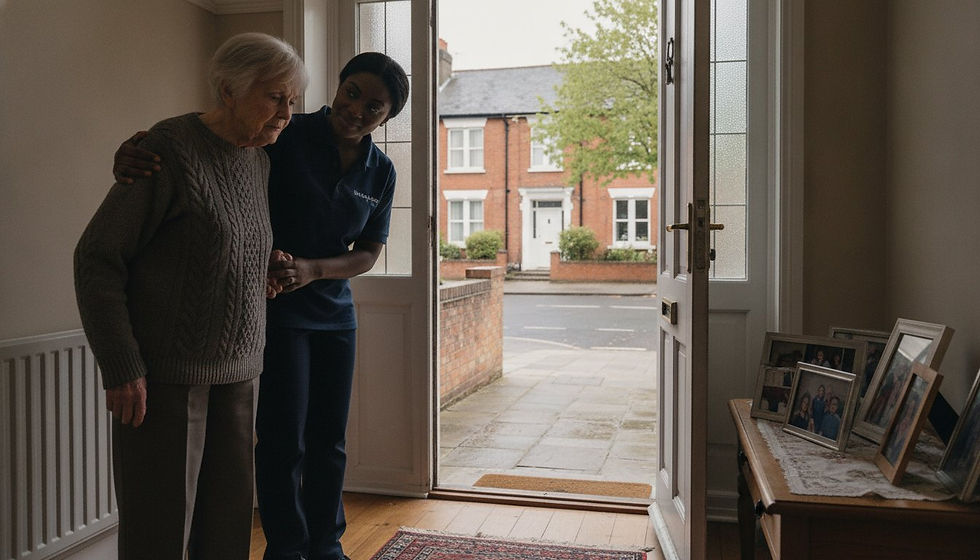
Creating a Safe Space: The home environment is adapted to reduce risks, whilst familiar objects and photographs are used to stimulate memory and provide comfort.
Companionship and Social Well-being
Domiciliary care is about more than just tasks; it is about connection. Loneliness can have a significant impact on mental and physical health. A key part of our service is matching caregivers with clients based on shared interests, personalities, and hobbies to foster a genuine, trusting relationship.
This companionship can take many forms, from sharing a cup of tea and a chat to supporting visits to local Hampstead landmarks, community centres, or favourite cafés. By facilitating this social engagement, we help clients stay connected to the neighbourhood they love. If you are exploring options for yourself or a loved one in the area, you can learn more about our visiting care in Highgate and Hampstead and how we tailor our approach to each individual.
Why Choose Home Care Over Residential Placement in NW3?
The thought of leaving a home filled with a lifetime of memories can be deeply distressing. For many Hampstead residents, their home is more than just a building; it is a sanctuary of personal history and comfort. Domiciliary care honours this connection, offering a powerful alternative to moving into a residential facility.
The benefits are both emotional and practical:
Psychological Well-being: Remaining amongst one’s own belongings, in a familiar neighbourhood, has a profound positive impact on mental health and overall happiness.
One-to-One Attention: Unlike the staff-to-resident ratios in a care home, domiciliary care provides dedicated, one-to-one support. This allows for a deep, trusting relationship to form between the client and their caregiver.
Flexibility and Control: Home care is built around the client’s preferences, not a rigid institutional schedule. They decide when to wake up, what to eat, and how to spend their day.
Cost-Effectiveness: For many, domiciliary care can be a more affordable option than the high fees associated with residential care homes in London, as you only pay for the specific support you need.
Preserving Independence and Autonomy
The ability to make your own choices is fundamental to a sense of self. Domiciliary care is designed to empower seniors, not disempower them. By providing support with challenging tasks, it enables individuals to remain the "master of their own home." This preservation of autonomy is crucial for long-term mental health, confidence, and longevity. A caregiver works alongside your loved one, assisting where needed but always encouraging them to do as much as they can for themselves.
Supporting the Whole Family
Caring for a loved one is a role often taken on by family members out of love and duty, but it can lead to immense strain and burnout. Professional domiciliary care lifts this burden, allowing family members to step back from the role of "carer" and simply be a daughter, son, or partner again. It provides respite and reassurance, knowing a trained professional is managing the day-to-day complexities. This support is vital for family well-being, and it is important to recognise the signs of exhaustion. We offer guidance on supporting family carers and preventing caregiver burnout to help you navigate this challenging journey.
How to Organise Domiciliary Care: A Step-by-Step Guide
Taking the first step towards arranging care can feel daunting, but a professional agency will guide you through the process with clarity and compassion. The journey is collaborative, designed to ensure the final care plan is a perfect fit for your family’s needs.
Step 1: The Initial Conversation and Home Assessment
The process begins with a conversation. This is your opportunity to discuss your concerns and ask questions. A reputable provider will then schedule a no-obligation home assessment. A senior care manager will visit your loved one’s home in Hampstead to understand their needs in detail. This is not just a clinical evaluation; it is a chance to learn about their personality, lifestyle, and what they hope to achieve with support. The assessment will identify practical needs, such as mobility hazards or nutritional gaps, as well as personal goals, like being able to attend a local club or recover strength after a fall.
Step 2: Creating a Personalised Care Plan
Following the assessment, a detailed care plan is developed. This document outlines the specific tasks the caregiver will perform, the schedule of visits, and key information about your loved one’s health and preferences. You will review this plan with the agency and have the opportunity to make adjustments. It is a living document that can be updated as circumstances change, ensuring the care remains relevant and effective.
Step 3: Funding and Understanding Costs
Understanding the financial landscape is a critical step. Domiciliary care is typically charged at an hourly rate, giving you flexibility over your budget. During your consultation, a transparent breakdown of all costs should be provided. It is also worth exploring potential financial support. Many people over the state pension age are eligible for non-means-tested benefits like Attendance Allowance, which is designed to help with the extra costs of long-term health conditions. The local authority may also provide funding depending on a financial assessment.
Step 4: Selecting the Right Care Agency
Choosing the right partner for your family is the most important decision. When speaking with a Hampstead care company, consider asking the following questions:
Are you regulated by the CQC, and what is your latest rating?
How do you recruit, train, and supervise your caregivers?
Can you provide specialist support for conditions like dementia or post-stroke recovery?
What is your process for matching a caregiver with my loved one?
What happens if our regular caregiver is unwell or on holiday?
A good agency will answer these questions with confidence and transparency. They should feel like a supportive partner, ready to help you navigate this new chapter. For practical support around the house, you can also explore our home help services for local residents.
NeeryVille Care: Compassionate Domiciliary Support in Hampstead
At NeeryVille Care, we understand that choosing a care provider is a decision of the heart as much as the head. Our commitment is to provide a truly person-centred approach for every NW3 family we support. As a CQC-regulated provider with deep local roots in North London, we combine the highest standards of professional care with a genuine, compassionate understanding of our clients’ needs.
We believe our role is to lift the burden from your shoulders. We handle the complexities of care management so you can focus on spending quality time with your loved one. Our goal is to create a supportive partnership that brings peace of mind, enhances quality of life, and allows your family to return to what matters most: being a family.
The NeeryVille Difference: Professionalism with Heart
Our reputation is built on the quality and character of our caregivers. We follow a rigorous selection process, choosing individuals not only for their skills and experience but for their empathy, warmth, and dedication. All our caregivers undergo enhanced background checks and receive ongoing specialist training in areas such as dementia care, medication management, and end-of-life support.
This emphasis on professionalism with heart is what sets us apart. We focus on emotional well-being just as much as practical assistance, ensuring your loved one feels safe, respected, and valued at all times.
Starting Your Journey with Us
If you are considering domiciliary care in Hampstead, we are here to help. The first step is a simple, confidential conversation with one of our care experts. We will listen to your story, answer your questions, and explain how we can support you.
We invite you to book a no-obligation home consultation to discuss your needs in detail. We promise complete transparency regarding our fees and care delivery, ensuring you have all the information you need to make the right choice for your family. Speak with our compassionate Hampstead care team today to begin your journey towards peace of mind.
Frequently Asked Questions About Domiciliary Care in Hampstead
How much does domiciliary care in Hampstead typically cost?
The cost of domiciliary care varies depending on the level of support required. It is usually charged at an hourly rate, which can differ for weekdays, weekends, and bank holidays. A reputable provider will give you a clear, transparent fee schedule after an initial assessment of your loved one’s needs. It is often more cost-effective than residential care, as you only pay for the time and services you need.
Can I choose the specific times that my caregiver visits?
Yes, absolutely. High-quality domiciliary care is built around your loved one’s established routine. During the care planning process, you will collaborate with the agency to create a schedule of visits that works for you, whether that is a morning visit to help with getting dressed, a lunchtime call for meal preparation, or an evening visit to assist with settling down for the night.
Is domiciliary care safe for someone living with advanced dementia?
For many individuals, yes. With a specialist caregiver trained in dementia care, the home can be a safe and calming environment. Familiar surroundings can reduce distress and confusion. A care plan for someone with advanced dementia would include robust safety measures, strategies for managing challenging behaviour, and close coordination with their GP and other healthcare professionals to ensure their well-being.
What happens if my regular caregiver is unwell or on holiday?
A professional, regulated care agency will have a system in place to ensure continuity of care. If your regular caregiver is unavailable, a suitable replacement caregiver, who has been fully briefed on your loved one’s care plan and preferences, will be provided. You should never be left without support.
Do you provide overnight care as part of your domiciliary services?
Yes, overnight care is a crucial part of domiciliary services. This can be arranged as either a "sleeping night," where the caregiver is on hand to assist if needed, or a "waking night," where the caregiver is awake and alert throughout the night to provide continuous support for those with more complex needs.
How quickly can home care be arranged in an emergency?
In urgent situations, such as a sudden illness or an unexpected hospital discharge, care can often be arranged very quickly, sometimes within 24 to 48 hours. A responsive agency will be able to conduct an emergency assessment and implement a safe, effective care plan to provide immediate support.
Will I have the same caregiver every time they visit?
The goal of most high-quality agencies is to provide a small, consistent team of caregivers. This helps to build a strong, trusting relationship between the caregiver and the client. While you will likely have a primary caregiver, you will also be introduced to one or two others who can provide cover, ensuring familiarity and continuity.
Is NeeryVille Care regulated by the Care Quality Commission (CQC)?
Yes, NeeryVille Care is proud to be fully regulated by the Care Quality Commission (CQC). This means we are regularly inspected and held to the highest national standards of safety, effectiveness, and quality in all the care we provide, giving you and your family complete peace of mind.


Comments