

10 Vital Signs My Elderly Parent Needs Help at Home: A Compassionate Checklist

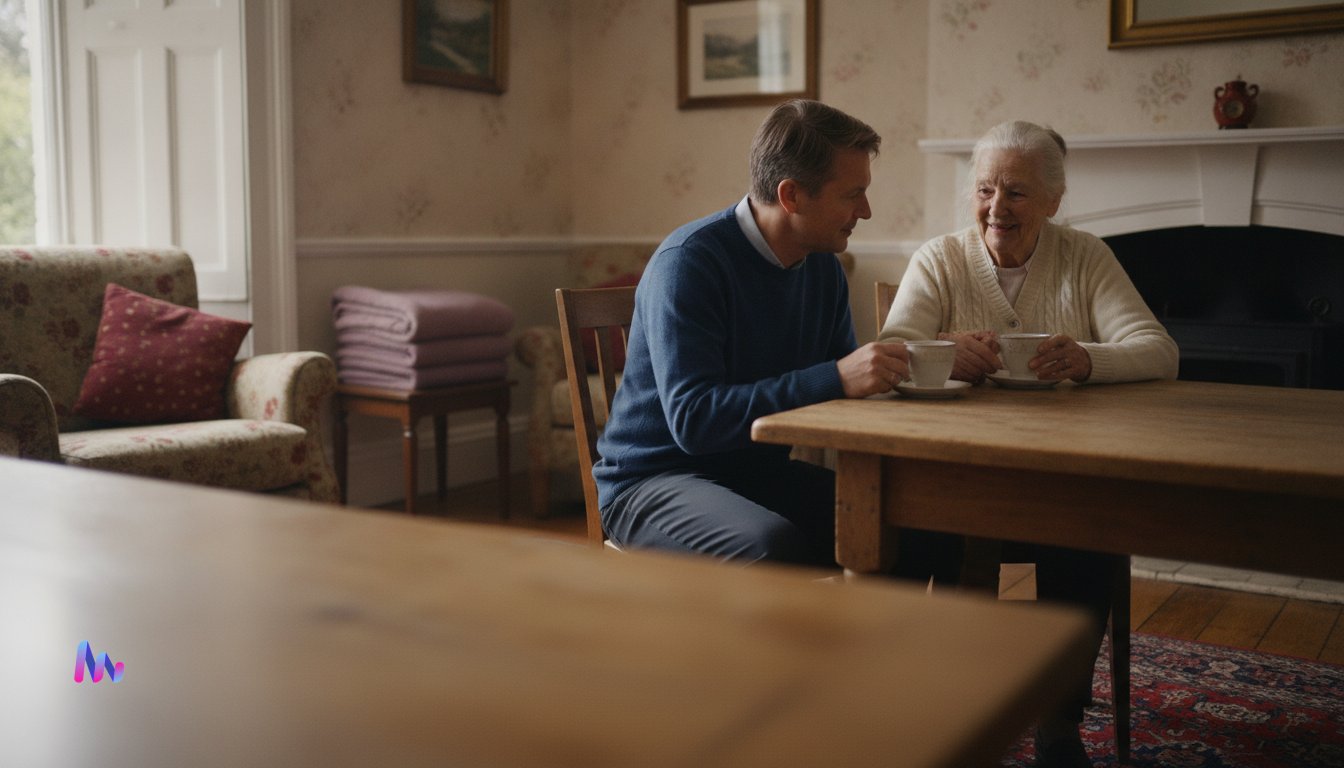
You arrive for your weekly Sunday visit and notice the post is piling up on the doormat, or perhaps there's a strange bruise on your mother's arm she can't quite explain. It’s a quiet, heavy realisation when you first start searching for signs my elderly parent needs help at home. You aren't alone in feeling that sharp pang of guilt or the constant, low-level anxiety about a potential fall when you aren't there. It's natural to want to protect their independence whilst ensuring they're safe.
This guide promises to help you recognise those subtle changes with clarity and compassion. We'll provide a vital checklist to validate your instincts and explain how CQC-regulated care can bridge the gap between struggling and thriving. You'll learn how to approach these difficult conversations with dignity, and we'll clarify the practical differences between visiting care and full-time live-in support. Let’s replace that overwhelming confusion with a steady, manageable plan for your loved one's well-being.
Table of Contents
Physical Signs: Changes in Appearance and Personal Care
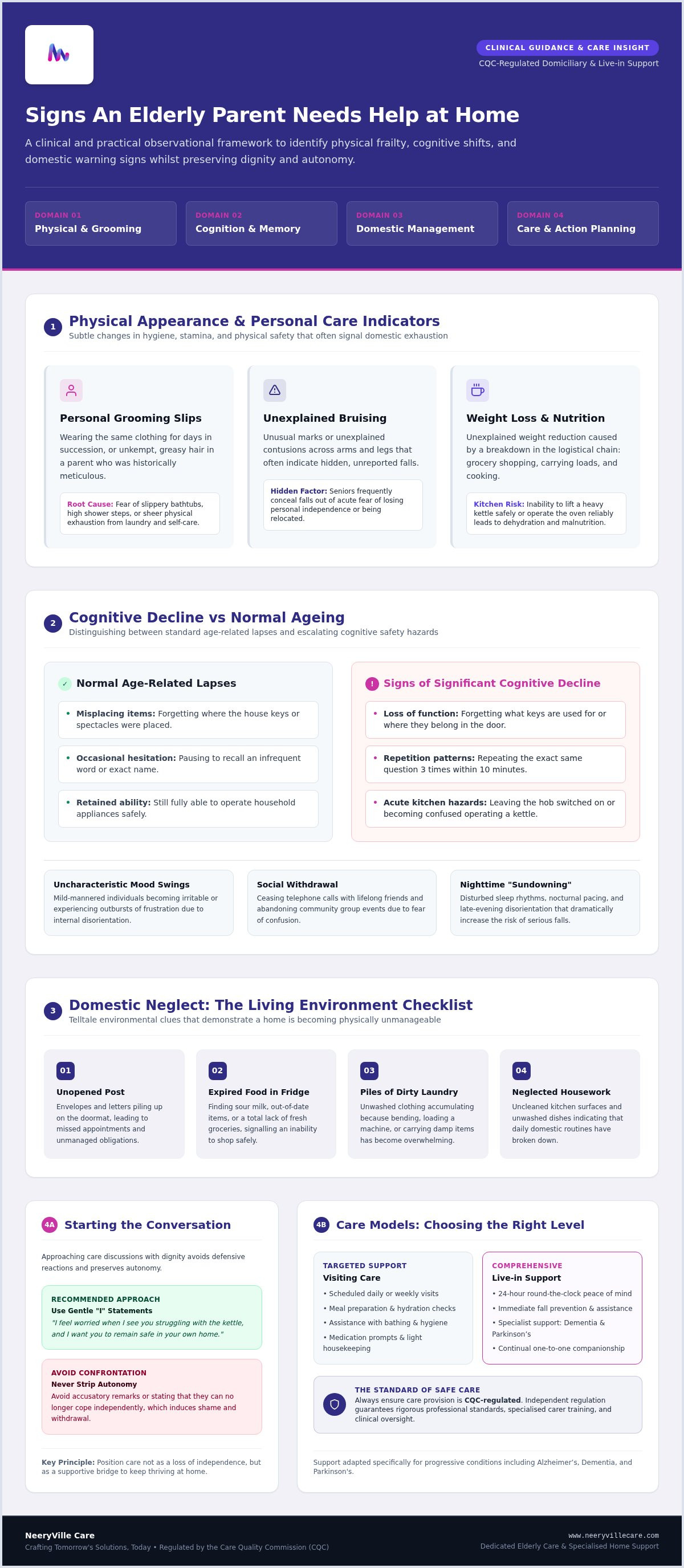
The first indicators often appear in the mirror. You might notice your father, once impeccable in his appearance, has started wearing the same jumper for three days straight. Perhaps your mother’s hair, usually neatly styled, looks unkempt or greasy. These aren't just aesthetic concerns; they are significant signs my elderly parent needs help at home. When personal grooming slips, it often signals that the physical effort required for bathing or laundry has become a source of exhaustion or even fear.
Unexplained weight loss is another critical marker. It can stem from a loss of appetite, but frequently, it's because the manual tasks of shopping and cooking have become too much to bear. You might also spot unusual bruising on their arms or legs. These marks often hint at recent, unreported falls. Many seniors hide these incidents because they fear losing their independence. Professional home care services can provide the discreet support needed to prevent these risks while maintaining a sense of normality and safety.
Hygiene and Self-Care Red Flags
Maintaining a clean home and a clean body requires significant physical stamina. If you notice a pile of dirty laundry or a parent who seems reluctant to wash, it’s rarely a choice. Often, the slippery surface of a bathtub or the high step of a shower tray becomes a terrifying obstacle. Recognising these struggles is the first step toward safety. By introducing professional personal care, you aren't taking away their autonomy; you're providing the steady hand they need to feel refreshed and dignified again.
Nutrition and Physical Health
Open the fridge and check the labels. Finding out-of-date milk or a lack of fresh groceries suggests that the logistics of a weekly shop are failing. Observe them in the kitchen; are they still able to lift a heavy kettle or safely operate the oven? Malnutrition and dehydration can lead to increased confusion and frailty, creating a dangerous cycle. When these physical changes occur, they serve as definitive signs my elderly parent needs help at home. Bespoke meal preparation ensures they receive balanced, hot meals every day, removing the stress of cooking whilst ensuring their physical health remains a priority.
Cognitive and Behavioural Changes to Watch For
While physical changes are often visible, cognitive shifts can be more subtle and, frequently, more distressing for families to witness. These internal changes are often the most significant signs my elderly parent needs help at home. You might notice your mother repeating the same question three times within ten minutes, or your father missing a long-awaited appointment at the Highgate Group Practice. It isn't just about "senior moments"; it's about a pattern of forgetfulness that begins to compromise their safety and daily rhythm.
Confusion during familiar tasks is a major red flag. If a parent who has made tea every day for fifty years suddenly struggles to operate the kettle or the microwave, their environment is becoming unfamiliar. You may also observe uncharacteristic mood swings. A person who was once mild-mannered might become irritable or have sudden outbursts of frustration. This often stems from the internal confusion they're experiencing, leading to a natural but difficult withdrawal from the local North London community events they once enjoyed.
Memory Loss vs. Cognitive Decline
It's vital to distinguish between normal ageing and more serious cognitive decline. Forgetting where the keys are is common, but forgetting what the keys are for is a safety concern. When these lapses involve leaving the hob on or getting lost on a familiar walk through Hampstead Heath, specialist support becomes essential. Implementing a structured routine through dementia care at home can provide the stability needed to manage these symptoms whilst keeping your loved one in the comfort of their own surroundings.
Emotional Well-being and Isolation
Loneliness is a silent crisis amongst the elderly, often manifesting as depression or a total loss of interest in hobbies. If your parent has stopped calling friends or no longer wants to leave the house, they may be struggling with more than just physical frailty. Monitoring for changes in sleep patterns or nighttime disorientation is equally important, as "sundowning" can increase the risk of falls. Professional companionship care does more than just assist with tasks; it revitalises a parent’s social life and provides the emotional anchor they need. If you've noticed these shifts, it may be time to discuss your concerns with a compassionate advisor who understands the complexities of cognitive health.
Domestic Neglect: Signs the Home is Becoming Unmanageable
A home that was once a sanctuary can quickly become a source of stress when physical or cognitive abilities begin to decline. You might notice a build-up of unopened post on the hallway floor or a stack of dirty dishes that has remained untouched for days. These aren't just lapses in tidiness. They are tangible signs my elderly parent needs help at home. When the environment starts to slip, it often reflects a silent struggle with the daily energy required to maintain a household.
Unusual odours, perhaps from spoiled food in the kitchen or bins that haven't been emptied, often point to a loss of sensory awareness or the simple inability to manage domestic waste. You may also spot signs of poor home maintenance, such as broken appliances or lightbulbs left unchanged, leaving rooms dim and hazardous. Outside, a garden that was once a pride and joy in Hampstead might now look overgrown and neglected. This neglect of outdoor spaces is frequently a sign that the physical toll of gardening has become too much for them to manage alone.
Safety Hazards and Mobility Issues
Many older properties in North London, particularly the Victorian and Edwardian terraces found in Highgate, feature steep, narrow staircases and uneven floorboards. For a senior, these architectural charms often become hazardous obstacles. Identifying trip hazards like loose rugs or cluttered hallways is essential for preventing a crisis. Professional mobility and frailty care can help mitigate these risks by providing the physical support needed to navigate between rooms and floors safely, ensuring your loved one remains secure in their familiar environment.
Financial and Administrative Struggles
Cognitive decline often manifests first in the inability to manage complex paperwork. If you find unpaid utility bills or final reminders amongst the clutter on the dining table, it's a clear sign that administrative tasks have become overwhelming. This confusion doesn't just lead to late fees; it significantly increases the risk of financial scams targeting vulnerable seniors living alone. Home help services provide a vital protective layer. By assisting with basic household organisation, a dedicated carer ensures that important correspondence is handled promptly, protecting your parent’s financial well-being and your own peace of mind.
Taking Action: How to Start the Conversation About Care
Starting the conversation is often harder than spotting the signs. You've noticed the bruises or the unopened post, but bringing it up feels like a betrayal of their independence. For many families in North London, balancing a demanding career in the City with frequent trips to Highgate or Hampstead to check on a parent creates a unique emotional pressure. This "sandwich generation" stress often leads to burnout. When you recognise the signs my elderly parent needs help at home, the goal isn't to take control, but to provide a vital safety net.
Choose a quiet afternoon when neither of you is rushed or stressed. Use "I" statements like "I feel worried when I see the stairs are becoming difficult" rather than "You can't manage anymore." This keeps the focus on your love and concern rather than their perceived failings. Listen deeply to their fears. Often, the resistance to care is actually a fear of being moved into a residential home. Identifying the early signs my elderly parent needs help at home is just the beginning of a collaborative journey toward safety.
Approaching the Topic with Empathy
Frame professional support as a tool for staying put. It’s about preserving their life in the home they love, surrounded by their own memories. If they are wary of "strangers" entering their private space, suggest starting with visiting care for just a few hours a week. This gentle introduction allows a relationship to form naturally at a pace they can control. It shifts the dynamic from a "carer" to a "companion" who helps with the heavy lifting of daily life, allowing them to focus on what they enjoy.
Navigating the Assessment Process
Once they agree to explore support, the next step is a professional Care Needs Assessment. As a CQC-regulated provider, we ensure this process is thorough but never clinical. We look at the physical environment of their North London home and their personal preferences. We involve the whole family in creating a bespoke care plan that feels right for everyone involved. To offer complete peace of mind during this transition, we provide a 14-day guarantee. This allows you to see the positive impact of the support before making any long-term commitment.
Finding the Right Support: Why Live-in Care is the Solution
Once you've recognised the signs my elderly parent needs help at home, the next step is choosing the right level of support. While visiting care is an excellent introduction, it often leaves gaps in the evening or during the night when anxiety and falls are most likely to occur. Comprehensive live-in care provides a permanent, reassuring presence. Safety. Dignity. Independence. It isn't just about practical tasks; it’s about the emotional security that comes from knowing someone is always there to share a cup of tea or help with a sudden moment of confusion.
For those living with dementia or Parkinson’s, consistency is everything. Moving to a residential home can trigger rapid decline due to the "transfer trauma" of an unfamiliar setting. Staying at home allows them to keep their own furniture, their own garden, and their own rhythm. This continuity is the bedrock of effective care. It alleviates the immense pressure on family members, preventing the burnout that often follows months of trying to manage everything alone. Recognising these signs my elderly parent needs help at home early is the kindest way to ensure their future remains bright and secure.
The Gold Standard: Live-in Care
Our "Same Carer Everyday" philosophy ensures that support isn't delivered by a rotating door of strangers. A deep, trusting bond forms when the same professional understands exactly how your father likes his toast or which local Highgate walk your mother prefers. This model is particularly vital for maintaining social connections within the North London community. It keeps life familiar. It keeps life stable. Additionally, live-in care for couples allows partners to remain together in their own home, even when their care needs differ significantly.
Quality and Trust in Home Care
Trust is built on transparency and clinical authority. As a CQC-regulated provider, we adhere to rigorous standards that ensure safety, effectiveness, and compassion. Many families overlook the importance of CQC ratings, but they are a non-negotiable marker of quality and professional accountability. Our deep local knowledge of areas like Hampstead, Highgate, and Camden means we aren't just a service provider; we're a steady guide. Taking that first step toward professional support can feel daunting, but you don't have to navigate it alone. Book a consultation with our North London team to discuss a bespoke plan tailored to your family’s unique needs.
Empowering Your Loved One’s Independence at Home
Recognising the signs my elderly parent needs help at home is the first step toward a safer, more dignified future. You've now learned to identify the subtle physical cues, cognitive shifts, and domestic changes that suggest it's time for professional support. Transitioning to home care isn't about taking away independence; it's about providing the clinical safety net required to preserve it.
As a CQC-Regulated Provider, we specialise in delivering specialist live-in care across North London, including Highgate, Hampstead, and Camden. We prioritise emotional well-being alongside practical safety, ensuring your loved one remains in the environment they know and love. Our 14-day satisfaction guarantee offers you complete peace of mind during this initial transition. You don't have to carry the weight of this worry alone. We are here to partner with your family, offering a steady, compassionate guide through every stage of the journey.
Take comfort in knowing that with the right support, your parent can continue to thrive in the home they cherish. We are ready to help you navigate this transition at a pace that feels right for your family.
Frequently Asked Questions
What are the first signs that an elderly person is struggling at home?
The earliest signs my elderly parent needs help at home often involve a decline in personal grooming or a fridge full of expired food. You might also notice they're withdrawing from local groups in Crouch End or Highgate. These subtle changes in domestic habits and physical appearance usually indicate that the daily demands of maintaining a household have become overwhelming, requiring a compassionate intervention to ensure their safety.
How do I persuade my parent to accept help when they are being stubborn?
Start by choosing a calm time to talk in their familiar North London surroundings. Use gentle "I" statements to explain how their safety affects your own peace of mind. Framing professional support as a way to stay at home, rather than a move toward residential care, helps reduce resistance. Suggesting a trial period of visiting care often feels less intrusive and allows them to maintain a sense of control.
Is live-in care safer than a residential care home?
Live-in care provides one-to-one support that is often safer than the staff-to-resident ratios found in residential homes. A dedicated carer provides constant safety monitoring, which is vital for preventing falls in older properties across Hampstead and Highgate. This personalised approach ensures that your parent receives immediate assistance at any time of day or night, all while remaining in the comfort and security of their own home.
What is the difference between home care and domiciliary care?
In the UK, domiciliary care and home care are frequently used to describe the same thing. Domiciliary care typically refers to visiting support where a carer assists with specific tasks like bathing or medication for set periods. Home care is a broader term encompassing everything from these short hourly visits to full-time live-in care, both of which focus on helping seniors live independently in their own houses.
How much does home care cost in North London?
Fees for home care in North London depend on the level of support required and the duration of the visits. Hourly visiting care is charged based on the length of each session, while live-in care involves a fixed weekly rate for 24/7 support. Because every family’s needs in areas like Camden and Tufnell Park are unique, we provide a detailed breakdown of costs following a bespoke care assessment.
What happens during a care needs assessment?
A care needs assessment is a professional evaluation of your parent’s physical, cognitive, and emotional requirements. A CQC-regulated advisor will visit the home to identify potential hazards and discuss daily routines. We look for specific signs my elderly parent needs help at home to build a bespoke plan. This collaborative process involves the whole family to ensure the support provided is safe, respectful, and perfectly tailored to their lifestyle.
Can I get help if my parent has dementia but wants to stay at home?
Specialist dementia care at home allows your parent to remain in a familiar environment, which is crucial for reducing confusion and anxiety. A trained carer can manage the complexities of memory loss and behavioural changes right in their North London residence. This one-to-one support ensures they can continue to enjoy their local community while receiving the professional supervision needed to keep them safe and comfortable throughout the day.
How quickly can home care be arranged in an emergency?
In times of crisis, such as a sudden hospital discharge, home care can be arranged with significant speed. Our North London team is experienced in responding to urgent situations in areas like Finsbury Park and Kentish Town. We prioritise a rapid assessment to ensure that professional support is in place as quickly as possible, providing a safe transition back home and immediate relief for concerned family members.


