

Hourly Home Care Rates in North London: A 2026 Guide to Costs and Quality
- Daniel Johnson

- Jul 4
- 12 min read
Updated: Jul 9

Is a lower hourly rate for home care a genuine saving, or is it a hidden risk to your loved one’s safety? When you start looking at the cost of home care in Hampstead, the wide variation in price points can feel overwhelming and even a little frightening. It’s natural to worry that a more affordable option might mean sacrificing the dignity or safety of someone you love. You aren't just buying a service; you're looking for a partner who will treat your family with the same tenderness and respect that you do.
We understand this weight of responsibility. This guide provides a clear, honest look at current North London benchmarks for 2026, helping you balance your budget with the high-quality support your family deserves. We’ll explore what a professional hourly rate actually includes, from specialist training to regulatory safety nets. By the end, you'll have the clarity you need to navigate local authority funding and choose a path that feels safe, stable, and right for your home.
Table of Contents
Understanding Hourly Home Care Rates in North London
Hourly home care, often referred to as domiciliary care in the UK, is a flexible way to bring professional support into your own living room. It isn't just about ticking boxes on a checklist. It's the gentle morning routine, the careful preparation of a favourite meal, and the quiet reassurance that someone is there. A typical visit might involve personal care, medication reminders, or light housekeeping, all delivered with an unwavering focus on personal dignity. This partnership allows your loved one to remain in familiar surroundings whilst receiving the exact level of help they need.
The 2026 North London Price Benchmark
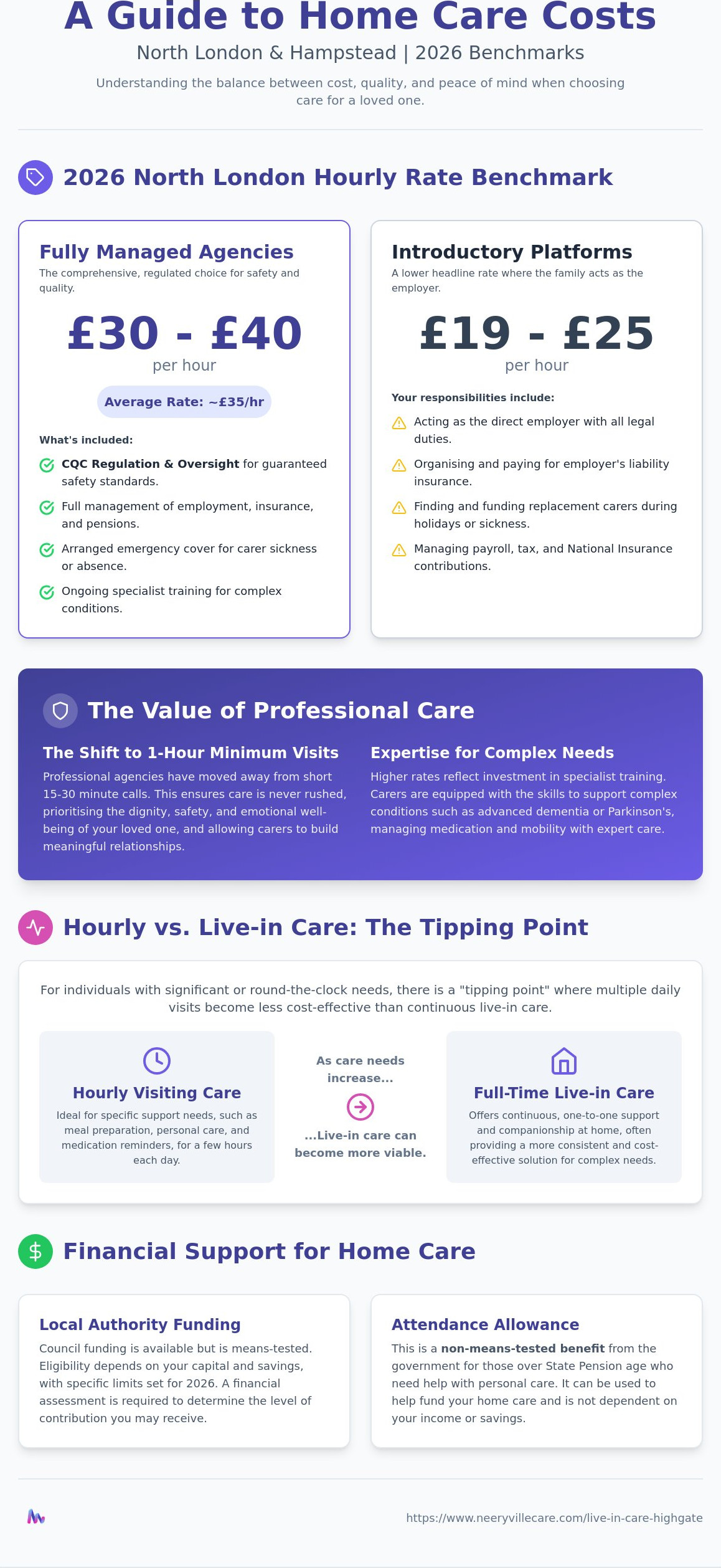
When you begin researching the cost of home care in Hampstead, you'll find that North London rates reflect the area's high standards and operational costs. By July 2026, the local market has seen adjustments due to the National Living Wage rising to £12.71 per hour and ongoing post-pandemic staffing pressures. In the N6 and NW3 postcode areas, you should expect a tiered pricing structure. Managed agencies, which handle all the legal complexities of employment and training, typically range between £30 and £40 per hour. Introductory platforms might offer lower rates, often between £19 and £25, but these require families to take on the roles of employer, including managing insurance and finding emergency cover. In 2026, the average hourly rate for a fully managed home care service in North London is approximately £35.
Minimum Call Times and Their Impact on Cost
You may find that many professional providers in Highgate and Hampstead have moved away from short, 15-minute or 30-minute visits. Most now implement a 1-hour minimum call time. This shift is rooted in quality and safety. Shorter visits often feel rushed, leaving the carer stressed and the client feeling like a task to be completed rather than a person to be cared for. The hidden costs of 30-minute visits are significant; they often lead to high staff turnover and a lack of continuity, which can be distressing for those with memory care needs. Longer visits allow for meaningful visiting care that prioritises emotional well-being alongside physical health. When a carer has a full hour, they can notice the subtle changes in a person's behaviour or health that a rushed visit would simply miss. It's about creating a calm, safe environment where care feels like a supportive conversation, not a race against the clock.
Factors Influencing Care Fees in Highgate and Hampstead
Understanding the cost of home care in Hampstead requires looking beneath the surface of a simple hourly rate. In a community that values excellence, the fee you pay reflects the rigorous infrastructure required to keep your loved one safe. It isn't just about the time spent in the home; it's about the invisible safety net that supports every minute of that visit. Several variables dictate why one rate may differ from another, often stemming from the level of risk management and the depth of specialist knowledge involved.
The Value of CQC Regulation and Oversight
CQC regulation is the cornerstone of professional care. Agencies that maintain this registration invest heavily in robust recruitment processes and enhanced DBS checks. They employ a Registered Manager who provides clinical oversight, ensuring that care plans are not just written but actively monitored and adjusted. This level of accountability is why regulated agencies often sit at a higher price point than independent carers. You aren't just paying for a pair of hands; you're paying for the peace of mind that comes from knowing every carer is supervised, insured, and trained to the highest standards. This oversight acts as a protective shield for your family, ensuring that if a carer is unwell or a crisis occurs, a professional system is already in place to respond.
Complexity of Care Needs
Complexity also plays a vital role in determining fees. Whilst basic companionship might focus on social interaction and light housekeeping, complex personal care requires a different level of expertise. Supporting someone with advanced dementia or Parkinson's involves specialist techniques to manage mobility and medication safely. If you are exploring how to navigate these choices, the NHS guidance on self-funding care provides a helpful framework for understanding your responsibilities. A personalised care plan is the only way to accurately forecast your long-term costs. It accounts for specific physical needs, such as hoist transfers, alongside emotional preferences that define a person's dignity.
Finally, consider the timing of the support and the qualifications of the person providing it. Professional agencies often apply premiums for unsocial hours, such as weekends, bank holidays, or overnight stays. These premiums ensure that the most dedicated carers are fairly compensated for their commitment to working when others are resting. Investing in a carer’s ongoing professional development means they bring the latest best practices into your home. This continuous learning directly impacts the quality of life for your family member, turning a standard visit into a therapeutic interaction. If you're feeling overwhelmed by these variables, we can help you build a plan that fits your family's unique needs.
Hourly Care vs. Live-in Care: A Cost-Benefit Analysis
Deciding between short visits and full-time support is a deeply personal choice. It's about finding the perfect balance between independence and safety. For many families, the cost of home care in Hampstead starts with just a few hours a week. It's a gentle introduction to professional help. It allows a loved one to stay in the home they love. This approach is often the most cost-effective way to manage early-stage needs. It provides a sense of security without being overwhelming.
Sustainability of Visiting Care
For residents in Highgate, 2 to 4 hours of daily support often provides a perfect middle ground. It keeps the cost of home care in Hampstead manageable whilst ensuring essentials like meal preparation or medication support are handled with professional care. This visiting care Highgate model allows your loved one to keep their existing routines. They remain the master of their own home. It feels less intrusive. It's a partnership that grows at a pace that feels right for them. You aren't paying for presence when it isn't needed. You are paying for targeted, high-impact support that preserves dignity.
There comes a specific moment when hourly care becomes less sustainable. Generally, once a person requires more than 6 hours of care per day, the cumulative costs can begin to exceed those of a fixed-rate live-in carer. The King's Fund analysis of social care highlights how sector-wide financial pressures influence these delivery models. Whilst hourly care offers maximum flexibility for changing schedules, live-in care provides a predictable weekly fee that covers 24-hour safety. It's a logical financial shift once the need for supervision becomes constant rather than occasional. This tipping point is a vital calculation for families looking at long-term budget planning.
Transitioning to Full-Time Support
Safety often dictates the move from hourly visits to a resident carer. If you find yourself worrying about what happens during the night, or if a loved one is increasingly prone to falls, hourly visits may no longer provide the security you need. The consistency of having the same person in the home day and night builds a profound sense of stability. It eliminates the anxiety of waiting for the next visit to start. It creates a rhythm of calm reliability. For many, this transition marks the point where care stops being a series of tasks and starts being a shared life. You can explore this further in our Complete Guide to Live-in Care in Highgate. Choosing the right path is about more than just numbers; it's about the emotional well-being of the whole family.
Financial Support and Funding for Home Care in 2026
The financial side of care often brings the most significant worry. It's a weight that many families carry alone, but it doesn't have to be that way. Understanding the available support can transform your perspective on the cost of home care in Hampstead. In 2026, the landscape of social care funding remains complex, yet several pathways exist to help ease the transition. Whether through state-funded support or non-means-tested benefits, the goal is to ensure your loved one remains safe and comfortable at home without compromising the family budget.
Accessing Attendance Allowance
Attendance Allowance is one of the most vital tools for families. It's a non-means-tested benefit for those over the State Pension age who need help with personal care or supervision. Because it isn't based on your income or savings, it's accessible to many who might not qualify for other types of aid. In 2026, the lower rate stands at £76.70 per week for those needing help during the day or night. The higher rate of £114.60 is available for those needing support both day and night. Applying is a practical first step; the funds can be used directly to offset your hourly care fees, providing a steady contribution toward professional support.
Local Authority Support in North London
If your savings and assets fall below certain thresholds, you may be eligible for help from your local council. For the 2026/27 financial year, the upper capital limit in England is £23,250. If your assets are below this, councils like Camden, Haringey, or Barnet will conduct a financial assessment to determine how much they can contribute. It is vital to remember that, unlike moving into a residential home, the value of your property is usually excluded from local authority means tests for care provided in your own home. This protection allows many families to keep their family home whilst accessing necessary support.
For those with complex or primary health needs, NHS Continuing Healthcare (CHC) remains a possibility. This is a package of care that is fully funded by the NHS and is not means-tested. Whilst the eligibility criteria are strict, it's a critical safety net for individuals with advanced conditions. If you do qualify for local authority funding, you can often request "Direct Payments." This gives you the power to receive the funding directly and choose your own provider, ensuring you maintain control over who enters your home. If you're unsure where to start with your application or assessment, we can guide you through the process step-by-step.
The NeeryVille Approach: Transparent and Compassionate Care
At NeeryVille Care, we believe that clarity is the first step toward peace of mind. When you're managing the cost of home care in Hampstead, the last thing you need is a surprise on your monthly invoice. We prioritise a transparent pricing model that is easy to understand. This means no hidden administrative fees and no complex contracts that are hard to decipher. We're here to lift the burden, not add to it. Our focus is entirely on providing a simple, safe solution that prioritises the emotional well-being of your family. It's a partnership built on trust and reliability, a philosophy championed by respected family-run providers like Suburban Home Care.
Tailored Support in Highgate and Hampstead
Our commitment to the N6 community is deeply personal. We're a local team, providing local carers for local families. This proximity ensures that our team is always within reach, offering a level of responsiveness that larger, national agencies often struggle to match. Our home help Highgate services go beyond practical assistance like meal preparation or light housekeeping. We focus on the person, not just the process. By matching carers to your loved one’s personality, hobbies, and interests, we build genuine friendships. This companionship is the heart of our visiting care model. It provides vital caregiver burnout support London, allowing family members to step back and breathe, knowing their loved one is in safe, professional hands. We value the individual over the procedure every single time.
Getting Started with Your Care Journey
The journey begins with a quiet, supportive conversation. We offer a free, no-obligation care assessment in the comfort of your own home. During this visit, we take the time to understand your daily routines, medical needs, and personal preferences. We don't rush. We listen. This assessment allows us to provide an accurate reflection of the cost of home care in Hampstead tailored specifically to your family's situation. Our Registered Manager oversees every detail, ensuring that clinical safety meets domestic warmth. We then organise a care schedule that fits seamlessly into your life, ensuring stability and a sense of calm. You don’t have to navigate these heavy decisions alone. We are here to guide you at a pace that feels right for you, offering a partnership built on trust, safety, and unwavering support. It is our promise to be the steady hand you need during this time of change.
Finding Stability for Your Loved One’s Future
Choosing the right support is a journey of the heart as much as the wallet. You now have the benchmarks for 2026 and a clearer understanding of how CQC regulation ensures the safety of those you love most. Quality care isn't just a series of tasks; it's a commitment to dignity, safety, and emotional well-being. By balancing professional oversight with local knowledge, you can create a stable environment that allows your loved one to thrive at home. Navigating the cost of home care in Hampstead doesn't have to be a source of constant anxiety.
As a CQC-regulated provider specialising in Hampstead and Highgate care, we are here to lift the burden. We provide personalised care plans with no hidden fees, ensuring you always know exactly where you stand. Our team is ready to offer the calm, reliable guidance your family deserves. Book a free care assessment with our Highgate team today and take the first step toward a simpler, safer solution. You've done the hard work of researching; now, let us help you find the peace of mind you've been looking for.
Frequently Asked Questions
What is the average hourly rate for home care in Hampstead in 2026?
In 2026, the typical hourly rate for a fully managed home care agency in North London ranges between £30 and £40. This bracket reflects the professional oversight, staff training, and regulatory compliance required to maintain high safety standards in the N6 and NW3 areas. While introductory platforms may offer lower rates, they often don't provide the same level of clinical supervision or emergency cover that a managed service guarantees.
Does the local council pay for hourly home care in Highgate?
Local authorities like Camden and Haringey can contribute toward your care costs if your savings and assets fall below the upper capital limit of £23,250. To access this, you must first request a free needs assessment from your local adult social care team. It's reassuring to know that for care delivered in your own home, the value of your property is usually excluded from the financial means test.
Is hourly care more expensive on weekends and bank holidays?
Most professional agencies apply a premium rate for visits during weekends, bank holidays, and overnight periods. These higher rates allow providers to fairly compensate dedicated carers for working unsocial hours, ensuring you receive consistent support from the same familiar faces. When calculating the cost of home care in Hampstead, it's vital to factor in these variations to ensure your budget remains sustainable over the long term.
What is the minimum number of hours I can book with a care agency?
Many high-quality agencies in North London have moved to a 1-hour minimum visit to ensure that care is never rushed and personal dignity is always maintained. Shorter visits of 15 or 30 minutes often lead to a lack of continuity and can feel transactional rather than person-centred. A full hour allows your carer to focus on emotional well-being and companionship alongside practical tasks like medication support or meal preparation.
Can I use my Attendance Allowance to pay for hourly home care?
Yes, you can use your Attendance Allowance to pay for any type of home care or support you require. Since this benefit is non-means-tested and based solely on your care needs, it provides a valuable weekly contribution toward the cost of home care in Hampstead. In 2026, the higher rate of £114.60 per week can significantly offset the fees for specialist support, such as dementia care or overnight assistance.
Are there extra charges for travel time or mileage in North London?
Some agencies include travel costs within their standard hourly rate, while others may add a separate charge for mileage or carer travel time between appointments. Transparent providers will clearly outline these potential extras during your initial assessment so there are no surprises on your invoice. Always ask for a full breakdown of fees to understand exactly what is included in your professional hourly rate.
How do I know if a care agency in London is CQC regulated?
You can verify an agency's status by searching for them on the official Care Quality Commission (CQC) website or by looking for the CQC digital badge on the provider's own website. Regulation is your safety net; it ensures the agency is regularly inspected and held to strict national standards for safety and effectiveness. Choosing a regulated provider means you have a formal point of accountability if your needs aren't being met.
What happens if my loved one’s care needs increase suddenly?
A managed care agency is designed to be responsive, allowing for a swift review of the care plan if a health crisis or sudden change occurs. We can quickly increase the frequency of visits or transition the support model from hourly care to full-time live-in care if 24-hour safety becomes a priority. This flexibility provides a sense of security, knowing that your care team can adapt at a pace that feels right for your family.


